Understanding Psychedelic Medicines and Therapeutic Compouds
Literature through October 30, 2026
1 Understanding the field without treating it as one medicine
Psychedelic research concerns several different questions: how drugs alter consciousness, whether particular treatment programs improve particular illnesses, what risks accompany those interventions, and how their use fits within medicine and society. These questions overlap, but they are not interchangeable. A compound can produce a profound experience without having demonstrated therapeutic benefit. A treatment can reduce symptoms in a carefully selected clinical population without being safe for everyone. A substance can have a long cultural history without its traditional use being equivalent to a standardized medical intervention. Understanding psychedelic medicines begins with keeping these distinctions visible. [1]
The strongest clinical evidence is not a single verdict on psychedelics. It is a collection of findings about specific substances, formulations, conditions, comparators, and care arrangements. Psilocybin studies have reported substantial improvements in depression, but an active-comparator trial did not establish superiority to escitalopram on its primary outcome, and the EPISODE trial failed its first prespecified primary comparison. MDMA-assisted therapy has produced positive phase 3 findings in posttraumatic stress disorder, but the FDA’s August 2024 complete response decision identified deficiencies in the submitted evidence, alongside questions about masking, safety assessment, and the contribution of accompanying therapy. Ketamine and esketamine have a different pharmacology and clinical development history; their evidence for depression cannot simply be transferred to PTSD or interpreted as proof of suicide prevention. [2]
The term medicine therefore needs context. It may refer to an approved pharmaceutical used for a specified indication; a drug used off label by a clinician; an investigational treatment being tested in research; or a culturally situated healing practice. These categories carry different evidentiary and legal meanings. This article uses compound names precisely and discusses treatment results as results of the interventions actually studied, rather than as promises attached to an entire class. Clinical trial doses mentioned below describe research, not instructions for self-treatment. [3]
The central conclusion is neither that these substances are established cures nor that methodological limitations make all observed improvements meaningless. Several research programs justify serious clinical investigation. Others remain primarily pharmacological, preliminary, or toxicological. Responsible interpretation requires attention to benefits and harms together, to negative as well as positive findings, and to the people and circumstances excluded from the trials. [4]
2 A classification based on pharmacology and context
The word psychedelic has both a narrow pharmacological meaning and a broader cultural use. In the narrower sense it refers to classic serotonergic compounds whose characteristic acute effects depend substantially on 5-HT2A receptor activation. In contemporary research and public discussion, the umbrella often also includes MDMA, ketamine, and other substances that alter consciousness or are investigated alongside classic psychedelics. This article uses that broader scope for comparison while retaining the narrower categories when explaining mechanisms. Shared cultural associations do not make these substances one biological class. [187]
Classic serotonergic psychedelics
Classic psychedelics include psilocybin and its active metabolite psilocin, lysergic acid diethylamide or LSD, N,N-dimethyltryptamine or DMT, mescaline, and the closely related but pharmacologically distinctive 5-methoxy-N,N-dimethyltryptamine or 5-MeO-DMT. Their characteristic effects involve serotonin receptors, particularly the 5-HT2A receptor. Serotonin is a signaling molecule; its receptors are different molecular targets, not a single switch. A receptor agonist activates a receptor, while a partial agonist produces less than the maximum response in a particular experimental system. Describing a drug as serotonergic does not mean that all serotonergic drugs produce psychedelic effects or have the same clinical risks. [5]
Chemical families provide another useful classification. Psilocin and DMT are tryptamines, mescaline is a phenethylamine, and LSD is an ergoline. These labels describe molecular structures. They help organize pharmacology, but do not independently establish treatment efficacy. Small structural changes can alter potency, receptor selectivity, metabolism, and duration. A synthetic analogue cannot inherit the clinical evidence of its parent compound merely because their structures resemble one another. [6]
Psilocybin acts as a prodrug: removal of its phosphate group produces psilocin, the principal molecule responsible for its acute psychedelic activity. Psilocin can reach the brain and activate serotonin receptors; it is subsequently cleared through pathways including glucuronidation, which attaches a chemical group that facilitates elimination. Conversion to an active molecule is therefore different from metabolism that helps terminate an effect. DMT illustrates a different problem: extensive breakdown by monoamine oxidase in the gut and liver limits oral exposure. MAO-inhibiting constituents in ayahuasca change that exposure. A preparation can consequently alter both time course and interaction hazards, rather than merely provide a different setting for the same drug experience. [7]
Related compounds with different primary mechanisms
MDMA, often called an entactogen or empathogen, affects monoamine transporters and promotes the release of serotonin and other monoamines. The terms describe its tendency to produce emotional openness or feelings of social connection; they do not guarantee empathy, truthfulness, or therapeutic benefit in any individual. MDA is a related compound with its own profile of perceptual and physiological effects. It is not interchangeable with MDMA, and MDMA treatment findings do not establish MDA efficacy. [8]
Ketamine is a dissociative anesthetic whose pharmacology prominently includes antagonism of the N-methyl-D-aspartate receptor, a glutamate receptor. Dissociation can involve altered bodily awareness and a sense of detachment from oneself or the environment. Racemic ketamine contains two mirror-image molecular forms, whereas esketamine is the S-enantiomer. Route, formulation, dose, co-treatment, and indication matter: intravenous racemic ketamine and intranasal esketamine are not one standardized intervention. [9]
Salvinorin A, the principal psychoactive constituent of Salvia divinorum, acts primarily at kappa-opioid receptors. Its placement near psychedelic substances in public discussion does not make it a classic serotonergic psychedelic. Amanita muscaria and Amanita pantherina contain a different set of psychoactive and toxicologically important constituents, including muscimol and ibotenic acid. Datura and Brugmansia contain tropane alkaloids that can produce antimuscarinic delirium. These distinctions have practical consequences: perceptual alteration is not a reliable guide to mechanism, benefit, or safety. [10]
Molecules and botanical preparations are different units of evidence
A botanical preparation may contain multiple active constituents whose concentrations vary with species, growing conditions, preparation, and storage. A trial of measured pharmaceutical psilocybin is not automatically a trial of every mushroom product. A mescaline experiment is not a clinical evaluation of peyote or San Pedro ceremony. Purified ibogaine is not the whole of iboga practice. Nor does a chemically defined product reproduce the social relationships, obligations, meanings, and knowledge systems of a traditional setting. [11]
This distinction cuts both ways. Standardization helps researchers attribute exposure and compare doses, but does not establish that a standardized formulation reproduces a traditional intervention. Traditional knowledge supplies important historical and cultural context, but cannot by itself answer the efficacy or safety questions posed by a modern randomized trial. A scientifically careful account can respect both forms of knowledge without making one stand in for the other. [12]
Comparing pharmacological families
The categories below organize mechanisms, not a ranking of therapeutic value. A shared effect on perception does not establish a shared mechanism or safety profile.
|
Family or preparation |
Principal pharmacological distinction |
Consequence for interpretation |
|
Psilocybin, LSD, DMT, mescaline |
Classic serotonergic activity prominently involving 5-HT2A receptors |
Duration, metabolism, and clinical evidence still differ by compound. [13] |
|
5-MeO-DMT |
Serotonergic activity with a particularly important 5-HT1A component |
DMT findings do not establish effects of 5-MeO-DMT formulations. [14] |
|
MDMA and MDA |
Monoamine release and transporter effects; MDA also has 5-HT2A agonist activity |
MDMA-assisted PTSD evidence cannot be assigned to MDA. [15] |
|
Ketamine and esketamine |
Dissociative NMDA-receptor antagonist pharmacology |
Route, enantiomer, co-treatment, and indication define the intervention. [16] |
|
Salvinorin A |
Kappa-opioid agonist |
Acute human experiments are not established therapeutic indications. [17] |
|
Amanita-associated compounds |
GABAergic and glutamatergic effects of distinct constituents |
These mushrooms are not substitutes for psilocybin mushrooms. [18] |
|
Datura and Brugmansia |
Antimuscarinic tropane alkaloids |
Delirium and systemic poisoning differ from classic psychedelic effects. [19] |
|
Ibogaine |
Multiple targets and variable metabolism, with cardiac ion-channel effects |
Uncontrolled clinical improvement does not resolve arrhythmia risk. [20] |
3 How effects arise and why mechanisms remain incomplete
Pharmacodynamics and pharmacokinetics
Pharmacodynamics concerns what a drug does to the body, including receptor activation and downstream signaling. Pharmacokinetics concerns what the body does to the drug: absorption, distribution, metabolism, and elimination. These processes jointly influence the onset, intensity, and duration of effects. A short plasma half-life does not prove a short therapeutic effect, and a prolonged subjective experience does not prove a more durable clinical benefit. Direct comparative clinical evidence is needed to establish either relationship. [21]
The 5-HT2A receptor is central to the acute effects of classic psychedelics, but receptor binding is only the beginning of the explanation. Different drugs interact with additional receptors, engage signaling pathways differently, and remain at their targets for different periods. The pharmacology of 5-MeO-DMT particularly illustrates why a simple 5-HT2A-only account is inadequate: 5-HT1A activity also matters, and structural and preclinical work has investigated how different 5-methoxytryptamines engage these targets. Such findings can guide compound development without demonstrating which mechanism produces recovery in patients. [22]
From molecular targets to changes in experience
A receptor, a transporter, and an enzyme do different jobs. A receptor responds to a chemical signal; a transporter moves a transmitter across a cell membrane; a metabolic enzyme helps transform or clear a substance. Classic psychedelics principally activate receptors directly. MDMA acts prominently through monoamine transporters, changing the availability of naturally occurring transmitters. Ketamine blocks an ion channel associated with a glutamate receptor. These are different ways to disturb communication among neurons, even when the resulting experiences share features such as altered emotion or bodily awareness. [188]
The 5-HT2A receptor belongs to a family that communicates through intracellular signaling proteins rather than itself forming an ion channel. Its activation can recruit G-protein signaling, including Gq-linked pathways that alter intracellular calcium signaling and neuronal responsiveness. Experimental work places these effects in cortical circuits containing excitatory pyramidal neurons as well as inhibitory cells. Altering their interaction can change how sensory information, internally generated imagery, and expectations influence perception. Human receptor-blocking experiments support a central role for 5-HT2A in acute psychedelic effects, but neither a single signaling pathway nor a simple increase in overall brain activity fully explains the experience. Which intracellular pathways matter for particular effects remains an active experimental question. [189]
MDMA instead promotes release of serotonin, noradrenaline, and dopamine through effects on their transporter systems. Serotonergic changes contribute to its acute psychological effects, while other monoamine effects contribute to arousal and cardiovascular stimulation. Emotional warmth, openness, or reduced interpersonal defensiveness can make difficult material feel different; these experiences are not proof that a memory is accurate or that therapeutic learning has occurred. The proposal that such changes facilitate trauma therapy is a clinical hypothesis about drug, person, and setting together. It cannot be reduced to a claim that releasing serotonin cures PTSD. [190]
Ketamine inhibits NMDA-receptor channel function, changing glutamatergic communication and, at some exposures, producing dissociation. One proposed antidepressant pathway links altered excitation and inhibition to AMPA-receptor signaling and downstream processes involved in synaptic plasticity. In rats, ketamine has increased synaptic proteins and spine formation through pathways involving mTOR, a regulator of protein synthesis. This provides a possible bridge between a brief exposure and later changes in brain function. It does not establish that this sequence explains every human response, that dissociation is necessary for recovery, or that growing more synapses is inherently therapeutic. [191]
Drug exposure also depends on metabolic enzymes and combinations. Monoamine oxidase contributes importantly to the metabolism of DMT and 5-MeO-DMT. Inhibiting an enzyme that normally clears a substance can increase or prolong exposure and change toxicity. This is one reason a claim about isolated DMT cannot be generalized to an ayahuasca brew or to other combinations. The familiar name of a constituent does not fully specify the pharmacological intervention. [23]
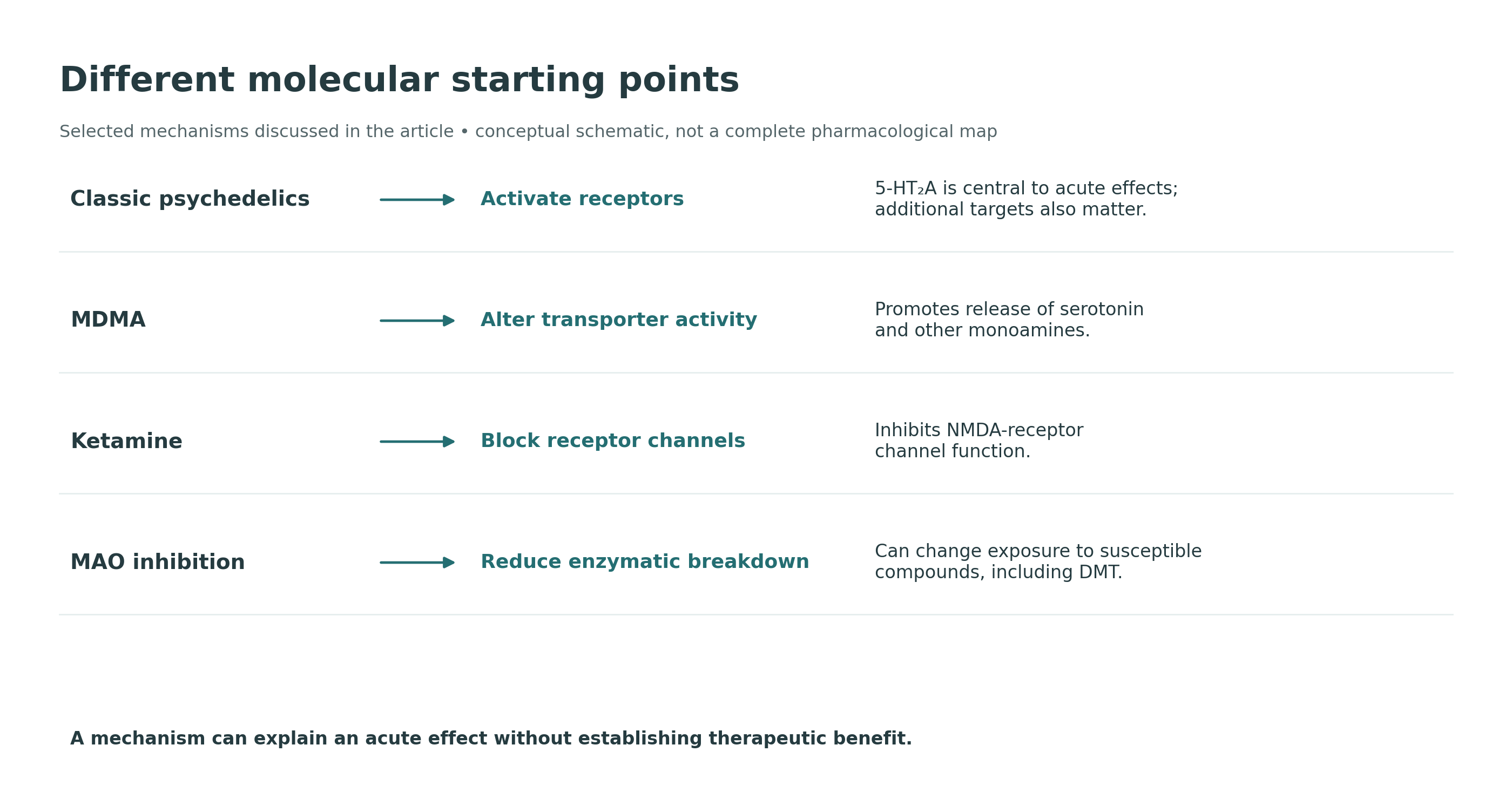
Figure 1.
Different molecular starting points. Classic psychedelics, MDMA, ketamine, and
monoamine oxidase inhibitors act through distinct pharmacological mechanisms.
These differences help explain their effects but do not, by themselves,
establish therapeutic benefit.
Routes, time courses, and the character of acute effects
Route changes the speed at which active drug reaches the circulation and brain. An intravenous infusion can maintain exposure while it continues; its duration is not comparable to that of a single bolus simply because the molecule is the same. Oral absorption usually produces a more gradual rise. Metabolic pathways, formulation, amount administered, and individual physiology further modify the course. The following comparisons describe broad patterns in supervised research, not predictable individual schedules or instructions for use. The acute effects ending does not establish that impairment, medical risk, or the need for observation has ended. [192]
Route-qualified comparison of acute effects
|
Compound and route |
Relative onset and acute course |
Characteristic experience and interpretation |
|
Psilocybin, oral [208] |
Builds over tens of minutes; usually lasts several hours. Shorter than LSD or mescaline in controlled oral comparisons. |
Changes in perception, emotion, self-experience, and meaning; intensity and emotional tone vary. |
|
LSD, oral [209] |
Builds over tens of minutes; commonly occupies much of a day. |
Prolonged perceptual and cognitive changes; longer exposure does not establish longer benefit. |
|
Mescaline, oral [210] |
More gradual onset than LSD or psilocybin in a direct comparison; long course, often much of a day. |
Substantial overlap with other classic psychedelic effects; nausea and other bodily effects can be important. |
|
DMT, intravenous bolus [211] |
Very rapid onset; brief course measured in minutes rather than hours. Infusion can extend exposure. |
Intense visual and immersive alterations; a short course can still be overwhelming. |
|
Ayahuasca, oral [212] |
Gradual onset and effects over hours, reflecting oral absorption and MAO inhibition. |
Perceptual and emotional changes alongside possible nausea or vomiting; variable preparations are not interchangeable. |
|
5-MeO-DMT, vaporized or intranasal [213] |
Rapid onset; generally briefer than oral psilocybin. Route and formulation determine the actual course. |
Profound changes in self-experience and orientation; not simply DMT with greater potency. |
|
MDMA, oral [214] |
Gradual onset and effects over several hours. |
Emotional openness and stimulation often stand out; physiological risk is not captured by whether an experience feels positive. |
|
Ketamine, intravenous; esketamine, intranasal [215] |
Effects emerge during administration or soon afterward; prominent acute changes usually recede on a shorter timescale than oral classic psychedelics. |
Dissociation, altered bodily awareness, and sedation differ from classic perceptual effects; the routes and products require separate interpretation. |
|
Salvinorin A, inhaled [216] |
Very rapid onset and brief acute course. |
Abrupt changes in bodily experience and contact with surroundings can be strongly disorienting. |
|
Ibogaine, oral [217] |
Prolonged, variable course; metabolism to noribogaine extends exposure beyond the parent compound. |
Dreamlike or introspective experiences may accompany marked incoordination; cardiac risk can outlast the most obvious subjective phase. |
These are relative comparisons, not equivalent-dose comparisons or a safety ranking. A psilocybin session lasting hours and an assessment weeks later measure different processes: the first concerns acute drug effects, the second the subsequent clinical course. Similarly, ketamine-associated dissociation can subside before an antidepressant outcome is measured. Continued improvement might involve learning, accompanying care, downstream biological change, or subsequent treatment; its duration must be observed rather than calculated from the drug’s half-life. Conversely, a long LSD experience does not itself establish superior durability. [193]
Repeated exposure may produce tolerance, meaning a reduced response to the same dose. Cross-tolerance between some classic psychedelics supports overlapping receptor mechanisms, but does not make repeated use medically benign. Tolerance to an acute subjective effect is not evidence of freedom from cardiovascular, psychological, or other cumulative harms. The consequences of repeated exposure must be studied directly rather than inferred from diminished perceptual effects. [24]
Tolerance, dependence, and compulsive use
Tolerance, physical dependence, and a substance-use disorder are related but distinct. Tolerance means diminished effect with repeated exposure. Physical dependence means adaptation such that reducing or stopping exposure can produce withdrawal; it can occur without compulsive behavior. A substance-use disorder concerns a problematic pattern of use, including impaired control and continued use despite harm. Neither needing a larger amount for the same effect nor experiencing an unpleasant after-effect, considered alone, establishes that diagnosis. [194]
Classic serotonergic psychedelics such as LSD and psilocybin generally show lower compulsive-use liability than many other psychoactive drugs, and a characteristic physical withdrawal syndrome is not established in the same way as for alcohol or opioids. Rapid tolerance to some classic psychedelics may discourage frequent repetition, but it does not make problematic use impossible. Ketamine has clinically important misuse and dependence potential; prolonged heavy use can involve craving, escalating consumption, and difficulty stopping. MDMA has a distinct stimulant and monoamine-releasing profile, and problematic repeated use is documented. Reports of fatigue or low mood afterward do not, by themselves, distinguish withdrawal from an acute after-effect, sleep disruption, or other exposures. [195]
Lower dependence liability is not a measure of freedom from injury. A person can experience panic, psychiatric destabilization, an accident, or toxic effects without developing compulsive use. Likewise, supervised therapeutic administration and frequent nonmedical exposure have different patterns of risk; neither should be used to erase what is known about the other. Section 18 considers interactions and repeated-exposure harms separately. [196]
Neuroplasticity is an experimental finding rather than a universal explanation
Neuroplasticity refers to changes in neural structure or function. Ly and colleagues demonstrated effects of several psychedelics on neuronal growth and synaptic measures in laboratory and animal systems. The work included structural measures such as branching and dendritic spines, as well as functional measurements. It helped establish a biological research program, but it did not show that a particular amount of neuronal growth causes antidepressant remission in humans. A cellular endpoint and a patient-centered outcome are different kinds of evidence. [25]
Nardou and colleagues investigated reopening of a social reward learning critical period in mice after several psychoactive compounds. A critical period is a window in which experience more readily shapes a particular form of learning. The study supports hypotheses about experience-dependent plasticity and timing, but the measured task was not psychotherapy, human trauma recovery, or a direct comparison of clinical treatment durations. A mouse learning result cannot establish that every patient has a therapeutically optimal post-session window of a specified length. [26]
These distinctions also apply to nonhallucinogenic analogues. Tabernanthalog, an ibogaine-inspired compound studied by Cameron and colleagues, was investigated through laboratory and animal experiments involving plasticity, behavior, and safety-related assays. Such work asks whether some potentially useful properties can be separated from other effects. It does not yet answer whether the resulting compound is effective or safe as a human treatment. Absence of a particular animal behavioral response is not the same as demonstrating an absence of subjective effects in people. [27]
Brain networks and psychological meaning
Neuroimaging studies investigate changes in activity and communication among brain systems. Terms such as connectivity and integration describe statistical relationships among measured signals, not the literal repair or rewiring of a damaged brain. The REBUS model proposes that psychedelics can relax the influence of entrenched high-level expectations, potentially permitting different interpretations of experience. It is a theoretical framework for organizing findings, not a proven universal mechanism of treatment. [28]
Secondary imaging analyses of psilocybin depression research have associated changes in brain integration with clinical outcomes. Such associations are scientifically useful but do not show that the imaging change caused the improvement, establish a validated biomarker for choosing treatment, or constitute another independent efficacy trial. People contributing scans may be a selected subset of a clinical cohort, and analyses reuse participants already represented in treatment reports. [29]
Psychological accounts emphasize emotional processing, changes in self-perspective, meaningful experience, and therapeutic relationships. These may be relevant to outcomes, but their interdependence makes causal attribution difficult. A person who feels better may retrospectively evaluate both the session and the therapeutic relationship more positively. An association between an intense experience and later improvement does not prove that greater intensity is necessary, sufficient, or desirable. The aim of treatment is not simply to maximize altered consciousness. [30]
4 Reading therapeutic evidence accurately
What the comparison actually tests
An open-label study tells participants and clinicians what is being administered. It can establish feasibility and identify possible benefits or harms, but improvement may also reflect expectation, supportive contact, the natural course of illness, or regression toward the average after enrollment during a particularly difficult period. A randomized trial allocates participants by chance, reducing some differences between groups. Its interpretation still depends on what each group receives and how outcomes are measured. [31]
A waiting-list comparison tests an immediate treatment package against delayed access, not a drug against otherwise identical care. An inert placebo controls administration but may be readily distinguishable from a strongly psychoactive substance. An active comparator may better reproduce some sensations, yet introduce effects of its own. An established medication comparator asks a clinically relevant question, but differences in dosing, treatment duration, and psychological support can affect the answer. No comparator solves every problem. [32]
Most psychedelic treatment trials test more than a molecule. Screening, preparation, monitoring during administration, and subsequent psychological support are part of the intervention. Some protocols include a formal psychotherapy; others describe support or integration without claiming a validated psychotherapy model. It is important to preserve the authors' distinction. A positive trial cannot automatically establish the efficacy of the same drug without the accompanying care, while the contribution of each component may remain uncertain. [33]
Masking and expectancy
Blinding or masking means that participants or evaluators do not know treatment assignment. Functional unblinding occurs when drug effects make the assignment apparent despite nominal masking. Expectations can then influence self-reports, clinician interactions, retention, or willingness to engage with treatment. Independent raters and efforts to prevent disclosure help, but do not necessarily remove these effects. [34]
This limitation should neither be ignored nor used to dismiss every result as placebo. Randomization can still estimate the effect of being assigned to a treatment package under the conditions studied. What becomes harder to isolate is the pharmacological contribution separate from beliefs and behavioral responses triggered by recognizing treatment. Better trials measure expectations, assess masking, use appropriate comparators, and report these features transparently. [35]
Outcomes and statistical uncertainty
A symptom score is not a diagnosis, and a change in score is not the same as recovery. Response commonly means a specified percentage reduction in symptoms. Remission means symptoms fall below a defined threshold. Functional recovery concerns the ability to live, work, maintain relationships, and participate in valued activities. Different scales and thresholds make response or remission rates difficult to compare directly across trials. [36]
The primary endpoint is the question designated in advance as the main test. Secondary endpoints add information, but testing many outcomes increases the probability of apparently favorable results arising by chance. Multiplicity correction or a prespecified testing hierarchy limits that problem. When the first test in a hierarchy fails, subsequent nominally favorable comparisons generally cannot be treated as confirmatory results. EPISODE provides an important concrete example discussed below. [37]
A confidence interval describes the uncertainty around an estimate under the statistical model. A wide interval can encompass materially different clinical possibilities. A nonsignificant result does not demonstrate equivalence, and a statistically significant difference does not establish that every patient benefits. Large changes within a treatment group do not show superiority if the comparator improves similarly. These are central distinctions in the depression and PTSD findings considered here. [38]
Time and independent replication
Longer follow-up is valuable, but the meaning of that follow-up can change. When participants cross over to active treatment, receive additional sessions, restart medication, or obtain other care, later improvement is not an intact continuation of the original randomized contrast. Responder-only follow-up selects people who already benefited and cannot estimate durability for everyone initially treated. Loss to follow-up can also bias results if those who return differ from those who do not. [39]
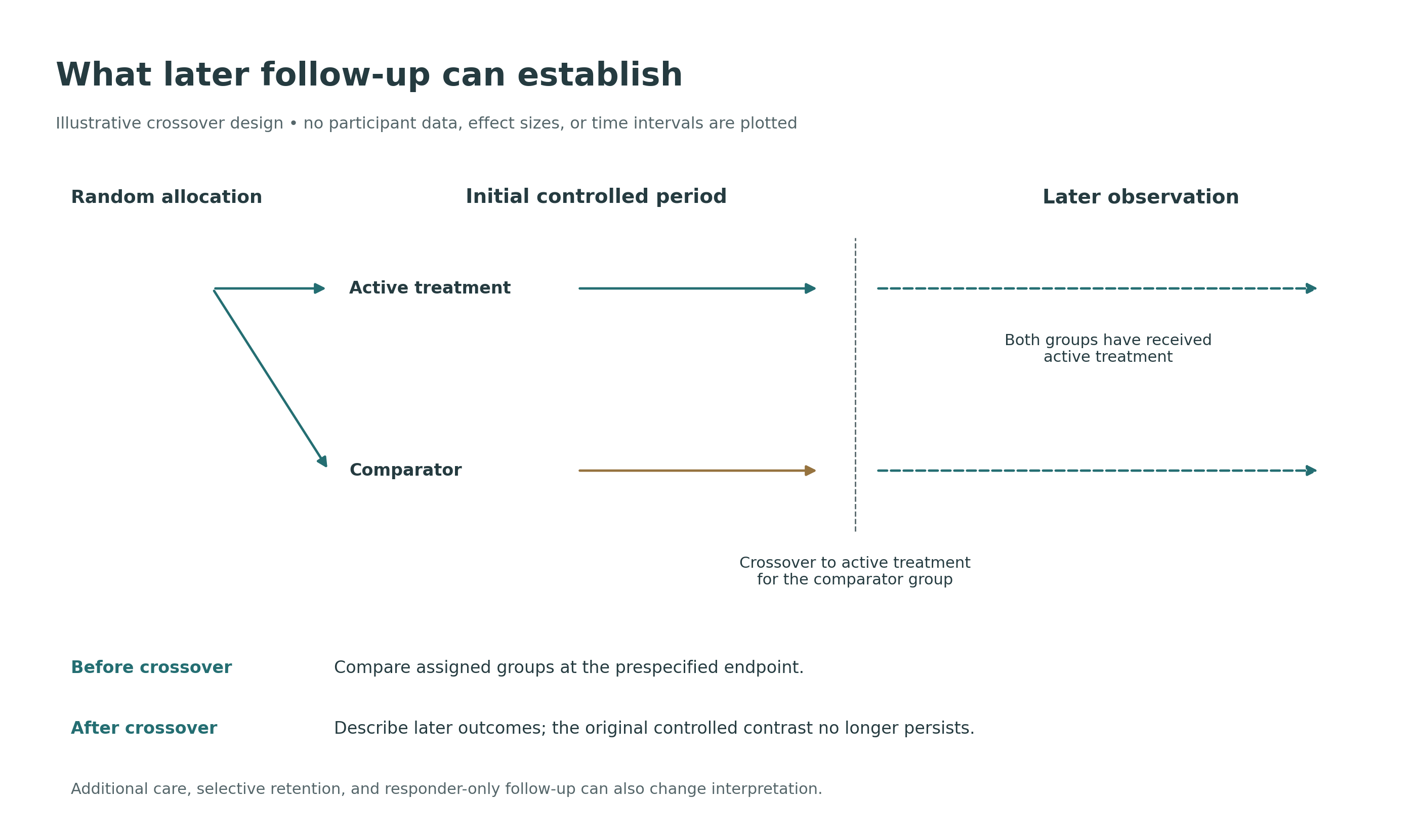
Figure 2. What later follow-up can establish. In this illustrative study design, the comparator group subsequently receives active treatment. Later follow-up remains informative, but it no longer preserves the original comparison with a group that has not received that treatment. No actual trial data or fixed time intervals are shown.
Finally, publications and independent studies must not be counted as though they were the same. A trial may generate a primary report, imaging analysis, qualitative paper, mediation analysis, and long-term follow-up. Each can contribute knowledge, but five publications may still describe one cohort. Systematic reviews synthesize those studies rather than creating new participants; trial registries describe plans and status rather than independently confirming results. [40]
A practical guide to levels of evidence
|
Evidence type |
What it contributes |
What it does not establish by itself |
|
Cell or animal experiment |
Targets, biological plausibility, and testable hypotheses |
Human therapeutic efficacy or a proven clinical mechanism. [41] |
|
Healthy-volunteer experiment |
Acute pharmacology under specified conditions |
Treatment of illness or safety in excluded populations. [42] |
|
Open-label clinical study |
Feasibility, observed clinical course, and potential harms |
A drug-specific causal effect distinct from support and expectation. [43] |
|
Randomized clinical trial |
The effect of assignment to the tested treatment package |
Perfect masking, universal generalizability, or drug-only benefit. [44] |
|
Follow-up after crossover |
Outcomes after participants have received active treatment |
A continuing untreated randomized comparison. [45] |
|
Case report or selected survey |
Recognition of possible harms and patterns |
Population incidence or a reliable per-exposure probability. [46] |
|
Registry or regulatory guidance |
Planned research or official development expectations |
A positive trial result or product approval. [47] |
5 Psilocybin and depression
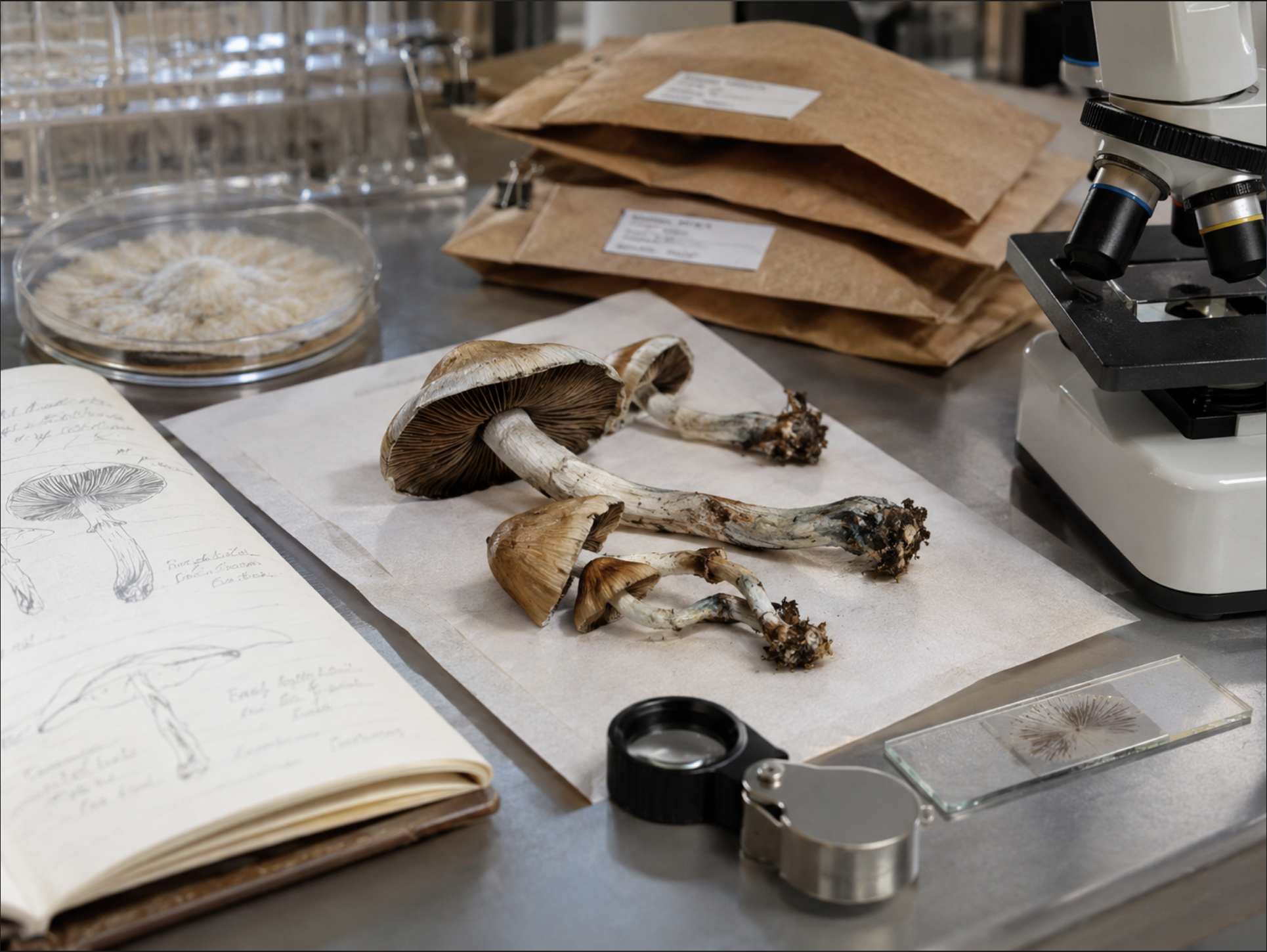
Figure 3. Psilocybin mushrooms and scientific investigation.
Mushroom specimens, laboratory materials, and research notes illustrate the
study of naturally occurring psilocybin-containing fungi. Botanical specimens
and variable mushroom preparations are distinct from the chemically defined
psilocybin formulations used in controlled clinical trials.
From feasibility to controlled comparisons
An early modern study by Carhart-Harris and colleagues treated 12 people with treatment-resistant depression using psilocybin with psychological support. It was open label and designed to investigate feasibility while obtaining preliminary clinical observations. Symptom improvements supported further investigation, but the absence of a comparison group prevented attribution to psilocybin itself. Benefits were not universal or uniformly sustained: five participants showed some relapse by three months. The later expanded six-month report belongs to the same research program and should not be counted as a wholly independent replication of the initial cohort. [48]
Davis and colleagues subsequently randomized 27 adults with major depressive disorder to immediate or delayed treatment. Twenty-four completed the intervention and the principal post-treatment assessments. Two psilocybin sessions were combined with supportive psychotherapy. Depression ratings were substantially lower after immediate treatment than during the corresponding waiting period, and 17 of the 24 treated participants met response criteria at four weeks. This was an important controlled signal, but a waiting list does not control the experience of receiving treatment, therapist contact, or expectations. The small, predominantly White sample and exclusion of people at elevated suicide risk also limit generalization. [49]
The 12-month follow-up retained all 24 treated participants and documented continuing improvement in many of them. Its strength was retention, not a year-long randomized comparison: everyone had received treatment, and one-third reported antidepressant use during follow-up. Those outcomes describe the course of people after psilocybin-assisted treatment, including subsequent care. They do not establish that two sessions alone produced medication-free remission for a year. [50]
The escitalopram comparison
The 2021 comparison with escitalopram addressed a different question. Fifty-nine participants were assigned either to two 25-mg psilocybin sessions with daily placebo or to daily escitalopram with two 1-mg psilocybin sessions; both groups received psychological support. At six weeks, the prespecified primary outcome, change in the self-reported QIDS-SR-16 depression score, did not differ significantly between groups (P=.17). Several secondary results favored psilocybin, but those analyses were not corrected for multiple comparisons. The trial therefore did not establish psilocybin's superiority on its primary test. It also was not designed to demonstrate equivalence, so its nonsignificant result cannot establish that the treatments work equally well. [51]
The comparison was short and involved a selected group, and both arms received substantial support. These features matter when interpreting claims that a small number of psychedelic sessions can replace conventional treatment. The six-month observational report found no significant difference in depression severity between the original groups, although some psychosocial measures favored the psilocybin group. Forty-six of the original 59 participants completed that follow-up. Additional interventions, missing data, and the absence of follow-up safety assessment constrain the interpretation; favorable secondary findings cannot retrospectively convert the initial primary result into a positive one. [52]
Larger placebo and low dose controlled studies
Goodwin and colleagues randomized 233 participants with treatment-resistant depression to a single 25-mg, 10-mg, or 1-mg dose with psychological support. At three weeks, the adjusted difference in MADRS depression-score change between 25 mg and 1 mg was -6.6 points (95% confidence interval -10.2 to -2.9), favoring 25 mg. The 10-mg comparison was not significant. This supports a short-term antidepressant effect for the higher dose under the trial conditions, not a general conclusion that every dose is effective. Because the testing hierarchy stopped, favorable response and remission findings were not independently confirmatory, and sustained response through 12 weeks was not established by the 25-mg comparison. [53]
Safety findings materially qualify that result. Adverse events occurred in 179 of 233 participants. Headache, nausea, and dizziness were common, but the findings were not limited to transient discomfort. Suicidal ideation, self-injury, or suicidal behavior occurred across dose groups. Between day 2 and week 3, the 25-mg group had serious events involving suicidal ideation in two participants and intentional self-injury in two. Three participants in that group reported suicidal behavior after week 3; all had a relevant prior history and had not responded at week 3. This does not establish that psilocybin caused each event, but it makes continued psychiatric monitoring essential to interpreting the intervention's risk-benefit profile. [54]
The Zurich trial by von Rotz and colleagues randomized 52 adults with major depressive disorder to a single moderate, weight-adjusted dose or placebo, with psychological support. At 14 days, depression outcomes favored psilocybin, and 14 of 26 participants in the psilocybin group met the study's MADRS remission criterion. Its contribution is a placebo-controlled result over a relatively short interval, not proof of sustained remission. The absence of observed serious adverse events in this small sample does not exclude uncommon harms. [55]
Raison and colleagues studied 104 adults across 11 US sites, comparing a single 25-mg dose with niacin and psychological support in both groups. The primary MADRS difference in change through day 43 was -12.3 points (95% confidence interval -17.5 to -7.2). Functional disability also improved more with psilocybin. Sustained response favored psilocybin, while the sustained-remission comparison was not significant. No serious treatment-emergent adverse events occurred, but overall and severe adverse events were more frequent with psilocybin. The finding supports benefit in the studied population without erasing the distinction between severe and serious events or extending reassurance to people excluded for mania, psychosis, or active suicidal intent. [56]
The EPISODE trial changes the balance of the account
EPISODE was a two-center German phase 2b trial that randomized 144 adults with treatment-resistant depression. Participants received psychotherapy and two dosing sessions six weeks apart. The primary question concerned response before the second dose: at least a 50% reduction on the 17-item Hamilton depression scale at week 6. The primary efficacy analysis included 142 participants, with 47 initially receiving 25 mg, 48 receiving 5 mg, and 47 receiving nicotinamide. Response occurred in 8 of 47 participants given 25 mg (17.0%) and 5 of 47 given nicotinamide (10.6%). The adjusted odds ratio was 1.73, with a wide 95% confidence interval of 0.53 to 6.23; P=.19. The first hierarchical comparison therefore failed. [57]
Continuous symptom scores and other secondary measures provided evidence suggestive of benefit, but subsequent comparisons were exploratory under the prespecified analysis structure. The distinction is substantive: a reduction in average symptom severity and a demonstrated increase in the proportion achieving a predefined response are different outcomes. The study does not prove absence of any antidepressant effect, but it cannot be represented as a successful confirmatory response trial. Its power calculation assumed a much larger difference in response rates than was observed. Center effects, a selected and relatively homogeneous population, and functional unblinding further complicate interpretation; 86% correctly identified the 25-mg condition. [58]
EPISODE also reported four serious adverse events, two judged related to 25-mg psilocybin. One involved a hypertensive crisis requiring medication. Another involved acute severe panic followed by recurrent anxiety, panic attacks, dissociation or depersonalization, flashbacks, and hallucinogen persisting perception disorder, requiring hospitalization. Dosing-day suicidal ideation was reported more often after 25 mg than in comparator conditions. The safety tables classify exposure by administered dose across sessions, so these figures must not be casually treated as simple risks in the original randomized groups. The two-session protocol was designed so that participants completing the assigned regimen would receive at least one 25-mg dose. That planned exposure should not be attributed to every randomized participant; the later improvement was not evidence from a continuing untreated control comparison. [59]
Public healthcare feasibility is a distinct contribution
The 2026 NHS study by Rucker and colleagues randomized 60 participants at one English site to 25-mg psilocybin or placebo with preparation, dosing support, and integration. Its primary outcomes concerned feasibility: recruitment, retention, and estimation of depression-score variance. Fifty-nine participants completed MADRS assessments at all follow-up visits. The adjusted week-3 difference was -10.41 points (95% confidence interval -14.86 to -5.95), and favorable symptom differences continued at week 6. These secondary clinical findings support a larger confirmatory study; they should not be relabeled as the successful primary efficacy endpoint of a definitive trial. [60]
The report recorded 287 nonserious events in the randomized phase, 164 in the psilocybin arm and 123 in the placebo arm. Four serious events were reported across the randomized and open-label phases, three occurring in the latter. The authors judged all but one unrelated to study medication; the remaining event was in the placebo arm and considered possibly related. Masking was assessed only in a subset, and all 13 questioned psilocybin recipients identified their assignment. Thus, public-service delivery and strong retention are important findings, while a single site, selected eligibility, phase-specific safety data, and incomplete masking assessment still limit conclusions. [61]
Taken together, these studies support an active depression research program with several positive controlled results and meaningful contrary or inconclusive findings. They do not establish one universal response rate, optimal regimen, or duration of benefit. Differences in treatment resistance, primary outcomes, support, comparator credibility, and follow-up help explain why a single headline estimate is inadequate. The appropriate synthesis preserves both the evidence of potential benefit and the unresolved questions about durability, harms, and comparative effectiveness. [62]
What a meta analysis adds and what it cannot repair
Borgogna and colleagues synthesized nine randomized psilocybin-for-depression trials, comprising ten subgroups and 602 participants. Their pooled incremental effect favored psilocybin, but the abstract and main results report different pooled estimates; a single reconciled numerical estimate is therefore not adopted here. A standardized effect describes a difference between groups relative to variability in scores, not a response or remission percentage. Effects were heterogeneous, and smaller studies tended to produce stronger favorable results. That small-study pattern is compatible with several explanations, including selective publication and differences in study design, and does not identify a single cause. [63]
The review also found substantial risk-of-bias concerns, uneven harms reporting, limited direct testing of proposed mechanisms, and frequent financial conflicts. These features are relevant to confidence in a pooled estimate, even when the estimate is statistically significant. Conflicts of interest do not prove invalid findings, but transparent sponsorship, investigator roles, analytic decisions, and independent replication are important safeguards. The synthesis represents the trials it included, not the full evidence balance through October 2026; later studies such as EPISODE must be evaluated separately rather than absorbed into an unchanged historical pooled result. [64]
6 Serious illness and existential distress
Depression and anxiety associated with life-threatening illness overlap with, but are not identical to, uncomplicated major depression. Fear of death, loss of meaning, physical symptoms, changes in relationships, and uncertainty about the future can all matter to the treatment goal. Psychedelic studies in this setting should therefore be understood as attempts to address psychological suffering, not as evidence of an effect on the underlying cancer or other medical disease. [65]
Griffiths and colleagues studied 51 people with life-threatening cancer and depression or anxiety symptoms, comparing a high psilocybin dose with a very low dose in a crossover design. The sessions were five weeks apart. High-dose treatment was associated with substantial improvements in mood, anxiety, and quality-of-life measures. The six-month observations were encouraging, but occurred after the crossover: they describe outcomes after exposure rather than a continuing comparison of high dose against an untreated group. Associations between mystical-type experience and outcomes are not proof that such an experience is required for benefit. [66]
Ross and colleagues randomized 29 patients with cancer-related anxiety and depression to psilocybin or niacin, both with psychotherapy, before crossover at seven weeks. The initial randomized comparison favored psilocybin on anxiety and depression measures; later observations included continuing improvements in existential distress and quality of life. The trial reported transient anxiety and psychotic-like symptoms, including paranoid ideation and thought disorder, although no medication-attributed serious adverse event occurred. A small, supported cancer cohort cannot establish safety in all medically ill patients or prove that the benefit persists independently of subsequent care. [67]
Anderson and colleagues extended feasibility work to 18 older long-term AIDS survivor men experiencing demoralization, using group therapy and one psilocybin session. Demoralization improved, but the study was open label and could not isolate drug effects from group support or other influences. Seven participants experienced self-limited severe expected reactions, despite no serious adverse reactions being identified. This is a useful reminder that a treatment described as feasible can still be difficult or distressing, and that severe and serious are not synonyms. [68]
A separate community cancer-center study by Agrawal and colleagues treated 30 participants in cohorts of three or four, using simultaneous psilocybin administration in adjacent rooms, one therapist per participant, and group preparation and integration supplemented by individual care. All completed the study. Depression improved, and no treatment-related serious adverse event was reported, but headaches, nausea, altered mood, and anxiety occurred. The open-label, single-center design cannot establish comparative efficacy or that the delivery model is equivalent to protocols with more therapist time. Its distinctive contribution is the feasibility of a different care arrangement, not a definitive solution to scalability. [69]
Secondary analyses from the Ross cancer cohort examined loss of meaning and suicidal ideation. They offer hypotheses about relationships among existential distress, depression, and suicidal thinking, but do not constitute an independent cancer trial or a trial demonstrating fewer suicide attempts or deaths. Later observations followed crossover and involved selected follow-up participants. These findings should inform future dedicated studies rather than be converted into a claim of established suicide prevention. [70]
7 Substance use disorders require substance specific conclusions
Alcohol use disorder
Early psilocybin alcohol research supplied proof-of-concept observations in an uncontrolled treatment program. Historical LSD trials also generated signals, later synthesized by Krebs and Johansen. These studies are relevant to the history of the field, but neither early uncontrolled improvement nor a synthesis of older trials establishes the effectiveness of a current, standardized intervention. Differences in diagnostic practice, accompanying treatment, and outcome measurement require attention. [71]
The 2022 Bogenschutz trial provided a stronger comparison. Ninety-five adults with alcohol dependence were randomized to psilocybin or diphenhydramine, with 12 weeks of manualized psychotherapy and two medication sessions. The primary measure was the percentage of heavy drinking days over the 32-week period following the first session. Reported values were 9.7% with psilocybin and 23.6% with diphenhydramine, a difference of 13.9 percentage points (95% confidence interval 3.0 to 24.7). Both groups had already reduced drinking during the premedication therapy period. The result concerns additional benefit within that treatment program, not an unsupported claim that psilocybin alone eliminates alcohol dependence. [72]
The comparator, masking, and participant selection remain important. Diphenhydramine does not closely reproduce a psychedelic experience, and treatment assignment was often recognized. Participants with important psychiatric, medical, and other substance-use complications were excluded. Blood pressure increased during psilocybin sessions, although no participant required treatment for hypertension in this trial. No serious adverse event occurred among those receiving psilocybin, but the sample and follow-up cannot establish freedom from uncommon harms. [73]
Rieser and colleagues tested a different clinical use: relapse prevention after alcohol withdrawal treatment. The Swiss phase 2 trial compared one 25-mg session plus brief psychotherapy with placebo plus the same brief psychotherapy. Thirty-seven participants contributed to the four-week analysis. Neither abstinence duration (P=.55) nor mean daily alcohol use (P=.51) differed significantly at the primary follow-up, and the six-month analyses did not establish a treatment advantage. This negative result must remain alongside the positive Bogenschutz trial. The studies differed in treatment stage, number of sessions, psychotherapy, and sample; the findings are not interchangeable replications of exactly the same intervention. [74]
Tobacco dependence
The early smoking-cessation pilot enrolled 15 smokers in a structured behavioral treatment program with psilocybin. Twelve showed biochemically verified seven-day point-prevalence abstinence at six months. That striking observation was uncontrolled, and publications examining mystical experience and later follow-up reuse this cohort rather than adding independent replications. Correlations between session experiences and abstinence in such a small sample cannot establish a necessary mechanism of quitting. [75]
The 2026 randomized pilot by Johnson and colleagues enrolled 82 participants: 42 assigned to psilocybin and 40 to nicotine patches, with a 13-week cognitive behavioral treatment program. At six months, prolonged abstinence occurred in 17 of 42 participants assigned to psilocybin (40.5%) and 4 of 40 assigned to patches (10.0%); the odds ratio was 6.12 (95% confidence interval 1.99 to 23.26; P=.003). Seven-day point-prevalence abstinence was also higher, 22 of 42 versus 10 of 40. The intention-to-treat analysis counted those lost to follow-up or discontinuing treatment as nonabstinent. These are positive pilot findings, not a null result. [76]
Their interpretation nevertheless requires the trial's limitations. Treatment was unblinded; participants were highly motivated and predominantly White; 64.6% reported prior classic psychedelic use. Median treatment contact was 29.6 hours in the psilocybin group and 16.8 hours in the patch group, largely reflecting administration and debriefing. Sixty-eight participants completed six-month follow-up. The study compared a treatment package with nicotine patches, not with every effective cessation option or the strongest available combination regimen. A larger trial with more comparable contact and a stronger comparator is needed before claiming superiority over smoking-cessation care generally. [77]
No serious study-related adverse event was reported, but adverse events were common. One psilocybin administration required physician-administered medication for hypertension; headache and blood-pressure elevations were also recorded. Vital signs were monitored differently between groups, limiting direct adverse-event comparisons. An unrelated serious event occurred in the patch arm. The absence of a serious event attributed to treatment is therefore neither an absence of adverse events nor evidence that unsupervised use is safe. [78]
8 LSD and the importance of treatment context
LSD (lysergic acid diethylamide) is a synthetic ergoline psychedelic, developed as a derivative of lysergic acid in research on ergot alkaloids. Albert Hofmann first synthesized it at Sandoz in 1938; its remarkable psychoactive properties were recognized in 1943. These are distinct milestones: making the compound preceded understanding its effects on consciousness. LSD subsequently became a major tool in experimental psychiatry, both for investigating altered mental states and for exploring psychotherapy, including the alcohol-treatment research discussed in Section 7. Its effects also helped focus attention on serotonin in the study of brain function. This history connects LSD to the serotonergic framework in Sections 2–3; Section 19 supplies the broader chronology. Historical importance does not establish therapeutic efficacy by modern standards. [218]
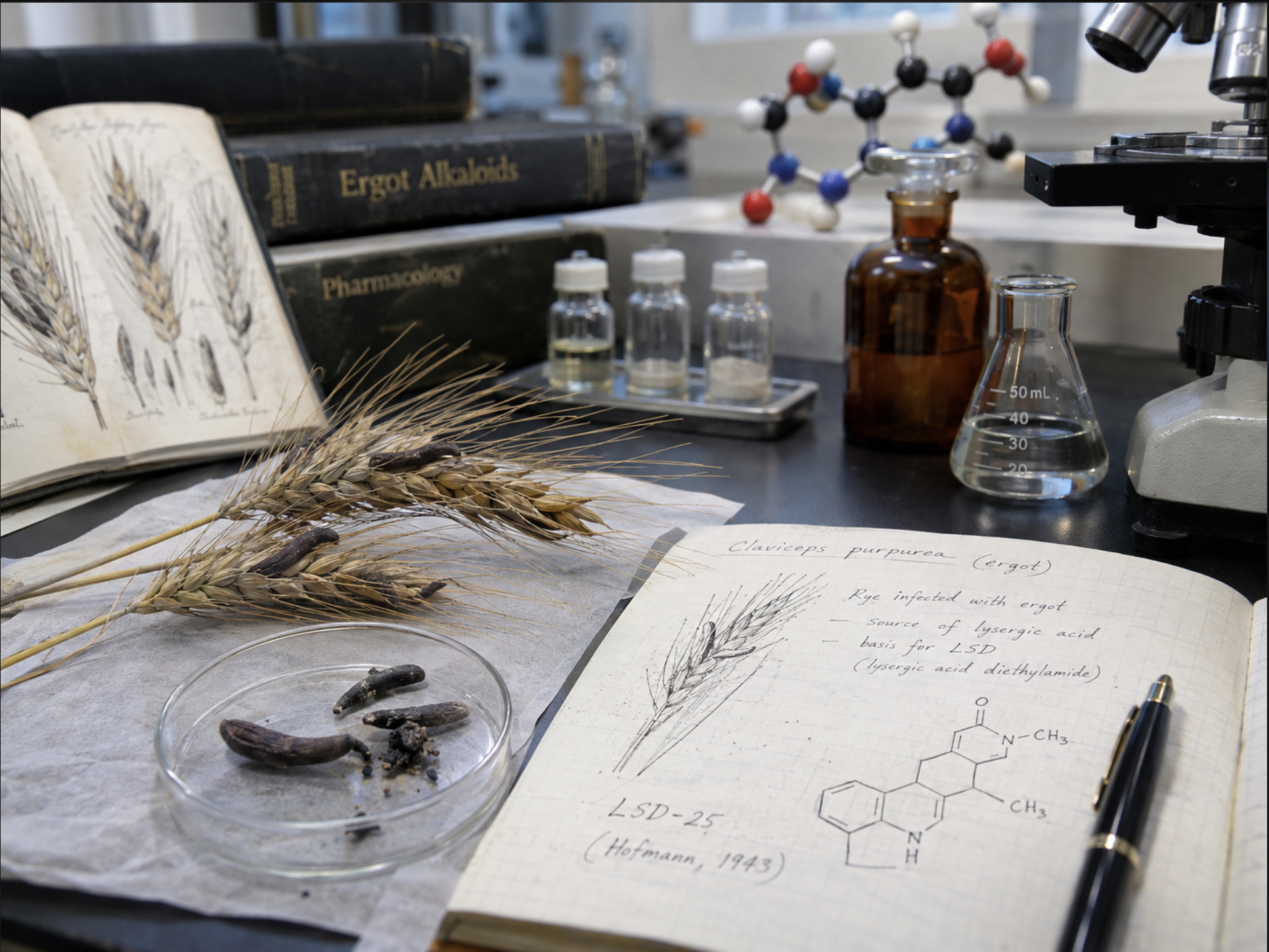
Figure 4. LSD's origins in ergot-alkaloid research.
Ergot-infected rye and laboratory materials illustrate the scientific
foundations of Albert Hofmann's synthesis of LSD in 1938 and the recognition of
its psychoactive properties in 1943.
LSD is active at much smaller mass doses than psilocybin or mescaline and generally produces a longer acute experience than psilocybin. Potency in this sense means the amount needed to produce an effect; it does not mean greater therapeutic efficacy. Its long duration has implications for supervision, staffing, fatigue, and the experience of distress. The pharmacological question of how long effects last must be distinguished from the clinical question of how long benefits persist. [79]
Gasser and colleagues conducted a small randomized pilot in 12 people with anxiety associated with life-threatening illness. Participants received psychotherapy and either higher-dose LSD or a low-dose comparator, with open-label crossover subsequently offered. Anxiety findings supported further study, but the small sample and later crossover limit long-term causal conclusions. The later Holze follow-up, from a separate anxiety research program, documented sustained improvements after treatment in 39 participants; it was an open-label follow-up after the parent crossover trial, not a new randomized replication or proof of enduring drug-only efficacy. [80]
The MM120 study by Robison and colleagues addressed generalized anxiety disorder with a larger dose-ranging design. It randomized 198 adults at 22 US sites to placebo or one of four doses of lysergide D-tartrate; 194 were included in the full analysis set. The primary analysis examined the dose-response relationship for change in Hamilton Anxiety Rating Scale scores at week 4. The 100- and 200-microgram groups showed significant advantages over placebo, whereas the two lower-dose groups did not. This was a phase 2b result supporting further development, not evidence that all LSD regimens treat all anxiety conditions. [81]
Unlike several psychedelic-assisted psychotherapy studies, this trial explicitly sought to avoid a systematic psychotherapeutic intervention. Monitors provided supervision, and interpersonal influences could still contribute, but calling its protocol psychotherapy would misdescribe what was tested. Perceptible effects made unblinding a concern, and visual perceptual changes, nausea, and headache were among the reported adverse events. The trial registry and published report describe the same research program, not two independent efficacy studies. [82]
9 DMT and 5 MeO DMT are not interchangeable short acting treatments
DMT from experimental exposure to depression trials
DMT's rapid metabolism makes brief exposure possible through some administration routes, but route and delivery pattern can substantially change duration. A small study by Luan and colleagues investigated bolus-plus-infusion administration in 11 selected, experienced healthy volunteers. It explored whether a sustained altered state could be maintained, not whether DMT treated depression or was safe in the general population. Ascending administration, incomplete participation across conditions, and small observation counts limit broad inference. An experimentally controllable infusion is not an established clinical protocol. [83]
The 2026 phase IIa study by Erritzoe and colleagues randomized 34 adults with moderate-to-severe major depression to intravenous DMT fumarate or placebo with supportive psychotherapeutic care. At two weeks, the mean difference in MADRS change was -7.35 points (95% confidence interval -13.62 to -1.08; P=.023), favoring DMT. This is a positive controlled clinical signal, but the interval is wide and the sample small. The subsequent open-label phase offered DMT to participants in both groups. Later improvements, including those observed around three months, therefore do not extend the original placebo-controlled inference. [84]
Common adverse events included infusion-site pain, nausea, and transient anxiety, and no serious event was reported. Those findings concern the screened population and supervised protocol studied. The absence of a significant difference between later one-dose and two-dose groups does not demonstrate that the regimens are equivalent or that one administration is optimal. Short administration time may be operationally attractive, but preparation, assessment, monitoring, and follow-up still require resources. [85]
5 MeO DMT and formulation specific evidence
5-MeO-DMT, also called mebufotenin, differs from DMT in receptor profile and subjective effects. Its prominent 5-HT1A activity is one reason it should not be described simply as a stronger version of DMT. Inhaled, intranasal, and sublingual formulations differ in absorption and exposure. Findings from one cannot be assumed to apply to the others, and a short acute experience may still be intensely disorienting or psychologically consequential. [86] Combining 5-MeO-DMT with a monoamine oxidase inhibitor is a separate high-consequence hazard: severe poisoning has been reported with harmaline. The interaction and the limits of case evidence are explained in Section 18.
The material commonly called bufo is secretion from the Sonoran Desert or Colorado River toad, Incilius alvarius (formerly Bufo alvarius), rather than a synonym for chemically defined 5-MeO-DMT. The secretion contains other constituents and is not equivalent to a synthetic or purified pharmaceutical formulation: its composition and resulting exposure cannot be assumed to match standardized investigational products. Consequently, formulation-specific clinical findings do not establish the safety or efficacy of toad secretion or ceremonial use. Collecting secretion also raises animal-welfare and ecological concerns, including handling and pressure on wild populations; Section 19 discusses the broader conservation context. [219]
An early phase 1 study evaluated vaporized GH001 in 22 healthy volunteers across small dose groups and an individualized escalation condition. It characterized acute experiences and tolerability in preparation for clinical research. Cognitive, mood, and wellbeing measurements did not establish a therapeutic effect; the participants were not a depression treatment cohort. Vital signs measured after administration also cannot fully characterize physiological changes at every moment of a brief peak experience. [87]
Feifel and colleagues' phase 2b trial, published October 26, 2026, provided randomized evidence for intranasal mebufotenin benzoate in treatment-resistant depression. The analysis included 193 participants assigned to 8 mg, 12 mg, or a 0.3-mg low-dose comparator with psychological support. The primary comparison was the change in MADRS score through day 29 for 12 mg versus 0.3 mg: the adjusted difference was -5.3 points (95% confidence interval -8.9 to -1.8; P=.003). The 8-mg comparison was also favorable within the prespecified secondary testing sequence. These findings support further clinical development of this formulation. [88]
Most reported events were mild or moderate, but treatment-emergent adverse events occurred in all dose groups. The investigators identified functional unblinding, changes in randomization ratio, limited ethnic diversity, possible underrepresentation of more severe treatment resistance, and uncertainty about the contribution of support as limitations. Medication discontinuation before treatment also limits extrapolation to people continuing antidepressants. The related registry is a record of this program, not additional randomized evidence. [89]
A sublingual phase 1 trial by Bistue Millon and colleagues studied repeated subpsychedelic doses in adults with elevated depression or anxiety symptoms but without formal psychiatric diagnosis or ongoing treatment. Its purpose was safety, tolerability, and pharmacokinetic characterization, not definitive treatment efficacy in a diagnosed disorder. Similarly, an open-label intranasal proof-of-concept study in people continuing an SSRI addresses a narrow combination under supervision. It does not establish that every SSRI, every 5-MeO-DMT preparation, or other serotonergic combinations are compatible. [90]
10 Ayahuasca mescaline and living botanical traditions
Ayahuasca is more than oral DMT
Ayahuasca commonly combines a source of DMT with Banisteriopsis caapi, whose beta-carboline alkaloids inhibit monoamine oxidase and alter oral DMT availability. Compositions and practices vary, and the word does not identify a single standardized pharmaceutical product. Indigenous Amazonian traditions, mestizo healing practices, and organized religious uses have their own histories and social meanings. A laboratory account of constituents is necessary for pharmacology but insufficient as an account of the practices themselves. [91]

Figure 5. Botanical constituents associated with ayahuasca.
Banisteriopsis caapi vine and Psychotria viridis leaves illustrate two plants
commonly used in ayahuasca preparations. The vine contains beta-carboline
alkaloids that inhibit monoamine oxidase, while the leaves provide a botanical
source of DMT.
Palhano-Fontes and colleagues randomized 29 patients with treatment-resistant depression to one ayahuasca administration or placebo. Depression ratings favored ayahuasca over the short follow-up, and at day 7 response was reported in 64% versus 27%. The remission comparison did not reach conventional significance (P=.054). Both groups showed substantial early response, underscoring the importance of setting and nonspecific effects. The study provides a controlled short-term signal, not evidence of sustained effectiveness across preparations or ceremonial contexts. [92]
The small sample, seven-day principal observation period, recognizable psychoactive and gastrointestinal effects, and selective eligibility constrain interpretation. Nausea and vomiting are important physiological events even when they have culturally meaningful interpretations in some contexts. Monoamine oxidase inhibition also creates interaction questions not shared identically by psilocybin or isolated DMT. Neither a positive depression trial nor long traditional use removes the need to consider medications, physical illness, and psychiatric vulnerability. [93] The MAOI-containing preparation also requires a different interaction assessment from isolated DMT; Section 18 explains why inhibited metabolism and increased serotonergic signaling cannot be treated as a universal compatibility rule.
Mescaline peyote and San Pedro
Mescaline occurs in peyote, Lophophora williamsii, and in South American cacti commonly called San Pedro or huachuma. Peyote use among Indigenous peoples of North America and Mexico, including traditions associated with the Native American Church, is not interchangeable with Andean huachuma practice. The chemical constituent connects these plants pharmacologically; it does not make their ceremonies, histories, community relationships, or legal circumstances identical. Conservation and Indigenous access are particularly important in discussions of peyote. [94]
Mescaline, a classical serotonergic psychedelic of the phenethylamine family, was isolated in 1897. This chemical milestone enabled subsequent experiments with a defined compound to investigate visual perception and altered consciousness before LSD entered research. It belongs to the laboratory history summarized in Section 19, not to the beginnings of Indigenous knowledge of peyote or its uses. [220]
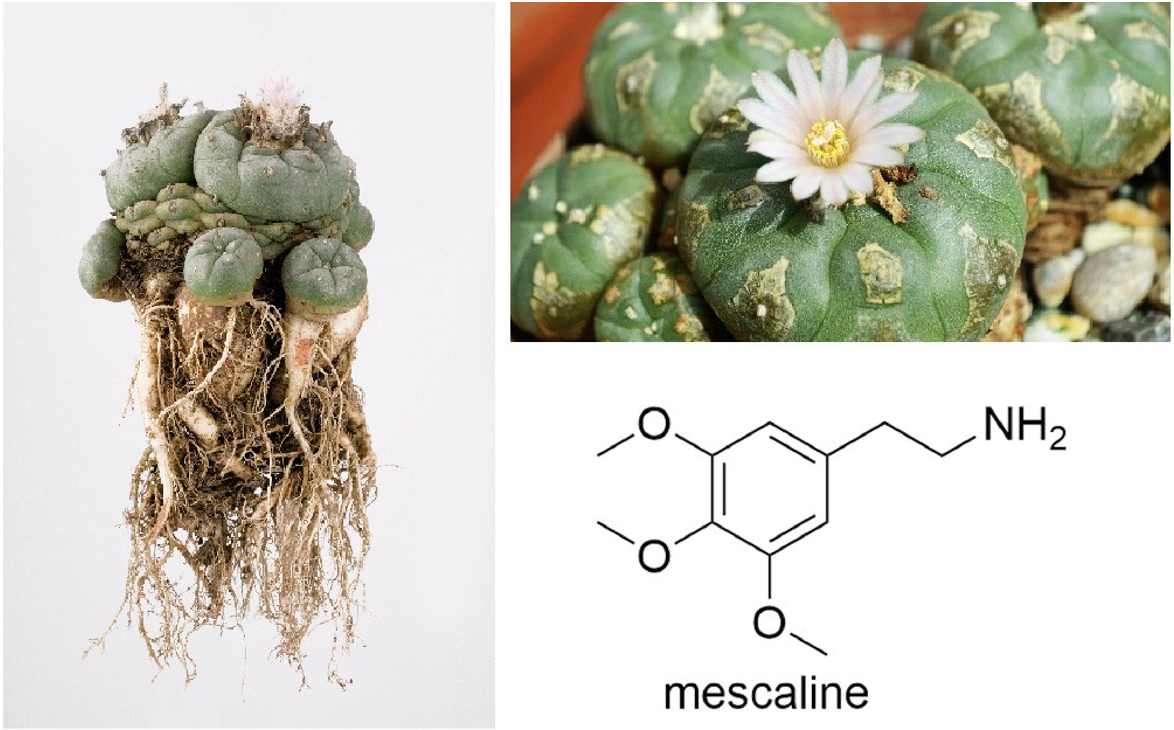
Figure 6. Peyote and mescaline. Peyote (Lophophora williamsii) is a cactus containing the naturally occurring psychedelic alkaloid mescaline, whose molecular structure is shown alongside the botanical photographs. Mescaline is also found in other cactus species, including San Pedro/huachuma.
Modern mescaline experiments have clarified acute pharmacology more than clinical treatment efficacy. Klaiber and colleagues used a placebo-controlled crossover study in 16 healthy participants to investigate dose-dependent effects and antagonism by ketanserin. Higher doses produced longer and more intense effects, cardiovascular changes, and greater tolerability problems, including nausea and vomiting at the highest dose. Attenuation by a 5-HT2A antagonist supports a receptor mechanism for the acute experience; it is not evidence that mescaline treats a mental disorder. [95]
The pharmacokinetic analysis by Mueller and colleagues combined 105 administrations in 49 participants from two phase 1 trials. Administrations are repeated observations, not 105 independent people, and the analysis overlaps constituent experiments. It characterized exposure, metabolism, and urinary recovery. Such data inform future dose selection and help explain duration, but they cannot establish efficacy, long-term safety, or the equivalence of purified mescaline and botanical preparations. [96]
11 MDMA MDA and trauma treatment
Early studies were not uniformly positive
MDMA research has focused particularly on whether its acute emotional and interpersonal effects can assist psychotherapy for PTSD. The initial Mithoefer randomized pilot included 20 people with chronic, treatment-resistant PTSD and compared MDMA-assisted psychotherapy with psychotherapy plus inactive placebo. The clinical signal was encouraging, but the small trial and readily distinguishable effects made further controlled work essential. Long-term follow-up after crossover describes the original treatment cohort, not an independent randomized demonstration of durability. [97]
The Oehen pilot in 12 participants did not show a statistically significant between-group reduction on the clinician-administered CAPS outcome (P=.066), although self-reported symptoms improved. That distinction should not disappear because the authors regarded the intervention as promising. In the 28-participant Ot'alora dose-response trial, the intention-to-treat primary comparison was not significant; significance was reached in the per-protocol analysis. Excluding participants from an analysis can change its meaning, so the per-protocol result cannot simply replace the randomized analysis. Later open-label treatment and follow-up also do not preserve the initial controlled comparison. [98]
Phase 3 findings and their boundaries
The first Mitchell phase 3 trial randomized 90 participants with severe PTSD to MDMA or placebo with manualized therapy. Treatment involved preparatory, experimental, and integration sessions. The primary CAPS-5 outcome favored MDMA-assisted therapy, with a reported between-group standardized effect size of 0.91; functional impairment also improved more. These results concern MDMA within that care program, not MDMA used alone or superiority to every established trauma-focused therapy. [99]
The second phase 3 trial randomized 104 people with moderate-to-severe PTSD, 53 to MDMA-assisted therapy and 51 to placebo with therapy. Adjusted mean CAPS-5 changes were -23.7 and -14.8 points, respectively, with P<.001 and a standardized between-group effect of 0.7. Functional impairment improved in both groups, with an additional advantage in the MDMA group. This trial included more ethnoracial diversity than much earlier psychedelic research, although specific exclusions and recruitment still constrain generalization. [100]
Safety requires more precision than a statement that no serious event occurred. In the second phase 3 trial, 102 of 104 participants experienced at least one treatment-emergent event. Severe events occurred in five MDMA participants and two placebo participants, while no serious treatment-emergent event or death was reported. Muscle tightness, nausea, reduced appetite, and sweating were more common with MDMA. Suicidal ideation occurred in both groups, and the trial excluded current serious imminent suicide risk. These findings cannot establish safety for people in acute crisis or rule out uncommon and delayed harms. [101]
Why regulatory scrutiny matters
The FDA's June 2024 advisory-committee briefing examined functional unblinding, expectations, the role and standardization of psychological care, cardiovascular observations, and limitations in collecting effects relevant to abuse potential. These issues affect how confidently treatment effects and harms can be attributed and how a treatment could be implemented. The briefing is a dated regulatory assessment prepared for an advisory process, not itself a final approval or rejection decision. Its criticism also does not establish that all observed improvement was fabricated or that MDMA can never have therapeutic value. [102]
On August 8, 2024, the FDA issued a complete response letter stating that the submitted midomafetamine application could not be approved in its present form. The agency identified unreliable safety characterization, including incomplete capture of effects relevant to abuse potential, inadequate evidence of durability beyond the trials’ endpoint, and selection and expectancy biases. It recommended a further trial with stronger safety assessment and blinded follow-up. This was the subsequent agency decision, not the June advisory discussion. It does not negate every favorable published result, permanently prohibit development, or prove that MDMA cannot help; it establishes that the submitted program did not meet the requirements for approval. [197]
Meta-analysis can summarize the pattern of clinical and functional findings, but pooling cannot eliminate shared design limitations. The same phase 2 and phase 3 cohorts appear in multiple reports and reviews. Harms reviews also depend on how original trials defined, solicited, counted, and reported events; later-retracted pooled publications require particular care. The most defensible synthesis retains the positive phase 3 results while treating masking, independent replication, treatment standardization, and longer-term safety as unresolved questions. [103]
MDA combines serotonin 5-HT2A agonist activity with monoamine-releasing effects. That combination gives it both perceptual and stimulant-related features rather than making it merely another name for MDMA. In a placebo-controlled human experiment, MDA increased visual alterations, including closed-eye imagery, with substantial variation between participants; stronger imagery was associated with poorer performance on some visual-processing tasks. Those associations offer clues about perception, not proof of one mechanism for all visions. The study did not test PTSD treatment. MDA’s own acute profile therefore deserves description, while MDMA’s therapeutic results and safety findings remain specific to MDMA. [104]
12 Ketamine esketamine and the limits of rapid relief
Depression evidence and repeated administration
In the United States, the regulatory distinction is explicit: FDA-approved ketamine injection is an anesthetic, while psychiatric treatment with racemic ketamine is off label. FDA reiterated this distinction in June 2026. Intranasal esketamine sold as SPRAVATO has separate product-specific psychiatric indications, described below. A compounded ketamine preparation is not the approved SPRAVATO product and does not acquire its approval or evidence simply by sharing part of its chemistry. [198]
Early ketamine experiments helped establish the possibility of a rapid antidepressant effect through a pharmacological route different from conventional monoaminergic treatment. Their historical importance should not be mistaken for a sufficient contemporary evidence base on its own. The earliest study was very small, and later research examined repeated treatment, alternative formulations, and durability under different conditions. [105]
Murrough and colleagues studied up to six intravenous infusions in 24 participants with treatment-resistant depression. The study was open label and included participants from an earlier report. It found a substantial response signal, with follow-up for relapse among responders, but did not demonstrate maintenance efficacy against a randomized comparator. A responder follow-up estimates what happened to selected responders after the course, not the probability of enduring benefit for every person starting treatment. [106]
Singh and colleagues then compared repeated intravenous ketamine with placebo using twice-weekly and thrice-weekly schedules. The principal day-15 depression outcome favored ketamine in both schedules. This supports short-term repeated-treatment efficacy, but similar observed outcomes do not prove formal equivalence of schedules or establish an optimal maintenance regimen. Dissociation, anxiety, headache, nausea, and dizziness were among the adverse events. Acute tolerability and long-term repeated-use safety remain separate questions. [107]
Esketamine trials include positive and negative primary results
The earlier Daly phase 2 intranasal study randomized 67 participants and used two one-week double-blind periods, including rerandomization of some placebo recipients. Participants continued their existing oral antidepressants. The combined analysis supported a dose-related short-term antidepressant effect, but optional open-label treatment and reduced dosing frequency afterward did not establish controlled maintenance efficacy. Adverse events led some participants to discontinue. The unusual rerandomized design and continuing medication should remain visible when this early signal is compared with subsequent phase 3 studies. [108]
Esketamine's development cannot be reduced to uniformly successful trials. TRANSFORM-1 compared fixed doses of intranasal esketamine plus a new oral antidepressant with placebo nasal spray plus a new antidepressant. Its first primary comparison, the 84-mg group versus control at day 28, was not significant (P=.088). The nominally favorable 56-mg comparison could not be formally tested after that failure in the hierarchy. A favorable numerical difference is relevant, but it does not change the status of the primary test. [109]
In the flexibly dosed Popova trial, 227 participants were randomized and 197 completed the 28-day double-blind phase. Esketamine plus a newly initiated oral antidepressant produced a significantly greater reduction in depression symptoms than the new antidepressant plus placebo spray. This was adjunctive treatment, not a monotherapy trial. Dissociation, nausea, vertigo, taste disturbance, and dizziness were more frequent with esketamine, and adverse-event discontinuation was reported in 7% versus 0.9%. The clinical benefit and the additional treatment burden must be considered together. [110]
The Daly relapse-prevention trial used randomized withdrawal after an induction and optimization period. Of 705 enrolled adults, 297 who achieved stable remission or response entered the randomized phase. Continuing esketamine with an oral antidepressant delayed relapse compared with switching to placebo spray while continuing the antidepressant. That is evidence about continuation among selected responders or remitters. It is not evidence that a short course produces lasting benefit without ongoing medication, nor does it estimate outcomes for all patients beginning esketamine. [111]
Suicidal thoughts are not suicide prevention
The Canuso proof-of-concept study randomized 68 people at imminent suicide risk to intranasal esketamine or placebo alongside comprehensive standard care. Depression scores favored esketamine at four hours and approximately 24 hours, but not at the day-25 endpoint. The suicidal-thought item favored esketamine at four hours, not at the later specified comparisons. Clinician global judgments of suicide risk did not differ significantly at any measured time point. These distinctions prevent a rapid depression effect from being mislabeled as proven prevention of suicidal behavior. [112]
Wilkinson and colleagues' individual-participant meta-analysis included 167 participants with suicidal ideation at baseline, drawing on ten comparison studies. It found short-term reductions in suicidal thoughts after intravenous ketamine. Results depended partly on the measure: clinician-rated and several self-report item analyses were favorable, but the Beck Depression Inventory item sensitivity analysis was not significant. Measurement conversion, missing information, and follow-up of up to one week limit conclusions. Neither this synthesis nor the esketamine study demonstrates fewer suicide attempts or deaths. [113]
The US prescribing information for Spravato revised in April 2025 explicitly states that effectiveness in preventing suicide or reducing suicidal ideation or behavior has not been demonstrated. It distinguishes treatment-resistant depression in adults, for which monotherapy or use with an oral antidepressant is included, from depressive symptoms in adults with major depression and acute suicidal ideation or behavior, for which use is in conjunction with an oral antidepressant. Improvement after a dose does not remove a clinically warranted need for hospitalization. These are formulation-specific, dated label statements, not claims about every ketamine preparation. [114]
The larger ASPIRE II trial randomized 230 adults with major depression and active suicidal ideation with intent; 227 received study medication and entered the efficacy and safety analyses. Both groups received comprehensive standard care, including hospitalization and initiation or optimization of oral antidepressant treatment. At 24 hours after the first administration, the adjusted MADRS difference favored esketamine by 3.9 points (95% confidence interval 1.11 to 6.60 points in the direction of benefit; P=.006). The key clinician-rated suicidality measure improved rapidly in both groups but did not differ significantly between them. Common esketamine adverse effects included dizziness, dissociation, nausea, altered taste, and somnolence. This phase 3 result strengthens evidence for rapid depressive-symptom relief within intensive care, not for replacing that care or preventing suicide. [115]
PTSD findings are mixed
Feder and colleagues randomized 30 people with chronic PTSD to six ketamine or midazolam infusions over two weeks. The clinician-rated PTSD outcome favored ketamine at week 2. The reported response proportion was 67% versus 20%, but the subsequent median time to loss of response applied only to ketamine responders. It cannot be described as the duration of a sustained randomized effect for the full sample. A favorable symptom result does not establish complete masking or exclude less common harms. [116]
The larger Abdallah multicenter trial enrolled 158 veterans and active-duty personnel with antidepressant-resistant PTSD symptoms and compared eight infusions over four weeks of standard-dose ketamine, lower-dose ketamine, or saline. It did not show a significant treatment-by-time effect on the primary self-reported PCL-5 PTSD measure (P=.38) or the clinician-rated CAPS-5 measure (P=.07). A secondary depression interaction was significant (P=.04), but improvement in depression is not proof of PTSD efficacy. Large within-group PTSD improvements occurred in the placebo group as well, illustrating why change from baseline alone is insufficient. [117]
Differences from Feder's study included a predominantly male military population, antidepressant resistance, saline rather than midazolam, and a longer dosing course. Nearly all participants had a current major depressive episode. These differences may help explain inconsistent results, but do not justify disregarding the larger negative trial. At least one adverse event was reported by 137 participants, with 402 events in total. Dissociative and psychotomimetic effects were dose related and transient, returning toward baseline within two hours. Treatment discontinuation was similar across groups. Later follow-up restricted to responders does not preserve an intact comparison of the full randomized cohort. [118]
Clinical use requires formulation specific safeguards
The esketamine label includes warnings for sedation, dissociation, respiratory depression, abuse and misuse, blood-pressure increases, and impairment of cognition and driving. It requires supervised administration through a restricted program. Ketamine-associated urinary injury in the broader literature and uncertainty around repeated long-term exposure are additional reasons not to equate a medically supervised short course with unrestricted repeated use. Monitoring needs depend on the actual product, exposure, and patient rather than on a single rule for every ketamine intervention. [119] The misuse and dependence concerns are also distinct from the rapid tolerance described for some classic psychedelics; Section 3 explains why tolerance, withdrawal, and compulsive use should not be conflated.
13 Iboga and ibogaine therapeutic interest alongside substantial cardiac risk
Ibogaine is an alkaloid found in Tabernanthe iboga, a Central African plant with culturally situated ceremonial uses. Isolated ibogaine administered in a treatment facility is not equivalent to participation in a Bwiti tradition, and neither should be reduced to the other. Its pharmacology also resists a simple label: actions at multiple receptor and transporter systems, metabolism to noribogaine, and a long, variable exposure distinguish it from short-acting serotonergic psychedelics. Reports of reduced opioid withdrawal or craving have motivated clinical investigation, but a compelling account of an individual recovery does not establish comparative treatment effectiveness. [120]
A systematic review of human ibogaine evidence illustrates the imbalance between clinical interest and evidentiary strength. The literature includes uncontrolled observations and heterogeneous treatment settings, rather than a mature series of adequately powered randomized addiction trials. Its small quantitative synthesis concerned adverse events, not a pooled demonstration of addiction-treatment efficacy. Withdrawal relief, abstinence after discharge, and durable recovery are different outcomes; follow-up selection, subsequent treatment, and the risks of discontinuing established care all matter when interpreting these reports. [121]
The most concrete physiological warning comes from an intensively monitored study of 14 people with opioid use disorder. Following ibogaine administration, the maximum QTc increase averaged 95 milliseconds, and seven participants crossed 500 milliseconds. QTc is a heart-rate-corrected measure of ventricular electrical recovery; marked prolongation can predispose to a dangerous rhythm called torsades de pointes. Six participants remained above 450 milliseconds beyond 24 hours. No torsades episode occurred in this small cohort, but the electrical changes were clinically important. All participants developed severe transient ataxia, meaning impaired coordination sufficiently marked that they could not walk without support. Absence of a fatal arrhythmia in 14 monitored individuals is not evidence that the arrhythmia risk is negligible. [122]
A subsequent pharmacokinetic analysis used this same cohort, not an independent replication. Ibogaine clearance varied strongly with CYP2D6 genotype, which influences drug metabolism. Plasma exposure was associated with QTc prolongation and cerebellar effects. These findings help explain why a fixed amount can produce markedly different exposure between individuals, but they do not supply a validated personal dosing algorithm. Experimental work showing inhibition of the cardiac hERG potassium channel provides a plausible mechanism for impaired electrical repolarization. Mechanistic plausibility, clinical QT changes, and reported severe events point in the same direction even though a precise population risk remains unknown. [123]
An observational study of 30 male Special Operations veterans with predominantly mild traumatic brain injury reported improvements after a magnesium-containing ibogaine intervention and associated care. This is important hypothesis-generating work in a highly selected population. It was not randomized, and the intervention included complementary treatment components; improvements cannot be attributed specifically to ibogaine or generalized to all people with traumatic brain injury or PTSD. Nor can a protocol that included magnesium establish that magnesium eliminates ibogaine-associated arrhythmia risk. The prospect of benefit does not cancel the need to measure cardiac, neurological, and psychiatric harms in controlled studies. [124]
14 Salvia Amanita and anticholinergic deliriants are not interchangeable psychedelics
Salvia divinorum and salvinorin A
Salvia divinorum has a specific relationship to Mazatec practices in Oaxaca, Mexico. Its principal psychoactive constituent, salvinorin A, is a potent kappa-opioid receptor agonist rather than a conventional serotonin 5-HT2A psychedelic. It is also chemically unusual: a non-nitrogenous diterpene rather than an alkaloid. The word "opioid" here identifies a receptor family, not an assumption that its subjective effects, therapeutic uses, or dependence profile match those of mu-opioid analgesics. Traditional preparations, concentrated extracts, and laboratory administration can differ substantially in context and exposure. [125]
Controlled human studies document rapid, intense alterations of perception, bodily experience, and contact with the surrounding environment. Such effects can be profoundly disorienting even when short lived. In an antagonist experiment involving 24 healthy volunteers, naltrexone attenuated salvinorin A effects whereas ketanserin did not, supporting an opioid rather than 5-HT2A-mediated account. Naltrexone is not selective for the kappa receptor, so the experiment should not be overstated as a complete receptor-specific proof by itself. These acute experiments are not trials showing treatment of depression, addiction, or trauma. Proposed therapeutic applications remain distinct from established human clinical benefit. [126]
Amanita muscaria and Amanita pantherina
The familiar red-and-white fly agaric, Amanita muscaria, is not a psilocybin mushroom. Muscimol and ibotenic acid have different pharmacology from psilocin: muscimol acts at GABA-A receptors, while ibotenic acid has excitatory glutamatergic actions. Amanita pantherina belongs to the same toxicological discussion but should not be assumed to have identical composition or potency. Species identification, variable concentrations, preparation, and uncertain commercial contents make a label or a traditional reputation a poor substitute for chemical characterization. [127]
Clinical poisoning reports include marked disturbances of consciousness, agitation or confusion, and central nervous system depression requiring medical observation and supportive treatment. A two-patient report involving older adults demonstrates that serious impairment can follow ingestion; two cases cannot establish how often it occurs. Commercial language about relaxation, sleep, or wellbeing is not evidence of an adequately tested therapeutic indication. In particular, results from a lung-cell experiment involving Amanita extracts cannot be translated into a claim that Amanita treats cancer in humans. Cellular toxicity is not a clinical cancer-treatment outcome, and selective therapeutic benefit cannot be inferred from killing cells in a laboratory. [128]
Datura and Brugmansia
Datura and Brugmansia contain tropane alkaloids such as atropine, scopolamine, and hyoscyamine. These block muscarinic acetylcholine receptors and can cause anticholinergic delirium: an acute disturbance of attention, orientation, memory, and reality testing. Delirium is not simply a more intense version of a classic psychedelic experience. A person may be unable to understand the situation or retain the insight that an experience is drug induced. Peripheral effects can include a rapid heart rate, dilated pupils, urinary retention, and impaired temperature regulation. Alkaloid content varies across plants and preparations. [129]
A report of six family members poisoned after Datura tea and a separate Brugmansia-leaf poisoning illustrate the practical consequences: confusion, agitation, hallucinations, and autonomic signs requiring clinical care. These are toxicology observations, not evidence for a self-directed therapeutic pathway. Purified antimuscarinic medicines have legitimate medical uses under specific conditions, but that does not validate ingestion of these plants for psychological healing. Botanical origin does not establish a therapeutic margin, reliable composition, or safety. [130]
15 2C B NBOMe compounds and emerging molecules
Chemical resemblance is not clinical equivalence
2C-B is a synthetic phenethylamine with psychedelic effects. Human evidence includes an observational acute-effects study and a controlled comparison with psilocybin in 22 selected, psychedelic-experienced healthy participants. These studies can inform cautious descriptions of acute subjective effects; they do not establish treatment efficacy, a general-population safety profile, or interchangeable doses. A compound described informally as combining psychedelic and social effects should not automatically be called a clinically validated empathogen. In the controlled study, the reported empathy-task result did not establish an empathogenic effect, despite broader descriptive language elsewhere in the paper. [131]
A newer controlled 2C B comparison
Arikci and colleagues' 2026 six-condition crossover experiment studied 24 healthy participants, comparing three 2C-B doses with MDMA, psilocybin, and placebo. It found dose-dependent subjective effects, and the highest 2C-B dose increased explicit emotional empathy toward positive images on the measured task. This finding differs from the earlier study's null empathy-task result, but the experiments used different doses and conditions; neither establishes a general therapeutic empathogenic effect. At the doses tested, cardiovascular stimulation was lower with 2C-B than with the comparator drugs, and its subjective effects were shorter than psilocybin's. Those relative comparisons do not establish universally equivalent doses or an overall safety ranking. [136]
The study reported no severe adverse events, but acute complaint scores increased in most active conditions; one participant withdrew after a challenging psilocybin experience. A small healthy-volunteer crossover can efficiently compare acute effects within the same people, yet it cannot establish benefits for psychiatric illness or detect uncommon harms. Its contribution is a more differentiated pharmacological comparison, not evidence that 2C-B is ready for routine treatment. [137]
NBOMe toxicity differs from 2C-B evidence
The NBOMe series illustrates why small chemical modifications can have major toxicological implications. In Suzuki and colleagues' review of analytically confirmed published intoxications, 20 patients were represented across ten reports. Eight required intensive care, eight had seizures, and three died. These are counts within a highly selected published case series, not estimates that 15% of all users die or that 40% of all exposures cause seizures. Severe agitation, hypertension, tachycardia, hyperthermia, muscle breakdown, and kidney injury were among the reported problems. Some individuals believed that they had taken LSD or 2C-B, making misidentification part of the clinical problem. [132]
The complete clinical table also shows that severe outcomes were not confined to a single organ system. One patient had prolonged critical illness with renal and respiratory complications; another sustained fatal injuries after a fall or jump, and another survived a serious self-inflicted injury. Co-exposures and incomplete clinical ascertainment limit attribution, but these limitations do not erase the documented harms. A toxicology review of 2C and NBOMe compounds reinforces the need to assess each chemical rather than borrowing reassurance from better-studied classic psychedelics. [133]
Analogs formulations and manufacturing
Drug development can modify duration, receptor selectivity, metabolism, formulation, or the intensity of subjective effects. None of those changes automatically improves clinical outcomes. A shorter experience could reduce staffing time yet still require preparation, emergency capability, and follow-up. A nonhallucinogenic analog may retain interesting preclinical effects without reproducing human therapeutic benefit. Conversely, the contribution of a profound subjective experience remains a testable question, not a requirement that can be assumed for every compound or disorder. [134]
Manufacturing research establishes how a defined product is produced and characterized; it does not establish treatment benefit. For example, a synthesis study of 5-MeO-DMT succinate reported high chromatographic purity while its impurity table listed vanadium above the stated limit. The example illustrates why the percentage of the intended chemical alone does not describe every quality attribute, much less clinical safety. Synthetic production also does not by itself demonstrate conservation benefit: that depends on actual sourcing, demand, governance, and ecological outcomes. [135]
16 Microdosing expectancy measurement and largely unconfirmed therapeutic claims
Microdosing generally refers to repeated use of amounts intended to produce subtle rather than full psychedelic effects. There is no single standardized practice across substances, formulations, schedules, and users. A dose described as subperceptual may still be noticeable, and noticing an effect can reveal treatment allocation. Claims about mood, creativity, concentration, productivity, and long-term mental health are different hypotheses requiring appropriately designed tests. An acute subjective change is not evidence that a depressive disorder has been treated. [138]
Szigeti and colleagues used a self-blinding citizen-science design, with 191 participants completing the study. Participants prepared capsules from their own substances and followed randomized procedures over four weeks. Psychological measures improved in both microdose and placebo conditions, without a clear between-group benefit on the principal longer-term measures. Small acute differences were related to participants' beliefs about what they had taken. This was an inventive way to study expectancy in a naturalistic setting, but self-sourced substances and participant-managed procedures limit chemical and procedural control. It supports skepticism about attributing every improvement to the drug; it does not prove that every possible microdosing regimen is ineffective. [139]
A placebo-controlled low-dose LSD study in 48 healthy older adults primarily examined safety and tolerability over six administrations. Twelve participants were assigned to each of three low-dose conditions or placebo. The selected population, short observation period, and small groups limit what can be concluded about uncommon or cumulative harms. The experiment was not a demonstration that LSD prevents dementia, improves Alzheimer's disease, or is safe for indefinite use. A tolerability study and a treatment-efficacy study answer different questions. [140]
A small psilocybin-mushroom microdosing experiment found noticeable subjective effects, particularly when participants correctly identified their condition, but did not establish broad improvements in cognition or creativity. A separate preregistered repeated-microdosing study did not find the expected improvements in emotion-related outcomes or symptoms of anxiety and depression; blinding weakened during later participation. These null results deserve direct attention because enthusiastic personal reports are especially susceptible to expectancy, selective reporting, and changes in routine that accompany starting a regimen. [141]
Taken together, these studies do not substantiate microdosing as an established treatment for a mental disorder or as a reliable cognitive enhancer. They also leave important questions open: chemically verified exposures, populations with diagnosed illness, repeated-dose physiology, interactions, and follow-up beyond a few weeks. A smaller amount does not logically establish a smaller cumulative risk when exposure is repeated many times, and the available short experiments cannot settle long-term safety. [142]
One specific long-term concern involves the serotonin 5-HT2B receptor. Sustained activation of this receptor is a recognized drug-development concern because it can promote pathological changes in heart valves. Its relevance depends on the particular compound’s functional activity and the pattern and duration of exposure. The FDA’s July 2026 guidance accordingly calls for investigation of this mechanism. Existing short microdosing studies do not establish whether valvular injury occurs, exclude it, or estimate its frequency. This remains a mechanism-based concern requiring direct study, not proof that psychedelic microdosing causes valve disease. Valve changes also differ from transient blood-pressure elevation and from ibogaine-related disruption of cardiac electrical repolarization. [199]
17 Additional clinical populations early findings should remain early findings
Obsessive compulsive disorder
The 2026 Moreno OCD trial used a randomized first phase followed by a second phase offering high-dose psilocybin. Eighteen eligible participants completed baseline assessment; one withdrew before treatment, leaving 17 who initiated treatment, and two withdrew after their first session. Fifteen completed phase 1, five per condition, and 14 completed phase 2. The eight-week response estimate of 73.3% and remission estimate of 40% used an N=15 analysis with last observation carried forward for the participant who stopped after phase 1. That person had received only low-dose sessions. These percentages therefore do not describe 15 completed eight-week courses or universal high-dose exposure. Later outcomes were not a continuing placebo-controlled comparison. Benefits diminished during follow-up, and cumulative-dose associations were post hoc. [143]
No serious adverse events or psychotic symptoms were reported, and measured suicidality did not significantly change. This very small, selected study nevertheless provides little ability to exclude uncommon harms. Its later outcomes combine treatment phases and, at eight weeks, an imputed observation; they do not establish a validated repeated-dose prescription or justify replacing established OCD care. [144]
Bipolar II depression
An open-label study administered psilocybin with psychotherapy to 15 people with treatment-resistant bipolar II depression. At three weeks, 12 met response criteria and 11 met remission criteria; at 12 weeks, 12 met both. Mania and suicidality scale scores did not show significant worsening. These are substantial within-person changes, but the study lacked a comparator, involved careful selection and monitoring, and included supervised changes to prior medication. Its findings cannot establish that psilocybin is safe in bipolar I disorder, active mania, an unscreened population, or routine unsupervised use. [145]
The distinction is particularly important because a reassuring small trial and reports of manic deterioration can both be true. Selection may exclude those at greatest risk, and rare events may not occur in a small sample. Reviews combining naturalistic exposure, clinical studies, and psychiatric presentations also combine different denominators and levels of vulnerability. Rates among people presenting for psychiatric care after drug use cannot be applied to all users, while the absence of mania in a selected trial cannot be applied to everyone with bipolar-spectrum vulnerability. [146] The lithium-associated seizure reports discussed in Section 18 add a medication-specific concern. Neither those reports nor this small supervised study supports stopping a mood stabilizer without clinical guidance.
Social anxiety in autistic adults
A pilot trial assigned eight autistic adults with marked social anxiety to MDMA-assisted psychotherapy and four to placebo-assisted psychotherapy. The primary social-anxiety comparison favored MDMA, and follow-up suggested persistence of improvement. However, the sample was extremely small and uncertainty around effect-size estimates was wide. This study concerned distressing social anxiety in autistic adults, not treatment of autism itself. Larger studies should preserve that distinction and examine outcomes meaningful to participants, accessibility of the treatment environment, and harms as well as symptom scales. [147]
18 Safety what has been observed and what research cannot yet exclude
Acute distress and physiological effects
Classic psychedelics can produce anxiety, fear, confusion, and distress during an altered state, alongside nausea, headache, dizziness, and increases in blood pressure. A meta-analysis of six randomized psilocybin trials involving 528 participants found higher relative risks of headache, nausea, anxiety, dizziness, and elevated blood pressure than with the included comparators. For example, the relative risk for nausea was 8.85, with a 95% confidence interval of 5.68 to 13.79. That is a relative comparison, not a statement that almost nine of every ten participants became nauseated. Absolute risks depend on the study, comparator, and ascertainment method. The review focused on acute events and cannot establish an absence of persistent harms. [148]
The clinical setting changes both risk and what investigators can observe. Screening, reassurance, a physically safe environment, trained staff, and medical rescue capacity can prevent distress from escalating or reduce its consequences. They do not guarantee that every adverse experience is transient or benign. Nor should a frightening experience automatically be reclassified as therapeutic because a participant or clinician later assigns meaning to it. A person can find an experience meaningful and still have been harmed. Safety assessment needs the participant's account as well as standardized measures and investigator judgments. [149]
"Severe" describes intensity; "serious" is a regulatory category involving outcomes such as hospitalization, life threat, or substantial disability. A severe headache need not be a serious adverse event, while an event of initially modest symptom intensity can become serious because of its consequences. "Treatment-emergent" means occurring after treatment begins, not proven to have been caused by the drug. Investigator attribution of relatedness is important but remains a judgment. These distinctions are essential when interpreting the severe events in MDMA trials, the serious events in depression trials, and the serious adverse reactions in EPISODE. [150]
Suicidality and delayed psychiatric deterioration
Improvement in mean depression scores does not ensure that every participant improves. The Goodwin trial recorded suicidal ideation, self-injury, and later suicidal behavior in some participants, including individuals with prior vulnerability and inadequate response. EPISODE documented serious reactions after 25 mg, including persistent perceptual and dissociative symptoms requiring hospitalization. These observations do not establish that every event was pharmacologically caused; they establish that follow-up must extend beyond the dosing room and beyond average efficacy scores. Disappointment after a highly anticipated treatment may also complicate interpretation, without explaining away an adverse event. [151]
Ketamine and esketamine require a similarly careful distinction. Reduced suicidal thoughts over hours or days can be clinically meaningful, but a suicidal-thought scale is not the same outcome as suicide attempts or deaths. The esketamine prescribing information explicitly limits claims about prevention of suicide and reduction of suicidal ideation or behavior. A short-term symptom improvement must not be used to conclude that hospitalization or other clinically indicated care is unnecessary. Observational associations between lifetime psychedelic use and lower distress or suicidality likewise cannot establish protection: selection, prior health, social circumstances, and other exposures can affect both drug use and outcomes. [152]
Psychosis mania and persistent perceptual disturbances
Case reports document psychotic and affective syndromes following psychedelic exposure. A systematic case-report review identified both schizophrenia-spectrum and affective presentations, with variable exposure histories and clinical courses. Such reports are useful for recognizing possible harms and clinical patterns but cannot estimate incidence: there is no reliable denominator of all exposed people, and publication selectively captures unusual cases. They also cannot always separate drug causation from an underlying disorder, concurrent substances, sleep loss, or other stressors. These uncertainties call for careful interpretation, not dismissal. [153]
Hallucinogen persisting perception disorder, or HPPD, involves recurrent or persistent perceptual symptoms after the acute drug effects have ended, with clinically important distress or impairment. Visual trails, afterimages, or other disturbances require differential assessment rather than automatic attribution to a psychedelic. Case-series evidence describes a heterogeneous syndrome with limited treatment evidence. EPISODE's serious HPPD-associated reaction is especially important because it arose within a supervised clinical trial, undermining any categorical assertion that persistent problems occur only in uncontrolled use. Depersonalization, derealization, panic, and trauma-like distress may overlap with perceptual complaints without being identical diagnoses. [154]
A longitudinal observational analysis of psychedelic exposure and psychosis- or mania-related outcomes requires particular restraint: its reported interaction findings did not survive false-discovery-rate correction, and the subgroup with a personal history of psychotic disorder contained only three psychedelic users. False-discovery-rate procedures address the accumulation of false-positive findings when many comparisons are made. An uncorrected interaction in this setting cannot establish that psychedelics protect vulnerable people or are broadly safe for them. [155]
The broader review by Sabe and colleagues combined an overview of prior reviews with a systematic assessment of human psychosis evidence. It found relatively few prolonged psychotic outcomes in screened contemporary settings, but the underlying studies varied markedly in quality, era, diagnostic definitions, and population. People who had already developed a substance-associated psychotic disorder were a distinct, higher-risk group for subsequent schizophrenia diagnoses. That conditional prognosis cannot be presented as the risk faced by everyone who takes a psychedelic. The review's low-quality and heterogeneous historical evidence also cannot justify removing screening precautions for people with psychosis vulnerability. [156]
What naturalistic surveys can and cannot add
Clinical trials may miss experiences that arise outside carefully screened settings. In a survey of 1,993 people describing their single most challenging psilocybin experience, 11% reported putting themselves or others at risk of physical harm and 2.7% reported seeking medical help. Among those whose experience had occurred more than a year earlier, 7.6% reported seeking treatment for enduring psychological symptoms. These figures describe respondents selected to recount their worst experience, not all psilocybin sessions or all users. They reveal possible consequences without supplying a population incidence rate. [157]
A large retrospective online survey reported in a 2026 preprint examined persistent adverse effects after naturalistic psychedelic use. It can help identify symptom categories, durations, and hypotheses for follow-up research, but it remains a preprint and a self-selected, retrospective report. A separate survey of self-attributed adverse outcomes also cannot convert a participant's causal attribution into proof that the drug caused the outcome. Online recruitment, recall, selective participation, and uncertain exposure composition may influence both reassuring and concerning results. Weighting selected data does not automatically make the sample representative. [158]
Cardiovascular and compound specific toxicity
The cardiac questions differ by compound. Transient blood-pressure and heart-rate increases during a supervised psilocybin or esketamine session are not the same mechanism as ibogaine-related QT prolongation. The smoking trial's physician-treated hypertension illustrates why even a selected, generally healthy sample needs medical safeguards. Ibogaine studies demonstrate a separate concern involving electrical repolarization and potentially dangerous rhythms. NBOMe poisoning can include hyperthermia, seizures, muscle breakdown, and organ injury; Amanita can cause profound impairment of consciousness; anticholinergic plants can produce delirium and autonomic toxicity. A class-wide reassurance would obscure these clinically meaningful differences. [159] Repeated exposure raises a further, distinct question about 5-HT2B-related valve changes, discussed in Section 16; the available microdosing evidence cannot settle that long-term risk.
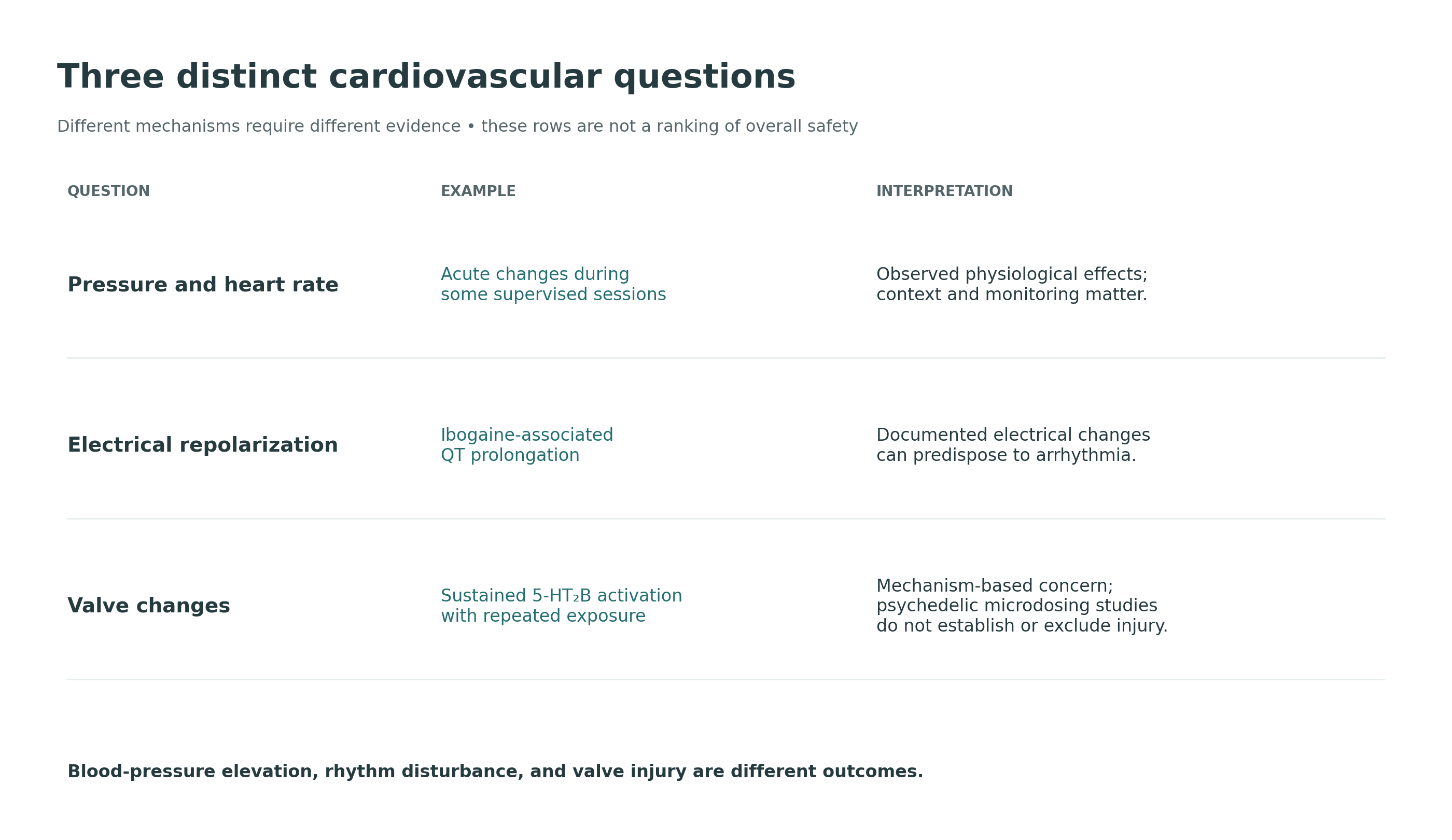
Figure 7. Three distinct cardiovascular safety questions.
Acute increases in blood pressure and heart rate, ibogaine-associated QT
prolongation, and the potential for heart-valve effects involving sustained
5-HT2B receptor activation represent different cardiovascular concerns. The
heart-valve question remains unresolved for psychedelic microdosing; these
mechanisms should not be interpreted as a ranking of overall compound safety.
MDMA's acute physiological risks also need to be distinguished from those of classic psychedelics. Temperature, hydration and electrolyte disturbances, cardiovascular activation, co-ingestants, and environmental conditions matter in nonmedical exposure. Pharmaceutical identity, screened participants, controlled ambient conditions, and monitored administration make clinical trials a different exposure setting from unregulated products sold as ecstasy or molly. Conversely, trial safeguards do not prove absence of risk in routine practice. A systematic MDMA adverse-effects review includes heterogeneous studies and a retracted pooled publication; its pooled results should not be treated as a clean independent safety verdict. The interpretation therefore depends on the quality and limitations of the individual studies. [160]
Medication interactions and pregnancy
Interaction evidence spans receptor experiments, small clinical studies, case reports, and reviews. A drug that blunts a subjective effect may still alter metabolism or physiology; a well-tolerated combination in a small selected study does not establish broad compatibility. Monoamine oxidase inhibition in ayahuasca preparations introduces concerns different from those of psilocybin alone. The medication, psychedelic, dose, route, exposure duration, and underlying condition all matter. Reviews of classic-psychedelic interactions and psychiatric-medication interactions with MDMA or psilocybin should not be merged into a universal compatibility chart. [161]
Two combinations illustrate why named hazards matter. Selected online reports describe seizures after lithium was taken with classic psychedelics, including LSD or psilocybin. These reports are a serious safety signal, but self-selection, uncertain exposure, and missing denominators prevent calculation of population incidence or definitive attribution in every case. Separately, a clinical case report describes severe poisoning after 5-MeO-DMT combined with harmaline, a monoamine oxidase inhibitor. It supports a specific warning about that combination, not a frequency estimate and not reassurance about other combinations. [200]
Serotonin toxicity is a potentially dangerous excess of serotonergic activity, with possible changes in mental state, autonomic function, and neuromuscular activity. Its mechanism is not synonymous with having a psychedelic experience. Direct receptor agonism, transporter-mediated monoamine release, and reduced enzymatic breakdown can affect serotonergic signaling in different ways. MAO inhibition may both impair clearance of susceptible tryptamines and increase the consequences of other serotonergic exposures. This makes MAOI-containing ayahuasca a different interaction problem from psilocybin alone and makes adding 5-MeO-DMT to an MAOI particularly concerning. The risks cannot be generalized into an assertion that every serotonergic medicine causes the same syndrome, or that a combination is safe because it weakens subjective effects. [201]
These uncertainties also mean that a research medication washout is not an instruction for a reader to stop prescribed treatment. Withdrawal, recurrence of illness, and destabilization can themselves be consequential. Decisions about changing medication require an appropriately qualified clinician who can consider the specific medicine and condition. Early studies conducted during antidepressant coadministration address selected combinations and formulations, not every serotonergic drug or every psychedelic. [162]
Pregnancy and breastfeeding are areas of substantial uncertainty, not demonstrated safety. A scoping review describes sparse and heterogeneous evidence that is insufficient to establish fetal or infant safety. Absence of reported harm is especially weak evidence where exposed pregnancies are poorly characterized, outcomes are incompletely followed, and compound identity or co-exposures may be uncertain. Adult efficacy trials cannot be extrapolated to fetal or infant safety. [163]
Harms depend partly on how researchers look for them
Adverse-event collection varies: spontaneous reporting, prompted checklists, clinician interviews, measurement scales, and medical records can identify different events. Events expected during a psychedelic session may be coded as part of the drug experience rather than systematically captured as adverse effects. A short observation period may miss delayed anxiety, sleep disruption, persistent perceptual changes, or worsening after discharge. Attrition can remove the very people whose outcomes are most important. These are reasons to improve ascertainment, not to assume that all unrecorded events occurred. [164]
A comparison of trial publications with registry records found reporting discrepancies but did not establish a simple, systematic pattern of publications hiding harms. Its sample consisted of reports, not hundreds of independent studies. Broad accusations of concealment would go beyond the findings, just as the absence of a consistent discrepancy pattern would not certify completeness. More reliable future studies need prespecified definitions, assessment of severity and seriousness, transparent attribution, delayed follow-up, and accessible reporting of negative outcomes. [165]
19 History culture and the conditions of responsible care
More than a rediscovery narrative
Modern psychiatric research developed through mid-twentieth-century experimentation, subsequent restrictions, and renewed clinical investigation. That chronology is not the beginning of all psychedelic knowledge. Indigenous and traditional practices have their own histories, purposes, and systems of authority. A pharmaceutical research narrative can describe the isolation of a molecule without implying that the plant, ceremony, or knowledge was previously unknown. It can also acknowledge that earlier clinical studies often used methods that do not meet contemporary expectations for masking, controls, consent, or standardized outcomes. Historical importance and present evidentiary strength are separate judgments. [166]
A biomedical chronology with several branches
The isolation of mescaline in 1897 gave laboratory investigators a defined substance with which to study effects previously encountered through peyote. Hofmann synthesized LSD in 1938 and recognized its extraordinary psychoactive activity in 1943; psilocybin was isolated in 1958. These milestones made standardized experiments more feasible. They mark developments in chemistry, not the discovery of the plants or the beginning of Indigenous knowledge about them. [202]
Mid-century psychiatry explored more than one use. Some researchers used these drugs as models of altered mental states; others combined them with psychotherapy. “Psycholytic” approaches used repeated sessions to facilitate psychological exploration, whereas “psychedelic” approaches emphasized a more intense experience within a prepared setting. Alcohol-treatment programs and work with distress in terminal illness helped shape later clinical questions. These projects were heterogeneous, with changing diagnoses, inconsistent controls, and sometimes inadequate reporting of adverse outcomes. Their historical importance does not turn their results into modern efficacy estimates. [203]
Research contracted during the later 1960s and 1970s as legal restrictions, reduced institutional support, and controversy made studies harder to conduct. Tighter expectations for evidence also changed the field: convincing clinical development increasingly required controlled comparisons rather than enthusiastic case series. The contraction was substantial, but did not mean that every experiment ceased or that traditional practices disappeared. Biomedical regulation and the histories of living communities are overlapping, unequal histories rather than one universal period of discovery, disappearance, and rediscovery. [204]
The later revival initially rebuilt basic human pharmacology. Strassman and colleagues’ 1994 controlled DMT studies, for example, measured acute dose-related physiological and subjective effects; they were not depression trials. By the 2000s and 2010s, modern psilocybin studies examined experiences in healthy volunteers and clinical questions involving serious illness, addiction, and depression. The cancer studies and subsequent larger depression trials discussed earlier show that transition from exploratory work to condition-specific controlled testing. Standardized outcomes and prospective safety assessment improved interpretability, while functional unblinding and the contribution of psychological support remained difficult problems. [205]
Ketamine and MDMA followed different paths within this broader story. Ketamine entered medicine through anesthesia before small depression experiments opened a separate psychiatric research program; later esketamine development led to product-specific approvals. MDMA’s development in trauma therapy instead progressed from small studies to phase 3 trials and the FDA’s 2024 complete response decision. These histories explain why renewed scientific interest, a positive trial, and regulatory acceptance are separate milestones. A shared contemporary label should not obscure their different starting points or evidentiary trajectories. [206]
Living traditions and reciprocal relationships
Peyote traditions, Amazonian ayahuasca practices, Mazatec uses of mushrooms and Salvia, and Central African iboga traditions should not be collapsed into a single "Indigenous psychedelic therapy." Their communities, preparations, purposes, and relationships to land differ. Nor are all contemporary ceremonies Indigenous or continuous with the traditions they invoke. Respectful scholarship requires specificity about whose knowledge is being discussed and caution about translating communal or spiritual practices into individual psychiatric interventions. Clinical efficacy evidence does not validate every commercial ceremony, and the absence of a randomized trial does not determine the cultural value of a tradition. [167]
Conservation and access can conflict when commercial demand grows. Peyote, iboga, ayahuasca-associated plants, and animal-derived materials raise different ecological and governance questions. Synthetic production may reduce some forms of extraction, but that outcome depends on actual substitution, sourcing, demand, and benefit-sharing. Neither a laboratory synthesis nor a marketing claim establishes conservation success. Collaboration should include community authority, reciprocal benefits, and the possibility that some knowledge or practices are not offered for unrestricted commercialization. [168]
Consent suggestibility and therapeutic boundaries
An intervention that alters perception, emotional salience, and interpersonal trust creates distinctive responsibilities. Consent needs to address foreseeable distress, uncertainty of benefit, possible persistent symptoms, the nature of psychological support, and procedures for responding to deterioration. It should also clarify touch, privacy, recording, and boundaries before an altered state limits a person's ability to evaluate a situation. A participant's vulnerability is not a therapeutic license to impose beliefs or reinterpret every objection as resistance. [169]
Preparation and integration have understandable clinical rationales, but those labels cover heterogeneous practices. Integration may involve discussing an experience, reconnecting with daily routines, or addressing difficult consequences; the label alone does not identify a validated psychotherapy. Staff competence, supervision, safeguarding, complaint mechanisms, and the ability to recognize psychiatric or medical deterioration are substantive features of care. Research on the setting should describe these components precisely enough that readers know what the tested intervention actually included. [170]
The role of psychotherapy also complicates attribution. A positive drug-plus-therapy trial does not establish which therapeutic component is necessary, whether less intensive support would work as well, or whether an alternative psychotherapy would improve outcomes. Conversely, evidence from a monitored drug trial without formal psychotherapy should not be rewritten as proof that all psychological support is dispensable. Comparative and component studies are needed to separate drug effects, expectancy, therapeutic relationships, preparation, and post-session care without neglecting safety. [171]
Participant accounts add information that symptom scales alone may miss. A qualitative study with four members of a participant advocacy network identified concerns about expectations, recruitment, facilitator relationships, practical preparation, and the ending of study support. These were four selected White participants from UK studies, engaged through repeated focus groups, not a representative survey of all trial participants. Their accounts help formulate questions about care and trial design; they cannot estimate the frequency of dissatisfaction or establish a universally preferred therapeutic model. [172]
Harm-reduction and integration models also distinguish helping someone process an experience from administering a psychedelic. A clinician can respond compassionately to persistent distress, confusion, or disappointment without endorsing future use or assuming that a spiritual interpretation is clinically correct. Such models are practice frameworks rather than randomized evidence that a particular integration method improves outcomes. Continued care should remain responsive to the person's actual needs, including conventional psychiatric or medical assessment when appropriate. [173]
Representation affordability and implementation
Study populations have often been demographically narrow. A systematic review of ethnoracial inclusion documents limitations relevant to generalizability and equity. Race and ethnicity should not be treated as simple biological explanations for treatment response; recruitment barriers, trust, discrimination, cultural fit, costs, and access to follow-up can all shape participation and outcomes. The fact that a trial includes a few members of an underrepresented group does not establish that it can estimate group-specific benefits or harms. [174]
Psychedelic services may require lengthy supervised sessions, preparation, follow-up, travel, time away from work, and sometimes substantial out-of-pocket expenditure. Health-economic questions therefore extend beyond the price of the molecule. A treatment could reduce later healthcare use yet remain unaffordable or impractical for many people; an apparently efficient short-acting drug could still require significant staffing and emergency readiness. Economic models should make assumptions about response, relapse, retreatment, adverse events, staffing, and access transparent rather than assuming that early trial effects persist indefinitely. [175]
Implementation must also consider people excluded from research, including those with medical instability, certain psychiatric histories, pregnancy, or complex medication regimens. Exclusion may be necessary for an early experiment but creates an evidence gap for real-world care. Responsible expansion requires new data, training, and surveillance rather than treating eligibility restrictions as mere administrative barriers. Disability access, sensory needs, communication preferences, and culturally appropriate care are part of whether an intervention can be delivered responsibly, not optional additions to an efficacy estimate. [176]
20 Regulation approval investigational use and local access are different
Regulatory language should identify the product, indication, jurisdiction, and date. "Approved medicine," "off-label treatment," "investigational compound," and "legal service" do not mean the same thing. An approval applies to a specified product and use under a regulator's conditions. Off-label prescribing concerns a medicine used outside its authorized indication; it is not equivalent to regulatory approval of that new indication. A trial registration records a research plan or status, not proof that its intervention works. [177]
Ketamine is a concrete example of these distinctions. In its June 23, 2026 statement, FDA described approved ketamine injection as a general anesthetic and distinguished it from psychiatric uses, which are off label. Compounded ketamine products are not FDA-approved SPRAVATO. Clinical evidence for a particular route or formulation cannot be assumed to apply unchanged to every compounded preparation. [207]
The U.S. esketamine label, revised in April 2025, authorizes treatment-resistant depression in adults as monotherapy or with an oral antidepressant, and depressive symptoms in adults with major depressive disorder and acute suicidal ideation or behavior with an oral antidepressant. Those are product-specific indications, accompanied by a restricted supervised-treatment program and prominent warnings. They do not authorize every ketamine formulation or prove prevention of suicide. Earlier adjunctive esketamine trials should remain described as adjunctive even though a later label includes a monotherapy indication. [178]
The FDA's July 2026 guidance on psychedelic clinical investigations addresses study design and conduct, including unusual masking and psychological-support issues. Guidance is neither product approval nor a randomized efficacy result. The MDMA program illustrates the separate role of an application decision: after the June 2024 advisory process, FDA issued its August 8, 2024 complete response letter declining approval of the submitted application in its present form and recommending further trial work. Section 11 describes the scientific concerns behind that decision. A complete response addresses the application and evidence presented; it is not a permanent judgment that the molecule can never be developed. [179]
Oregon's psilocybin services framework and Australia's authorized-prescriber arrangements illustrate different forms of jurisdiction-specific access. Oregon's October 2026 materials describe a licensed service system, not an FDA drug approval. Australia's TGA materials describe restricted pathways involving authorized psychiatrists for specified uses of MDMA and psilocybin, not unrestricted access or general marketing approval of all products. These models differ in professional roles, eligibility, product oversight, and legal authority. Their existence should not be used as a substitute for evaluating clinical evidence. [180]
This article's regulatory discussion is a dated account of documents available within the October 30, 2026 literature boundary, not a directory of current legal permissions. Laws, access pathways, product authorizations, and local implementation can change. A reader considering care needs jurisdiction-specific confirmation from the relevant regulator and qualified professionals; a scientific article cannot determine the legality or suitability of an individual service. [181]
21 Research priorities and an integrated conclusion
The next stage of research needs more than additional uncontrolled improvement curves. It needs adequately powered trials with prespecified outcomes, credible comparisons, transparent assessment of masking, and analyses that preserve the distinction between confirmatory and exploratory results. The contrasting findings in depression, alcohol use disorder, and PTSD show why one favorable endpoint or one early cohort cannot stand for an entire therapeutic field. Replication should test the same clinical question closely enough to be informative, while also examining how results change across populations, settings, and support models. [182]
Long-term research should measure functioning, quality of life, relapse, additional treatment, and sustained harms, not merely symptom scores at the first favorable time point. Follow-up should retain people who discontinue treatment or become disappointed, document subsequent psychedelic exposure and conventional care, and distinguish maintenance treatment from medication-free durability. Safety studies need sufficient size and duration to characterize uncommon but serious outcomes, together with active ascertainment of persistent perceptual, affective, dissociative, and suicidal symptoms. [183]
Mechanistic research can clarify receptor activity, brain-network changes, learning, and psychological processes, but a mechanistic account should earn its clinical interpretation. Imaging correlations are not validated treatment-selection biomarkers. Plasticity in cells or animals is not proof of human recovery. A profound subjective experience is neither sufficient evidence of benefit nor, on current evidence, a universally demonstrated requirement for every therapeutic effect. Studies that distinguish these possibilities could improve both treatment design and informed consent. [184] The comparison also begins before those downstream hypotheses: direct receptor activation, transmitter release, and NMDA-channel blockade are different pharmacological starting points. Route and metabolism help determine acute exposure; they cannot by themselves predict enduring recovery.
The evidence supports neither dismissal of all psychedelic research nor a generalized claim that psychedelics are safe, transformative medicines for everyone. Psilocybin has produced clinically important signals across several conditions, alongside null primary comparisons, limited durability evidence, and consequential adverse events. MDMA-assisted therapy has positive PTSD trials, but the FDA’s August 2024 complete response decision demonstrates why favorable results alone do not establish regulatory adequacy. Ketamine and esketamine have a distinct clinical and regulatory history, with short-term antidepressant findings that should not be generalized to suicide prevention or all trauma-related conditions. Newer DMT, 5-MeO-DMT, and LSD programs add controlled evidence without eliminating the need for replication, careful safety assessment, and product-specific interpretation. [185]
Other compounds occupy much earlier or fundamentally different positions: ibogaine combines uncontrolled therapeutic observations with significant cardiotoxicity; mescaline and Salvia human experiments chiefly characterize acute pharmacology; microdosing claims remain largely unconfirmed by controlled tests; Amanita and anticholinergic plants raise toxicological questions that should not be disguised as established wellness care. Understanding this field therefore requires attention to the particular molecule, preparation, person, condition, treatment setting, comparator, and outcome. The most useful question is not whether "psychedelics work," but which defined intervention benefits which people, by how much, for how long, at what risk, and with what remaining uncertainty. [186]
References
Numbers below correspond to claim annotations in the article. Each entry identifies its supporting publication or publications and maps to stable Source IDs. Repeated publications support distinct claims; they are not additional independent studies.
[1] Anoushka Bhat, Elmira Zolali, Mahfuz A Sakib, et al. Short- and Long-Acting Psychedelics: Structure-Activity Relationships, Pharmacology, and Implications for Neuropsychiatric Therapeutics. ACS chemical neuroscience. 2026 Jun 17;17(12):2278-2301. doi:10.1021/acschemneuro.6c00202. PMID:42257400. Source ID [001]. Publication
Collin M Reiff, Elon E Richman, Charles B Nemeroff, et al. Psychedelics and Psychedelic-Assisted Psychotherapy. The American journal of psychiatry. 2020 May 01;177(5):391-410. doi:10.1176/appi.ajp.2019.19010035. PMID:32098487. Source ID [005]. Publication
David E Nichols. Psychedelics. Pharmacological reviews. 2016 Apr;68(2):264-355. doi:10.1124/pr.115.011478. PMID:26841800. Source ID [011]. Publication
[2] Robin Carhart-Harris, Bruna Giribaldi, Rosalind Watts, et al. Trial of Psilocybin versus Escitalopram for Depression. The New England journal of medicine. 2021 Apr 15;384(15):1402-1411. doi:10.1056/NEJMoa2032994. PMID:33852780. Source ID [020]. Publication
Mertens LJ, et al. Efficacy and Safety of Psilocybin in Treatment-Resistant Major Depression: The EPISODE Randomized Clinical Trial. JAMA Psychiatry. 2026;83(5):448-460. DOI: 10.1001/jamapsychiatry.2026.0132. PMID: 41848690. Source ID [151]. Publication
Jennifer M Mitchell, Marcela Ot'alora G, Bessel van der Kolk, et al. MDMA-assisted therapy for moderate to severe PTSD: a randomized, placebo-controlled phase 3 trial. Nature medicine. 2023 Oct;29(10):2473-2480. doi:10.1038/s41591-023-02565-4. PMID:37709999. Source ID [041]. Publication
U.S. Food and Drug Administration. SPRAVATO (esketamine) nasal spray, CIII: Prescribing Information. NDA 211243/S-019. 2025. Source ID [063]. Publication
U.S. Food and Drug Administration. NDA 215455 (midomafetamine): Complete Response Letter. August 8, 2024. Reference ID: 5427030. Source ID [154]. Publication
[3] U.S. Food and Drug Administration. Psychedelic Drugs: Considerations for Clinical Investigations: Guidance for Industry. July 2026. Source ID [004]. Publication
U.S. Food and Drug Administration. SPRAVATO (esketamine) nasal spray, CIII: Prescribing Information. NDA 211243/S-019. 2025. Source ID [063]. Publication
Veronica Magar, Marlena Robbins, Óscar Martín López Fernández Lobo Blanco, et al. Indigenous Knowledge Systems & Psychedelic Science: Towards Ethical and Reciprocal Collaboration. Journal of psychopharmacology (Oxford, England). 2026 Jan;40(1):179-188. doi:10.1177/02698811251387104. PMID:41618525. Source ID [114]. Publication
Therapeutic Goods Administration. Prescribe MDMA or psilocybine psychiatrists. Official guidance page. Published September 6 2023; modified June 11 2026. Retrieved November 1 2026 America Los Angeles. Source ID [145]. Publication
[4] Jacob S Aday, Boris D Heifets, Steven D Pratscher, et al. Great Expectations: recommendations for improving the methodological rigor of psychedelic clinical trials. Psychopharmacology. 2022 Jun;239(6):1989-2010. doi:10.1007/s00213-022-06123-7. PMID:35359159. Source ID [002]. Publication
Mw Johnson, Wa Richards, Rr Griffiths. Human hallucinogen research: guidelines for safety. Journal of psychopharmacology (Oxford, England). 2008 Aug;22(6):603-20. doi:10.1177/0269881108093587. PMID:18593734. Source ID [007]. Publication
Otto Simonsson, Melissa Bradley, Joshua C Black, et al. Adverse Health Outcomes of Psilocybin, LSD, MDMA, Ibogaine, and 5-MeO-DMT. JAMA network open. 2026 Sep 01;9(9):e2636756. doi:10.1001/jamanetworkopen.2026.36756. PMID:42809289. Source ID [083]. Publication
[5] Anoushka Bhat, Elmira Zolali, Mahfuz A Sakib, et al. Short- and Long-Acting Psychedelics: Structure-Activity Relationships, Pharmacology, and Implications for Neuropsychiatric Therapeutics. ACS chemical neuroscience. 2026 Jun 17;17(12):2278-2301. doi:10.1021/acschemneuro.6c00202. PMID:42257400. Source ID [001]. Publication
David E Nichols. Psychedelics. Pharmacological reviews. 2016 Apr;68(2):264-355. doi:10.1124/pr.115.011478. PMID:26841800. Source ID [011]. Publication
Audrey L Warren, David Lankri, Michael J Cunningham, et al. Structural pharmacology and therapeutic potential of 5-methoxytryptamines. Nature. 2024 Jun;630(8015):237-246. doi:10.1038/s41586-024-07403-2. PMID:38720072. Source ID [087]. Publication
[6] Anoushka Bhat, Elmira Zolali, Mahfuz A Sakib, et al. Short- and Long-Acting Psychedelics: Structure-Activity Relationships, Pharmacology, and Implications for Neuropsychiatric Therapeutics. ACS chemical neuroscience. 2026 Jun 17;17(12):2278-2301. doi:10.1021/acschemneuro.6c00202. PMID:42257400. Source ID [001]. Publication
David E Nichols. Psychedelics. Pharmacological reviews. 2016 Apr;68(2):264-355. doi:10.1124/pr.115.011478. PMID:26841800. Source ID [011]. Publication
[7] Anoushka Bhat, Elmira Zolali, Mahfuz A Sakib, et al. Short- and Long-Acting Psychedelics: Structure-Activity Relationships, Pharmacology, and Implications for Neuropsychiatric Therapeutics. ACS chemical neuroscience. 2026 Jun 17;17(12):2278-2301. doi:10.1021/acschemneuro.6c00202. PMID:42257400. Source ID [001]. Publication
David E Nichols. Psychedelics. Pharmacological reviews. 2016 Apr;68(2):264-355. doi:10.1124/pr.115.011478. PMID:26841800. Source ID [011]. Publication
Johannes T Reckweg, Malin V Uthaug, Attila Szabo, et al. The clinical pharmacology and potential therapeutic applications of 5-methoxy-N,N-dimethyltryptamine (5-MeO-DMT). Journal of neurochemistry. 2022 Jul;162(1):128-146. doi:10.1111/jnc.15587. PMID:35149998. Source ID [089]. Publication
[8] Collin M Reiff, Elon E Richman, Charles B Nemeroff, et al. Psychedelics and Psychedelic-Assisted Psychotherapy. The American journal of psychiatry. 2020 May 01;177(5):391-410. doi:10.1176/appi.ajp.2019.19010035. PMID:32098487. Source ID [005]. Publication
David E Nichols. Psychedelics. Pharmacological reviews. 2016 Apr;68(2):264-355. doi:10.1124/pr.115.011478. PMID:26841800. Source ID [011]. Publication
Matthew J Baggott, Jennifer D Siegrist, Gantt P Galloway, et al. Investigating the mechanisms of hallucinogen-induced visions using 3,4-methylenedioxyamphetamine (MDA): a randomized controlled trial in humans. PloS one. 2010 Dec 02;5(12):e14074. doi:10.1371/journal.pone.0014074. PMID:21152030. Source ID [122]. Publication
[9] Collin M Reiff, Elon E Richman, Charles B Nemeroff, et al. Psychedelics and Psychedelic-Assisted Psychotherapy. The American journal of psychiatry. 2020 May 01;177(5):391-410. doi:10.1176/appi.ajp.2019.19010035. PMID:32098487. Source ID [005]. Publication
Gerard Sanacora, Mark A Frye, William McDonald, et al. A Consensus Statement on the Use of Ketamine in the Treatment of Mood Disorders. JAMA psychiatry. 2017 Apr 01;74(4):399-405. doi:10.1001/jamapsychiatry.2017.0080. PMID:28249076. Source ID [062]. Publication
U.S. Food and Drug Administration. SPRAVATO (esketamine) nasal spray, CIII: Prescribing Information. NDA 211243/S-019. 2025. Source ID [063]. Publication
[10] Sara Calado, Bruno Pires, Luana M Rosendo, et al. Salvinorin A and Salvia divinorum: Toxicology, Pharmacological Profile, and Therapeutic Potential. International journal of molecular sciences. 2025 Jun 11;26(12):5588. doi:10.3390/ijms26125588. PMID:40565052. Source ID [103]. Publication
Joana Gonçalves, Ângelo Luís, Eugenia Gallardo, et al. Psychoactive Substances of Natural Origin: Toxicological Aspects, Therapeutic Properties and Analysis in Biological Samples. Molecules (Basel, Switzerland). 2021 Mar 05;26(5):1397. doi:10.3390/molecules26051397. PMID:33807728. Source ID [104]. Publication
Niloofar Khoshnam-Rad, Marziyeh Heydari, Keyhan Mohammadi, et al. Datura poisoning in a family: Case series and literature review. Clinical case reports. 2022 Jul;10(7):e6091. doi:10.1002/ccr3.6091. PMID:35903511. Source ID [106]. Publication
Ana Elda Maqueda, Marta Valle, Peter H Addy, et al. Naltrexone but Not Ketanserin Antagonizes the Subjective, Cardiovascular, and Neuroendocrine Effects of Salvinorin-A in Humans. The international journal of neuropsychopharmacology. 2016 Jul;19(7):pyw016. doi:10.1093/ijnp/pyw016. PMID:26874330. Source ID [146]. Publication
[11] David E Nichols. Psychedelics. Pharmacological reviews. 2016 Apr;68(2):264-355. doi:10.1124/pr.115.011478. PMID:26841800. Source ID [011]. Publication
Simon Ruffell, Nige Netzband, Catherine Bird, et al. The pharmacological interaction of compounds in ayahuasca: a systematic review. Revista brasileira de psiquiatria (Sao Paulo, Brazil : 1999). 2020;42(6):646-656. doi:10.1590/1516-4446-2020-0884. PMID:32638916. Source ID [092]. Publication
Lorenz Mueller, Aaron Klaiber, Laura Ley, et al. Pharmacokinetics, Pharmacodynamics, and Urinary Recovery of Oral Mescaline Hydrochloride in Healthy Participants. Clinical pharmacokinetics. 2025 Oct;64(10):1495-1506. doi:10.1007/s40262-025-01544-x. PMID:40658345. Source ID [094]. Publication
Veronica Magar, Marlena Robbins, Óscar Martín López Fernández Lobo Blanco, et al. Indigenous Knowledge Systems & Psychedelic Science: Towards Ethical and Reciprocal Collaboration. Journal of psychopharmacology (Oxford, England). 2026 Jan;40(1):179-188. doi:10.1177/02698811251387104. PMID:41618525. Source ID [114]. Publication
[12] Brian Pilecki, Jason B Luoma, Geoff J Bathje, et al. Ethical and legal issues in psychedelic harm reduction and integration therapy. Harm reduction journal. 2021 Apr 07;18(1):40. doi:10.1186/s12954-021-00489-1. PMID:33827588. Source ID [112]. Publication
Veronica Magar, Marlena Robbins, Óscar Martín López Fernández Lobo Blanco, et al. Indigenous Knowledge Systems & Psychedelic Science: Towards Ethical and Reciprocal Collaboration. Journal of psychopharmacology (Oxford, England). 2026 Jan;40(1):179-188. doi:10.1177/02698811251387104. PMID:41618525. Source ID [114]. Publication
Anna O. Ermakova and Sam Gandy. Of shrub, cactus, vine and toad: psychedelic species of conservation concern. Frontiers in Conservation Science. 2025;6:1569528. doi:10.3389/fcosc.2025.1569528. Source ID [126]. Publication
[13] Anoushka Bhat, Elmira Zolali, Mahfuz A Sakib, et al. Short- and Long-Acting Psychedelics: Structure-Activity Relationships, Pharmacology, and Implications for Neuropsychiatric Therapeutics. ACS chemical neuroscience. 2026 Jun 17;17(12):2278-2301. doi:10.1021/acschemneuro.6c00202. PMID:42257400. Source ID [001]. Publication
David E Nichols. Psychedelics. Pharmacological reviews. 2016 Apr;68(2):264-355. doi:10.1124/pr.115.011478. PMID:26841800. Source ID [011]. Publication
[14] Audrey L Warren, David Lankri, Michael J Cunningham, et al. Structural pharmacology and therapeutic potential of 5-methoxytryptamines. Nature. 2024 Jun;630(8015):237-246. doi:10.1038/s41586-024-07403-2. PMID:38720072. Source ID [087]. Publication
Johannes T Reckweg, Malin V Uthaug, Attila Szabo, et al. The clinical pharmacology and potential therapeutic applications of 5-methoxy-N,N-dimethyltryptamine (5-MeO-DMT). Journal of neurochemistry. 2022 Jul;162(1):128-146. doi:10.1111/jnc.15587. PMID:35149998. Source ID [089]. Publication
[15] Collin M Reiff, Elon E Richman, Charles B Nemeroff, et al. Psychedelics and Psychedelic-Assisted Psychotherapy. The American journal of psychiatry. 2020 May 01;177(5):391-410. doi:10.1176/appi.ajp.2019.19010035. PMID:32098487. Source ID [005]. Publication
Matthew J Baggott, Jennifer D Siegrist, Gantt P Galloway, et al. Investigating the mechanisms of hallucinogen-induced visions using 3,4-methylenedioxyamphetamine (MDA): a randomized controlled trial in humans. PloS one. 2010 Dec 02;5(12):e14074. doi:10.1371/journal.pone.0014074. PMID:21152030. Source ID [122]. Publication
[16] Collin M Reiff, Elon E Richman, Charles B Nemeroff, et al. Psychedelics and Psychedelic-Assisted Psychotherapy. The American journal of psychiatry. 2020 May 01;177(5):391-410. doi:10.1176/appi.ajp.2019.19010035. PMID:32098487. Source ID [005]. Publication
U.S. Food and Drug Administration. SPRAVATO (esketamine) nasal spray, CIII: Prescribing Information. NDA 211243/S-019. 2025. Source ID [063]. Publication
[17] Sara Calado, Bruno Pires, Luana M Rosendo, et al. Salvinorin A and Salvia divinorum: Toxicology, Pharmacological Profile, and Therapeutic Potential. International journal of molecular sciences. 2025 Jun 11;26(12):5588. doi:10.3390/ijms26125588. PMID:40565052. Source ID [103]. Publication
Ana Elda Maqueda, Marta Valle, Peter H Addy, et al. Naltrexone but Not Ketanserin Antagonizes the Subjective, Cardiovascular, and Neuroendocrine Effects of Salvinorin-A in Humans. The international journal of neuropsychopharmacology. 2016 Jul;19(7):pyw016. doi:10.1093/ijnp/pyw016. PMID:26874330. Source ID [146]. Publication
[18] Stanila Stoeva-Grigorova, Ivanesa Yarabanova, Maya Radeva-Ilieva, et al. Acute Amanita muscaria Toxicity: A Literature Review and Two Case Reports in Elderly Spouses Following Home Preparation. Toxins. 2025 Nov 25;17(12):570. doi:10.3390/toxins17120570. PMID:41441606. Source ID [100]. Publication
Michal Ordak. Amanita muscaria in the evolving novel psychoactive substances landscape - toxicological risks and clinical implications: a narrative review. Frontiers in pharmacology. 2026;17:1838212. doi:10.3389/fphar.2026.1838212. PMID:42272832. Source ID [101]. Publication
[19] Vera L Petricevich, David Osvaldo Salinas-Sánchez, Dante Avilés-Montes, et al. Chemical Compounds, Pharmacological and Toxicological Activity of Brugmansia suaveolens: A Review. Plants (Basel, Switzerland). 2020 Sep 08;9(9):1161. doi:10.3390/plants9091161. PMID:32911850. Source ID [105]. Publication
Niloofar Khoshnam-Rad, Marziyeh Heydari, Keyhan Mohammadi, et al. Datura poisoning in a family: Case series and literature review. Clinical case reports. 2022 Jul;10(7):e6091. doi:10.1002/ccr3.6091. PMID:35903511. Source ID [106]. Publication
K P Jayawickreme, K V C Janaka, S A S P Subasinghe. Unknowing ingestion of Brugmansia suaveolens leaves presenting with signs of anticholinergic toxicity: a case report. Journal of medical case reports. 2019 Oct 30;13(1):322. doi:10.1186/s13256-019-2250-1. PMID:31665073. Source ID [107]. Publication
[20] Thomas Knuijver, Rob Ter Heine, Arnt F A Schellekens, et al. The pharmacokinetics and pharmacodynamics of ibogaine in opioid use disorder patients. Journal of psychopharmacology (Oxford, England). 2024 May;38(5):481-488. doi:10.1177/02698811241237873. PMID:38519421. Source ID [095]. Publication
Thomas Knuijver, Arnt Schellekens, Maarten Belgers, et al. Safety of ibogaine administration in detoxification of opioid-dependent individuals: a descriptive open-label observational study. Addiction (Abingdon, England). 2022 Jan;117(1):118-128. doi:10.1111/add.15448. PMID:33620733. Source ID [096]. Publication
Xaver Koenig, Michael Kovar, Stefan Boehm, et al. Anti-addiction drug ibogaine inhibits hERG channels: a cardiac arrhythmia risk. Addiction biology. 2014 Mar;19(2):237-239. doi:10.1111/j.1369-1600.2012.00447.x. PMID:22458604. Source ID [097]. Publication
[21] Anoushka Bhat, Elmira Zolali, Mahfuz A Sakib, et al. Short- and Long-Acting Psychedelics: Structure-Activity Relationships, Pharmacology, and Implications for Neuropsychiatric Therapeutics. ACS chemical neuroscience. 2026 Jun 17;17(12):2278-2301. doi:10.1021/acschemneuro.6c00202. PMID:42257400. Source ID [001]. Publication
David E Nichols. Psychedelics. Pharmacological reviews. 2016 Apr;68(2):264-355. doi:10.1124/pr.115.011478. PMID:26841800. Source ID [011]. Publication
[22] Anoushka Bhat, Elmira Zolali, Mahfuz A Sakib, et al. Short- and Long-Acting Psychedelics: Structure-Activity Relationships, Pharmacology, and Implications for Neuropsychiatric Therapeutics. ACS chemical neuroscience. 2026 Jun 17;17(12):2278-2301. doi:10.1021/acschemneuro.6c00202. PMID:42257400. Source ID [001]. Publication
David E Nichols. Psychedelics. Pharmacological reviews. 2016 Apr;68(2):264-355. doi:10.1124/pr.115.011478. PMID:26841800. Source ID [011]. Publication
Audrey L Warren, David Lankri, Michael J Cunningham, et al. Structural pharmacology and therapeutic potential of 5-methoxytryptamines. Nature. 2024 Jun;630(8015):237-246. doi:10.1038/s41586-024-07403-2. PMID:38720072. Source ID [087]. Publication
[23] David E Nichols. Psychedelics. Pharmacological reviews. 2016 Apr;68(2):264-355. doi:10.1124/pr.115.011478. PMID:26841800. Source ID [011]. Publication
Johannes T Reckweg, Malin V Uthaug, Attila Szabo, et al. The clinical pharmacology and potential therapeutic applications of 5-methoxy-N,N-dimethyltryptamine (5-MeO-DMT). Journal of neurochemistry. 2022 Jul;162(1):128-146. doi:10.1111/jnc.15587. PMID:35149998. Source ID [089]. Publication
Aryan Sarparast, Kelan Thomas, Benjamin Malcolm, et al. Drug-drug interactions between psychiatric medications and MDMA or psilocybin: a systematic review. Psychopharmacology. 2022 Jun;239(6):1945-1976. doi:10.1007/s00213-022-06083-y. PMID:35253070. Source ID [117]. Publication
[24] David E Nichols. Psychedelics. Pharmacological reviews. 2016 Apr;68(2):264-355. doi:10.1124/pr.115.011478. PMID:26841800. Source ID [011]. Publication
Anne K Schlag, Jacob Aday, Iram Salam, et al. Adverse effects of psychedelics: From anecdotes and misinformation to systematic science. Journal of psychopharmacology (Oxford, England). 2022 Mar;36(3):258-272. doi:10.1177/02698811211069100. PMID:35107059. Source ID [075]. Publication
[25] Calvin Ly, Alexandra C Greb, Lindsay P Cameron, et al. Psychedelics Promote Structural and Functional Neural Plasticity. Cell reports. 2018 Jun 12;23(11):3170-3182. doi:10.1016/j.celrep.2018.05.022. PMID:29898390. Source ID [013]. Publication
[26] Romain Nardou, Edward Sawyer, Young Jun Song, et al. Psychedelics reopen the social reward learning critical period. Nature. 2023 Jun;618(7966):790-798. doi:10.1038/s41586-023-06204-3. PMID:37316665. Source ID [043]. Publication
[27] Lindsay P Cameron, Robert J Tombari, Ju Lu, et al. A non-hallucinogenic psychedelic analogue with therapeutic potential. Nature. 2021 Jan;589(7842):474-479. doi:10.1038/s41586-020-3008-z. PMID:33299186. Source ID [098]. Publication
[28] R L Carhart-Harris, K J Friston. REBUS and the Anarchic Brain: Toward a Unified Model of the Brain Action of Psychedelics. Pharmacological reviews. 2019 Jul;71(3):316-344. doi:10.1124/pr.118.017160. PMID:31221820. Source ID [014]. Publication
[29] Richard E Daws, Christopher Timmermann, Bruna Giribaldi, et al. Increased global integration in the brain after psilocybin therapy for depression. Nature medicine. 2022 Apr;28(4):844-851. doi:10.1038/s41591-022-01744-z. PMID:35411074. Source ID [022]. Publication
[30] Roberta Murphy, Hannes Kettner, Rick Zeifman, et al. Therapeutic Alliance and Rapport Modulate Responses to Psilocybin Assisted Therapy for Depression. Frontiers in Pharmacology. 2022;12:788155. doi:10.3389/fphar.2021.788155. PMID:35431912. Source ID [015]. Publication
Jacob S Aday, Boris D Heifets, Steven D Pratscher, et al. Great Expectations: recommendations for improving the methodological rigor of psychedelic clinical trials. Psychopharmacology. 2022 Jun;239(6):1989-2010. doi:10.1007/s00213-022-06123-7. PMID:35359159. Source ID [002]. Publication
R L Carhart-Harris, K J Friston. REBUS and the Anarchic Brain: Toward a Unified Model of the Brain Action of Psychedelics. Pharmacological reviews. 2019 Jul;71(3):316-344. doi:10.1124/pr.118.017160. PMID:31221820. Source ID [014]. Publication
[31] Jacob S Aday, Boris D Heifets, Steven D Pratscher, et al. Great Expectations: recommendations for improving the methodological rigor of psychedelic clinical trials. Psychopharmacology. 2022 Jun;239(6):1989-2010. doi:10.1007/s00213-022-06123-7. PMID:35359159. Source ID [002]. Publication
Matt Butler, Luke Jelen, James Rucker. Expectancy in placebo-controlled trials of psychedelics: if so, so what?. Psychopharmacology. 2022 Oct;239(10):3047-3055. doi:10.1007/s00213-022-06221-6. PMID:36063208. Source ID [010]. Publication
[32] Jacob S Aday, Boris D Heifets, Steven D Pratscher, et al. Great Expectations: recommendations for improving the methodological rigor of psychedelic clinical trials. Psychopharmacology. 2022 Jun;239(6):1989-2010. doi:10.1007/s00213-022-06123-7. PMID:35359159. Source ID [002]. Publication
Matt Butler, Luke Jelen, James Rucker. Expectancy in placebo-controlled trials of psychedelics: if so, so what?. Psychopharmacology. 2022 Oct;239(10):3047-3055. doi:10.1007/s00213-022-06221-6. PMID:36063208. Source ID [010]. Publication
Robin Carhart-Harris, Bruna Giribaldi, Rosalind Watts, et al. Trial of Psilocybin versus Escitalopram for Depression. The New England journal of medicine. 2021 Apr 15;384(15):1402-1411. doi:10.1056/NEJMoa2032994. PMID:33852780. Source ID [020]. Publication
[33] Jacob S Aday, Boris D Heifets, Steven D Pratscher, et al. Great Expectations: recommendations for improving the methodological rigor of psychedelic clinical trials. Psychopharmacology. 2022 Jun;239(6):1989-2010. doi:10.1007/s00213-022-06123-7. PMID:35359159. Source ID [002]. Publication
U.S. Food and Drug Administration. Psychedelic Drugs: Considerations for Clinical Investigations: Guidance for Industry. July 2026. Source ID [004]. Publication
Chloé Pronovost-Morgan, Kyle T Greenway, Leor Roseman, et al. An international Delphi consensus for reporting of setting in psychedelic clinical trials. Nature medicine. 2025 Jul;31(7):2186-2195. doi:10.1038/s41591-025-03685-9. PMID:40461819. Source ID [119]. Publication
[34] Jacob S Aday, Boris D Heifets, Steven D Pratscher, et al. Great Expectations: recommendations for improving the methodological rigor of psychedelic clinical trials. Psychopharmacology. 2022 Jun;239(6):1989-2010. doi:10.1007/s00213-022-06123-7. PMID:35359159. Source ID [002]. Publication
Matt Butler, Luke Jelen, James Rucker. Expectancy in placebo-controlled trials of psychedelics: if so, so what?. Psychopharmacology. 2022 Oct;239(10):3047-3055. doi:10.1007/s00213-022-06221-6. PMID:36063208. Source ID [010]. Publication
[35] Jacob S Aday, Boris D Heifets, Steven D Pratscher, et al. Great Expectations: recommendations for improving the methodological rigor of psychedelic clinical trials. Psychopharmacology. 2022 Jun;239(6):1989-2010. doi:10.1007/s00213-022-06123-7. PMID:35359159. Source ID [002]. Publication
Soliman PS, Curley DE, Capone C, Eaton E, Haass-Koffler CL. In the New Era of Psychedelic Assisted Therapy: A Systematic Review of Study Methodology in Randomized Controlled Trials. Psychopharmacology (Berl). 2024;241(6):1101–1110. doi:10.1007/s00213-024-06598-6. PMID:38683460. Source ID [149]. Publication
[36] Robin Carhart-Harris, Bruna Giribaldi, Rosalind Watts, et al. Trial of Psilocybin versus Escitalopram for Depression. The New England journal of medicine. 2021 Apr 15;384(15):1402-1411. doi:10.1056/NEJMoa2032994. PMID:33852780. Source ID [020]. Publication
Charles L Raison, Gerard Sanacora, Joshua Woolley, et al. Single-Dose Psilocybin Treatment for Major Depressive Disorder: A Randomized Clinical Trial. JAMA. 2023 Sep 05;330(9):843-853. doi:10.1001/jama.2023.14530. PMID:37651119. Source ID [025]. Publication
Mertens LJ, et al. Efficacy and Safety of Psilocybin in Treatment-Resistant Major Depression: The EPISODE Randomized Clinical Trial. JAMA Psychiatry. 2026;83(5):448-460. DOI: 10.1001/jamapsychiatry.2026.0132. PMID: 41848690. Source ID [151]. Publication
[37] Mertens LJ, et al. Efficacy and Safety of Psilocybin in Treatment-Resistant Major Depression: The EPISODE Randomized Clinical Trial. JAMA Psychiatry. 2026;83(5):448-460. DOI: 10.1001/jamapsychiatry.2026.0132. PMID: 41848690. Source ID [151]. Publication
[38] Robin Carhart-Harris, Bruna Giribaldi, Rosalind Watts, et al. Trial of Psilocybin versus Escitalopram for Depression. The New England journal of medicine. 2021 Apr 15;384(15):1402-1411. doi:10.1056/NEJMoa2032994. PMID:33852780. Source ID [020]. Publication
Abdallah CG, et al. Dose-related effects of ketamine for antidepressant-resistant symptoms of posttraumatic stress disorder in veterans and active duty military: a double-blind, randomized, placebo-controlled multi-center clinical trial. Neuropsychopharmacology. 2022;47(8):1574-1581. DOI: 10.1038/s41386-022-01266-9. PMID: 35046508. Source ID [152]. Publication
[39] Natalie Gukasyan, Alan K Davis, Frederick S Barrett, et al. Efficacy and safety of psilocybin-assisted treatment for major depressive disorder: Prospective 12-month follow-up. Journal of psychopharmacology (Oxford, England). 2022 Feb;36(2):151-158. doi:10.1177/02698811211073759. PMID:35166158. Source ID [019]. Publication
David Erritzoe, Tommaso Barba, Kyle T Greenway, et al. Effect of psilocybin versus escitalopram on depression symptom severity in patients with moderate-to-severe major depressive disorder: observational 6-month follow-up of a phase 2, double-blind, randomised, controlled trial. EClinicalMedicine. 2024 Oct;76:102799. doi:10.1016/j.eclinm.2024.102799. PMID:39764567. Source ID [021]. Publication
James W Murrough, Andrew M Perez, Sarah Pillemer, et al. Rapid and longer-term antidepressant effects of repeated ketamine infusions in treatment-resistant major depression. Biological psychiatry. 2013 Aug 15;74(4):250-6. doi:10.1016/j.biopsych.2012.06.022. PMID:22840761. Source ID [052]. Publication
Adriana Feder, Sara Costi, Sarah B Rutter, et al. A Randomized Controlled Trial of Repeated Ketamine Administration for Chronic Posttraumatic Stress Disorder. The American journal of psychiatry. 2021 Feb 01;178(2):193-202. doi:10.1176/appi.ajp.2020.20050596. PMID:33397139. Source ID [060]. Publication
[40] Roberta Murphy, Hannes Kettner, Rick Zeifman, et al. Therapeutic Alliance and Rapport Modulate Responses to Psilocybin Assisted Therapy for Depression. Frontiers in Pharmacology. 2022;12:788155. doi:10.3389/fphar.2021.788155. PMID:35431912. Source ID [015]. Publication
Richard E Daws, Christopher Timmermann, Bruna Giribaldi, et al. Increased global integration in the brain after psilocybin therapy for depression. Nature medicine. 2022 Apr;28(4):844-851. doi:10.1038/s41591-022-01744-z. PMID:35411074. Source ID [022]. Publication
Natalia E Fares-Otero, Yuki Furukawa, Marit Sijbrandij, et al. Efficacy of 3,4-methylenedioxymethamphetamine (MDMA)-assisted therapy for posttraumatic stress disorder: A systematic review and meta-analysis of clinical and functional outcomes. European neuropsychopharmacology : the journal of the European College of Neuropsychopharmacology. 2026 Jun;107:112802. doi:10.1016/j.euroneuro.2026.112802. PMID:41825162. Source ID [042]. Publication
ClinicalTrials.gov. BPL-003 Efficacy and Safety in Treatment Resistant Depression. NCT05870540. Record last updated September 10, 2026. Source ID [131]. Publication
[41] Calvin Ly, Alexandra C Greb, Lindsay P Cameron, et al. Psychedelics Promote Structural and Functional Neural Plasticity. Cell reports. 2018 Jun 12;23(11):3170-3182. doi:10.1016/j.celrep.2018.05.022. PMID:29898390. Source ID [013]. Publication
Romain Nardou, Edward Sawyer, Young Jun Song, et al. Psychedelics reopen the social reward learning critical period. Nature. 2023 Jun;618(7966):790-798. doi:10.1038/s41586-023-06204-3. PMID:37316665. Source ID [043]. Publication
[42] Johannes Reckweg, Natasha L Mason, Cees van Leeuwen, et al. A Phase 1, Dose-Ranging Study to Assess Safety and Psychoactive Effects of a Vaporized 5-Methoxy-N, N-Dimethyltryptamine Formulation (GH001) in Healthy Volunteers. Frontiers in pharmacology. 2021;12:760671. doi:10.3389/fphar.2021.760671. PMID:34912222. Source ID [088]. Publication
Aaron Klaiber, Yasmin Schmid, Anna M Becker, et al. Acute dose-dependent effects of mescaline in a double-blind placebo-controlled study in healthy subjects. Translational psychiatry. 2024 Sep 30;14(1):395. doi:10.1038/s41398-024-03116-2. PMID:39349427. Source ID [093]. Publication
[43] Robin L Carhart-Harris, Mark Bolstridge, James Rucker, et al. Psilocybin with psychological support for treatment-resistant depression: an open-label feasibility study. The lancet. Psychiatry. 2016 Jul;3(7):619-27. doi:10.1016/S2215-0366(16)30065-7. PMID:27210031. Source ID [016]. Publication
James W Murrough, Andrew M Perez, Sarah Pillemer, et al. Rapid and longer-term antidepressant effects of repeated ketamine infusions in treatment-resistant major depression. Biological psychiatry. 2013 Aug 15;74(4):250-6. doi:10.1016/j.biopsych.2012.06.022. PMID:22840761. Source ID [052]. Publication
[44] Jacob S Aday, Boris D Heifets, Steven D Pratscher, et al. Great Expectations: recommendations for improving the methodological rigor of psychedelic clinical trials. Psychopharmacology. 2022 Jun;239(6):1989-2010. doi:10.1007/s00213-022-06123-7. PMID:35359159. Source ID [002]. Publication
Robin Carhart-Harris, Bruna Giribaldi, Rosalind Watts, et al. Trial of Psilocybin versus Escitalopram for Depression. The New England journal of medicine. 2021 Apr 15;384(15):1402-1411. doi:10.1056/NEJMoa2032994. PMID:33852780. Source ID [020]. Publication
[45] Roland R Griffiths, Matthew W Johnson, Michael A Carducci, et al. Psilocybin produces substantial and sustained decreases in depression and anxiety in patients with life-threatening cancer: A randomized double-blind trial. Journal of psychopharmacology (Oxford, England). 2016 Dec;30(12):1181-1197. doi:10.1177/0269881116675513. PMID:27909165. Source ID [030]. Publication
Stephen Ross, Anthony Bossis, Jeffrey Guss, et al. Rapid and sustained symptom reduction following psilocybin treatment for anxiety and depression in patients with life-threatening cancer: a randomized controlled trial. Journal of psychopharmacology (Oxford, England). 2016 Dec;30(12):1165-1180. doi:10.1177/0269881116675512. PMID:27909164. Source ID [031]. Publication
[46] Theresa M Carbonaro, Matthew P Bradstreet, Frederick S Barrett, et al. Survey study of challenging experiences after ingesting psilocybin mushrooms: Acute and enduring positive and negative consequences. Journal of psychopharmacology (Oxford, England). 2016 Dec;30(12):1268-1278. doi:10.1177/0269881116662634. PMID:27578767. Source ID [074]. Publication
B Yildirim, S S Sahin, A Gee, et al. Adverse psychiatric effects of psychedelic drugs: a systematic review of case reports. Psychological medicine. 2024 Nov;54(15):4035-4047. doi:10.1017/S0033291724002496. PMID:39564729. Source ID [078]. Publication
Joji Suzuki, Michael A Dekker, Erin S Valenti, et al. Toxicities associated with NBOMe ingestion-a novel class of potent hallucinogens: a review of the literature. Psychosomatics. 2015;56(2):129-39. doi:10.1016/j.psym.2014.11.002. PMID:25659919. Source ID [110]. Publication
[47] U.S. Food and Drug Administration. Psychedelic Drugs: Considerations for Clinical Investigations: Guidance for Industry. July 2026. Source ID [004]. Publication
ClinicalTrials.gov. BPL-003 Efficacy and Safety in Treatment Resistant Depression. NCT05870540. Record last updated September 10, 2026. Source ID [131]. Publication
[48] Robin L Carhart-Harris, Mark Bolstridge, James Rucker, et al. Psilocybin with psychological support for treatment-resistant depression: an open-label feasibility study. The lancet. Psychiatry. 2016 Jul;3(7):619-27. doi:10.1016/S2215-0366(16)30065-7. PMID:27210031. Source ID [016]. Publication
R L Carhart-Harris, M Bolstridge, C M J Day, et al. Psilocybin with psychological support for treatment-resistant depression: six-month follow-up. Psychopharmacology. 2018 Feb;235(2):399-408. doi:10.1007/s00213-017-4771-x. PMID:29119217. Source ID [017]. Publication
[49] Alan K Davis, Frederick S Barrett, Darrick G May, et al. Effects of Psilocybin-Assisted Therapy on Major Depressive Disorder: A Randomized Clinical Trial. JAMA psychiatry. 2021 May 01;78(5):481-489. doi:10.1001/jamapsychiatry.2020.3285. PMID:33146667. Source ID [018]. Publication
[50] Natalie Gukasyan, Alan K Davis, Frederick S Barrett, et al. Efficacy and safety of psilocybin-assisted treatment for major depressive disorder: Prospective 12-month follow-up. Journal of psychopharmacology (Oxford, England). 2022 Feb;36(2):151-158. doi:10.1177/02698811211073759. PMID:35166158. Source ID [019]. Publication
[51] Robin Carhart-Harris, Bruna Giribaldi, Rosalind Watts, et al. Trial of Psilocybin versus Escitalopram for Depression. The New England journal of medicine. 2021 Apr 15;384(15):1402-1411. doi:10.1056/NEJMoa2032994. PMID:33852780. Source ID [020]. Publication
[52] Robin Carhart-Harris, Bruna Giribaldi, Rosalind Watts, et al. Trial of Psilocybin versus Escitalopram for Depression. The New England journal of medicine. 2021 Apr 15;384(15):1402-1411. doi:10.1056/NEJMoa2032994. PMID:33852780. Source ID [020]. Publication
David Erritzoe, Tommaso Barba, Kyle T Greenway, et al. Effect of psilocybin versus escitalopram on depression symptom severity in patients with moderate-to-severe major depressive disorder: observational 6-month follow-up of a phase 2, double-blind, randomised, controlled trial. EClinicalMedicine. 2024 Oct;76:102799. doi:10.1016/j.eclinm.2024.102799. PMID:39764567. Source ID [021]. Publication
[53] Guy M Goodwin, Scott T Aaronson, Oscar Alvarez, et al. Single-Dose Psilocybin for a Treatment-Resistant Episode of Major Depression. The New England journal of medicine. 2022 Nov 03;387(18):1637-1648. doi:10.1056/NEJMoa2206443. PMID:36322843. Source ID [023]. Publication
[54] Guy M Goodwin, Scott T Aaronson, Oscar Alvarez, et al. Single-Dose Psilocybin for a Treatment-Resistant Episode of Major Depression. The New England journal of medicine. 2022 Nov 03;387(18):1637-1648. doi:10.1056/NEJMoa2206443. PMID:36322843. Source ID [023]. Publication
[55] Robin von Rotz, Eva M Schindowski, Johannes Jungwirth, et al. Single-dose psilocybin-assisted therapy in major depressive disorder: A placebo-controlled, double-blind, randomised clinical trial. EClinicalMedicine. 2023 Feb;56:101809. doi:10.1016/j.eclinm.2022.101809. PMID:36636296. Source ID [024]. Publication
[56] Charles L Raison, Gerard Sanacora, Joshua Woolley, et al. Single-Dose Psilocybin Treatment for Major Depressive Disorder: A Randomized Clinical Trial. JAMA. 2023 Sep 05;330(9):843-853. doi:10.1001/jama.2023.14530. PMID:37651119. Source ID [025]. Publication
[57] Mertens LJ, et al. Efficacy and Safety of Psilocybin in Treatment-Resistant Major Depression: The EPISODE Randomized Clinical Trial. JAMA Psychiatry. 2026;83(5):448-460. DOI: 10.1001/jamapsychiatry.2026.0132. PMID: 41848690. Source ID [151]. Publication
[58] Mertens LJ, et al. Efficacy and Safety of Psilocybin in Treatment-Resistant Major Depression: The EPISODE Randomized Clinical Trial. JAMA Psychiatry. 2026;83(5):448-460. DOI: 10.1001/jamapsychiatry.2026.0132. PMID: 41848690. Source ID [151]. Publication
[59] Mertens LJ, et al. Efficacy and Safety of Psilocybin in Treatment-Resistant Major Depression: The EPISODE Randomized Clinical Trial. JAMA Psychiatry. 2026;83(5):448-460. DOI: 10.1001/jamapsychiatry.2026.0132. PMID: 41848690. Source ID [151]. Publication
[60] James J Rucker, Tim Mantingh, Jess Kerr-Gaffney, et al. Psilocybin-assisted therapy for treatment-resistant major depressive disorder in a public healthcare setting: a randomized controlled trial. Nature medicine. 2026 Sep;32(9):3430-3437. doi:10.1038/s41591-026-04541-0. PMID:42562964. Source ID [026]. Publication
[61] James J Rucker, Tim Mantingh, Jess Kerr-Gaffney, et al. Psilocybin-assisted therapy for treatment-resistant major depressive disorder in a public healthcare setting: a randomized controlled trial. Nature medicine. 2026 Sep;32(9):3430-3437. doi:10.1038/s41591-026-04541-0. PMID:42562964. Source ID [026]. Publication
[62] Robin Carhart-Harris, Bruna Giribaldi, Rosalind Watts, et al. Trial of Psilocybin versus Escitalopram for Depression. The New England journal of medicine. 2021 Apr 15;384(15):1402-1411. doi:10.1056/NEJMoa2032994. PMID:33852780. Source ID [020]. Publication
Guy M Goodwin, Scott T Aaronson, Oscar Alvarez, et al. Single-Dose Psilocybin for a Treatment-Resistant Episode of Major Depression. The New England journal of medicine. 2022 Nov 03;387(18):1637-1648. doi:10.1056/NEJMoa2206443. PMID:36322843. Source ID [023]. Publication
James J Rucker, Tim Mantingh, Jess Kerr-Gaffney, et al. Psilocybin-assisted therapy for treatment-resistant major depressive disorder in a public healthcare setting: a randomized controlled trial. Nature medicine. 2026 Sep;32(9):3430-3437. doi:10.1038/s41591-026-04541-0. PMID:42562964. Source ID [026]. Publication
Mertens LJ, et al. Efficacy and Safety of Psilocybin in Treatment-Resistant Major Depression: The EPISODE Randomized Clinical Trial. JAMA Psychiatry. 2026;83(5):448-460. DOI: 10.1001/jamapsychiatry.2026.0132. PMID: 41848690. Source ID [151]. Publication
[63] Nicholas C Borgogna, Tyler Owen, Dan Petrovitch, et al. Incremental efficacy systematic review and meta-analysis of psilocybin-for-depression RCTs. Psychopharmacology. 2025 Oct;242(10):2139-2157. doi:10.1007/s00213-025-06788-w. PMID:40266291. Source ID [144]. Publication
[64] Nicholas C Borgogna, Tyler Owen, Dan Petrovitch, et al. Incremental efficacy systematic review and meta-analysis of psilocybin-for-depression RCTs. Psychopharmacology. 2025 Oct;242(10):2139-2157. doi:10.1007/s00213-025-06788-w. PMID:40266291. Source ID [144]. Publication
Mertens LJ, et al. Efficacy and Safety of Psilocybin in Treatment-Resistant Major Depression: The EPISODE Randomized Clinical Trial. JAMA Psychiatry. 2026;83(5):448-460. DOI: 10.1001/jamapsychiatry.2026.0132. PMID: 41848690. Source ID [151]. Publication
[65] Roland R Griffiths, Matthew W Johnson, Michael A Carducci, et al. Psilocybin produces substantial and sustained decreases in depression and anxiety in patients with life-threatening cancer: A randomized double-blind trial. Journal of psychopharmacology (Oxford, England). 2016 Dec;30(12):1181-1197. doi:10.1177/0269881116675513. PMID:27909165. Source ID [030]. Publication
Stephen Ross, Anthony Bossis, Jeffrey Guss, et al. Rapid and sustained symptom reduction following psilocybin treatment for anxiety and depression in patients with life-threatening cancer: a randomized controlled trial. Journal of psychopharmacology (Oxford, England). 2016 Dec;30(12):1165-1180. doi:10.1177/0269881116675512. PMID:27909164. Source ID [031]. Publication
Brian T Anderson, Alicia Danforth, Prof Robert Daroff, et al. Psilocybin-assisted group therapy for demoralized older long-term AIDS survivor men: An open-label safety and feasibility pilot study. EClinicalMedicine. 2020 Oct;27:100538. doi:10.1016/j.eclinm.2020.100538. PMID:33150319. Source ID [032]. Publication
[66] Roland R Griffiths, Matthew W Johnson, Michael A Carducci, et al. Psilocybin produces substantial and sustained decreases in depression and anxiety in patients with life-threatening cancer: A randomized double-blind trial. Journal of psychopharmacology (Oxford, England). 2016 Dec;30(12):1181-1197. doi:10.1177/0269881116675513. PMID:27909165. Source ID [030]. Publication
[67] Stephen Ross, Anthony Bossis, Jeffrey Guss, et al. Rapid and sustained symptom reduction following psilocybin treatment for anxiety and depression in patients with life-threatening cancer: a randomized controlled trial. Journal of psychopharmacology (Oxford, England). 2016 Dec;30(12):1165-1180. doi:10.1177/0269881116675512. PMID:27909164. Source ID [031]. Publication
[68] Brian T Anderson, Alicia Danforth, Prof Robert Daroff, et al. Psilocybin-assisted group therapy for demoralized older long-term AIDS survivor men: An open-label safety and feasibility pilot study. EClinicalMedicine. 2020 Oct;27:100538. doi:10.1016/j.eclinm.2020.100538. PMID:33150319. Source ID [032]. Publication
[69] Manish Agrawal, Ezekiel Emanuel, Brian Richards, et al. Assessment of Psilocybin Therapy for Patients With Cancer and Major Depression Disorder. JAMA oncology. 2023 Jun 01;9(6):864-866. doi:10.1001/jamaoncol.2023.0351. PMID:37052904. Source ID [069]. Publication
[70] Stephen Ross, Anthony Bossis, Jeffrey Guss, et al. Rapid and sustained symptom reduction following psilocybin treatment for anxiety and depression in patients with life-threatening cancer: a randomized controlled trial. Journal of psychopharmacology (Oxford, England). 2016 Dec;30(12):1165-1180. doi:10.1177/0269881116675512. PMID:27909164. Source ID [031]. Publication
Stephen Ross, Gabrielle Agin-Liebes, Sharon Lo, et al. Acute and Sustained Reductions in Loss of Meaning and Suicidal Ideation Following Psilocybin-Assisted Psychotherapy for Psychiatric and Existential Distress in Life-Threatening Cancer. ACS pharmacology & translational science. 2021 Apr 09;4(2):553-562. doi:10.1021/acsptsci.1c00020. PMID:33860185. Source ID [067]. Publication
[71] Teri S Krebs, Pål-Ørjan Johansen. Lysergic acid diethylamide (LSD) for alcoholism: meta-analysis of randomized controlled trials. Journal of psychopharmacology (Oxford, England). 2012 Jul;26(7):994-1002. doi:10.1177/0269881112439253. PMID:22406913. Source ID [045]. Publication
Michael P Bogenschutz, Alyssa A Forcehimes, Jessica A Pommy, et al. Psilocybin-assisted treatment for alcohol dependence: a proof-of-concept study. Journal of psychopharmacology (Oxford, England). 2015 Mar;29(3):289-99. doi:10.1177/0269881114565144. PMID:25586396. Source ID [046]. Publication
[72] Michael P Bogenschutz, Stephen Ross, Snehal Bhatt, et al. Percentage of Heavy Drinking Days Following Psilocybin-Assisted Psychotherapy vs Placebo in the Treatment of Adult Patients With Alcohol Use Disorder: A Randomized Clinical Trial. JAMA psychiatry. 2022 Oct 01;79(10):953-962. doi:10.1001/jamapsychiatry.2022.2096. PMID:36001306. Source ID [047]. Publication
[73] Michael P Bogenschutz, Stephen Ross, Snehal Bhatt, et al. Percentage of Heavy Drinking Days Following Psilocybin-Assisted Psychotherapy vs Placebo in the Treatment of Adult Patients With Alcohol Use Disorder: A Randomized Clinical Trial. JAMA psychiatry. 2022 Oct 01;79(10):953-962. doi:10.1001/jamapsychiatry.2022.2096. PMID:36001306. Source ID [047]. Publication
[74] Nathalie M Rieser, Raoul Bitar, Simon Halm, et al. Psilocybin-assisted therapy for relapse prevention in alcohol use disorder: a phase 2 randomized clinical trial. EClinicalMedicine. 2025 Apr;82:103149. doi:10.1016/j.eclinm.2025.103149. PMID:40144690. Source ID [139]. Publication
[75] Matthew W Johnson, Albert Garcia-Romeu, Mary P Cosimano, et al. Pilot study of the 5-HT2AR agonist psilocybin in the treatment of tobacco addiction. Journal of psychopharmacology (Oxford, England). 2014 Nov;28(11):983-92. doi:10.1177/0269881114548296. PMID:25213996. Source ID [048]. Publication
Albert Garcia-Romeu, Roland R Griffiths, Matthew W Johnson. Psilocybin-occasioned mystical experiences in the treatment of tobacco addiction. Current drug abuse reviews. 2014;7(3):157-64. doi:10.2174/1874473708666150107121331. PMID:25563443. Source ID [049]. Publication
Matthew W Johnson, Albert Garcia-Romeu, Roland R Griffiths. Long-term follow-up of psilocybin-facilitated smoking cessation. The American journal of drug and alcohol abuse. 2017 Jan;43(1):55-60. doi:10.3109/00952990.2016.1170135. PMID:27441452. Source ID [050]. Publication
[76] Johnson MW, Naude GP, Hendricks PS, Garcia-Romeu A. Psilocybin or Nicotine Patch for Smoking Cessation: A Pilot Randomized Clinical Trial. JAMA Network Open. 2026;9(3):e260972. DOI: 10.1001/jamanetworkopen.2026.0972. PMID: 41805956. Source ID [153]. Publication
[77] Johnson MW, Naude GP, Hendricks PS, Garcia-Romeu A. Psilocybin or Nicotine Patch for Smoking Cessation: A Pilot Randomized Clinical Trial. JAMA Network Open. 2026;9(3):e260972. DOI: 10.1001/jamanetworkopen.2026.0972. PMID: 41805956. Source ID [153]. Publication
[78] Johnson MW, Naude GP, Hendricks PS, Garcia-Romeu A. Psilocybin or Nicotine Patch for Smoking Cessation: A Pilot Randomized Clinical Trial. JAMA Network Open. 2026;9(3):e260972. DOI: 10.1001/jamanetworkopen.2026.0972. PMID: 41805956. Source ID [153]. Publication
[79] Anoushka Bhat, Elmira Zolali, Mahfuz A Sakib, et al. Short- and Long-Acting Psychedelics: Structure-Activity Relationships, Pharmacology, and Implications for Neuropsychiatric Therapeutics. ACS chemical neuroscience. 2026 Jun 17;17(12):2278-2301. doi:10.1021/acschemneuro.6c00202. PMID:42257400. Source ID [001]. Publication
David E Nichols. Psychedelics. Pharmacological reviews. 2016 Apr;68(2):264-355. doi:10.1124/pr.115.011478. PMID:26841800. Source ID [011]. Publication
[80] Peter Gasser, Dominique Holstein, Yvonne Michel, et al. Safety and efficacy of lysergic acid diethylamide-assisted psychotherapy for anxiety associated with life-threatening diseases. The Journal of nervous and mental disease. 2014 Jul;202(7):513-20. doi:10.1097/NMD.0000000000000113. PMID:24594678. Source ID [033]. Publication
Friederike Holze, Peter Gasser, Felix Müller, et al. LSD-assisted therapy in patients with anxiety: open-label prospective 12-month follow-up. The British journal of psychiatry : the journal of mental science. 2024 Sep;225(3):362-370. doi:10.1192/bjp.2024.99. PMID:39078038. Source ID [035]. Publication
[81] Reid Robison, Robert Barrow, Craig Conant, et al. Single Treatment With MM120 (Lysergide) in Generalized Anxiety Disorder: A Randomized Clinical Trial. JAMA. 2025 Oct 21;334(15):1358-1372. doi:10.1001/jama.2025.13481. PMID:40906494. Source ID [135]. Publication
[82] ClinicalTrials.gov. A Dose-Finding Study of MM120 (LSD D-Tartrate) for the Treatment of Anxiety Symptoms. NCT05407064. Record last updated February 27, 2026. Source ID [132]. Publication
Reid Robison, Robert Barrow, Craig Conant, et al. Single Treatment With MM120 (Lysergide) in Generalized Anxiety Disorder: A Randomized Clinical Trial. JAMA. 2025 Oct 21;334(15):1358-1372. doi:10.1001/jama.2025.13481. PMID:40906494. Source ID [135]. Publication
[83] Lisa X Luan, Emma Eckernäs, Michael Ashton, et al. Psychological and physiological effects of extended DMT. Journal of psychopharmacology (Oxford, England). 2024 Jan;38(1):56-67. doi:10.1177/02698811231196877. PMID:37897244. Source ID [091]. Publication
[84] David Erritzoe, Tommaso Barba, Tiffanie Benway, et al. A short-acting psychedelic intervention for major depressive disorder: a phase IIa randomized placebo-controlled trial. Nature medicine. 2026 Feb;32(2):591-598. doi:10.1038/s41591-025-04154-z. PMID:41699126. Source ID [123]. Publication
[85] David Erritzoe, Tommaso Barba, Tiffanie Benway, et al. A short-acting psychedelic intervention for major depressive disorder: a phase IIa randomized placebo-controlled trial. Nature medicine. 2026 Feb;32(2):591-598. doi:10.1038/s41591-025-04154-z. PMID:41699126. Source ID [123]. Publication
[86] Audrey L Warren, David Lankri, Michael J Cunningham, et al. Structural pharmacology and therapeutic potential of 5-methoxytryptamines. Nature. 2024 Jun;630(8015):237-246. doi:10.1038/s41586-024-07403-2. PMID:38720072. Source ID [087]. Publication
Johannes T Reckweg, Malin V Uthaug, Attila Szabo, et al. The clinical pharmacology and potential therapeutic applications of 5-methoxy-N,N-dimethyltryptamine (5-MeO-DMT). Journal of neurochemistry. 2022 Jul;162(1):128-146. doi:10.1111/jnc.15587. PMID:35149998. Source ID [089]. Publication
[87] Johannes Reckweg, Natasha L Mason, Cees van Leeuwen, et al. A Phase 1, Dose-Ranging Study to Assess Safety and Psychoactive Effects of a Vaporized 5-Methoxy-N, N-Dimethyltryptamine Formulation (GH001) in Healthy Volunteers. Frontiers in pharmacology. 2021;12:760671. doi:10.3389/fphar.2021.760671. PMID:34912222. Source ID [088]. Publication
[88] David Feifel, Mathieu Seynaeve, Wieslaw Jerzy Cubala, et al. Single Intranasal Administration of the Psychedelic Mebufotenin for Treatment-Resistant Depression: A Randomized Clinical Trial. JAMA. 2026 Oct 26:e2618380. doi:10.1001/jama.2026.18380. PMID:42931733. Source ID [134]. Publication
[89] ClinicalTrials.gov. BPL-003 Efficacy and Safety in Treatment Resistant Depression. NCT05870540. Record last updated September 10, 2026. Source ID [131]. Publication
David Feifel, Mathieu Seynaeve, Wieslaw Jerzy Cubala, et al. Single Intranasal Administration of the Psychedelic Mebufotenin for Treatment-Resistant Depression: A Randomized Clinical Trial. JAMA. 2026 Oct 26:e2618380. doi:10.1001/jama.2026.18380. PMID:42931733. Source ID [134]. Publication
[90] ClinicalTrials.gov. Safety, Tolerability, and Efficacy of Sublingual Microdoses of 5-MeO-DMT for Depression and Anxiety. NCT06816667. Record last updated March 5, 2025. Source ID [133]. Publication
Maria Beatriz Bistue Millón, Laura Noguera, Diana Bruno, et al. Safety and tolerability of multiple sublingual microdoses of 5-MeO-DMT in adults with moderate symptoms of depression and/or anxiety: a randomized, double-blind, placebo-controlled study. Neuropsychopharmacology : official publication of the American College of Neuropsychopharmacology. 2025 Oct;50(11):1715-1723. doi:10.1038/s41386-025-02167-3. PMID:40659913. Source ID [136]. Publication
Mathieu Seynaeve, Fiona Dunbar, Chandni Hindocha, et al. Intranasal 5-MeO-DMT Concomitant with SSRI for Treatment-Resistant Depression: A Proof-of-Concept Trial. CNS Drugs. 2026 May;40(5):725-728. doi:10.1007/s40263-025-01250-z. PMID:41874919. Source ID [140]. Publication
[91] David E Nichols. Psychedelics. Pharmacological reviews. 2016 Apr;68(2):264-355. doi:10.1124/pr.115.011478. PMID:26841800. Source ID [011]. Publication
Simon Ruffell, Nige Netzband, Catherine Bird, et al. The pharmacological interaction of compounds in ayahuasca: a systematic review. Revista brasileira de psiquiatria (Sao Paulo, Brazil : 1999). 2020;42(6):646-656. doi:10.1590/1516-4446-2020-0884. PMID:32638916. Source ID [092]. Publication
Veronica Magar, Marlena Robbins, Óscar Martín López Fernández Lobo Blanco, et al. Indigenous Knowledge Systems & Psychedelic Science: Towards Ethical and Reciprocal Collaboration. Journal of psychopharmacology (Oxford, England). 2026 Jan;40(1):179-188. doi:10.1177/02698811251387104. PMID:41618525. Source ID [114]. Publication
Anna O. Ermakova and Sam Gandy. Of shrub, cactus, vine and toad: psychedelic species of conservation concern. Frontiers in Conservation Science. 2025;6:1569528. doi:10.3389/fcosc.2025.1569528. Source ID [126]. Publication
[92] Fernanda Palhano-Fontes, Dayanna Barreto, Heloisa Onias, et al. Rapid antidepressant effects of the psychedelic ayahuasca in treatment-resistant depression: a randomized placebo-controlled trial. Psychological medicine. 2019 Mar;49(4):655-663. doi:10.1017/S0033291718001356. PMID:29903051. Source ID [003]. Publication
[93] Fernanda Palhano-Fontes, Dayanna Barreto, Heloisa Onias, et al. Rapid antidepressant effects of the psychedelic ayahuasca in treatment-resistant depression: a randomized placebo-controlled trial. Psychological medicine. 2019 Mar;49(4):655-663. doi:10.1017/S0033291718001356. PMID:29903051. Source ID [003]. Publication
Simon Ruffell, Nige Netzband, Catherine Bird, et al. The pharmacological interaction of compounds in ayahuasca: a systematic review. Revista brasileira de psiquiatria (Sao Paulo, Brazil : 1999). 2020;42(6):646-656. doi:10.1590/1516-4446-2020-0884. PMID:32638916. Source ID [092]. Publication
Andreas Halman, Geraldine Kong, Jerome Sarris, et al. Drug-drug interactions involving classic psychedelics: A systematic review. Journal of psychopharmacology (Oxford, England). 2024 Jan;38(1):3-18. doi:10.1177/02698811231211219. PMID:37982394. Source ID [082]. Publication
[94] David E Nichols. Psychedelics. Pharmacological reviews. 2016 Apr;68(2):264-355. doi:10.1124/pr.115.011478. PMID:26841800. Source ID [011]. Publication
Lorenz Mueller, Aaron Klaiber, Laura Ley, et al. Pharmacokinetics, Pharmacodynamics, and Urinary Recovery of Oral Mescaline Hydrochloride in Healthy Participants. Clinical pharmacokinetics. 2025 Oct;64(10):1495-1506. doi:10.1007/s40262-025-01544-x. PMID:40658345. Source ID [094]. Publication
Veronica Magar, Marlena Robbins, Óscar Martín López Fernández Lobo Blanco, et al. Indigenous Knowledge Systems & Psychedelic Science: Towards Ethical and Reciprocal Collaboration. Journal of psychopharmacology (Oxford, England). 2026 Jan;40(1):179-188. doi:10.1177/02698811251387104. PMID:41618525. Source ID [114]. Publication
Anna O. Ermakova and Sam Gandy. Of shrub, cactus, vine and toad: psychedelic species of conservation concern. Frontiers in Conservation Science. 2025;6:1569528. doi:10.3389/fcosc.2025.1569528. Source ID [126]. Publication
[95] Aaron Klaiber, Yasmin Schmid, Anna M Becker, et al. Acute dose-dependent effects of mescaline in a double-blind placebo-controlled study in healthy subjects. Translational psychiatry. 2024 Sep 30;14(1):395. doi:10.1038/s41398-024-03116-2. PMID:39349427. Source ID [093]. Publication
[96] Lorenz Mueller, Aaron Klaiber, Laura Ley, et al. Pharmacokinetics, Pharmacodynamics, and Urinary Recovery of Oral Mescaline Hydrochloride in Healthy Participants. Clinical pharmacokinetics. 2025 Oct;64(10):1495-1506. doi:10.1007/s40262-025-01544-x. PMID:40658345. Source ID [094]. Publication
[97] Michael C Mithoefer, Mark T Wagner, Ann T Mithoefer, et al. The safety and efficacy of {+/-}3,4-methylenedioxymethamphetamine-assisted psychotherapy in subjects with chronic, treatment-resistant posttraumatic stress disorder: the first randomized controlled pilot study. Journal of psychopharmacology (Oxford, England). 2011 Apr;25(4):439-52. doi:10.1177/0269881110378371. PMID:20643699. Source ID [036]. Publication
Michael C Mithoefer, Mark T Wagner, Ann T Mithoefer, et al. Durability of improvement in post-traumatic stress disorder symptoms and absence of harmful effects or drug dependency after 3,4-methylenedioxymethamphetamine-assisted psychotherapy: a prospective long-term follow-up study. Journal of psychopharmacology (Oxford, England). 2013 Jan;27(1):28-39. doi:10.1177/0269881112456611. PMID:23172889. Source ID [037]. Publication
[98] Peter Oehen, Rafael Traber, Verena Widmer, et al. A randomized, controlled pilot study of MDMA (± 3,4-Methylenedioxymethamphetamine)-assisted psychotherapy for treatment of resistant, chronic Post-Traumatic Stress Disorder (PTSD). Journal of psychopharmacology (Oxford, England). 2013 Jan;27(1):40-52. doi:10.1177/0269881112464827. PMID:23118021. Source ID [038]. Publication
Marcela Ot'alora G, Jim Grigsby, Bruce Poulter, et al. 3,4-Methylenedioxymethamphetamine-assisted psychotherapy for treatment of chronic posttraumatic stress disorder: A randomized phase 2 controlled trial. Journal of psychopharmacology (Oxford, England). 2018 Dec;32(12):1295-1307. doi:10.1177/0269881118806297. PMID:30371148. Source ID [039]. Publication
[99] Jennifer M Mitchell, Michael Bogenschutz, Alia Lilienstein, et al. MDMA-assisted therapy for severe PTSD: a randomized, double-blind, placebo-controlled phase 3 study. Nature medicine. 2021 Jun;27(6):1025-1033. doi:10.1038/s41591-021-01336-3. PMID:33972795. Source ID [040]. Publication
[100] Jennifer M Mitchell, Marcela Ot'alora G, Bessel van der Kolk, et al. MDMA-assisted therapy for moderate to severe PTSD: a randomized, placebo-controlled phase 3 trial. Nature medicine. 2023 Oct;29(10):2473-2480. doi:10.1038/s41591-023-02565-4. PMID:37709999. Source ID [041]. Publication
[101] Jennifer M Mitchell, Marcela Ot'alora G, Bessel van der Kolk, et al. MDMA-assisted therapy for moderate to severe PTSD: a randomized, placebo-controlled phase 3 trial. Nature medicine. 2023 Oct;29(10):2473-2480. doi:10.1038/s41591-023-02565-4. PMID:37709999. Source ID [041]. Publication
[102] U.S. Food and Drug Administration. NDA 215455 (midomafetamine): Psychopharmacologic Drugs Advisory Committee Briefing Document. June 4, 2024. Source ID [044]. Publication
[103] Natalia E Fares-Otero, Yuki Furukawa, Marit Sijbrandij, et al. Efficacy of 3,4-methylenedioxymethamphetamine (MDMA)-assisted therapy for posttraumatic stress disorder: A systematic review and meta-analysis of clinical and functional outcomes. European neuropsychopharmacology : the journal of the European College of Neuropsychopharmacology. 2026 Jun;107:112802. doi:10.1016/j.euroneuro.2026.112802. PMID:41825162. Source ID [042]. Publication
Julia Colcott, Alexandre A Guerin, Olivia Carter, et al. Side-effects of mdma-assisted psychotherapy: a systematic review and meta-analysis. Neuropsychopharmacology : official publication of the American College of Neuropsychopharmacology. 2024 Jul;49(8):1208-1226. doi:10.1038/s41386-024-01865-8. PMID:38654146. Source ID [148]. Publication
[104] Matthew J Baggott, Jennifer D Siegrist, Gantt P Galloway, et al. Investigating the mechanisms of hallucinogen-induced visions using 3,4-methylenedioxyamphetamine (MDA): a randomized controlled trial in humans. PloS one. 2010 Dec 02;5(12):e14074. doi:10.1371/journal.pone.0014074. PMID:21152030. Source ID [122]. Publication
[105] R M Berman, A Cappiello, A Anand, et al. Antidepressant effects of ketamine in depressed patients. Biological psychiatry. 2000 Feb 15;47(4):351-4. doi:10.1016/s0006-3223(99)00230-9. PMID:10686270. Source ID [051]. Publication
James W Murrough, Andrew M Perez, Sarah Pillemer, et al. Rapid and longer-term antidepressant effects of repeated ketamine infusions in treatment-resistant major depression. Biological psychiatry. 2013 Aug 15;74(4):250-6. doi:10.1016/j.biopsych.2012.06.022. PMID:22840761. Source ID [052]. Publication
Jaskaran B Singh, Maggie Fedgchin, Ella J Daly, et al. A Double-Blind, Randomized, Placebo-Controlled, Dose-Frequency Study of Intravenous Ketamine in Patients With Treatment-Resistant Depression. The American journal of psychiatry. 2016 Aug 01;173(8):816-26. doi:10.1176/appi.ajp.2016.16010037. PMID:27056608. Source ID [053]. Publication
[106] James W Murrough, Andrew M Perez, Sarah Pillemer, et al. Rapid and longer-term antidepressant effects of repeated ketamine infusions in treatment-resistant major depression. Biological psychiatry. 2013 Aug 15;74(4):250-6. doi:10.1016/j.biopsych.2012.06.022. PMID:22840761. Source ID [052]. Publication
[107] Jaskaran B Singh, Maggie Fedgchin, Ella J Daly, et al. A Double-Blind, Randomized, Placebo-Controlled, Dose-Frequency Study of Intravenous Ketamine in Patients With Treatment-Resistant Depression. The American journal of psychiatry. 2016 Aug 01;173(8):816-26. doi:10.1176/appi.ajp.2016.16010037. PMID:27056608. Source ID [053]. Publication
[108] Ella J Daly, Jaskaran B Singh, Maggie Fedgchin, et al. Efficacy and Safety of Intranasal Esketamine Adjunctive to Oral Antidepressant Therapy in Treatment-Resistant Depression: A Randomized Clinical Trial. JAMA psychiatry. 2018 Feb 01;75(2):139-148. doi:10.1001/jamapsychiatry.2017.3739. PMID:29282469. Source ID [054]. Publication
[109] Maggie Fedgchin, Madhukar Trivedi, Ella J Daly, et al. Efficacy and Safety of Fixed-Dose Esketamine Nasal Spray Combined With a New Oral Antidepressant in Treatment-Resistant Depression: Results of a Randomized, Double-Blind, Active-Controlled Study (TRANSFORM-1). The international journal of neuropsychopharmacology. 2019 Oct 01;22(10):616-630. doi:10.1093/ijnp/pyz039. PMID:31290965. Source ID [055]. Publication
[110] Vanina Popova, Ella J Daly, Madhukar Trivedi, et al. Efficacy and Safety of Flexibly Dosed Esketamine Nasal Spray Combined With a Newly Initiated Oral Antidepressant in Treatment-Resistant Depression: A Randomized Double-Blind Active-Controlled Study. The American journal of psychiatry. 2019 Jun 01;176(6):428-438. doi:10.1176/appi.ajp.2019.19020172. PMID:31109201. Source ID [056]. Publication
[111] Ella J Daly, Madhukar H Trivedi, Adam Janik, et al. Efficacy of Esketamine Nasal Spray Plus Oral Antidepressant Treatment for Relapse Prevention in Patients With Treatment-Resistant Depression: A Randomized Clinical Trial. JAMA psychiatry. 2019 Sep 01;76(9):893-903. doi:10.1001/jamapsychiatry.2019.1189. PMID:31166571. Source ID [057]. Publication
[112] Carla M Canuso, Jaskaran B Singh, Maggie Fedgchin, et al. Efficacy and Safety of Intranasal Esketamine for the Rapid Reduction of Symptoms of Depression and Suicidality in Patients at Imminent Risk for Suicide: Results of a Double-Blind, Randomized, Placebo-Controlled Study. The American journal of psychiatry. 2018 Jul 01;175(7):620-630. doi:10.1176/appi.ajp.2018.17060720. PMID:29656663. Source ID [058]. Publication
[113] Samuel T Wilkinson, Elizabeth D Ballard, Michael H Bloch, et al. The Effect of a Single Dose of Intravenous Ketamine on Suicidal Ideation: A Systematic Review and Individual Participant Data Meta-Analysis. The American journal of psychiatry. 2018 Feb 01;175(2):150-158. doi:10.1176/appi.ajp.2017.17040472. PMID:28969441. Source ID [061]. Publication
[114] U.S. Food and Drug Administration. SPRAVATO (esketamine) nasal spray, CIII: Prescribing Information. NDA 211243/S-019. 2025. Source ID [063]. Publication
[115] Dawn F Ionescu, Dong-Jing Fu, Xin Qiu, et al. Esketamine Nasal Spray for Rapid Reduction of Depressive Symptoms in Patients With Major Depressive Disorder Who Have Active Suicide Ideation With Intent: Results of a Phase 3, Double-Blind, Randomized Study (ASPIRE II). The international journal of neuropsychopharmacology. 2021 Jan 20;24(1):22-31. doi:10.1093/ijnp/pyaa068. PMID:32861217. Source ID [059]. Publication
[116] Adriana Feder, Sara Costi, Sarah B Rutter, et al. A Randomized Controlled Trial of Repeated Ketamine Administration for Chronic Posttraumatic Stress Disorder. The American journal of psychiatry. 2021 Feb 01;178(2):193-202. doi:10.1176/appi.ajp.2020.20050596. PMID:33397139. Source ID [060]. Publication
[117] Abdallah CG, et al. Dose-related effects of ketamine for antidepressant-resistant symptoms of posttraumatic stress disorder in veterans and active duty military: a double-blind, randomized, placebo-controlled multi-center clinical trial. Neuropsychopharmacology. 2022;47(8):1574-1581. DOI: 10.1038/s41386-022-01266-9. PMID: 35046508. Source ID [152]. Publication
[118] Abdallah CG, et al. Dose-related effects of ketamine for antidepressant-resistant symptoms of posttraumatic stress disorder in veterans and active duty military: a double-blind, randomized, placebo-controlled multi-center clinical trial. Neuropsychopharmacology. 2022;47(8):1574-1581. DOI: 10.1038/s41386-022-01266-9. PMID: 35046508. Source ID [152]. Publication
[119] Gerard Sanacora, Mark A Frye, William McDonald, et al. A Consensus Statement on the Use of Ketamine in the Treatment of Mood Disorders. JAMA psychiatry. 2017 Apr 01;74(4):399-405. doi:10.1001/jamapsychiatry.2017.0080. PMID:28249076. Source ID [062]. Publication
U.S. Food and Drug Administration. SPRAVATO (esketamine) nasal spray, CIII: Prescribing Information. NDA 211243/S-019. 2025. Source ID [063]. Publication
[120] Alessio Mosca, Stefania Chiappini, Andrea Miuli, et al. Ibogaine/Noribogaine in the Treatment of Substance Use Disorders: A Systematic Review of the Current Literature. Current neuropharmacology. 2023;21(11):2178-2194. doi:10.2174/1570159X21666221017085612. PMID:36263479. Source ID [084]. Publication
Thomas Knuijver, Rob Ter Heine, Arnt F A Schellekens, et al. The pharmacokinetics and pharmacodynamics of ibogaine in opioid use disorder patients. Journal of psychopharmacology (Oxford, England). 2024 May;38(5):481-488. doi:10.1177/02698811241237873. PMID:38519421. Source ID [095]. Publication
Veronica Magar, Marlena Robbins, Óscar Martín López Fernández Lobo Blanco, et al. Indigenous Knowledge Systems & Psychedelic Science: Towards Ethical and Reciprocal Collaboration. Journal of psychopharmacology (Oxford, England). 2026 Jan;40(1):179-188. doi:10.1177/02698811251387104. PMID:41618525. Source ID [114]. Publication
[121] Alessio Mosca, Stefania Chiappini, Andrea Miuli, et al. Ibogaine/Noribogaine in the Treatment of Substance Use Disorders: A Systematic Review of the Current Literature. Current neuropharmacology. 2023;21(11):2178-2194. doi:10.2174/1570159X21666221017085612. PMID:36263479. Source ID [084]. Publication
[122] Thomas Knuijver, Arnt Schellekens, Maarten Belgers, et al. Safety of ibogaine administration in detoxification of opioid-dependent individuals: a descriptive open-label observational study. Addiction (Abingdon, England). 2022 Jan;117(1):118-128. doi:10.1111/add.15448. PMID:33620733. Source ID [096]. Publication
[123] Thomas Knuijver, Rob Ter Heine, Arnt F A Schellekens, et al. The pharmacokinetics and pharmacodynamics of ibogaine in opioid use disorder patients. Journal of psychopharmacology (Oxford, England). 2024 May;38(5):481-488. doi:10.1177/02698811241237873. PMID:38519421. Source ID [095]. Publication
Thomas Knuijver, Arnt Schellekens, Maarten Belgers, et al. Safety of ibogaine administration in detoxification of opioid-dependent individuals: a descriptive open-label observational study. Addiction (Abingdon, England). 2022 Jan;117(1):118-128. doi:10.1111/add.15448. PMID:33620733. Source ID [096]. Publication
Xaver Koenig, Michael Kovar, Stefan Boehm, et al. Anti-addiction drug ibogaine inhibits hERG channels: a cardiac arrhythmia risk. Addiction biology. 2014 Mar;19(2):237-239. doi:10.1111/j.1369-1600.2012.00447.x. PMID:22458604. Source ID [097]. Publication
[124] Kirsten N Cherian, Jackob N Keynan, Lauren Anker, et al. Magnesium-ibogaine therapy in veterans with traumatic brain injuries. Nature medicine. 2024 Feb;30(2):373-381. doi:10.1038/s41591-023-02705-w. PMID:38182784. Source ID [124]. Publication
[125] Sara Calado, Bruno Pires, Luana M Rosendo, et al. Salvinorin A and Salvia divinorum: Toxicology, Pharmacological Profile, and Therapeutic Potential. International journal of molecular sciences. 2025 Jun 11;26(12):5588. doi:10.3390/ijms26125588. PMID:40565052. Source ID [103]. Publication
[126] Matthew W Johnson, Katherine A MacLean, Chad J Reissig, et al. Human psychopharmacology and dose-effects of salvinorin A, a kappa opioid agonist hallucinogen present in the plant Salvia divinorum. Drug and alcohol dependence. 2011 May 01;115(1-2):150-5. doi:10.1016/j.drugalcdep.2010.11.005. PMID:21131142. Source ID [102]. Publication
Ana Elda Maqueda, Marta Valle, Peter H Addy, et al. Naltrexone but Not Ketanserin Antagonizes the Subjective, Cardiovascular, and Neuroendocrine Effects of Salvinorin-A in Humans. The international journal of neuropsychopharmacology. 2016 Jul;19(7):pyw016. doi:10.1093/ijnp/pyw016. PMID:26874330. Source ID [146]. Publication
[127] Stanila Stoeva-Grigorova, Ivanesa Yarabanova, Maya Radeva-Ilieva, et al. Acute Amanita muscaria Toxicity: A Literature Review and Two Case Reports in Elderly Spouses Following Home Preparation. Toxins. 2025 Nov 25;17(12):570. doi:10.3390/toxins17120570. PMID:41441606. Source ID [100]. Publication
Michal Ordak. Amanita muscaria in the evolving novel psychoactive substances landscape - toxicological risks and clinical implications: a narrative review. Frontiers in pharmacology. 2026;17:1838212. doi:10.3389/fphar.2026.1838212. PMID:42272832. Source ID [101]. Publication
[128] Alexander Dushkov, Zuzana Vosáhlová, Alexander Tzintzarov, et al. Analysis of the Ibotenic Acid, Muscimol, and Ergosterol Content of an Amanita Muscaria Hydroalcoholic Extract with an Evaluation of Its Cytotoxic Effect against a Panel of Lung Cell Lines In Vitro. Molecules (Basel, Switzerland). 2023 Sep 27;28(19):6824. doi:10.3390/molecules28196824. PMID:37836667. Source ID [099]. Publication
Stanila Stoeva-Grigorova, Ivanesa Yarabanova, Maya Radeva-Ilieva, et al. Acute Amanita muscaria Toxicity: A Literature Review and Two Case Reports in Elderly Spouses Following Home Preparation. Toxins. 2025 Nov 25;17(12):570. doi:10.3390/toxins17120570. PMID:41441606. Source ID [100]. Publication
Michal Ordak. Amanita muscaria in the evolving novel psychoactive substances landscape - toxicological risks and clinical implications: a narrative review. Frontiers in pharmacology. 2026;17:1838212. doi:10.3389/fphar.2026.1838212. PMID:42272832. Source ID [101]. Publication
[129] Joana Gonçalves, Ângelo Luís, Eugenia Gallardo, et al. Psychoactive Substances of Natural Origin: Toxicological Aspects, Therapeutic Properties and Analysis in Biological Samples. Molecules (Basel, Switzerland). 2021 Mar 05;26(5):1397. doi:10.3390/molecules26051397. PMID:33807728. Source ID [104]. Publication
Vera L Petricevich, David Osvaldo Salinas-Sánchez, Dante Avilés-Montes, et al. Chemical Compounds, Pharmacological and Toxicological Activity of Brugmansia suaveolens: A Review. Plants (Basel, Switzerland). 2020 Sep 08;9(9):1161. doi:10.3390/plants9091161. PMID:32911850. Source ID [105]. Publication
[130] Niloofar Khoshnam-Rad, Marziyeh Heydari, Keyhan Mohammadi, et al. Datura poisoning in a family: Case series and literature review. Clinical case reports. 2022 Jul;10(7):e6091. doi:10.1002/ccr3.6091. PMID:35903511. Source ID [106]. Publication
K P Jayawickreme, K V C Janaka, S A S P Subasinghe. Unknowing ingestion of Brugmansia suaveolens leaves presenting with signs of anticholinergic toxicity: a case report. Journal of medical case reports. 2019 Oct 30;13(1):322. doi:10.1186/s13256-019-2250-1. PMID:31665073. Source ID [107]. Publication
[131] Esther Papaseit, Magí Farré, Clara Pérez-Mañá, et al. Acute Pharmacological Effects of 2C-B in Humans: An Observational Study. Frontiers in pharmacology. 2018;9:206. doi:10.3389/fphar.2018.00206. PMID:29593537. Source ID [108]. Publication
Pablo Mallaroni, Natasha L Mason, Johannes T Reckweg, et al. Assessment of the Acute Effects of 2C-B vs. Psilocybin on Subjective Experience, Mood, and Cognition. Clinical pharmacology and therapeutics. 2023 Aug;114(2):423-433. doi:10.1002/cpt.2958. PMID:37253161. Source ID [141]. Publication
[132] Joji Suzuki, Michael A Dekker, Erin S Valenti, et al. Toxicities associated with NBOMe ingestion-a novel class of potent hallucinogens: a review of the literature. Psychosomatics. 2015;56(2):129-39. doi:10.1016/j.psym.2014.11.002. PMID:25659919. Source ID [110]. Publication
[133] Joji Suzuki, Michael A Dekker, Erin S Valenti, et al. Toxicities associated with NBOMe ingestion-a novel class of potent hallucinogens: a review of the literature. Psychosomatics. 2015;56(2):129-39. doi:10.1016/j.psym.2014.11.002. PMID:25659919. Source ID [110]. Publication
Eva Gil-Martins, Daniel José Barbosa, Fernanda Borges, et al. Toxicodynamic insights of 2C and NBOMe drugs - Is there abuse potential?. Toxicology reports. 2025 Jun;14:101890. doi:10.1016/j.toxrep.2025.101890. PMID:39867514. Source ID [111]. Publication
[134] Anoushka Bhat, Elmira Zolali, Mahfuz A Sakib, et al. Short- and Long-Acting Psychedelics: Structure-Activity Relationships, Pharmacology, and Implications for Neuropsychiatric Therapeutics. ACS chemical neuroscience. 2026 Jun 17;17(12):2278-2301. doi:10.1021/acschemneuro.6c00202. PMID:42257400. Source ID [001]. Publication
Calvin Ly, Alexandra C Greb, Lindsay P Cameron, et al. Psychedelics Promote Structural and Functional Neural Plasticity. Cell reports. 2018 Jun 12;23(11):3170-3182. doi:10.1016/j.celrep.2018.05.022. PMID:29898390. Source ID [013]. Publication
Lindsay P Cameron, Robert J Tombari, Ju Lu, et al. A non-hallucinogenic psychedelic analogue with therapeutic potential. Nature. 2021 Jan;589(7842):474-479. doi:10.1038/s41586-020-3008-z. PMID:33299186. Source ID [098]. Publication
[135] Sherwood AM, Claveau R, Lancelotta R, Kaylo KW, Lenoch K. Synthesis and Characterization of 5-MeO-DMT Succinate for Clinical Use. ACS Omega. 2020;5(49):32067–32075. doi:10.1021/acsomega.0c05099. PMID:33344861. Source ID [150]. Publication
Anna O. Ermakova and Sam Gandy. Of shrub, cactus, vine and toad: psychedelic species of conservation concern. Frontiers in Conservation Science. 2025;6:1569528. doi:10.3389/fcosc.2025.1569528. Source ID [126]. Publication
[136] Pablo Mallaroni, Natasha L Mason, Johannes T Reckweg, et al. Assessment of the Acute Effects of 2C-B vs. Psilocybin on Subjective Experience, Mood, and Cognition. Clinical pharmacology and therapeutics. 2023 Aug;114(2):423-433. doi:10.1002/cpt.2958. PMID:37253161. Source ID [141]. Publication
Denis Arikci, Joran Borgulya, Isabelle Straumann, et al. Acute dose-dependent effects of 4-bromo-2,5-dimethoxyphenethylamine (2C-B) compared with 3,4-methylenedioxymethamphetamine (MDMA) and psilocybin in a double-blind, placebo-controlled study in healthy participants. Neuropsychopharmacology : official publication of the American College of Neuropsychopharmacology. 2026 Jul;51(8):1511-1518. doi:10.1038/s41386-026-02428-9. PMID:42049943. Source ID [142]. Publication
[137] Denis Arikci, Joran Borgulya, Isabelle Straumann, et al. Acute dose-dependent effects of 4-bromo-2,5-dimethoxyphenethylamine (2C-B) compared with 3,4-methylenedioxymethamphetamine (MDMA) and psilocybin in a double-blind, placebo-controlled study in healthy participants. Neuropsychopharmacology : official publication of the American College of Neuropsychopharmacology. 2026 Jul;51(8):1511-1518. doi:10.1038/s41386-026-02428-9. PMID:42049943. Source ID [142]. Publication
[138] Balázs Szigeti, Laura Kartner, Allan Blemings, et al. Self-blinding citizen science to explore psychedelic microdosing. eLife. 2021 Mar 02;10:e62878. doi:10.7554/eLife.62878. PMID:33648632. Source ID [070]. Publication
Neiloufar Family, Emeline L Maillet, Luke T J Williams, et al. Safety, tolerability, pharmacokinetics, and pharmacodynamics of low dose lysergic acid diethylamide (LSD) in healthy older volunteers. Psychopharmacology. 2020 Mar;237(3):841-853. doi:10.1007/s00213-019-05417-7. PMID:31853557. Source ID [071]. Publication
Federico Cavanna, Stephanie Muller, Laura Alethia de la Fuente, et al. Microdosing with psilocybin mushrooms: a double-blind placebo-controlled study. Translational psychiatry. 2022 Aug 02;12(1):307. doi:10.1038/s41398-022-02039-0. PMID:35918311. Source ID [072]. Publication
Josephine Marschall, George Fejer, Pascal Lempe, et al. Psilocybin microdosing does not affect emotion-related symptoms and processing: A preregistered field and lab-based study. Journal of psychopharmacology (Oxford, England). 2022 Jan;36(1):97-113. doi:10.1177/02698811211050556. PMID:34915762. Source ID [073]. Publication
[139] Balázs Szigeti, Laura Kartner, Allan Blemings, et al. Self-blinding citizen science to explore psychedelic microdosing. eLife. 2021 Mar 02;10:e62878. doi:10.7554/eLife.62878. PMID:33648632. Source ID [070]. Publication
[140] Neiloufar Family, Emeline L Maillet, Luke T J Williams, et al. Safety, tolerability, pharmacokinetics, and pharmacodynamics of low dose lysergic acid diethylamide (LSD) in healthy older volunteers. Psychopharmacology. 2020 Mar;237(3):841-853. doi:10.1007/s00213-019-05417-7. PMID:31853557. Source ID [071]. Publication
[141] Federico Cavanna, Stephanie Muller, Laura Alethia de la Fuente, et al. Microdosing with psilocybin mushrooms: a double-blind placebo-controlled study. Translational psychiatry. 2022 Aug 02;12(1):307. doi:10.1038/s41398-022-02039-0. PMID:35918311. Source ID [072]. Publication
Josephine Marschall, George Fejer, Pascal Lempe, et al. Psilocybin microdosing does not affect emotion-related symptoms and processing: A preregistered field and lab-based study. Journal of psychopharmacology (Oxford, England). 2022 Jan;36(1):97-113. doi:10.1177/02698811211050556. PMID:34915762. Source ID [073]. Publication
[142] Balázs Szigeti, Laura Kartner, Allan Blemings, et al. Self-blinding citizen science to explore psychedelic microdosing. eLife. 2021 Mar 02;10:e62878. doi:10.7554/eLife.62878. PMID:33648632. Source ID [070]. Publication
Neiloufar Family, Emeline L Maillet, Luke T J Williams, et al. Safety, tolerability, pharmacokinetics, and pharmacodynamics of low dose lysergic acid diethylamide (LSD) in healthy older volunteers. Psychopharmacology. 2020 Mar;237(3):841-853. doi:10.1007/s00213-019-05417-7. PMID:31853557. Source ID [071]. Publication
Federico Cavanna, Stephanie Muller, Laura Alethia de la Fuente, et al. Microdosing with psilocybin mushrooms: a double-blind placebo-controlled study. Translational psychiatry. 2022 Aug 02;12(1):307. doi:10.1038/s41398-022-02039-0. PMID:35918311. Source ID [072]. Publication
Josephine Marschall, George Fejer, Pascal Lempe, et al. Psilocybin microdosing does not affect emotion-related symptoms and processing: A preregistered field and lab-based study. Journal of psychopharmacology (Oxford, England). 2022 Jan;36(1):97-113. doi:10.1177/02698811211050556. PMID:34915762. Source ID [073]. Publication
[143] Francisco A Moreno, Katja E Allen, Christopher B Wiegand, et al. A randomized clinical trial of repeated doses of psilocybin for the treatment of obsessive-compulsive disorder. Journal of psychopharmacology (Oxford, England). 2026 May;40(5):837-849. doi:10.1177/02698811261424214. PMID:41825921. Source ID [085]. Publication
[144] Francisco A Moreno, Katja E Allen, Christopher B Wiegand, et al. A randomized clinical trial of repeated doses of psilocybin for the treatment of obsessive-compulsive disorder. Journal of psychopharmacology (Oxford, England). 2026 May;40(5):837-849. doi:10.1177/02698811261424214. PMID:41825921. Source ID [085]. Publication
[145] Scott T Aaronson, Andrew van der Vaart, Tammy Miller, et al. Single-Dose Synthetic Psilocybin With Psychotherapy for Treatment-Resistant Bipolar Type II Major Depressive Episodes: A Nonrandomized Open-Label Trial. JAMA psychiatry. 2024 Jun 01;81(6):555-562. doi:10.1001/jamapsychiatry.2023.4685. PMID:38055270. Source ID [064]. Publication
[146] Scott T Aaronson, Andrew van der Vaart, Tammy Miller, et al. Single-Dose Synthetic Psilocybin With Psychotherapy for Treatment-Resistant Bipolar Type II Major Depressive Episodes: A Nonrandomized Open-Label Trial. JAMA psychiatry. 2024 Jun 01;81(6):555-562. doi:10.1001/jamapsychiatry.2023.4685. PMID:38055270. Source ID [064]. Publication
B Yildirim, S S Sahin, A Gee, et al. Adverse psychiatric effects of psychedelic drugs: a systematic review of case reports. Psychological medicine. 2024 Nov;54(15):4035-4047. doi:10.1017/S0033291724002496. PMID:39564729. Source ID [078]. Publication
Mickael Eskinazi, Rayan Nasserdine, Romane M Cusin, et al. Psychedelic-induced hypomania and mania: a systematic review and meta-analysis. Molecular psychiatry. 2026 Oct;31(10):5749-5763. doi:10.1038/s41380-026-03657-6. PMID:42215638. Source ID [121]. Publication
[147] Alicia L Danforth, Charles S Grob, Christopher Struble, et al. Reduction in social anxiety after MDMA-assisted psychotherapy with autistic adults: a randomized, double-blind, placebo-controlled pilot study. Psychopharmacology. 2018 Nov;235(11):3137-3148. doi:10.1007/s00213-018-5010-9. PMID:30196397. Source ID [065]. Publication
[148] Akhila Yerubandi, Jennifer E Thomas, N M Mahmudul Alam Bhuiya, et al. Acute Adverse Effects of Therapeutic Doses of Psilocybin: A Systematic Review and Meta-Analysis. JAMA network open. 2024 Apr 01;7(4):e245960. doi:10.1001/jamanetworkopen.2024.5960. PMID:38598236. Source ID [077]. Publication
[149] Mw Johnson, Wa Richards, Rr Griffiths. Human hallucinogen research: guidelines for safety. Journal of psychopharmacology (Oxford, England). 2008 Aug;22(6):603-20. doi:10.1177/0269881108093587. PMID:18593734. Source ID [007]. Publication
Theresa M Carbonaro, Matthew P Bradstreet, Frederick S Barrett, et al. Survey study of challenging experiences after ingesting psilocybin mushrooms: Acute and enduring positive and negative consequences. Journal of psychopharmacology (Oxford, England). 2016 Dec;30(12):1268-1278. doi:10.1177/0269881116662634. PMID:27578767. Source ID [074]. Publication
Anne K Schlag, Jacob Aday, Iram Salam, et al. Adverse effects of psychedelics: From anecdotes and misinformation to systematic science. Journal of psychopharmacology (Oxford, England). 2022 Mar;36(3):258-272. doi:10.1177/02698811211069100. PMID:35107059. Source ID [075]. Publication
Michelle Matvey, D Parker Kelley, Ellen R Bradley, et al. Modifying Informed Consent to Help Address Functional Unmasking in Psychedelic Clinical Trials. JAMA psychiatry. 2025 Mar 01;82(3):311-318. doi:10.1001/jamapsychiatry.2024.4312. PMID:39775830. Source ID [116]. Publication
[150] Guy M Goodwin, Scott T Aaronson, Oscar Alvarez, et al. Single-Dose Psilocybin for a Treatment-Resistant Episode of Major Depression. The New England journal of medicine. 2022 Nov 03;387(18):1637-1648. doi:10.1056/NEJMoa2206443. PMID:36322843. Source ID [023]. Publication
Jennifer M Mitchell, Marcela Ot'alora G, Bessel van der Kolk, et al. MDMA-assisted therapy for moderate to severe PTSD: a randomized, placebo-controlled phase 3 trial. Nature medicine. 2023 Oct;29(10):2473-2480. doi:10.1038/s41591-023-02565-4. PMID:37709999. Source ID [041]. Publication
Mertens LJ, et al. Efficacy and Safety of Psilocybin in Treatment-Resistant Major Depression: The EPISODE Randomized Clinical Trial. JAMA Psychiatry. 2026;83(5):448-460. DOI: 10.1001/jamapsychiatry.2026.0132. PMID: 41848690. Source ID [151]. Publication
[151] Guy M Goodwin, Scott T Aaronson, Oscar Alvarez, et al. Single-Dose Psilocybin for a Treatment-Resistant Episode of Major Depression. The New England journal of medicine. 2022 Nov 03;387(18):1637-1648. doi:10.1056/NEJMoa2206443. PMID:36322843. Source ID [023]. Publication
Mertens LJ, et al. Efficacy and Safety of Psilocybin in Treatment-Resistant Major Depression: The EPISODE Randomized Clinical Trial. JAMA Psychiatry. 2026;83(5):448-460. DOI: 10.1001/jamapsychiatry.2026.0132. PMID: 41848690. Source ID [151]. Publication
[152] Carla M Canuso, Jaskaran B Singh, Maggie Fedgchin, et al. Efficacy and Safety of Intranasal Esketamine for the Rapid Reduction of Symptoms of Depression and Suicidality in Patients at Imminent Risk for Suicide: Results of a Double-Blind, Randomized, Placebo-Controlled Study. The American journal of psychiatry. 2018 Jul 01;175(7):620-630. doi:10.1176/appi.ajp.2018.17060720. PMID:29656663. Source ID [058]. Publication
Samuel T Wilkinson, Elizabeth D Ballard, Michael H Bloch, et al. The Effect of a Single Dose of Intravenous Ketamine on Suicidal Ideation: A Systematic Review and Individual Participant Data Meta-Analysis. The American journal of psychiatry. 2018 Feb 01;175(2):150-158. doi:10.1176/appi.ajp.2017.17040472. PMID:28969441. Source ID [061]. Publication
U.S. Food and Drug Administration. SPRAVATO (esketamine) nasal spray, CIII: Prescribing Information. NDA 211243/S-019. 2025. Source ID [063]. Publication
Peter S Hendricks, Christopher B Thorne, C Brendan Clark, et al. Classic psychedelic use is associated with reduced psychological distress and suicidality in the United States adult population. Journal of psychopharmacology (Oxford, England). 2015 Mar;29(3):280-8. doi:10.1177/0269881114565653. PMID:25586402. Source ID [066]. Publication
[153] B Yildirim, S S Sahin, A Gee, et al. Adverse psychiatric effects of psychedelic drugs: a systematic review of case reports. Psychological medicine. 2024 Nov;54(15):4035-4047. doi:10.1017/S0033291724002496. PMID:39564729. Source ID [078]. Publication
[154] Hannah Ford, Clare L Fraser, Emma Solly, et al. Hallucinogenic Persisting Perception Disorder: A Case Series and Review of the Literature. Frontiers in neurology. 2022;13:878609. doi:10.3389/fneur.2022.878609. PMID:35599738. Source ID [079]. Publication
Mertens LJ, et al. Efficacy and Safety of Psilocybin in Treatment-Resistant Major Depression: The EPISODE Randomized Clinical Trial. JAMA Psychiatry. 2026;83(5):448-460. DOI: 10.1001/jamapsychiatry.2026.0132. PMID: 41848690. Source ID [151]. Publication
[155] Ludwig Honk, Cecilia U D Stenfors, Simon B Goldberg, et al. Longitudinal associations between psychedelic use and psychotic symptoms in the United States and the United Kingdom. Journal of affective disorders. 2024 Apr 15;351:194-201. doi:10.1016/j.jad.2024.01.197. PMID:38280572. Source ID [080]. Publication
[156] Michel Sabé, Adi Sulstarova, Alban Glangetas, et al. Reconsidering evidence for psychedelic-induced psychosis: an overview of reviews, a systematic review, and meta-analysis of human studies. Molecular psychiatry. 2025 Mar;30(3):1223-1255. doi:10.1038/s41380-024-02800-5. PMID:39592825. Source ID [143]. Publication
[157] Theresa M Carbonaro, Matthew P Bradstreet, Frederick S Barrett, et al. Survey study of challenging experiences after ingesting psilocybin mushrooms: Acute and enduring positive and negative consequences. Journal of psychopharmacology (Oxford, England). 2016 Dec;30(12):1268-1278. doi:10.1177/0269881116662634. PMID:27578767. Source ID [074]. Publication
[158] Oliver C Robinson, David Luke, Jules Evans, et al. Extended difficulties after psychedelic experiences: Prevalence and associations in a global, multilingual sample. Research square. 2026 Apr 08:rs.3.rs-9304959. doi:10.21203/rs.3.rs-9304959/v1. PMID:41994126. Source ID [076]. Publication
Otto Simonsson, Melissa Bradley, Joshua C Black, et al. Adverse Health Outcomes of Psilocybin, LSD, MDMA, Ibogaine, and 5-MeO-DMT. JAMA network open. 2026 Sep 01;9(9):e2636756. doi:10.1001/jamanetworkopen.2026.36756. PMID:42809289. Source ID [083]. Publication
[159] U.S. Food and Drug Administration. SPRAVATO (esketamine) nasal spray, CIII: Prescribing Information. NDA 211243/S-019. 2025. Source ID [063]. Publication
Thomas Knuijver, Arnt Schellekens, Maarten Belgers, et al. Safety of ibogaine administration in detoxification of opioid-dependent individuals: a descriptive open-label observational study. Addiction (Abingdon, England). 2022 Jan;117(1):118-128. doi:10.1111/add.15448. PMID:33620733. Source ID [096]. Publication
Joji Suzuki, Michael A Dekker, Erin S Valenti, et al. Toxicities associated with NBOMe ingestion-a novel class of potent hallucinogens: a review of the literature. Psychosomatics. 2015;56(2):129-39. doi:10.1016/j.psym.2014.11.002. PMID:25659919. Source ID [110]. Publication
Johnson MW, Naude GP, Hendricks PS, Garcia-Romeu A. Psilocybin or Nicotine Patch for Smoking Cessation: A Pilot Randomized Clinical Trial. JAMA Network Open. 2026;9(3):e260972. DOI: 10.1001/jamanetworkopen.2026.0972. PMID: 41805956. Source ID [153]. Publication
[160] Collin M Reiff, Elon E Richman, Charles B Nemeroff, et al. Psychedelics and Psychedelic-Assisted Psychotherapy. The American journal of psychiatry. 2020 May 01;177(5):391-410. doi:10.1176/appi.ajp.2019.19010035. PMID:32098487. Source ID [005]. Publication
Jennifer M Mitchell, Michael Bogenschutz, Alia Lilienstein, et al. MDMA-assisted therapy for severe PTSD: a randomized, double-blind, placebo-controlled phase 3 study. Nature medicine. 2021 Jun;27(6):1025-1033. doi:10.1038/s41591-021-01336-3. PMID:33972795. Source ID [040]. Publication
Jennifer M Mitchell, Marcela Ot'alora G, Bessel van der Kolk, et al. MDMA-assisted therapy for moderate to severe PTSD: a randomized, placebo-controlled phase 3 trial. Nature medicine. 2023 Oct;29(10):2473-2480. doi:10.1038/s41591-023-02565-4. PMID:37709999. Source ID [041]. Publication
Julia Colcott, Alexandre A Guerin, Olivia Carter, et al. Side-effects of mdma-assisted psychotherapy: a systematic review and meta-analysis. Neuropsychopharmacology : official publication of the American College of Neuropsychopharmacology. 2024 Jul;49(8):1208-1226. doi:10.1038/s41386-024-01865-8. PMID:38654146. Source ID [148]. Publication
[161] Andreas Halman, Geraldine Kong, Jerome Sarris, et al. Drug-drug interactions involving classic psychedelics: A systematic review. Journal of psychopharmacology (Oxford, England). 2024 Jan;38(1):3-18. doi:10.1177/02698811231211219. PMID:37982394. Source ID [082]. Publication
Simon Ruffell, Nige Netzband, Catherine Bird, et al. The pharmacological interaction of compounds in ayahuasca: a systematic review. Revista brasileira de psiquiatria (Sao Paulo, Brazil : 1999). 2020;42(6):646-656. doi:10.1590/1516-4446-2020-0884. PMID:32638916. Source ID [092]. Publication
Aryan Sarparast, Kelan Thomas, Benjamin Malcolm, et al. Drug-drug interactions between psychiatric medications and MDMA or psilocybin: a systematic review. Psychopharmacology. 2022 Jun;239(6):1945-1976. doi:10.1007/s00213-022-06083-y. PMID:35253070. Source ID [117]. Publication
[162] Andreas Halman, Geraldine Kong, Jerome Sarris, et al. Drug-drug interactions involving classic psychedelics: A systematic review. Journal of psychopharmacology (Oxford, England). 2024 Jan;38(1):3-18. doi:10.1177/02698811231211219. PMID:37982394. Source ID [082]. Publication
Aryan Sarparast, Kelan Thomas, Benjamin Malcolm, et al. Drug-drug interactions between psychiatric medications and MDMA or psilocybin: a systematic review. Psychopharmacology. 2022 Jun;239(6):1945-1976. doi:10.1007/s00213-022-06083-y. PMID:35253070. Source ID [117]. Publication
Mathieu Seynaeve, Fiona Dunbar, Chandni Hindocha, et al. Intranasal 5-MeO-DMT Concomitant with SSRI for Treatment-Resistant Depression: A Proof-of-Concept Trial. CNS Drugs. 2026 May;40(5):725-728. doi:10.1007/s40263-025-01250-z. PMID:41874919. Source ID [140]. Publication
[163] Ovie Martin Albert, Alexander Arthur. Psychedelic exposure in pregnancy: a scoping review to inform perinatal drug safety and clinical counseling. Therapeutic advances in drug safety. 2026;17:20420986261436104. doi:10.1177/20420986261436104. PMID:41930230. Source ID [118]. Publication
[164] U.S. Food and Drug Administration. Psychedelic Drugs: Considerations for Clinical Investigations: Guidance for Industry. July 2026. Source ID [004]. Publication
Anne K Schlag, Jacob Aday, Iram Salam, et al. Adverse effects of psychedelics: From anecdotes and misinformation to systematic science. Journal of psychopharmacology (Oxford, England). 2022 Mar;36(3):258-272. doi:10.1177/02698811211069100. PMID:35107059. Source ID [075]. Publication
Jonathon Marinis, Sarah T Clarke, Alexandre A Guerin, et al. Reporting of side-effects in clinical trials of psilocybin-assisted psychotherapy for psychiatric conditions: systematic review. BJPsych open. 2025 Nov 03;11(6):e261. doi:10.1192/bjo.2025.10847. PMID:41178084. Source ID [147]. Publication
[165] Jonathon Marinis, Sarah T Clarke, Alexandre A Guerin, et al. Reporting of side-effects in clinical trials of psilocybin-assisted psychotherapy for psychiatric conditions: systematic review. BJPsych open. 2025 Nov 03;11(6):e261. doi:10.1192/bjo.2025.10847. PMID:41178084. Source ID [147]. Publication
[166] Robin L Carhart-Harris, Guy M Goodwin. The Therapeutic Potential of Psychedelic Drugs: Past, Present, and Future. Neuropsychopharmacology : official publication of the American College of Neuropsychopharmacology. 2017 Oct;42(11):2105-2113. doi:10.1038/npp.2017.84. PMID:28443617. Source ID [008]. Publication
James J H Rucker, Jonathan Iliff, David J Nutt. Psychiatry & the psychedelic drugs. Past, present & future. Neuropharmacology. 2018 Nov;142:200-218. doi:10.1016/j.neuropharm.2017.12.040. PMID:29284138. Source ID [009]. Publication
Veronica Magar, Marlena Robbins, Óscar Martín López Fernández Lobo Blanco, et al. Indigenous Knowledge Systems & Psychedelic Science: Towards Ethical and Reciprocal Collaboration. Journal of psychopharmacology (Oxford, England). 2026 Jan;40(1):179-188. doi:10.1177/02698811251387104. PMID:41618525. Source ID [114]. Publication
[167] Sara Calado, Bruno Pires, Luana M Rosendo, et al. Salvinorin A and Salvia divinorum: Toxicology, Pharmacological Profile, and Therapeutic Potential. International journal of molecular sciences. 2025 Jun 11;26(12):5588. doi:10.3390/ijms26125588. PMID:40565052. Source ID [103]. Publication
Veronica Magar, Marlena Robbins, Óscar Martín López Fernández Lobo Blanco, et al. Indigenous Knowledge Systems & Psychedelic Science: Towards Ethical and Reciprocal Collaboration. Journal of psychopharmacology (Oxford, England). 2026 Jan;40(1):179-188. doi:10.1177/02698811251387104. PMID:41618525. Source ID [114]. Publication
Anna O. Ermakova and Sam Gandy. Of shrub, cactus, vine and toad: psychedelic species of conservation concern. Frontiers in Conservation Science. 2025;6:1569528. doi:10.3389/fcosc.2025.1569528. Source ID [126]. Publication
[168] Veronica Magar, Marlena Robbins, Óscar Martín López Fernández Lobo Blanco, et al. Indigenous Knowledge Systems & Psychedelic Science: Towards Ethical and Reciprocal Collaboration. Journal of psychopharmacology (Oxford, England). 2026 Jan;40(1):179-188. doi:10.1177/02698811251387104. PMID:41618525. Source ID [114]. Publication
Meg J Spriggs, Ashleigh Murphy-Beiner, Roberta Murphy, et al. ARC: a framework for access, reciprocity and conduct in psychedelic therapies. Frontiers in psychology. 2023;14:1119115. doi:10.3389/fpsyg.2023.1119115. PMID:37251069. Source ID [115]. Publication
Anna O. Ermakova and Sam Gandy. Of shrub, cactus, vine and toad: psychedelic species of conservation concern. Frontiers in Conservation Science. 2025;6:1569528. doi:10.3389/fcosc.2025.1569528. Source ID [126]. Publication
Sherwood AM, Claveau R, Lancelotta R, Kaylo KW, Lenoch K. Synthesis and Characterization of 5-MeO-DMT Succinate for Clinical Use. ACS Omega. 2020;5(49):32067–32075. doi:10.1021/acsomega.0c05099. PMID:33344861. Source ID [150]. Publication
[169] Mw Johnson, Wa Richards, Rr Griffiths. Human hallucinogen research: guidelines for safety. Journal of psychopharmacology (Oxford, England). 2008 Aug;22(6):603-20. doi:10.1177/0269881108093587. PMID:18593734. Source ID [007]. Publication
Brian Pilecki, Jason B Luoma, Geoff J Bathje, et al. Ethical and legal issues in psychedelic harm reduction and integration therapy. Harm reduction journal. 2021 Apr 07;18(1):40. doi:10.1186/s12954-021-00489-1. PMID:33827588. Source ID [112]. Publication
Michelle Matvey, D Parker Kelley, Ellen R Bradley, et al. Modifying Informed Consent to Help Address Functional Unmasking in Psychedelic Clinical Trials. JAMA psychiatry. 2025 Mar 01;82(3):311-318. doi:10.1001/jamapsychiatry.2024.4312. PMID:39775830. Source ID [116]. Publication
[170] Brian Pilecki, Jason B Luoma, Geoff J Bathje, et al. Ethical and legal issues in psychedelic harm reduction and integration therapy. Harm reduction journal. 2021 Apr 07;18(1):40. doi:10.1186/s12954-021-00489-1. PMID:33827588. Source ID [112]. Publication
Chloé Pronovost-Morgan, Kyle T Greenway, Leor Roseman, et al. An international Delphi consensus for reporting of setting in psychedelic clinical trials. Nature medicine. 2025 Jul;31(7):2186-2195. doi:10.1038/s41591-025-03685-9. PMID:40461819. Source ID [119]. Publication
Megan M Hosein, Matthew J Reid, Sarah Walser, et al. Considerations and cautions for the integration of psilocybin into routine clinical care: a consensus statement from the US National Network of Depression Centers' Task Group on Psychedelics and Related Compounds. EClinicalMedicine. 2025 Nov;89:103517. doi:10.1016/j.eclinm.2025.103517. PMID:41048658. Source ID [120]. Publication
[171] Jacob S Aday, Boris D Heifets, Steven D Pratscher, et al. Great Expectations: recommendations for improving the methodological rigor of psychedelic clinical trials. Psychopharmacology. 2022 Jun;239(6):1989-2010. doi:10.1007/s00213-022-06123-7. PMID:35359159. Source ID [002]. Publication
U.S. Food and Drug Administration. Psychedelic Drugs: Considerations for Clinical Investigations: Guidance for Industry. July 2026. Source ID [004]. Publication
Chloé Pronovost-Morgan, Kyle T Greenway, Leor Roseman, et al. An international Delphi consensus for reporting of setting in psychedelic clinical trials. Nature medicine. 2025 Jul;31(7):2186-2195. doi:10.1038/s41591-025-03685-9. PMID:40461819. Source ID [119]. Publication
Reid Robison, Robert Barrow, Craig Conant, et al. Single Treatment With MM120 (Lysergide) in Generalized Anxiety Disorder: A Randomized Clinical Trial. JAMA. 2025 Oct 21;334(15):1358-1372. doi:10.1001/jama.2025.13481. PMID:40906494. Source ID [135]. Publication
[172] Mathieu Seynaeve, Leonie Schneider, Ian Roullier, et al. Participant experiences and recommendations for psychedelic clinical trials and future treatment delivery: a qualitative study with experts by experience from the Psychedelic Participant Advocacy Network. Frontiers in psychiatry. 2026;17:1682810. doi:10.3389/fpsyt.2026.1682810. PMID:42952701. Source ID [137]. Publication
[173] Ingmar Gorman, Elizabeth M Nielson, Aja Molinar, et al. Psychedelic Harm Reduction and Integration: A Transtheoretical Model for Clinical Practice. Frontiers in psychology. 2021;12:645246. doi:10.3389/fpsyg.2021.645246. PMID:33796055. Source ID [029]. Publication
Brian Pilecki, Jason B Luoma, Geoff J Bathje, et al. Ethical and legal issues in psychedelic harm reduction and integration therapy. Harm reduction journal. 2021 Apr 07;18(1):40. doi:10.1186/s12954-021-00489-1. PMID:33827588. Source ID [112]. Publication
[174] Marcus E Hughes, Albert Garcia-Romeu. Ethnoracial inclusion in clinical trials of psychedelics: a systematic review. EClinicalMedicine. 2024 Aug;74:102711. doi:10.1016/j.eclinm.2024.102711. PMID:39050106. Source ID [081]. Publication
Darron T Smith, Sonya C Faber, NiCole T Buchanan, et al. The Need for Psychedelic-Assisted Therapy in the Black Community and the Burdens of Its Provision. Frontiers in psychiatry. 2021;12:774736. doi:10.3389/fpsyt.2021.774736. PMID:35126196. Source ID [113]. Publication
[175] Elliot Marseille, Stefano Bertozzi, James G Kahn. The economics of psychedelic-assisted therapies: A research agenda. Frontiers in psychiatry. 2022;13:1025726. doi:10.3389/fpsyt.2022.1025726. PMID:36545038. Source ID [125]. Publication
[176] Alicia L Danforth, Charles S Grob, Christopher Struble, et al. Reduction in social anxiety after MDMA-assisted psychotherapy with autistic adults: a randomized, double-blind, placebo-controlled pilot study. Psychopharmacology. 2018 Nov;235(11):3137-3148. doi:10.1007/s00213-018-5010-9. PMID:30196397. Source ID [065]. Publication
Marcus E Hughes, Albert Garcia-Romeu. Ethnoracial inclusion in clinical trials of psychedelics: a systematic review. EClinicalMedicine. 2024 Aug;74:102711. doi:10.1016/j.eclinm.2024.102711. PMID:39050106. Source ID [081]. Publication
Ovie Martin Albert, Alexander Arthur. Psychedelic exposure in pregnancy: a scoping review to inform perinatal drug safety and clinical counseling. Therapeutic advances in drug safety. 2026;17:20420986261436104. doi:10.1177/20420986261436104. PMID:41930230. Source ID [118]. Publication
Megan M Hosein, Matthew J Reid, Sarah Walser, et al. Considerations and cautions for the integration of psilocybin into routine clinical care: a consensus statement from the US National Network of Depression Centers' Task Group on Psychedelics and Related Compounds. EClinicalMedicine. 2025 Nov;89:103517. doi:10.1016/j.eclinm.2025.103517. PMID:41048658. Source ID [120]. Publication
[177] U.S. Food and Drug Administration. Psychedelic Drugs: Considerations for Clinical Investigations: Guidance for Industry. July 2026. Source ID [004]. Publication
U.S. Food and Drug Administration. SPRAVATO (esketamine) nasal spray, CIII: Prescribing Information. NDA 211243/S-019. 2025. Source ID [063]. Publication
U.S. Drug Enforcement Administration. Hallucinogens. In: Drugs of Abuse: A DEA Resource Guide, 2024 Edition. 2024. Source ID [127]. Publication
ClinicalTrials.gov. BPL-003 Efficacy and Safety in Treatment Resistant Depression. NCT05870540. Record last updated September 10, 2026. Source ID [131]. Publication
[178] Vanina Popova, Ella J Daly, Madhukar Trivedi, et al. Efficacy and Safety of Flexibly Dosed Esketamine Nasal Spray Combined With a Newly Initiated Oral Antidepressant in Treatment-Resistant Depression: A Randomized Double-Blind Active-Controlled Study. The American journal of psychiatry. 2019 Jun 01;176(6):428-438. doi:10.1176/appi.ajp.2019.19020172. PMID:31109201. Source ID [056]. Publication
U.S. Food and Drug Administration. SPRAVATO (esketamine) nasal spray, CIII: Prescribing Information. NDA 211243/S-019. 2025. Source ID [063]. Publication
[179] U.S. Food and Drug Administration. Psychedelic Drugs: Considerations for Clinical Investigations: Guidance for Industry. July 2026. Source ID [004]. Publication
U.S. Food and Drug Administration. NDA 215455 (midomafetamine): Psychopharmacologic Drugs Advisory Committee Briefing Document. June 4, 2024. Source ID [044]. Publication
U.S. Food and Drug Administration. NDA 215455 (midomafetamine): Complete Response Letter. August 8, 2024. Reference ID: 5427030. Source ID [154]. Publication
[180] Oregon Health Authority, Oregon Psilocybin Services. Guidance on Administrative Rules. Updated October 30, 2026. Source ID [128]. Publication
Australian Therapeutic Goods Administration. Access to MDMA (3,4-methylenedioxymethamphetamine) and psilocybin for therapeutic purposes: Information for psychiatrist prescribers. Version 4.0. March 2024. Source ID [129]. Publication
Therapeutic Goods Administration. Prescribe MDMA or psilocybine psychiatrists. Official guidance page. Published September 6 2023; modified June 11 2026. Retrieved November 1 2026 America Los Angeles. Source ID [145]. Publication
[181] U.S. Food and Drug Administration. Psychedelic Drugs: Considerations for Clinical Investigations: Guidance for Industry. July 2026. Source ID [004]. Publication
U.S. Food and Drug Administration. SPRAVATO (esketamine) nasal spray, CIII: Prescribing Information. NDA 211243/S-019. 2025. Source ID [063]. Publication
Oregon Health Authority, Oregon Psilocybin Services. Guidance on Administrative Rules. Updated October 30, 2026. Source ID [128]. Publication
Therapeutic Goods Administration. Prescribe MDMA or psilocybine psychiatrists. Official guidance page. Published September 6 2023; modified June 11 2026. Retrieved November 1 2026 America Los Angeles. Source ID [145]. Publication
[182] Jacob S Aday, Boris D Heifets, Steven D Pratscher, et al. Great Expectations: recommendations for improving the methodological rigor of psychedelic clinical trials. Psychopharmacology. 2022 Jun;239(6):1989-2010. doi:10.1007/s00213-022-06123-7. PMID:35359159. Source ID [002]. Publication
Robin Carhart-Harris, Bruna Giribaldi, Rosalind Watts, et al. Trial of Psilocybin versus Escitalopram for Depression. The New England journal of medicine. 2021 Apr 15;384(15):1402-1411. doi:10.1056/NEJMoa2032994. PMID:33852780. Source ID [020]. Publication
Nathalie M Rieser, Raoul Bitar, Simon Halm, et al. Psilocybin-assisted therapy for relapse prevention in alcohol use disorder: a phase 2 randomized clinical trial. EClinicalMedicine. 2025 Apr;82:103149. doi:10.1016/j.eclinm.2025.103149. PMID:40144690. Source ID [139]. Publication
Abdallah CG, et al. Dose-related effects of ketamine for antidepressant-resistant symptoms of posttraumatic stress disorder in veterans and active duty military: a double-blind, randomized, placebo-controlled multi-center clinical trial. Neuropsychopharmacology. 2022;47(8):1574-1581. DOI: 10.1038/s41386-022-01266-9. PMID: 35046508. Source ID [152]. Publication
[183] Natalie Gukasyan, Alan K Davis, Frederick S Barrett, et al. Efficacy and safety of psilocybin-assisted treatment for major depressive disorder: Prospective 12-month follow-up. Journal of psychopharmacology (Oxford, England). 2022 Feb;36(2):151-158. doi:10.1177/02698811211073759. PMID:35166158. Source ID [019]. Publication
David Erritzoe, Tommaso Barba, Kyle T Greenway, et al. Effect of psilocybin versus escitalopram on depression symptom severity in patients with moderate-to-severe major depressive disorder: observational 6-month follow-up of a phase 2, double-blind, randomised, controlled trial. EClinicalMedicine. 2024 Oct;76:102799. doi:10.1016/j.eclinm.2024.102799. PMID:39764567. Source ID [021]. Publication
Ella J Daly, Madhukar H Trivedi, Adam Janik, et al. Efficacy of Esketamine Nasal Spray Plus Oral Antidepressant Treatment for Relapse Prevention in Patients With Treatment-Resistant Depression: A Randomized Clinical Trial. JAMA psychiatry. 2019 Sep 01;76(9):893-903. doi:10.1001/jamapsychiatry.2019.1189. PMID:31166571. Source ID [057]. Publication
Mertens LJ, et al. Efficacy and Safety of Psilocybin in Treatment-Resistant Major Depression: The EPISODE Randomized Clinical Trial. JAMA Psychiatry. 2026;83(5):448-460. DOI: 10.1001/jamapsychiatry.2026.0132. PMID: 41848690. Source ID [151]. Publication
[184] Calvin Ly, Alexandra C Greb, Lindsay P Cameron, et al. Psychedelics Promote Structural and Functional Neural Plasticity. Cell reports. 2018 Jun 12;23(11):3170-3182. doi:10.1016/j.celrep.2018.05.022. PMID:29898390. Source ID [013]. Publication
R L Carhart-Harris, K J Friston. REBUS and the Anarchic Brain: Toward a Unified Model of the Brain Action of Psychedelics. Pharmacological reviews. 2019 Jul;71(3):316-344. doi:10.1124/pr.118.017160. PMID:31221820. Source ID [014]. Publication
Richard E Daws, Christopher Timmermann, Bruna Giribaldi, et al. Increased global integration in the brain after psilocybin therapy for depression. Nature medicine. 2022 Apr;28(4):844-851. doi:10.1038/s41591-022-01744-z. PMID:35411074. Source ID [022]. Publication
Romain Nardou, Edward Sawyer, Young Jun Song, et al. Psychedelics reopen the social reward learning critical period. Nature. 2023 Jun;618(7966):790-798. doi:10.1038/s41586-023-06204-3. PMID:37316665. Source ID [043]. Publication
[185] Guy M Goodwin, Scott T Aaronson, Oscar Alvarez, et al. Single-Dose Psilocybin for a Treatment-Resistant Episode of Major Depression. The New England journal of medicine. 2022 Nov 03;387(18):1637-1648. doi:10.1056/NEJMoa2206443. PMID:36322843. Source ID [023]. Publication
Jennifer M Mitchell, Marcela Ot'alora G, Bessel van der Kolk, et al. MDMA-assisted therapy for moderate to severe PTSD: a randomized, placebo-controlled phase 3 trial. Nature medicine. 2023 Oct;29(10):2473-2480. doi:10.1038/s41591-023-02565-4. PMID:37709999. Source ID [041]. Publication
U.S. Food and Drug Administration. SPRAVATO (esketamine) nasal spray, CIII: Prescribing Information. NDA 211243/S-019. 2025. Source ID [063]. Publication
Mertens LJ, et al. Efficacy and Safety of Psilocybin in Treatment-Resistant Major Depression: The EPISODE Randomized Clinical Trial. JAMA Psychiatry. 2026;83(5):448-460. DOI: 10.1001/jamapsychiatry.2026.0132. PMID: 41848690. Source ID [151]. Publication
U.S. Food and Drug Administration. NDA 215455 (midomafetamine): Complete Response Letter. August 8, 2024. Reference ID: 5427030. Source ID [154]. Publication
[186] Balázs Szigeti, Laura Kartner, Allan Blemings, et al. Self-blinding citizen science to explore psychedelic microdosing. eLife. 2021 Mar 02;10:e62878. doi:10.7554/eLife.62878. PMID:33648632. Source ID [070]. Publication
Aaron Klaiber, Yasmin Schmid, Anna M Becker, et al. Acute dose-dependent effects of mescaline in a double-blind placebo-controlled study in healthy subjects. Translational psychiatry. 2024 Sep 30;14(1):395. doi:10.1038/s41398-024-03116-2. PMID:39349427. Source ID [093]. Publication
Thomas Knuijver, Arnt Schellekens, Maarten Belgers, et al. Safety of ibogaine administration in detoxification of opioid-dependent individuals: a descriptive open-label observational study. Addiction (Abingdon, England). 2022 Jan;117(1):118-128. doi:10.1111/add.15448. PMID:33620733. Source ID [096]. Publication
Michal Ordak. Amanita muscaria in the evolving novel psychoactive substances landscape - toxicological risks and clinical implications: a narrative review. Frontiers in pharmacology. 2026;17:1838212. doi:10.3389/fphar.2026.1838212. PMID:42272832. Source ID [101]. Publication
[187] Collin M Reiff, Elon E Richman, Charles B Nemeroff, et al. Psychedelics and Psychedelic-Assisted Psychotherapy. The American journal of psychiatry. 2020 May 01;177(5):391-410. doi:10.1176/appi.ajp.2019.19010035. PMID:32098487. Source ID [005]. Publication
David E Nichols. Psychedelics. Pharmacological reviews. 2016 Apr;68(2):264-355. doi:10.1124/pr.115.011478. PMID:26841800. Source ID [011]. Publication
[188] Collin M Reiff, Elon E Richman, Charles B Nemeroff, et al. Psychedelics and Psychedelic-Assisted Psychotherapy. The American journal of psychiatry. 2020 May 01;177(5):391-410. doi:10.1176/appi.ajp.2019.19010035. PMID:32098487. Source ID [005]. Publication
David E Nichols. Psychedelics. Pharmacological reviews. 2016 Apr;68(2):264-355. doi:10.1124/pr.115.011478. PMID:26841800. Source ID [011]. Publication
Aryan Sarparast, Kelan Thomas, Benjamin Malcolm, et al. Drug-drug interactions between psychiatric medications and MDMA or psilocybin: a systematic review. Psychopharmacology. 2022 Jun;239(6):1945-1976. doi:10.1007/s00213-022-06083-y. PMID:35253070. Source ID [117]. Publication
U.S. Food and Drug Administration. SPRAVATO (esketamine) nasal spray, CIII: Prescribing Information. NDA 211243/S-019. 2025. Source ID [063]. Publication
[189] Anoushka Bhat, Elmira Zolali, Mahfuz A Sakib, et al. Short- and Long-Acting Psychedelics: Structure-Activity Relationships, Pharmacology, and Implications for Neuropsychiatric Therapeutics. ACS chemical neuroscience. 2026 Jun 17;17(12):2278-2301. doi:10.1021/acschemneuro.6c00202. PMID:42257400. Source ID [001]. Publication
David E Nichols. Psychedelics. Pharmacological reviews. 2016 Apr;68(2):264-355. doi:10.1124/pr.115.011478. PMID:26841800. Source ID [011]. Publication
[190] Collin M Reiff, Elon E Richman, Charles B Nemeroff, et al. Psychedelics and Psychedelic-Assisted Psychotherapy. The American journal of psychiatry. 2020 May 01;177(5):391-410. doi:10.1176/appi.ajp.2019.19010035. PMID:32098487. Source ID [005]. Publication
Aryan Sarparast, Kelan Thomas, Benjamin Malcolm, et al. Drug-drug interactions between psychiatric medications and MDMA or psilocybin: a systematic review. Psychopharmacology. 2022 Jun;239(6):1945-1976. doi:10.1007/s00213-022-06083-y. PMID:35253070. Source ID [117]. Publication
[191] Nanxin Li, Boyoung Lee, Rong-Jian Liu, et al. mTOR-dependent synapse formation underlies the rapid antidepressant effects of NMDA antagonists. Science (New York, N.Y.). 2010 Aug 20;329(5994):959-64. doi:10.1126/science.1190287. PMID:20724638. Source ID [156]. Publication
U.S. Food and Drug Administration. SPRAVATO (esketamine) nasal spray, CIII: Prescribing Information. NDA 211243/S-019. 2025. Source ID [063]. Publication
[192] Anoushka Bhat, Elmira Zolali, Mahfuz A Sakib, et al. Short- and Long-Acting Psychedelics: Structure-Activity Relationships, Pharmacology, and Implications for Neuropsychiatric Therapeutics. ACS chemical neuroscience. 2026 Jun 17;17(12):2278-2301. doi:10.1021/acschemneuro.6c00202. PMID:42257400. Source ID [001]. Publication
Lisa X Luan, Emma Eckernäs, Michael Ashton, et al. Psychological and physiological effects of extended DMT. Journal of psychopharmacology (Oxford, England). 2024 Jan;38(1):56-67. doi:10.1177/02698811231196877. PMID:37897244. Source ID [091]. Publication
U.S. Food and Drug Administration. SPRAVATO (esketamine) nasal spray, CIII: Prescribing Information. NDA 211243/S-019. 2025. Source ID [063]. Publication
[193] Collin M Reiff, Elon E Richman, Charles B Nemeroff, et al. Psychedelics and Psychedelic-Assisted Psychotherapy. The American journal of psychiatry. 2020 May 01;177(5):391-410. doi:10.1176/appi.ajp.2019.19010035. PMID:32098487. Source ID [005]. Publication
Abdallah CG, et al. Dose-related effects of ketamine for antidepressant-resistant symptoms of posttraumatic stress disorder in veterans and active duty military: a double-blind, randomized, placebo-controlled multi-center clinical trial. Neuropsychopharmacology. 2022;47(8):1574-1581. DOI: 10.1038/s41386-022-01266-9. PMID: 35046508. Source ID [152]. Publication
U.S. Food and Drug Administration. SPRAVATO (esketamine) nasal spray, CIII: Prescribing Information. NDA 211243/S-019. 2025. Source ID [063]. Publication
Laura Ley, Friederike Holze, Denis Arikci, et al. Comparative acute effects of mescaline, lysergic acid diethylamide, and psilocybin in a randomized, double-blind, placebo-controlled cross-over study in healthy participants. Neuropsychopharmacology : official publication of the American College of Neuropsychopharmacology. 2023 Oct;48(11):1659-1667. doi:10.1038/s41386-023-01607-2. PMID:37231080. Source ID [159]. Publication
[194] U.S. Food and Drug Administration. SPRAVATO (esketamine) nasal spray, CIII: Prescribing Information. NDA 211243/S-019. 2025. Source ID [063]. Publication
Anne K Schlag, Jacob Aday, Iram Salam, et al. Adverse effects of psychedelics: From anecdotes and misinformation to systematic science. Journal of psychopharmacology (Oxford, England). 2022 Mar;36(3):258-272. doi:10.1177/02698811211069100. PMID:35107059. Source ID [075]. Publication
Linda B Cottler, Kit Sang Leung, Arbi Ben Abdallah. Test-re-test reliability of DSM-IV adopted criteria for 3,4-methylenedioxymethamphetamine (MDMA) abuse and dependence: a cross-national study. Addiction (Abingdon, England). 2009 Oct;104(10):1679-90. doi:10.1111/j.1360-0443.2009.02649.x. PMID:19681802. Source ID [157]. Publication
[195] David E Nichols. Psychedelics. Pharmacological reviews. 2016 Apr;68(2):264-355. doi:10.1124/pr.115.011478. PMID:26841800. Source ID [011]. Publication
Anne K Schlag, Jacob Aday, Iram Salam, et al. Adverse effects of psychedelics: From anecdotes and misinformation to systematic science. Journal of psychopharmacology (Oxford, England). 2022 Mar;36(3):258-272. doi:10.1177/02698811211069100. PMID:35107059. Source ID [075]. Publication
U.S. Food and Drug Administration. SPRAVATO (esketamine) nasal spray, CIII: Prescribing Information. NDA 211243/S-019. 2025. Source ID [063]. Publication
Linda B Cottler, Kit Sang Leung, Arbi Ben Abdallah. Test-re-test reliability of DSM-IV adopted criteria for 3,4-methylenedioxymethamphetamine (MDMA) abuse and dependence: a cross-national study. Addiction (Abingdon, England). 2009 Oct;104(10):1679-90. doi:10.1111/j.1360-0443.2009.02649.x. PMID:19681802. Source ID [157]. Publication
[196] Anne K Schlag, Jacob Aday, Iram Salam, et al. Adverse effects of psychedelics: From anecdotes and misinformation to systematic science. Journal of psychopharmacology (Oxford, England). 2022 Mar;36(3):258-272. doi:10.1177/02698811211069100. PMID:35107059. Source ID [075]. Publication
U.S. Food and Drug Administration. SPRAVATO (esketamine) nasal spray, CIII: Prescribing Information. NDA 211243/S-019. 2025. Source ID [063]. Publication
[197] U.S. Food and Drug Administration. NDA 215455 (midomafetamine): Complete Response Letter. August 8, 2024. Reference ID: 5427030. Source ID [154]. Publication
[198] U.S. Food and Drug Administration. Ketamine Store / www.ketaminestore.org: Warning Letter. MARCS-CMS 725147. June 23, 2026. Source ID [155]. Publication
U.S. Food and Drug Administration. SPRAVATO (esketamine) nasal spray, CIII: Prescribing Information. NDA 211243/S-019. 2025. Source ID [063]. Publication
[199] U.S. Food and Drug Administration. Psychedelic Drugs: Considerations for Clinical Investigations: Guidance for Industry. July 2026. Source ID [004]. Publication
Neiloufar Family, Emeline L Maillet, Luke T J Williams, et al. Safety, tolerability, pharmacokinetics, and pharmacodynamics of low dose lysergic acid diethylamide (LSD) in healthy older volunteers. Psychopharmacology. 2020 Mar;237(3):841-853. doi:10.1007/s00213-019-05417-7. PMID:31853557. Source ID [071]. Publication
Federico Cavanna, Stephanie Muller, Laura Alethia de la Fuente, et al. Microdosing with psilocybin mushrooms: a double-blind placebo-controlled study. Translational psychiatry. 2022 Aug 02;12(1):307. doi:10.1038/s41398-022-02039-0. PMID:35918311. Source ID [072]. Publication
[200] Sandeep M Nayak, Natalie Gukasyan, Frederick S Barrett, et al. Classic Psychedelic Coadministration with Lithium, but Not Lamotrigine, is Associated with Seizures: An Analysis of Online Psychedelic Experience Reports. Pharmacopsychiatry. 2021 Sep;54(5):240-245. doi:10.1055/a-1524-2794. PMID:34348413. Source ID [158]. Publication
Andreas Halman, Geraldine Kong, Jerome Sarris, et al. Drug-drug interactions involving classic psychedelics: A systematic review. Journal of psychopharmacology (Oxford, England). 2024 Jan;38(1):3-18. doi:10.1177/02698811231211219. PMID:37982394. Source ID [082]. Publication
[201] Andreas Halman, Geraldine Kong, Jerome Sarris, et al. Drug-drug interactions involving classic psychedelics: A systematic review. Journal of psychopharmacology (Oxford, England). 2024 Jan;38(1):3-18. doi:10.1177/02698811231211219. PMID:37982394. Source ID [082]. Publication
Aryan Sarparast, Kelan Thomas, Benjamin Malcolm, et al. Drug-drug interactions between psychiatric medications and MDMA or psilocybin: a systematic review. Psychopharmacology. 2022 Jun;239(6):1945-1976. doi:10.1007/s00213-022-06083-y. PMID:35253070. Source ID [117]. Publication
[202] James J H Rucker, Jonathan Iliff, David J Nutt. Psychiatry & the psychedelic drugs. Past, present & future. Neuropharmacology. 2018 Nov;142:200-218. doi:10.1016/j.neuropharm.2017.12.040. PMID:29284138. Source ID [009]. Publication
[203] James J H Rucker, Jonathan Iliff, David J Nutt. Psychiatry & the psychedelic drugs. Past, present & future. Neuropharmacology. 2018 Nov;142:200-218. doi:10.1016/j.neuropharm.2017.12.040. PMID:29284138. Source ID [009]. Publication
Collin M Reiff, Elon E Richman, Charles B Nemeroff, et al. Psychedelics and Psychedelic-Assisted Psychotherapy. The American journal of psychiatry. 2020 May 01;177(5):391-410. doi:10.1176/appi.ajp.2019.19010035. PMID:32098487. Source ID [005]. Publication
[204] James J H Rucker, Jonathan Iliff, David J Nutt. Psychiatry & the psychedelic drugs. Past, present & future. Neuropharmacology. 2018 Nov;142:200-218. doi:10.1016/j.neuropharm.2017.12.040. PMID:29284138. Source ID [009]. Publication
[205] James J H Rucker, Jonathan Iliff, David J Nutt. Psychiatry & the psychedelic drugs. Past, present & future. Neuropharmacology. 2018 Nov;142:200-218. doi:10.1016/j.neuropharm.2017.12.040. PMID:29284138. Source ID [009]. Publication
David E Nichols. Psychedelics. Pharmacological reviews. 2016 Apr;68(2):264-355. doi:10.1124/pr.115.011478. PMID:26841800. Source ID [011]. Publication
Roland R Griffiths, Matthew W Johnson, Michael A Carducci, et al. Psilocybin produces substantial and sustained decreases in depression and anxiety in patients with life-threatening cancer: A randomized double-blind trial. Journal of psychopharmacology (Oxford, England). 2016 Dec;30(12):1181-1197. doi:10.1177/0269881116675513. PMID:27909165. Source ID [030]. Publication
Stephen Ross, Anthony Bossis, Jeffrey Guss, et al. Rapid and sustained symptom reduction following psilocybin treatment for anxiety and depression in patients with life-threatening cancer: a randomized controlled trial. Journal of psychopharmacology (Oxford, England). 2016 Dec;30(12):1165-1180. doi:10.1177/0269881116675512. PMID:27909164. Source ID [031]. Publication
Guy M Goodwin, Scott T Aaronson, Oscar Alvarez, et al. Single-Dose Psilocybin for a Treatment-Resistant Episode of Major Depression. The New England journal of medicine. 2022 Nov 03;387(18):1637-1648. doi:10.1056/NEJMoa2206443. PMID:36322843. Source ID [023]. Publication
[206] Collin M Reiff, Elon E Richman, Charles B Nemeroff, et al. Psychedelics and Psychedelic-Assisted Psychotherapy. The American journal of psychiatry. 2020 May 01;177(5):391-410. doi:10.1176/appi.ajp.2019.19010035. PMID:32098487. Source ID [005]. Publication
R M Berman, A Cappiello, A Anand, et al. Antidepressant effects of ketamine in depressed patients. Biological psychiatry. 2000 Feb 15;47(4):351-4. doi:10.1016/s0006-3223(99)00230-9. PMID:10686270. Source ID [051]. Publication
U.S. Food and Drug Administration. SPRAVATO (esketamine) nasal spray, CIII: Prescribing Information. NDA 211243/S-019. 2025. Source ID [063]. Publication
Jennifer M Mitchell, Marcela Ot'alora G, Bessel van der Kolk, et al. MDMA-assisted therapy for moderate to severe PTSD: a randomized, placebo-controlled phase 3 trial. Nature medicine. 2023 Oct;29(10):2473-2480. doi:10.1038/s41591-023-02565-4. PMID:37709999. Source ID [041]. Publication
U.S. Food and Drug Administration. NDA 215455 (midomafetamine): Complete Response Letter. August 8, 2024. Reference ID: 5427030. Source ID [154]. Publication
[207] U.S. Food and Drug Administration. Ketamine Store / www.ketaminestore.org: Warning Letter. MARCS-CMS 725147. June 23, 2026. Source ID [155]. Publication
U.S. Food and Drug Administration. SPRAVATO (esketamine) nasal spray, CIII: Prescribing Information. NDA 211243/S-019. 2025. Source ID [063]. Publication
[208] Laura Ley, Friederike Holze, Denis Arikci, et al. Comparative acute effects of mescaline, lysergic acid diethylamide, and psilocybin in a randomized, double-blind, placebo-controlled cross-over study in healthy participants. Neuropsychopharmacology : official publication of the American College of Neuropsychopharmacology. 2023 Oct;48(11):1659-1667. doi:10.1038/s41386-023-01607-2. PMID:37231080. Source ID [159]. Publication
Collin M Reiff, Elon E Richman, Charles B Nemeroff, et al. Psychedelics and Psychedelic-Assisted Psychotherapy. The American journal of psychiatry. 2020 May 01;177(5):391-410. doi:10.1176/appi.ajp.2019.19010035. PMID:32098487. Source ID [005]. Publication
[209] Laura Ley, Friederike Holze, Denis Arikci, et al. Comparative acute effects of mescaline, lysergic acid diethylamide, and psilocybin in a randomized, double-blind, placebo-controlled cross-over study in healthy participants. Neuropsychopharmacology : official publication of the American College of Neuropsychopharmacology. 2023 Oct;48(11):1659-1667. doi:10.1038/s41386-023-01607-2. PMID:37231080. Source ID [159]. Publication
Collin M Reiff, Elon E Richman, Charles B Nemeroff, et al. Psychedelics and Psychedelic-Assisted Psychotherapy. The American journal of psychiatry. 2020 May 01;177(5):391-410. doi:10.1176/appi.ajp.2019.19010035. PMID:32098487. Source ID [005]. Publication
[210] Laura Ley, Friederike Holze, Denis Arikci, et al. Comparative acute effects of mescaline, lysergic acid diethylamide, and psilocybin in a randomized, double-blind, placebo-controlled cross-over study in healthy participants. Neuropsychopharmacology : official publication of the American College of Neuropsychopharmacology. 2023 Oct;48(11):1659-1667. doi:10.1038/s41386-023-01607-2. PMID:37231080. Source ID [159]. Publication
Aaron Klaiber, Yasmin Schmid, Anna M Becker, et al. Acute dose-dependent effects of mescaline in a double-blind placebo-controlled study in healthy subjects. Translational psychiatry. 2024 Sep 30;14(1):395. doi:10.1038/s41398-024-03116-2. PMID:39349427. Source ID [093]. Publication
[211] Lisa X Luan, Emma Eckernäs, Michael Ashton, et al. Psychological and physiological effects of extended DMT. Journal of psychopharmacology (Oxford, England). 2024 Jan;38(1):56-67. doi:10.1177/02698811231196877. PMID:37897244. Source ID [091]. Publication
Anoushka Bhat, Elmira Zolali, Mahfuz A Sakib, et al. Short- and Long-Acting Psychedelics: Structure-Activity Relationships, Pharmacology, and Implications for Neuropsychiatric Therapeutics. ACS chemical neuroscience. 2026 Jun 17;17(12):2278-2301. doi:10.1021/acschemneuro.6c00202. PMID:42257400. Source ID [001]. Publication
[212] Collin M Reiff, Elon E Richman, Charles B Nemeroff, et al. Psychedelics and Psychedelic-Assisted Psychotherapy. The American journal of psychiatry. 2020 May 01;177(5):391-410. doi:10.1176/appi.ajp.2019.19010035. PMID:32098487. Source ID [005]. Publication
Anoushka Bhat, Elmira Zolali, Mahfuz A Sakib, et al. Short- and Long-Acting Psychedelics: Structure-Activity Relationships, Pharmacology, and Implications for Neuropsychiatric Therapeutics. ACS chemical neuroscience. 2026 Jun 17;17(12):2278-2301. doi:10.1021/acschemneuro.6c00202. PMID:42257400. Source ID [001]. Publication
[213] Johannes T Reckweg, Malin V Uthaug, Attila Szabo, et al. The clinical pharmacology and potential therapeutic applications of 5-methoxy-N,N-dimethyltryptamine (5-MeO-DMT). Journal of neurochemistry. 2022 Jul;162(1):128-146. doi:10.1111/jnc.15587. PMID:35149998. Source ID [089]. Publication
David Feifel, Mathieu Seynaeve, Wieslaw Jerzy Cubala, et al. Single Intranasal Administration of the Psychedelic Mebufotenin for Treatment-Resistant Depression: A Randomized Clinical Trial. JAMA. 2026 Oct 26:e2618380. doi:10.1001/jama.2026.18380. PMID:42931733. Source ID [134]. Publication
[214] Collin M Reiff, Elon E Richman, Charles B Nemeroff, et al. Psychedelics and Psychedelic-Assisted Psychotherapy. The American journal of psychiatry. 2020 May 01;177(5):391-410. doi:10.1176/appi.ajp.2019.19010035. PMID:32098487. Source ID [005]. Publication
Aryan Sarparast, Kelan Thomas, Benjamin Malcolm, et al. Drug-drug interactions between psychiatric medications and MDMA or psilocybin: a systematic review. Psychopharmacology. 2022 Jun;239(6):1945-1976. doi:10.1007/s00213-022-06083-y. PMID:35253070. Source ID [117]. Publication
Denis Arikci, Joran Borgulya, Isabelle Straumann, et al. Acute dose-dependent effects of 4-bromo-2,5-dimethoxyphenethylamine (2C-B) compared with 3,4-methylenedioxymethamphetamine (MDMA) and psilocybin in a double-blind, placebo-controlled study in healthy participants. Neuropsychopharmacology : official publication of the American College of Neuropsychopharmacology. 2026 Jul;51(8):1511-1518. doi:10.1038/s41386-026-02428-9. PMID:42049943. Source ID [142]. Publication
[215] Abdallah CG, et al. Dose-related effects of ketamine for antidepressant-resistant symptoms of posttraumatic stress disorder in veterans and active duty military: a double-blind, randomized, placebo-controlled multi-center clinical trial. Neuropsychopharmacology. 2022;47(8):1574-1581. DOI: 10.1038/s41386-022-01266-9. PMID: 35046508. Source ID [152]. Publication
U.S. Food and Drug Administration. SPRAVATO (esketamine) nasal spray, CIII: Prescribing Information. NDA 211243/S-019. 2025. Source ID [063]. Publication
[216] Matthew W Johnson, Katherine A MacLean, Chad J Reissig, et al. Human psychopharmacology and dose-effects of salvinorin A, a kappa opioid agonist hallucinogen present in the plant Salvia divinorum. Drug and alcohol dependence. 2011 May 01;115(1-2):150-5. doi:10.1016/j.drugalcdep.2010.11.005. PMID:21131142. Source ID [102]. Publication
[217] Thomas Knuijver, Rob Ter Heine, Arnt F A Schellekens, et al. The pharmacokinetics and pharmacodynamics of ibogaine in opioid use disorder patients. Journal of psychopharmacology (Oxford, England). 2024 May;38(5):481-488. doi:10.1177/02698811241237873. PMID:38519421. Source ID [095]. Publication
Thomas Knuijver, Arnt Schellekens, Maarten Belgers, et al. Safety of ibogaine administration in detoxification of opioid-dependent individuals: a descriptive open-label observational study. Addiction (Abingdon, England). 2022 Jan;117(1):118-128. doi:10.1111/add.15448. PMID:33620733. Source ID [096]. Publication
[218] James J H Rucker, Jonathan Iliff, David J Nutt. Psychiatry & the psychedelic drugs. Past, present & future. Neuropharmacology. 2018 Nov;142:200-218. doi:10.1016/j.neuropharm.2017.12.040. PMID:29284138. Source ID [009]. Publication
David E Nichols. Psychedelics. Pharmacological reviews. 2016 Apr;68(2):264-355. doi:10.1124/pr.115.011478. PMID:26841800. Source ID [011]. Publication
[219] Johannes T Reckweg, Malin V Uthaug, Attila Szabo, et al. The clinical pharmacology and potential therapeutic applications of 5-methoxy-N,N-dimethyltryptamine (5-MeO-DMT). Journal of neurochemistry. 2022 Jul;162(1):128-146. doi:10.1111/jnc.15587. PMID:35149998. Source ID [089]. Publication
Anna O. Ermakova and Sam Gandy. Of shrub, cactus, vine and toad: psychedelic species of conservation concern. Frontiers in Conservation Science. 2025;6:1569528. doi:10.3389/fcosc.2025.1569528. Source ID [126]. Publication
Sherwood AM, Claveau R, Lancelotta R, Kaylo KW, Lenoch K. Synthesis and Characterization of 5-MeO-DMT Succinate for Clinical Use. ACS Omega. 2020;5(49):32067–32075. doi:10.1021/acsomega.0c05099. PMID:33344861. Source ID [150]. Publication
[220] James J H Rucker, Jonathan Iliff, David J Nutt. Psychiatry & the psychedelic drugs. Past, present & future. Neuropharmacology. 2018 Nov;142:200-218. doi:10.1016/j.neuropharm.2017.12.040. PMID:29284138. Source ID [009]. Publication
David E Nichols. Psychedelics. Pharmacological reviews. 2016 Apr;68(2):264-355. doi:10.1124/pr.115.011478. PMID:26841800. Source ID [011]. Publication
Sources
This register lists each underlying publication or authoritative record used, once, under its stable package Source ID. Article annotations and Source IDs are separate numbering systems. Associated records are supplements, corrections, or alternate representations belonging to the principal source, not independent studies. Publication links may lead to publisher access pages rather than unrestricted full text.
[001] Anoushka Bhat, Elmira Zolali, Mahfuz A Sakib, et al. Short- and Long-Acting Psychedelics: Structure-Activity Relationships, Pharmacology, and Implications for Neuropsychiatric Therapeutics. ACS chemical neuroscience. 2026 Jun 17;17(12):2278-2301. doi:10.1021/acschemneuro.6c00202. PMID:42257400. Publication
Supports article annotations: 1, 5, 6, 7, 13, 21, 22, 79, 134, 189, 192, 211, 212.
[002] Jacob S Aday, Boris D Heifets, Steven D Pratscher, et al. Great Expectations: recommendations for improving the methodological rigor of psychedelic clinical trials. Psychopharmacology. 2022 Jun;239(6):1989-2010. doi:10.1007/s00213-022-06123-7. PMID:35359159. Publication
Supports article annotations: 4, 30, 31, 32, 33, 34, 35, 44, 171, 182.
[003] Fernanda Palhano-Fontes, Dayanna Barreto, Heloisa Onias, et al. Rapid antidepressant effects of the psychedelic ayahuasca in treatment-resistant depression: a randomized placebo-controlled trial. Psychological medicine. 2019 Mar;49(4):655-663. doi:10.1017/S0033291718001356. PMID:29903051. Publication
Supports article annotations: 92, 93.
Associated records: 003-S1.
[004] U.S. Food and Drug Administration. Psychedelic Drugs: Considerations for Clinical Investigations: Guidance for Industry. July 2026. Publication
Supports article annotations: 3, 33, 47, 164, 171, 177, 179, 181, 199.
[005] Collin M Reiff, Elon E Richman, Charles B Nemeroff, et al. Psychedelics and Psychedelic-Assisted Psychotherapy. The American journal of psychiatry. 2020 May 01;177(5):391-410. doi:10.1176/appi.ajp.2019.19010035. PMID:32098487. Publication
Supports article annotations: 1, 8, 9, 15, 16, 160, 187, 188, 190, 193, 203, 206, 208, 209, 212, 214.
[007] Mw Johnson, Wa Richards, Rr Griffiths. Human hallucinogen research: guidelines for safety. Journal of psychopharmacology (Oxford, England). 2008 Aug;22(6):603-20. doi:10.1177/0269881108093587. PMID:18593734. Publication
Supports article annotations: 4, 149, 169.
[008] Robin L Carhart-Harris, Guy M Goodwin. The Therapeutic Potential of Psychedelic Drugs: Past, Present, and Future. Neuropsychopharmacology : official publication of the American College of Neuropsychopharmacology. 2017 Oct;42(11):2105-2113. doi:10.1038/npp.2017.84. PMID:28443617. Publication
Supports article annotations: 166.
[009] James J H Rucker, Jonathan Iliff, David J Nutt. Psychiatry & the psychedelic drugs. Past, present & future. Neuropharmacology. 2018 Nov;142:200-218. doi:10.1016/j.neuropharm.2017.12.040. PMID:29284138. Publication
Supports article annotations: 166, 202, 203, 204, 205, 218, 220.
[010] Matt Butler, Luke Jelen, James Rucker. Expectancy in placebo-controlled trials of psychedelics: if so, so what?. Psychopharmacology. 2022 Oct;239(10):3047-3055. doi:10.1007/s00213-022-06221-6. PMID:36063208. Publication
Supports article annotations: 31, 32, 34.
[011] David E Nichols. Psychedelics. Pharmacological reviews. 2016 Apr;68(2):264-355. doi:10.1124/pr.115.011478. PMID:26841800. Publication
Supports article annotations: 1, 5, 6, 7, 8, 11, 13, 21, 22, 23, 24, 79, 91, 94, 187, 188, 189, 195, 205, 218, 220.
[013] Calvin Ly, Alexandra C Greb, Lindsay P Cameron, et al. Psychedelics Promote Structural and Functional Neural Plasticity. Cell reports. 2018 Jun 12;23(11):3170-3182. doi:10.1016/j.celrep.2018.05.022. PMID:29898390. Publication
Supports article annotations: 25, 41, 134, 184.
Associated records: 013-S1.
[014] R L Carhart-Harris, K J Friston. REBUS and the Anarchic Brain: Toward a Unified Model of the Brain Action of Psychedelics. Pharmacological reviews. 2019 Jul;71(3):316-344. doi:10.1124/pr.118.017160. PMID:31221820. Publication
Supports article annotations: 28, 30, 184.
[015] Roberta Murphy, Hannes Kettner, Rick Zeifman, et al. Therapeutic Alliance and Rapport Modulate Responses to Psilocybin Assisted Therapy for Depression. Frontiers in Pharmacology. 2022;12:788155. doi:10.3389/fphar.2021.788155. PMID:35431912. Publication
Supports article annotations: 30, 40.
Associated records: 015-S1.
[016] Robin L Carhart-Harris, Mark Bolstridge, James Rucker, et al. Psilocybin with psychological support for treatment-resistant depression: an open-label feasibility study. The lancet. Psychiatry. 2016 Jul;3(7):619-27. doi:10.1016/S2215-0366(16)30065-7. PMID:27210031. Publication
Supports article annotations: 43, 48.
[017] R L Carhart-Harris, M Bolstridge, C M J Day, et al. Psilocybin with psychological support for treatment-resistant depression: six-month follow-up. Psychopharmacology. 2018 Feb;235(2):399-408. doi:10.1007/s00213-017-4771-x. PMID:29119217. Publication
Supports article annotations: 48.
Associated records: 017-S1.
[018] Alan K Davis, Frederick S Barrett, Darrick G May, et al. Effects of Psilocybin-Assisted Therapy on Major Depressive Disorder: A Randomized Clinical Trial. JAMA psychiatry. 2021 May 01;78(5):481-489. doi:10.1001/jamapsychiatry.2020.3285. PMID:33146667. Publication
Supports article annotations: 49.
Associated records: 018-S1, 018-S2, 018-S3.
[019] Natalie Gukasyan, Alan K Davis, Frederick S Barrett, et al. Efficacy and safety of psilocybin-assisted treatment for major depressive disorder: Prospective 12-month follow-up. Journal of psychopharmacology (Oxford, England). 2022 Feb;36(2):151-158. doi:10.1177/02698811211073759. PMID:35166158. Publication
Supports article annotations: 39, 50, 183.
Associated records: 019-S1.
[020] Robin Carhart-Harris, Bruna Giribaldi, Rosalind Watts, et al. Trial of Psilocybin versus Escitalopram for Depression. The New England journal of medicine. 2021 Apr 15;384(15):1402-1411. doi:10.1056/NEJMoa2032994. PMID:33852780. Publication
Supports article annotations: 2, 32, 36, 38, 44, 51, 52, 62, 182.
[021] David Erritzoe, Tommaso Barba, Kyle T Greenway, et al. Effect of psilocybin versus escitalopram on depression symptom severity in patients with moderate-to-severe major depressive disorder: observational 6-month follow-up of a phase 2, double-blind, randomised, controlled trial. EClinicalMedicine. 2024 Oct;76:102799. doi:10.1016/j.eclinm.2024.102799. PMID:39764567. Publication
Supports article annotations: 39, 52, 183.
Associated records: 021-S1.
[022] Richard E Daws, Christopher Timmermann, Bruna Giribaldi, et al. Increased global integration in the brain after psilocybin therapy for depression. Nature medicine. 2022 Apr;28(4):844-851. doi:10.1038/s41591-022-01744-z. PMID:35411074. Publication
Supports article annotations: 29, 40, 184.
[023] Guy M Goodwin, Scott T Aaronson, Oscar Alvarez, et al. Single-Dose Psilocybin for a Treatment-Resistant Episode of Major Depression. The New England journal of medicine. 2022 Nov 03;387(18):1637-1648. doi:10.1056/NEJMoa2206443. PMID:36322843. Publication
Supports article annotations: 53, 54, 62, 150, 151, 185, 205.
[024] Robin von Rotz, Eva M Schindowski, Johannes Jungwirth, et al. Single-dose psilocybin-assisted therapy in major depressive disorder: A placebo-controlled, double-blind, randomised clinical trial. EClinicalMedicine. 2023 Feb;56:101809. doi:10.1016/j.eclinm.2022.101809. PMID:36636296. Publication
Supports article annotations: 55.
Associated records: 024-S1, 024-S2, 024-S3, 024-S4.
Associated corrigendum corrects Figure 2 condition colors without changing reported results (10.1016/j.eclinm.2023.101841).
[025] Charles L Raison, Gerard Sanacora, Joshua Woolley, et al. Single-Dose Psilocybin Treatment for Major Depressive Disorder: A Randomized Clinical Trial. JAMA. 2023 Sep 05;330(9):843-853. doi:10.1001/jama.2023.14530. PMID:37651119. Publication
Supports article annotations: 36, 56.
[026] James J Rucker, Tim Mantingh, Jess Kerr-Gaffney, et al. Psilocybin-assisted therapy for treatment-resistant major depressive disorder in a public healthcare setting: a randomized controlled trial. Nature medicine. 2026 Sep;32(9):3430-3437. doi:10.1038/s41591-026-04541-0. PMID:42562964. Publication
Supports article annotations: 60, 61, 62.
Associated records: 026-S1, 026-S2.
[029] Ingmar Gorman, Elizabeth M Nielson, Aja Molinar, et al. Psychedelic Harm Reduction and Integration: A Transtheoretical Model for Clinical Practice. Frontiers in psychology. 2021;12:645246. doi:10.3389/fpsyg.2021.645246. PMID:33796055. Publication
Supports article annotations: 173.
[030] Roland R Griffiths, Matthew W Johnson, Michael A Carducci, et al. Psilocybin produces substantial and sustained decreases in depression and anxiety in patients with life-threatening cancer: A randomized double-blind trial. Journal of psychopharmacology (Oxford, England). 2016 Dec;30(12):1181-1197. doi:10.1177/0269881116675513. PMID:27909165. Publication
Supports article annotations: 45, 65, 66, 205.
Associated records: 030-S1.
[031] Stephen Ross, Anthony Bossis, Jeffrey Guss, et al. Rapid and sustained symptom reduction following psilocybin treatment for anxiety and depression in patients with life-threatening cancer: a randomized controlled trial. Journal of psychopharmacology (Oxford, England). 2016 Dec;30(12):1165-1180. doi:10.1177/0269881116675512. PMID:27909164. Publication
Supports article annotations: 45, 65, 67, 70, 205.
Associated records: 031-S1.
[032] Brian T Anderson, Alicia Danforth, Prof Robert Daroff, et al. Psilocybin-assisted group therapy for demoralized older long-term AIDS survivor men: An open-label safety and feasibility pilot study. EClinicalMedicine. 2020 Oct;27:100538. doi:10.1016/j.eclinm.2020.100538. PMID:33150319. Publication
Supports article annotations: 65, 68.
Associated records: 032-S1, 032-S2.
[033] Peter Gasser, Dominique Holstein, Yvonne Michel, et al. Safety and efficacy of lysergic acid diethylamide-assisted psychotherapy for anxiety associated with life-threatening diseases. The Journal of nervous and mental disease. 2014 Jul;202(7):513-20. doi:10.1097/NMD.0000000000000113. PMID:24594678. Publication
Supports article annotations: 80.
[035] Friederike Holze, Peter Gasser, Felix Müller, et al. LSD-assisted therapy in patients with anxiety: open-label prospective 12-month follow-up. The British journal of psychiatry : the journal of mental science. 2024 Sep;225(3):362-370. doi:10.1192/bjp.2024.99. PMID:39078038. Publication
Supports article annotations: 80.
Associated records: 035-S1.
[036] Michael C Mithoefer, Mark T Wagner, Ann T Mithoefer, et al. The safety and efficacy of {+/-}3,4-methylenedioxymethamphetamine-assisted psychotherapy in subjects with chronic, treatment-resistant posttraumatic stress disorder: the first randomized controlled pilot study. Journal of psychopharmacology (Oxford, England). 2011 Apr;25(4):439-52. doi:10.1177/0269881110378371. PMID:20643699. Publication
Supports article annotations: 97.
Associated records: 036-S1.
[037] Michael C Mithoefer, Mark T Wagner, Ann T Mithoefer, et al. Durability of improvement in post-traumatic stress disorder symptoms and absence of harmful effects or drug dependency after 3,4-methylenedioxymethamphetamine-assisted psychotherapy: a prospective long-term follow-up study. Journal of psychopharmacology (Oxford, England). 2013 Jan;27(1):28-39. doi:10.1177/0269881112456611. PMID:23172889. Publication
Supports article annotations: 97.
[038] Peter Oehen, Rafael Traber, Verena Widmer, et al. A randomized, controlled pilot study of MDMA (± 3,4-Methylenedioxymethamphetamine)-assisted psychotherapy for treatment of resistant, chronic Post-Traumatic Stress Disorder (PTSD). Journal of psychopharmacology (Oxford, England). 2013 Jan;27(1):40-52. doi:10.1177/0269881112464827. PMID:23118021. Publication
Supports article annotations: 98.
[039] Marcela Ot'alora G, Jim Grigsby, Bruce Poulter, et al. 3,4-Methylenedioxymethamphetamine-assisted psychotherapy for treatment of chronic posttraumatic stress disorder: A randomized phase 2 controlled trial. Journal of psychopharmacology (Oxford, England). 2018 Dec;32(12):1295-1307. doi:10.1177/0269881118806297. PMID:30371148. Publication
Supports article annotations: 98.
Associated records: 039-S1.
[040] Jennifer M Mitchell, Michael Bogenschutz, Alia Lilienstein, et al. MDMA-assisted therapy for severe PTSD: a randomized, double-blind, placebo-controlled phase 3 study. Nature medicine. 2021 Jun;27(6):1025-1033. doi:10.1038/s41591-021-01336-3. PMID:33972795. Publication
Supports article annotations: 99, 160.
Associated records: 040-S1, 040-S2.
[041] Jennifer M Mitchell, Marcela Ot'alora G, Bessel van der Kolk, et al. MDMA-assisted therapy for moderate to severe PTSD: a randomized, placebo-controlled phase 3 trial. Nature medicine. 2023 Oct;29(10):2473-2480. doi:10.1038/s41591-023-02565-4. PMID:37709999. Publication
Supports article annotations: 2, 100, 101, 150, 160, 185, 206.
Associated records: 041-S1, 041-S2, 041-S3, 041-S4, 041-S5.
[042] Natalia E Fares-Otero, Yuki Furukawa, Marit Sijbrandij, et al. Efficacy of 3,4-methylenedioxymethamphetamine (MDMA)-assisted therapy for posttraumatic stress disorder: A systematic review and meta-analysis of clinical and functional outcomes. European neuropsychopharmacology : the journal of the European College of Neuropsychopharmacology. 2026 Jun;107:112802. doi:10.1016/j.euroneuro.2026.112802. PMID:41825162. Publication
Supports article annotations: 40, 103.
Associated records: 042-S1.
[043] Romain Nardou, Edward Sawyer, Young Jun Song, et al. Psychedelics reopen the social reward learning critical period. Nature. 2023 Jun;618(7966):790-798. doi:10.1038/s41586-023-06204-3. PMID:37316665. Publication
Supports article annotations: 26, 41, 184.
Associated records: 043-S1, 043-S2.
[044] U.S. Food and Drug Administration. NDA 215455 (midomafetamine): Psychopharmacologic Drugs Advisory Committee Briefing Document. June 4, 2024. Publication
Supports article annotations: 102, 179.
Associated records: 044-S1, 044-S2, 044-S3.
[045] Teri S Krebs, Pål-Ørjan Johansen. Lysergic acid diethylamide (LSD) for alcoholism: meta-analysis of randomized controlled trials. Journal of psychopharmacology (Oxford, England). 2012 Jul;26(7):994-1002. doi:10.1177/0269881112439253. PMID:22406913. Publication
Supports article annotations: 71.
[046] Michael P Bogenschutz, Alyssa A Forcehimes, Jessica A Pommy, et al. Psilocybin-assisted treatment for alcohol dependence: a proof-of-concept study. Journal of psychopharmacology (Oxford, England). 2015 Mar;29(3):289-99. doi:10.1177/0269881114565144. PMID:25586396. Publication
Supports article annotations: 71.
[047] Michael P Bogenschutz, Stephen Ross, Snehal Bhatt, et al. Percentage of Heavy Drinking Days Following Psilocybin-Assisted Psychotherapy vs Placebo in the Treatment of Adult Patients With Alcohol Use Disorder: A Randomized Clinical Trial. JAMA psychiatry. 2022 Oct 01;79(10):953-962. doi:10.1001/jamapsychiatry.2022.2096. PMID:36001306. Publication
Supports article annotations: 72, 73.
Associated records: 047-S1, 047-S2.
[048] Matthew W Johnson, Albert Garcia-Romeu, Mary P Cosimano, et al. Pilot study of the 5-HT2AR agonist psilocybin in the treatment of tobacco addiction. Journal of psychopharmacology (Oxford, England). 2014 Nov;28(11):983-92. doi:10.1177/0269881114548296. PMID:25213996. Publication
Supports article annotations: 75.
[049] Albert Garcia-Romeu, Roland R Griffiths, Matthew W Johnson. Psilocybin-occasioned mystical experiences in the treatment of tobacco addiction. Current drug abuse reviews. 2014;7(3):157-64. doi:10.2174/1874473708666150107121331. PMID:25563443. Publication
Supports article annotations: 75.
[050] Matthew W Johnson, Albert Garcia-Romeu, Roland R Griffiths. Long-term follow-up of psilocybin-facilitated smoking cessation. The American journal of drug and alcohol abuse. 2017 Jan;43(1):55-60. doi:10.3109/00952990.2016.1170135. PMID:27441452. Publication
Supports article annotations: 75.
[051] R M Berman, A Cappiello, A Anand, et al. Antidepressant effects of ketamine in depressed patients. Biological psychiatry. 2000 Feb 15;47(4):351-4. doi:10.1016/s0006-3223(99)00230-9. PMID:10686270. Publication
Supports article annotations: 105, 206.
[052] James W Murrough, Andrew M Perez, Sarah Pillemer, et al. Rapid and longer-term antidepressant effects of repeated ketamine infusions in treatment-resistant major depression. Biological psychiatry. 2013 Aug 15;74(4):250-6. doi:10.1016/j.biopsych.2012.06.022. PMID:22840761. Publication
Supports article annotations: 39, 43, 105, 106.
Associated records: 052-S1.
[053] Jaskaran B Singh, Maggie Fedgchin, Ella J Daly, et al. A Double-Blind, Randomized, Placebo-Controlled, Dose-Frequency Study of Intravenous Ketamine in Patients With Treatment-Resistant Depression. The American journal of psychiatry. 2016 Aug 01;173(8):816-26. doi:10.1176/appi.ajp.2016.16010037. PMID:27056608. Publication
Supports article annotations: 105, 107.
[054] Ella J Daly, Jaskaran B Singh, Maggie Fedgchin, et al. Efficacy and Safety of Intranasal Esketamine Adjunctive to Oral Antidepressant Therapy in Treatment-Resistant Depression: A Randomized Clinical Trial. JAMA psychiatry. 2018 Feb 01;75(2):139-148. doi:10.1001/jamapsychiatry.2017.3739. PMID:29282469. Publication
Supports article annotations: 108.
Associated records: 054-S1, 054-S2.
[055] Maggie Fedgchin, Madhukar Trivedi, Ella J Daly, et al. Efficacy and Safety of Fixed-Dose Esketamine Nasal Spray Combined With a New Oral Antidepressant in Treatment-Resistant Depression: Results of a Randomized, Double-Blind, Active-Controlled Study (TRANSFORM-1). The international journal of neuropsychopharmacology. 2019 Oct 01;22(10):616-630. doi:10.1093/ijnp/pyz039. PMID:31290965. Publication
Supports article annotations: 109.
Associated records: 055-S1, 055-S2.
[056] Vanina Popova, Ella J Daly, Madhukar Trivedi, et al. Efficacy and Safety of Flexibly Dosed Esketamine Nasal Spray Combined With a Newly Initiated Oral Antidepressant in Treatment-Resistant Depression: A Randomized Double-Blind Active-Controlled Study. The American journal of psychiatry. 2019 Jun 01;176(6):428-438. doi:10.1176/appi.ajp.2019.19020172. PMID:31109201. Publication
Supports article annotations: 110, 178.
[057] Ella J Daly, Madhukar H Trivedi, Adam Janik, et al. Efficacy of Esketamine Nasal Spray Plus Oral Antidepressant Treatment for Relapse Prevention in Patients With Treatment-Resistant Depression: A Randomized Clinical Trial. JAMA psychiatry. 2019 Sep 01;76(9):893-903. doi:10.1001/jamapsychiatry.2019.1189. PMID:31166571. Publication
Supports article annotations: 111, 183.
Associated records: 057-S1, 057-S2.
[058] Carla M Canuso, Jaskaran B Singh, Maggie Fedgchin, et al. Efficacy and Safety of Intranasal Esketamine for the Rapid Reduction of Symptoms of Depression and Suicidality in Patients at Imminent Risk for Suicide: Results of a Double-Blind, Randomized, Placebo-Controlled Study. The American journal of psychiatry. 2018 Jul 01;175(7):620-630. doi:10.1176/appi.ajp.2018.17060720. PMID:29656663. Publication
Supports article annotations: 112, 152.
Associated records: 058-S1.
[059] Dawn F Ionescu, Dong-Jing Fu, Xin Qiu, et al. Esketamine Nasal Spray for Rapid Reduction of Depressive Symptoms in Patients With Major Depressive Disorder Who Have Active Suicide Ideation With Intent: Results of a Phase 3, Double-Blind, Randomized Study (ASPIRE II). The international journal of neuropsychopharmacology. 2021 Jan 20;24(1):22-31. doi:10.1093/ijnp/pyaa068. PMID:32861217. Publication
Supports article annotations: 115.
Associated records: 059-S1.
[060] Adriana Feder, Sara Costi, Sarah B Rutter, et al. A Randomized Controlled Trial of Repeated Ketamine Administration for Chronic Posttraumatic Stress Disorder. The American journal of psychiatry. 2021 Feb 01;178(2):193-202. doi:10.1176/appi.ajp.2020.20050596. PMID:33397139. Publication
Supports article annotations: 39, 116.
Associated records: 060-S1.
[061] Samuel T Wilkinson, Elizabeth D Ballard, Michael H Bloch, et al. The Effect of a Single Dose of Intravenous Ketamine on Suicidal Ideation: A Systematic Review and Individual Participant Data Meta-Analysis. The American journal of psychiatry. 2018 Feb 01;175(2):150-158. doi:10.1176/appi.ajp.2017.17040472. PMID:28969441. Publication
Supports article annotations: 113, 152.
Associated records: 061-S1.
[062] Gerard Sanacora, Mark A Frye, William McDonald, et al. A Consensus Statement on the Use of Ketamine in the Treatment of Mood Disorders. JAMA psychiatry. 2017 Apr 01;74(4):399-405. doi:10.1001/jamapsychiatry.2017.0080. PMID:28249076. Publication
Supports article annotations: 9, 119.
[063] U.S. Food and Drug Administration. SPRAVATO (esketamine) nasal spray, CIII: Prescribing Information. NDA 211243/S-019. 2025. Publication
Supports article annotations: 2, 3, 9, 16, 114, 119, 152, 159, 177, 178, 181, 185, 188, 191, 192, 193, 194, 195, 196, 198, 206, 207, 215.
[064] Scott T Aaronson, Andrew van der Vaart, Tammy Miller, et al. Single-Dose Synthetic Psilocybin With Psychotherapy for Treatment-Resistant Bipolar Type II Major Depressive Episodes: A Nonrandomized Open-Label Trial. JAMA psychiatry. 2024 Jun 01;81(6):555-562. doi:10.1001/jamapsychiatry.2023.4685. PMID:38055270. Publication
Supports article annotations: 145, 146.
Associated records: 064-S1, 064-S2.
Corrected publication dated April 10, 2024 retained with the parent record.
[065] Alicia L Danforth, Charles S Grob, Christopher Struble, et al. Reduction in social anxiety after MDMA-assisted psychotherapy with autistic adults: a randomized, double-blind, placebo-controlled pilot study. Psychopharmacology. 2018 Nov;235(11):3137-3148. doi:10.1007/s00213-018-5010-9. PMID:30196397. Publication
Supports article annotations: 147, 176.
Associated records: 065-S1, 065-S2.
[066] Peter S Hendricks, Christopher B Thorne, C Brendan Clark, et al. Classic psychedelic use is associated with reduced psychological distress and suicidality in the United States adult population. Journal of psychopharmacology (Oxford, England). 2015 Mar;29(3):280-8. doi:10.1177/0269881114565653. PMID:25586402. Publication
Supports article annotations: 152.
[067] Stephen Ross, Gabrielle Agin-Liebes, Sharon Lo, et al. Acute and Sustained Reductions in Loss of Meaning and Suicidal Ideation Following Psilocybin-Assisted Psychotherapy for Psychiatric and Existential Distress in Life-Threatening Cancer. ACS pharmacology & translational science. 2021 Apr 09;4(2):553-562. doi:10.1021/acsptsci.1c00020. PMID:33860185. Publication
Supports article annotations: 70.
Associated records: 067-S1.
[069] Manish Agrawal, Ezekiel Emanuel, Brian Richards, et al. Assessment of Psilocybin Therapy for Patients With Cancer and Major Depression Disorder. JAMA oncology. 2023 Jun 01;9(6):864-866. doi:10.1001/jamaoncol.2023.0351. PMID:37052904. Publication
Supports article annotations: 69.
Associated records: 069-S1, 069-S2, 069-S3.
[070] Balázs Szigeti, Laura Kartner, Allan Blemings, et al. Self-blinding citizen science to explore psychedelic microdosing. eLife. 2021 Mar 02;10:e62878. doi:10.7554/eLife.62878. PMID:33648632. Publication
Supports article annotations: 138, 139, 142, 186.
Associated records: 070-S1, 070-S2, 070-S3, 070-S4, 070-S5, 070-S6, 070-S7, 070-S8, 070-S9.
[071] Neiloufar Family, Emeline L Maillet, Luke T J Williams, et al. Safety, tolerability, pharmacokinetics, and pharmacodynamics of low dose lysergic acid diethylamide (LSD) in healthy older volunteers. Psychopharmacology. 2020 Mar;237(3):841-853. doi:10.1007/s00213-019-05417-7. PMID:31853557. Publication
Supports article annotations: 138, 140, 142, 199.
Associated records: 071-S1.
[072] Federico Cavanna, Stephanie Muller, Laura Alethia de la Fuente, et al. Microdosing with psilocybin mushrooms: a double-blind placebo-controlled study. Translational psychiatry. 2022 Aug 02;12(1):307. doi:10.1038/s41398-022-02039-0. PMID:35918311. Publication
Supports article annotations: 138, 141, 142, 199.
Associated records: 072-S1.
[073] Josephine Marschall, George Fejer, Pascal Lempe, et al. Psilocybin microdosing does not affect emotion-related symptoms and processing: A preregistered field and lab-based study. Journal of psychopharmacology (Oxford, England). 2022 Jan;36(1):97-113. doi:10.1177/02698811211050556. PMID:34915762. Publication
Supports article annotations: 138, 141, 142.
Associated records: 073-S1, 073-S2.
[074] Theresa M Carbonaro, Matthew P Bradstreet, Frederick S Barrett, et al. Survey study of challenging experiences after ingesting psilocybin mushrooms: Acute and enduring positive and negative consequences. Journal of psychopharmacology (Oxford, England). 2016 Dec;30(12):1268-1278. doi:10.1177/0269881116662634. PMID:27578767. Publication
Supports article annotations: 46, 149, 157.
[075] Anne K Schlag, Jacob Aday, Iram Salam, et al. Adverse effects of psychedelics: From anecdotes and misinformation to systematic science. Journal of psychopharmacology (Oxford, England). 2022 Mar;36(3):258-272. doi:10.1177/02698811211069100. PMID:35107059. Publication
Supports article annotations: 24, 149, 164, 194, 195, 196.
Associated records: 075-S1.
[076] Oliver C Robinson, David Luke, Jules Evans, et al. Extended difficulties after psychedelic experiences: Prevalence and associations in a global, multilingual sample. Research square. 2026 Apr 08:rs.3.rs-9304959. doi:10.21203/rs.3.rs-9304959/v1. PMID:41994126. Publication
Supports article annotations: 158.
Associated records: 076-S1.
Preprint version 1, not a peer-reviewed clinical trial.
[077] Akhila Yerubandi, Jennifer E Thomas, N M Mahmudul Alam Bhuiya, et al. Acute Adverse Effects of Therapeutic Doses of Psilocybin: A Systematic Review and Meta-Analysis. JAMA network open. 2024 Apr 01;7(4):e245960. doi:10.1001/jamanetworkopen.2024.5960. PMID:38598236. Publication
Supports article annotations: 148.
Associated records: 077-S1.
[078] B Yildirim, S S Sahin, A Gee, et al. Adverse psychiatric effects of psychedelic drugs: a systematic review of case reports. Psychological medicine. 2024 Nov;54(15):4035-4047. doi:10.1017/S0033291724002496. PMID:39564729. Publication
Supports article annotations: 46, 146, 153.
Associated records: 078-S1.
[079] Hannah Ford, Clare L Fraser, Emma Solly, et al. Hallucinogenic Persisting Perception Disorder: A Case Series and Review of the Literature. Frontiers in neurology. 2022;13:878609. doi:10.3389/fneur.2022.878609. PMID:35599738. Publication
Supports article annotations: 154.
[080] Ludwig Honk, Cecilia U D Stenfors, Simon B Goldberg, et al. Longitudinal associations between psychedelic use and psychotic symptoms in the United States and the United Kingdom. Journal of affective disorders. 2024 Apr 15;351:194-201. doi:10.1016/j.jad.2024.01.197. PMID:38280572. Publication
Supports article annotations: 155.
Associated records: 080-S1.
[081] Marcus E Hughes, Albert Garcia-Romeu. Ethnoracial inclusion in clinical trials of psychedelics: a systematic review. EClinicalMedicine. 2024 Aug;74:102711. doi:10.1016/j.eclinm.2024.102711. PMID:39050106. Publication
Supports article annotations: 174, 176.
[082] Andreas Halman, Geraldine Kong, Jerome Sarris, et al. Drug-drug interactions involving classic psychedelics: A systematic review. Journal of psychopharmacology (Oxford, England). 2024 Jan;38(1):3-18. doi:10.1177/02698811231211219. PMID:37982394. Publication
Supports article annotations: 93, 161, 162, 200, 201.
Associated records: 082-S1.
[083] Otto Simonsson, Melissa Bradley, Joshua C Black, et al. Adverse Health Outcomes of Psilocybin, LSD, MDMA, Ibogaine, and 5-MeO-DMT. JAMA network open. 2026 Sep 01;9(9):e2636756. doi:10.1001/jamanetworkopen.2026.36756. PMID:42809289. Publication
Supports article annotations: 4, 158.
Associated records: 083-S1.
[084] Alessio Mosca, Stefania Chiappini, Andrea Miuli, et al. Ibogaine/Noribogaine in the Treatment of Substance Use Disorders: A Systematic Review of the Current Literature. Current neuropharmacology. 2023;21(11):2178-2194. doi:10.2174/1570159X21666221017085612. PMID:36263479. Publication
Supports article annotations: 120, 121.
Associated records: 084-S1.
[085] Francisco A Moreno, Katja E Allen, Christopher B Wiegand, et al. A randomized clinical trial of repeated doses of psilocybin for the treatment of obsessive-compulsive disorder. Journal of psychopharmacology (Oxford, England). 2026 May;40(5):837-849. doi:10.1177/02698811261424214. PMID:41825921. Publication
Supports article annotations: 143, 144.
[087] Audrey L Warren, David Lankri, Michael J Cunningham, et al. Structural pharmacology and therapeutic potential of 5-methoxytryptamines. Nature. 2024 Jun;630(8015):237-246. doi:10.1038/s41586-024-07403-2. PMID:38720072. Publication
Supports article annotations: 5, 14, 22, 86.
Associated records: 087-S1.
[088] Johannes Reckweg, Natasha L Mason, Cees van Leeuwen, et al. A Phase 1, Dose-Ranging Study to Assess Safety and Psychoactive Effects of a Vaporized 5-Methoxy-N, N-Dimethyltryptamine Formulation (GH001) in Healthy Volunteers. Frontiers in pharmacology. 2021;12:760671. doi:10.3389/fphar.2021.760671. PMID:34912222. Publication
Supports article annotations: 42, 87.
Associated records: 088-S1.
[089] Johannes T Reckweg, Malin V Uthaug, Attila Szabo, et al. The clinical pharmacology and potential therapeutic applications of 5-methoxy-N,N-dimethyltryptamine (5-MeO-DMT). Journal of neurochemistry. 2022 Jul;162(1):128-146. doi:10.1111/jnc.15587. PMID:35149998. Publication
Supports article annotations: 7, 14, 23, 86, 213, 219.
[091] Lisa X Luan, Emma Eckernäs, Michael Ashton, et al. Psychological and physiological effects of extended DMT. Journal of psychopharmacology (Oxford, England). 2024 Jan;38(1):56-67. doi:10.1177/02698811231196877. PMID:37897244. Publication
Supports article annotations: 83, 192, 211.
Associated records: 091-S1.
[092] Simon Ruffell, Nige Netzband, Catherine Bird, et al. The pharmacological interaction of compounds in ayahuasca: a systematic review. Revista brasileira de psiquiatria (Sao Paulo, Brazil : 1999). 2020;42(6):646-656. doi:10.1590/1516-4446-2020-0884. PMID:32638916. Publication
Supports article annotations: 11, 91, 93, 161.
Associated records: 092-S1.
Corrigendum corrects murine versus human tissue attribution (10.1590/1516-4446-2020-0023). No human neurogenesis inference is used here.
[093] Aaron Klaiber, Yasmin Schmid, Anna M Becker, et al. Acute dose-dependent effects of mescaline in a double-blind placebo-controlled study in healthy subjects. Translational psychiatry. 2024 Sep 30;14(1):395. doi:10.1038/s41398-024-03116-2. PMID:39349427. Publication
Supports article annotations: 42, 95, 186, 210.
Associated records: 093-S1.
[094] Lorenz Mueller, Aaron Klaiber, Laura Ley, et al. Pharmacokinetics, Pharmacodynamics, and Urinary Recovery of Oral Mescaline Hydrochloride in Healthy Participants. Clinical pharmacokinetics. 2025 Oct;64(10):1495-1506. doi:10.1007/s40262-025-01544-x. PMID:40658345. Publication
Supports article annotations: 11, 94, 96.
Associated records: 094-S1.
[095] Thomas Knuijver, Rob Ter Heine, Arnt F A Schellekens, et al. The pharmacokinetics and pharmacodynamics of ibogaine in opioid use disorder patients. Journal of psychopharmacology (Oxford, England). 2024 May;38(5):481-488. doi:10.1177/02698811241237873. PMID:38519421. Publication
Supports article annotations: 20, 120, 123, 217.
Associated records: 095-S1.
[096] Thomas Knuijver, Arnt Schellekens, Maarten Belgers, et al. Safety of ibogaine administration in detoxification of opioid-dependent individuals: a descriptive open-label observational study. Addiction (Abingdon, England). 2022 Jan;117(1):118-128. doi:10.1111/add.15448. PMID:33620733. Publication
Supports article annotations: 20, 122, 123, 159, 186, 217.
Associated records: 096-S1.
[097] Xaver Koenig, Michael Kovar, Stefan Boehm, et al. Anti-addiction drug ibogaine inhibits hERG channels: a cardiac arrhythmia risk. Addiction biology. 2014 Mar;19(2):237-239. doi:10.1111/j.1369-1600.2012.00447.x. PMID:22458604. Publication
Supports article annotations: 20, 123.
[098] Lindsay P Cameron, Robert J Tombari, Ju Lu, et al. A non-hallucinogenic psychedelic analogue with therapeutic potential. Nature. 2021 Jan;589(7842):474-479. doi:10.1038/s41586-020-3008-z. PMID:33299186. Publication
Supports article annotations: 27, 134.
Associated records: 098-S1, 098-S2, 098-S3, 098-S4.
[099] Alexander Dushkov, Zuzana Vosáhlová, Alexander Tzintzarov, et al. Analysis of the Ibotenic Acid, Muscimol, and Ergosterol Content of an Amanita Muscaria Hydroalcoholic Extract with an Evaluation of Its Cytotoxic Effect against a Panel of Lung Cell Lines In Vitro. Molecules (Basel, Switzerland). 2023 Sep 27;28(19):6824. doi:10.3390/molecules28196824. PMID:37836667. Publication
Supports article annotations: 128.
[100] Stanila Stoeva-Grigorova, Ivanesa Yarabanova, Maya Radeva-Ilieva, et al. Acute Amanita muscaria Toxicity: A Literature Review and Two Case Reports in Elderly Spouses Following Home Preparation. Toxins. 2025 Nov 25;17(12):570. doi:10.3390/toxins17120570. PMID:41441606. Publication
Supports article annotations: 18, 127, 128.
[101] Michal Ordak. Amanita muscaria in the evolving novel psychoactive substances landscape - toxicological risks and clinical implications: a narrative review. Frontiers in pharmacology. 2026;17:1838212. doi:10.3389/fphar.2026.1838212. PMID:42272832. Publication
Supports article annotations: 18, 127, 128, 186.
[102] Matthew W Johnson, Katherine A MacLean, Chad J Reissig, et al. Human psychopharmacology and dose-effects of salvinorin A, a kappa opioid agonist hallucinogen present in the plant Salvia divinorum. Drug and alcohol dependence. 2011 May 01;115(1-2):150-5. doi:10.1016/j.drugalcdep.2010.11.005. PMID:21131142. Publication
Supports article annotations: 126, 216.
[103] Sara Calado, Bruno Pires, Luana M Rosendo, et al. Salvinorin A and Salvia divinorum: Toxicology, Pharmacological Profile, and Therapeutic Potential. International journal of molecular sciences. 2025 Jun 11;26(12):5588. doi:10.3390/ijms26125588. PMID:40565052. Publication
Supports article annotations: 10, 17, 125, 167.
[104] Joana Gonçalves, Ângelo Luís, Eugenia Gallardo, et al. Psychoactive Substances of Natural Origin: Toxicological Aspects, Therapeutic Properties and Analysis in Biological Samples. Molecules (Basel, Switzerland). 2021 Mar 05;26(5):1397. doi:10.3390/molecules26051397. PMID:33807728. Publication
Supports article annotations: 10, 129.
[105] Vera L Petricevich, David Osvaldo Salinas-Sánchez, Dante Avilés-Montes, et al. Chemical Compounds, Pharmacological and Toxicological Activity of Brugmansia suaveolens: A Review. Plants (Basel, Switzerland). 2020 Sep 08;9(9):1161. doi:10.3390/plants9091161. PMID:32911850. Publication
Supports article annotations: 19, 129.
[106] Niloofar Khoshnam-Rad, Marziyeh Heydari, Keyhan Mohammadi, et al. Datura poisoning in a family: Case series and literature review. Clinical case reports. 2022 Jul;10(7):e6091. doi:10.1002/ccr3.6091. PMID:35903511. Publication
Supports article annotations: 10, 19, 130.
[107] K P Jayawickreme, K V C Janaka, S A S P Subasinghe. Unknowing ingestion of Brugmansia suaveolens leaves presenting with signs of anticholinergic toxicity: a case report. Journal of medical case reports. 2019 Oct 30;13(1):322. doi:10.1186/s13256-019-2250-1. PMID:31665073. Publication
Supports article annotations: 19, 130.
[108] Esther Papaseit, Magí Farré, Clara Pérez-Mañá, et al. Acute Pharmacological Effects of 2C-B in Humans: An Observational Study. Frontiers in pharmacology. 2018;9:206. doi:10.3389/fphar.2018.00206. PMID:29593537. Publication
Supports article annotations: 131.
[110] Joji Suzuki, Michael A Dekker, Erin S Valenti, et al. Toxicities associated with NBOMe ingestion-a novel class of potent hallucinogens: a review of the literature. Psychosomatics. 2015;56(2):129-39. doi:10.1016/j.psym.2014.11.002. PMID:25659919. Publication
Supports article annotations: 46, 132, 133, 159.
Used complete NLM author-manuscript XML, NIHMS640852, PMC4355190.1, including Table 1; not the superseded clipped PDF.
[111] Eva Gil-Martins, Daniel José Barbosa, Fernanda Borges, et al. Toxicodynamic insights of 2C and NBOMe drugs - Is there abuse potential?. Toxicology reports. 2025 Jun;14:101890. doi:10.1016/j.toxrep.2025.101890. PMID:39867514. Publication
Supports article annotations: 133.
[112] Brian Pilecki, Jason B Luoma, Geoff J Bathje, et al. Ethical and legal issues in psychedelic harm reduction and integration therapy. Harm reduction journal. 2021 Apr 07;18(1):40. doi:10.1186/s12954-021-00489-1. PMID:33827588. Publication
Supports article annotations: 12, 169, 170, 173.
[113] Darron T Smith, Sonya C Faber, NiCole T Buchanan, et al. The Need for Psychedelic-Assisted Therapy in the Black Community and the Burdens of Its Provision. Frontiers in psychiatry. 2021;12:774736. doi:10.3389/fpsyt.2021.774736. PMID:35126196. Publication
Supports article annotations: 174.
[114] Veronica Magar, Marlena Robbins, Óscar Martín López Fernández Lobo Blanco, et al. Indigenous Knowledge Systems & Psychedelic Science: Towards Ethical and Reciprocal Collaboration. Journal of psychopharmacology (Oxford, England). 2026 Jan;40(1):179-188. doi:10.1177/02698811251387104. PMID:41618525. Publication
Supports article annotations: 3, 11, 12, 91, 94, 120, 166, 167, 168.
[115] Meg J Spriggs, Ashleigh Murphy-Beiner, Roberta Murphy, et al. ARC: a framework for access, reciprocity and conduct in psychedelic therapies. Frontiers in psychology. 2023;14:1119115. doi:10.3389/fpsyg.2023.1119115. PMID:37251069. Publication
Supports article annotations: 168.
[116] Michelle Matvey, D Parker Kelley, Ellen R Bradley, et al. Modifying Informed Consent to Help Address Functional Unmasking in Psychedelic Clinical Trials. JAMA psychiatry. 2025 Mar 01;82(3):311-318. doi:10.1001/jamapsychiatry.2024.4312. PMID:39775830. Publication
Supports article annotations: 149, 169.
[117] Aryan Sarparast, Kelan Thomas, Benjamin Malcolm, et al. Drug-drug interactions between psychiatric medications and MDMA or psilocybin: a systematic review. Psychopharmacology. 2022 Jun;239(6):1945-1976. doi:10.1007/s00213-022-06083-y. PMID:35253070. Publication
Supports article annotations: 23, 161, 162, 188, 190, 201, 214.
Associated records: 117-S1.
[118] Ovie Martin Albert, Alexander Arthur. Psychedelic exposure in pregnancy: a scoping review to inform perinatal drug safety and clinical counseling. Therapeutic advances in drug safety. 2026;17:20420986261436104. doi:10.1177/20420986261436104. PMID:41930230. Publication
Supports article annotations: 163, 176.
Associated records: 118-S1.
[119] Chloé Pronovost-Morgan, Kyle T Greenway, Leor Roseman, et al. An international Delphi consensus for reporting of setting in psychedelic clinical trials. Nature medicine. 2025 Jul;31(7):2186-2195. doi:10.1038/s41591-025-03685-9. PMID:40461819. Publication
Supports article annotations: 33, 170, 171.
Associated records: 119-S1, 119-S2.
[120] Megan M Hosein, Matthew J Reid, Sarah Walser, et al. Considerations and cautions for the integration of psilocybin into routine clinical care: a consensus statement from the US National Network of Depression Centers' Task Group on Psychedelics and Related Compounds. EClinicalMedicine. 2025 Nov;89:103517. doi:10.1016/j.eclinm.2025.103517. PMID:41048658. Publication
Supports article annotations: 170, 176.
[121] Mickael Eskinazi, Rayan Nasserdine, Romane M Cusin, et al. Psychedelic-induced hypomania and mania: a systematic review and meta-analysis. Molecular psychiatry. 2026 Oct;31(10):5749-5763. doi:10.1038/s41380-026-03657-6. PMID:42215638. Publication
Supports article annotations: 146.
Associated records: 121-S1.
[122] Matthew J Baggott, Jennifer D Siegrist, Gantt P Galloway, et al. Investigating the mechanisms of hallucinogen-induced visions using 3,4-methylenedioxyamphetamine (MDA): a randomized controlled trial in humans. PloS one. 2010 Dec 02;5(12):e14074. doi:10.1371/journal.pone.0014074. PMID:21152030. Publication
Supports article annotations: 8, 15, 104.
Associated records: 122-S1, 122-S2.
[123] David Erritzoe, Tommaso Barba, Tiffanie Benway, et al. A short-acting psychedelic intervention for major depressive disorder: a phase IIa randomized placebo-controlled trial. Nature medicine. 2026 Feb;32(2):591-598. doi:10.1038/s41591-025-04154-z. PMID:41699126. Publication
Supports article annotations: 84, 85.
Associated records: 123-S1, 123-S2.
[124] Kirsten N Cherian, Jackob N Keynan, Lauren Anker, et al. Magnesium-ibogaine therapy in veterans with traumatic brain injuries. Nature medicine. 2024 Feb;30(2):373-381. doi:10.1038/s41591-023-02705-w. PMID:38182784. Publication
Supports article annotations: 124.
Associated records: 124-S1.
[125] Elliot Marseille, Stefano Bertozzi, James G Kahn. The economics of psychedelic-assisted therapies: A research agenda. Frontiers in psychiatry. 2022;13:1025726. doi:10.3389/fpsyt.2022.1025726. PMID:36545038. Publication
Supports article annotations: 175.
[126] Anna O. Ermakova and Sam Gandy. Of shrub, cactus, vine and toad: psychedelic species of conservation concern. Frontiers in Conservation Science. 2025;6:1569528. doi:10.3389/fcosc.2025.1569528. Publication
Supports article annotations: 12, 91, 94, 135, 167, 168, 219.
[127] U.S. Drug Enforcement Administration. Hallucinogens. In: Drugs of Abuse: A DEA Resource Guide, 2024 Edition. 2024. Publication
Supports article annotations: 177.
[128] Oregon Health Authority, Oregon Psilocybin Services. Guidance on Administrative Rules. Updated October 30, 2026. Publication
Supports article annotations: 180, 181.
Edition verified against the linked document cover: October 30, 2026, within the literature cutoff.
[129] Australian Therapeutic Goods Administration. Access to MDMA (3,4-methylenedioxymethamphetamine) and psilocybin for therapeutic purposes: Information for psychiatrist prescribers. Version 4.0. March 2024. Publication
Supports article annotations: 180.
[131] ClinicalTrials.gov. BPL-003 Efficacy and Safety in Treatment Resistant Depression. NCT05870540. Record last updated September 10, 2026. Publication
Supports article annotations: 40, 47, 89, 177.
[132] ClinicalTrials.gov. A Dose-Finding Study of MM120 (LSD D-Tartrate) for the Treatment of Anxiety Symptoms. NCT05407064. Record last updated February 27, 2026. Publication
Supports article annotations: 82.
[133] ClinicalTrials.gov. Safety, Tolerability, and Efficacy of Sublingual Microdoses of 5-MeO-DMT for Depression and Anxiety. NCT06816667. Record last updated March 5, 2025. Publication
Supports article annotations: 90.
[134] David Feifel, Mathieu Seynaeve, Wieslaw Jerzy Cubala, et al. Single Intranasal Administration of the Psychedelic Mebufotenin for Treatment-Resistant Depression: A Randomized Clinical Trial. JAMA. 2026 Oct 26:e2618380. doi:10.1001/jama.2026.18380. PMID:42931733. Publication
Supports article annotations: 88, 89, 213.
Associated records: 134-S1, 134-S2, 134-S3, 134-S4.
[135] Reid Robison, Robert Barrow, Craig Conant, et al. Single Treatment With MM120 (Lysergide) in Generalized Anxiety Disorder: A Randomized Clinical Trial. JAMA. 2025 Oct 21;334(15):1358-1372. doi:10.1001/jama.2025.13481. PMID:40906494. Publication
Supports article annotations: 81, 82, 171.
Associated records: 135-S1, 135-S2, 135-S3, 135-S4.
[136] Maria Beatriz Bistue Millón, Laura Noguera, Diana Bruno, et al. Safety and tolerability of multiple sublingual microdoses of 5-MeO-DMT in adults with moderate symptoms of depression and/or anxiety: a randomized, double-blind, placebo-controlled study. Neuropsychopharmacology : official publication of the American College of Neuropsychopharmacology. 2025 Oct;50(11):1715-1723. doi:10.1038/s41386-025-02167-3. PMID:40659913. Publication
Supports article annotations: 90.
Associated records: 136-S1.
[137] Mathieu Seynaeve, Leonie Schneider, Ian Roullier, et al. Participant experiences and recommendations for psychedelic clinical trials and future treatment delivery: a qualitative study with experts by experience from the Psychedelic Participant Advocacy Network. Frontiers in psychiatry. 2026;17:1682810. doi:10.3389/fpsyt.2026.1682810. PMID:42952701. Publication
Supports article annotations: 172.
Associated records: 137-S1, 137-S2.
[139] Nathalie M Rieser, Raoul Bitar, Simon Halm, et al. Psilocybin-assisted therapy for relapse prevention in alcohol use disorder: a phase 2 randomized clinical trial. EClinicalMedicine. 2025 Apr;82:103149. doi:10.1016/j.eclinm.2025.103149. PMID:40144690. Publication
Supports article annotations: 74, 182.
Associated records: 139-S1, 139-S2, 139-S3.
[140] Mathieu Seynaeve, Fiona Dunbar, Chandni Hindocha, et al. Intranasal 5-MeO-DMT Concomitant with SSRI for Treatment-Resistant Depression: A Proof-of-Concept Trial. CNS Drugs. 2026 May;40(5):725-728. doi:10.1007/s40263-025-01250-z. PMID:41874919. Publication
Supports article annotations: 90, 162.
Associated records: 140-S1.
[141] Pablo Mallaroni, Natasha L Mason, Johannes T Reckweg, et al. Assessment of the Acute Effects of 2C-B vs. Psilocybin on Subjective Experience, Mood, and Cognition. Clinical pharmacology and therapeutics. 2023 Aug;114(2):423-433. doi:10.1002/cpt.2958. PMID:37253161. Publication
Supports article annotations: 131, 136.
Associated records: 141-S1, 141-S2, 141-S3.
141-S1 duplicates the publication, not an independent study. Supplement-only comparisons are not used.
[142] Denis Arikci, Joran Borgulya, Isabelle Straumann, et al. Acute dose-dependent effects of 4-bromo-2,5-dimethoxyphenethylamine (2C-B) compared with 3,4-methylenedioxymethamphetamine (MDMA) and psilocybin in a double-blind, placebo-controlled study in healthy participants. Neuropsychopharmacology : official publication of the American College of Neuropsychopharmacology. 2026 Jul;51(8):1511-1518. doi:10.1038/s41386-026-02428-9. PMID:42049943. Publication
Supports article annotations: 136, 137, 214.
Associated records: 142-S1.
[143] Michel Sabé, Adi Sulstarova, Alban Glangetas, et al. Reconsidering evidence for psychedelic-induced psychosis: an overview of reviews, a systematic review, and meta-analysis of human studies. Molecular psychiatry. 2025 Mar;30(3):1223-1255. doi:10.1038/s41380-024-02800-5. PMID:39592825. Publication
Supports article annotations: 156.
Associated records: 143-S1.
[144] Nicholas C Borgogna, Tyler Owen, Dan Petrovitch, et al. Incremental efficacy systematic review and meta-analysis of psilocybin-for-depression RCTs. Psychopharmacology. 2025 Oct;242(10):2139-2157. doi:10.1007/s00213-025-06788-w. PMID:40266291. Publication
Supports article annotations: 63, 64.
Associated records: 144-S1, 144-S2, 144-S3, 144-S4, 144-S5, 144-S6, 144-S7, 144-S8.
144-S7 is the authorship and affiliation correction (10.1007/s00213-025-06818-7); 144-S8 is a separate recovered supplement. Neither is a new trial.
[145] Therapeutic Goods Administration. Prescribe MDMA or psilocybine psychiatrists. Official guidance page. Published September 6 2023; modified June 11 2026. Retrieved November 1 2026 America Los Angeles. Publication
Supports article annotations: 3, 180, 181.
Associated records: 145-S1, 145-S2.
[146] Ana Elda Maqueda, Marta Valle, Peter H Addy, et al. Naltrexone but Not Ketanserin Antagonizes the Subjective, Cardiovascular, and Neuroendocrine Effects of Salvinorin-A in Humans. The international journal of neuropsychopharmacology. 2016 Jul;19(7):pyw016. doi:10.1093/ijnp/pyw016. PMID:26874330. Publication
Supports article annotations: 10, 17, 126.
Associated records: 146-S1.
[147] Jonathon Marinis, Sarah T Clarke, Alexandre A Guerin, et al. Reporting of side-effects in clinical trials of psilocybin-assisted psychotherapy for psychiatric conditions: systematic review. BJPsych open. 2025 Nov 03;11(6):e261. doi:10.1192/bjo.2025.10847. PMID:41178084. Publication
Supports article annotations: 164, 165.
Associated records: 147-S1, 147-S2.
[148] Julia Colcott, Alexandre A Guerin, Olivia Carter, et al. Side-effects of mdma-assisted psychotherapy: a systematic review and meta-analysis. Neuropsychopharmacology : official publication of the American College of Neuropsychopharmacology. 2024 Jul;49(8):1208-1226. doi:10.1038/s41386-024-01865-8. PMID:38654146. Publication
Supports article annotations: 103, 160.
Associated records: 148-S1, 148-S2, 148-S3.
Contains a later-retracted pooled publication among its included evidence; no pooled safety estimate is adopted.
[149] Soliman PS, Curley DE, Capone C, Eaton E, Haass-Koffler CL. In the New Era of Psychedelic Assisted Therapy: A Systematic Review of Study Methodology in Randomized Controlled Trials. Psychopharmacology (Berl). 2024;241(6):1101–1110. doi:10.1007/s00213-024-06598-6. PMID:38683460. Publication
Supports article annotations: 35.
Associated records: 149-S1.
[150] Sherwood AM, Claveau R, Lancelotta R, Kaylo KW, Lenoch K. Synthesis and Characterization of 5-MeO-DMT Succinate for Clinical Use. ACS Omega. 2020;5(49):32067–32075. doi:10.1021/acsomega.0c05099. PMID:33344861. Publication
Supports article annotations: 135, 168, 219.
Associated records: 150-S1.
Manufacturing report only; supplementary Table S1 includes the stated vanadium specification exceedance.
[151] Mertens LJ, et al. Efficacy and Safety of Psilocybin in Treatment-Resistant Major Depression: The EPISODE Randomized Clinical Trial. JAMA Psychiatry. 2026;83(5):448-460. DOI: 10.1001/jamapsychiatry.2026.0132. PMID: 41848690. Publication
Supports article annotations: 2, 36, 37, 57, 58, 59, 62, 64, 150, 151, 154, 183, 185.
Associated records: 151-S1, 151-S2, 151-S3, 151-S4.
Primary trial, protocol, statistical analysis plan, and supplementary adverse-reaction narrative remain one trial family.
[152] Abdallah CG, et al. Dose-related effects of ketamine for antidepressant-resistant symptoms of posttraumatic stress disorder in veterans and active duty military: a double-blind, randomized, placebo-controlled multi-center clinical trial. Neuropsychopharmacology. 2022;47(8):1574-1581. DOI: 10.1038/s41386-022-01266-9. PMID: 35046508. Publication
Supports article annotations: 38, 117, 118, 182, 193, 215.
Associated records: 152-S1, 152-S2.
Read with associated published correction and supplementary material; not an additional trial.
[153] Johnson MW, Naude GP, Hendricks PS, Garcia-Romeu A. Psilocybin or Nicotine Patch for Smoking Cessation: A Pilot Randomized Clinical Trial. JAMA Network Open. 2026;9(3):e260972. DOI: 10.1001/jamanetworkopen.2026.0972. PMID: 41805956. Publication
Supports article annotations: 76, 77, 78, 159.
Associated records: 153-S1, 153-S2, 153-S3.
Randomized pilot distinct from the older 048-050 smoking cohort.
[154] U.S. Food and Drug Administration. NDA 215455 (midomafetamine): Complete Response Letter. August 8, 2024. Reference ID: 5427030. Publication
Supports article annotations: 2, 179, 185, 197, 206.
[155] U.S. Food and Drug Administration. Ketamine Store / www.ketaminestore.org: Warning Letter. MARCS-CMS 725147. June 23, 2026. Publication
Supports article annotations: 198, 207.
[156] Nanxin Li, Boyoung Lee, Rong-Jian Liu, et al. mTOR-dependent synapse formation underlies the rapid antidepressant effects of NMDA antagonists. Science (New York, N.Y.). 2010 Aug 20;329(5994):959-64. doi:10.1126/science.1190287. PMID:20724638. Publication
Supports article annotations: 191.
[157] Linda B Cottler, Kit Sang Leung, Arbi Ben Abdallah. Test-re-test reliability of DSM-IV adopted criteria for 3,4-methylenedioxymethamphetamine (MDMA) abuse and dependence: a cross-national study. Addiction (Abingdon, England). 2009 Oct;104(10):1679-90. doi:10.1111/j.1360-0443.2009.02649.x. PMID:19681802. Publication
Supports article annotations: 194, 195.
[158] Sandeep M Nayak, Natalie Gukasyan, Frederick S Barrett, et al. Classic Psychedelic Coadministration with Lithium, but Not Lamotrigine, is Associated with Seizures: An Analysis of Online Psychedelic Experience Reports. Pharmacopsychiatry. 2021 Sep;54(5):240-245. doi:10.1055/a-1524-2794. PMID:34348413. Publication
Supports article annotations: 200.
[159] Laura Ley, Friederike Holze, Denis Arikci, et al. Comparative acute effects of mescaline, lysergic acid diethylamide, and psilocybin in a randomized, double-blind, placebo-controlled cross-over study in healthy participants. Neuropsychopharmacology : official publication of the American College of Neuropsychopharmacology. 2023 Oct;48(11):1659-1667. doi:10.1038/s41386-023-01607-2. PMID:37231080. Publication
Supports article annotations: 193, 208, 209, 210.