Understanding Healing, Wellness and Growth Pathways
A guide to the goals, evidence, and conditions that shape healing, well-being, and personal development.
Contents
Overview
Definitions and conceptual scope
Health and human flourishing
Whole person health and
interacting systems
Social conditions and the limits
of individual choice
Understanding evidence and
uncertainty
Individual differences and
personalized pathways
Physical health foundations
Brain plasticity and learning
Mental and emotional well being
Trauma resilience and
restoration of safety
Relationships belonging and
community
Work family caregiving and
everyday roles
Nature environment and place
Meaning purpose and existential
growth
Character strengths and positive
psychology
Flow creativity and learning
Mindfulness meditation and
contemplation
Breathing body awareness and
somatic approaches
Integrative medicine and patient
centered care
Behavior change and sustainable
practice
Education coaching and
nonclinical support
Retreats immersive experiences
and transitions home
Psychedelic assisted and
psychedelic adjacent pathways
Spirituality transcendence and
belief change
Aging disability chronic illness
and the end of life
Matching goals to pathways
Illustrative pathway examples
Evaluating providers and
programs
Ethics safety and responsible
communication
Measuring progress without
reducing the person to a score
Research limits and unanswered
questions
Conclusion
Reference annotations
Sources and bibliography
Overview
People seek help for different reasons. One person wants relief from pain, another wants to recover from a frightening experience, and another wants a life that feels less isolated or more meaningful. Some people need treatment for a diagnosed condition. Others need supportive relationships, a safer environment, an opportunity to learn, or time to reconsider their direction. These needs can overlap, but they are not interchangeable. A useful account of healing, wellness, and growth begins by identifying what a person is trying to change and what would count as improvement.
This article presents a framework for understanding those goals and the pathways that may support them. It brings together public health, medicine, psychology, environmental research, and scholarship on human flourishing. Its central conclusion is that well-being depends on interacting biological, psychological, social, and material conditions. Personal practices can matter substantially, but their value depends on the goal, the evidence, the person's circumstances, and the quality of the support available. No single practice can reasonably stand in for all of these needs. [1]
The framework distinguishes established health foundations from emerging interventions and from philosophical or spiritual approaches whose value cannot be reduced to clinical outcomes. It includes movement, sleep, nutrition, psychotherapy, relationships, nature, meaning, contemplative practice, body-based approaches, and coordinated health care. It also examines education, coaching, retreats, and psychedelic-related pathways without assuming that every offering in these categories has been clinically validated. Inclusion in the map is an invitation to evaluate an approach, not an endorsement of every provider or claim made in its name.
The discussion draws on empirical research, public health reports, and philosophical accounts of well-being. These forms of knowledge answer different questions: evidence of treatment benefit, for example, differs from an account of what makes life meaningful. The sections on evidence explain how to interpret those differences.
Readers can use the article in several ways. Someone new to the subject can begin with the definitions and follow the sequence through the major domains. A reader evaluating a particular service can go directly to the relevant section and then consult the chapters on evidence, safety, and pathway matching. Practitioners and educators can use the broader framework to notice needs that fall outside their own specialty. Throughout, the aim is to make choices more understandable without turning an educational article into individualized medical advice.
Numbers in square brackets refer to the annotations following the article. Each annotation identifies supporting works by their bibliography numbers. The bibliography provides full publication details and clickable source links.
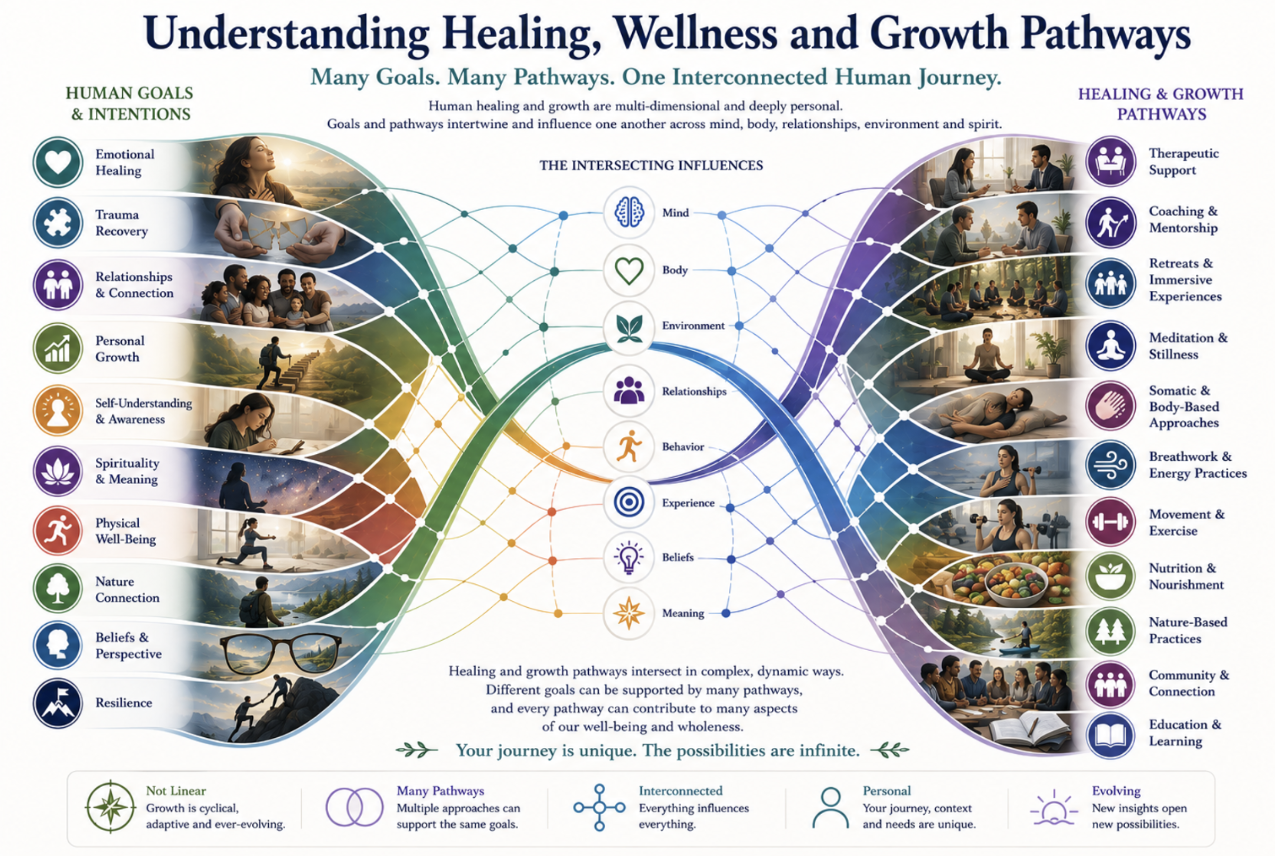
Figure
1. Goals and pathways. This illustration is a conceptual map, not an evidence
ranking or a claim that every named approach treats the same conditions.
Definitions and conceptual scope
Healing and cure
Healing is used here to describe movement toward greater comfort, functioning, coherence, or capacity after illness, injury, distress, or disruption. Cure has a narrower meaning: the resolution or elimination of a disease or condition. The two can coincide, but neither should be used as a substitute for the other. A successfully treated infection may be cured. A person living with an incurable illness may nevertheless experience less suffering, stronger relationships, and a greater sense of agency. A whole person perspective needs language for both situations. [2]
This distinction protects readers from promises that are too broad. A service may help someone feel calmer without treating the cause of persistent physical symptoms. A meaningful conversation may support grieving without making grief disappear. An intervention may improve daily functioning while a diagnosis remains. These outcomes can be valuable, but they need accurate names. Describing every positive experience as a cure obscures what has actually changed and what still requires attention.
Healing also does not require a return to a previous identity. Illness, bereavement, disability, or a major transition can make an earlier way of living unavailable. In those circumstances, a person's goal may be to adapt, develop new capacities, or live well with continuing limitations. The appropriate standard is not whether the person becomes indistinguishable from someone who has never suffered. It is whether the pathway supports outcomes the person values without making unrealistic demands.
Wellness and growth
Wellness refers here to practices and conditions that support health and everyday well-being. It includes maintenance and prevention as well as improvement. Preparing food, obtaining adequate rest, participating in community, and managing an established health condition can all belong within this domain. Wellness is not a diagnostic category, a particular appearance, or a requirement to feel good all the time. Public health approaches place it within the circumstances of everyday life rather than confining it to specialized services. [3]
Growth refers to the development of capacities, understanding, relationships, or meaningful participation. Learning to communicate more clearly, becoming more skillful at a valued activity, reconsidering an inherited belief, or accepting appropriate help may represent growth. Growth does not necessarily involve greater productivity, higher status, or more intense experiences. It may involve choosing fewer commitments or recognizing a limit that was previously ignored. Psychological accounts of well-being include personal development alongside autonomy, relationships, self-acceptance, purpose, and the ability to manage one's surroundings. [4]
These categories overlap. Learning a movement practice can support physical health, confidence, and social connection. Psychotherapy may reduce symptoms and help someone make decisions that better reflect their values. A community project may provide purpose while improving a shared environment. The overlap is useful only if the particular outcomes remain visible. An approach that supports one domain should not automatically be credited with improving every other domain.
Pathways rather than universal prescriptions
A pathway is a sequence or combination of actions, supports, and conditions directed toward a goal. It can include formal treatment, informal support, personal practice, and changes in the environment. It is more than a list of products. Two people may participate in the same activity but follow different pathways because their starting points, goals, constraints, and sources of support differ.
For example, walking may be recreation for one person, part of a clinician-supported rehabilitation plan for another, and an opportunity for conversation for a third. The activity alone does not tell us its purpose or whether it is sufficient. A pathway framework makes those questions explicit. It also leaves room for revision when the original approach is ineffective, impractical, or no longer relevant.
This language should not imply that people control every factor affecting their lives. Personal agency operates within available resources and social conditions. A person cannot choose safe housing, paid leave, accessible transport, or specialist care into existence simply by becoming more motivated. An honest account of pathways includes both what an individual can influence and what requires collective action. [5]
Health and human flourishing
Beyond the absence of disease
Reducing disease and distress is essential, but a person can have few symptoms and still feel profoundly disconnected. Conversely, someone managing a chronic condition may have strong relationships, a meaningful role, and considerable life satisfaction. Mental health itself involves capacities for living and participating, not merely the absence of a diagnostic label. This broader view helps explain why symptom measures and measures of well-being answer related but different questions. [6]
VanderWeele's account of flourishing proposes attention to happiness and life satisfaction, mental and physical health, meaning and purpose, character and virtue, and close social relationships. Financial and material stability matter for sustaining these domains. The model offers an organizing framework rather than a guarantee that each dimension can be maximized simultaneously. It also makes clear that a narrow focus on any single outcome can miss important aspects of a person's life. [7]
A flourishing framework can be misused if it becomes a ranking of human worth. People experiencing depression, poverty, disability, or grief do not have less dignity because their scores on a questionnaire are lower. Nor should flourishing become an expectation that people respond positively to injustice. Its value is descriptive and practical: it asks which aspects of life deserve attention and which conditions might support them.
The distinction is especially important in care. An intervention might reduce symptoms but make daily life harder through burdensome schedules or unwanted effects. Another might produce only a modest change on a symptom scale while allowing someone to resume a valued relationship or activity. Considering multiple outcomes makes those tradeoffs visible. It does not eliminate the need to measure disease-specific results when treating a disease.
Complementary models of well-being
Ryff's model describes six dimensions of psychological well-being: self-acceptance, positive relations, autonomy, environmental mastery, purpose in life, and personal growth. These dimensions concern how a person lives and develops, not simply how pleasant life feels. Environmental mastery, for example, involves being able to manage demands and use opportunities; it should not be confused with complete control over external events. Autonomy concerns self-directed judgment, not a requirement to reject interdependence. [8]
Self-determination theory emphasizes autonomy, competence, and relatedness. People are more likely to experience supportive motivation when they can understand and endorse what they do, develop effectiveness, and feel connected to others. Autonomy is compatible with choosing help, honoring relationships, and accepting responsibilities. A person may willingly rely on a clinician, family member, or community without surrendering all agency. [9]
Seligman's PERMA framework draws attention to positive emotion, engagement, relationships, meaning, and accomplishment. These elements overlap with other accounts but are not identical to them. Engagement directs attention to absorption in activity; accomplishment recognizes the value of developing and exercising competence. Neither requires constant achievement. The usefulness of the framework lies in broadening inquiry, not in proving that five categories exhaust every culture's understanding of a good life. [10]
The models can be used together without being collapsed into one score. A reader might ask whether life contains enough connection, whether important choices feel self-endorsed, and whether there is room for meaningful activity. Those questions may reveal a need that a general question such as “Am I happy?” leaves unexplored. They also make it possible to recognize improvement in one domain while another remains difficult.
Well-being across time and circumstance
Well-being is not a permanent state attained once and then preserved without effort. Needs change with development, health, relationships, work, and major transitions. The same activity can be nourishing at one point and burdensome at another. Research on psychological well-being across adulthood and multidisciplinary work on flourishing both support examining the person's situation rather than imposing one ideal life pattern. [11]
This temporal perspective changes the question from “Which lifestyle is best?” to “What would support this person now, and what might need to change later?” A period of recovery may call for fewer demands. A later period may make learning or contribution more important. There is no contradiction in adapting a pathway as circumstances change. Flexibility is part of responsible care and self-direction.
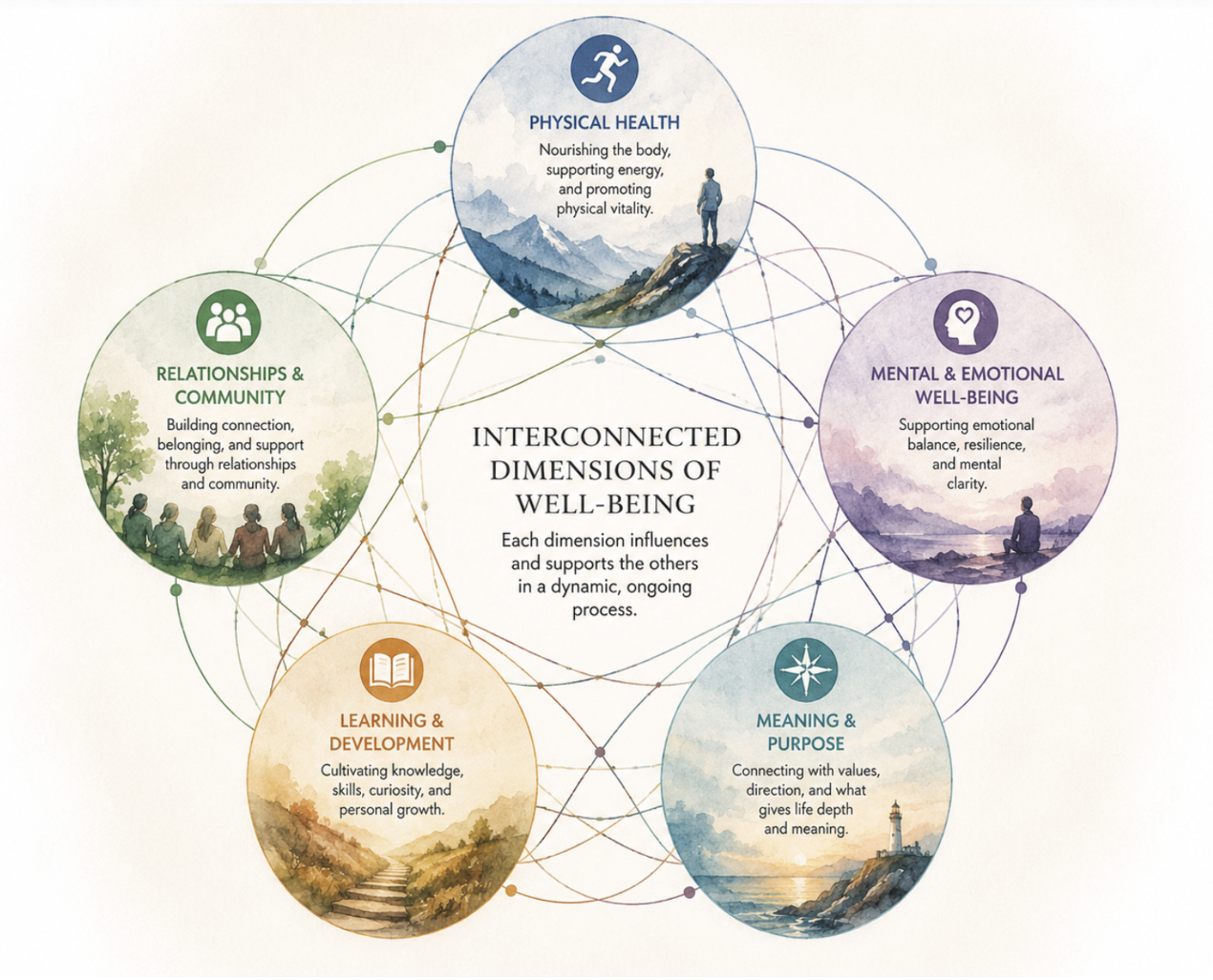
Figure 2. Interconnected dimensions of well-being. The connections illustrate a broad framework rather than measured causal effects.
Whole person health and interacting systems
The biopsychosocial model asks clinicians to consider biological processes, psychological experience, and social context together. It does not reject biomedical knowledge. Instead, it challenges the assumption that a diagnosis or laboratory result fully explains the person's experience of illness. The way symptoms affect daily life, the meaning assigned to them, and the resources available for responding can influence what care is needed. [12]
NCCIH's 2021–2025 strategic plan extended this orientation through a whole person health research agenda spanning biological, behavioral, social, and environmental domains. This is a program for studying interconnected health processes and multicomponent approaches. It should not be mistaken for proof that any intervention marketed as “whole person” is effective. The label identifies an intended scope, not a verified outcome. [13]
Systems thinking adds attention to interactions and feedback. An illustrative example is a person whose pain disrupts sleep, whose fatigue reduces activity, and whose reduced activity limits social participation. That sequence is not a diagnosis or a universal mechanism. It shows why a single outcome can be connected to several aspects of daily life. Improvement may require attention to more than one part of the situation, while still respecting the need to investigate the pain itself.
Plsek and Greenhalgh describe health care through the lens of complex adaptive systems. In such systems, the effects of an action depend partly on relationships, context, and responses elsewhere in the system. The practical implication is that plans should be evaluated as they unfold. Clear goals and feedback help reveal whether a plan is working as intended. [14]
Integration and the risk of adding too much
An integrated pathway coordinates relevant supports. It does not simply accumulate them. A person with several providers may receive conflicting explanations, duplicated exercises, incompatible schedules, or advice that no one has reconciled. More services can increase expense and confusion without improving care. Patient-centered approaches therefore place value on communication, shared understanding, and a plan that is feasible in the person's life. [15]
The distinction between combination and coordination is important. Combining several practices produces a package. Coordinating them requires clarity about each practice's purpose, how it relates to other care, and how progress or harm will be recognized. A simple plan with a clear rationale may be more useful than a complicated program whose components all claim to address the same vague problem.
Research on whole person approaches faces a related challenge. If a program includes movement, nutrition support, counseling, and group meetings, a positive result may establish that the package helped under the study conditions. It does not automatically reveal which component mattered most, whether all were necessary, or whether they interacted. The NCCIH workshop on whole person research addresses the methodological need to study such questions rather than assuming the answers. [16]
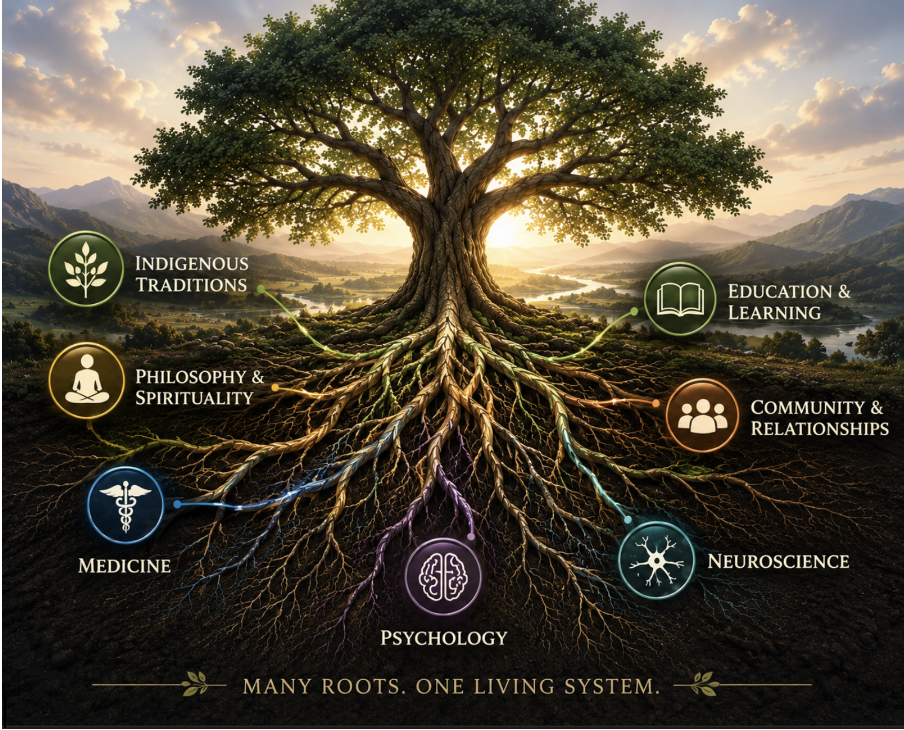
Figure
3. Fields and traditions contributing to ideas about healing and growth. Their
inclusion does not imply equivalent methods, evidence, or clinical authority.
Social conditions and the limits of individual choice
Health is shaped by the distribution of resources and opportunities. Solar and Irwin distinguish structural determinants, such as social and economic arrangements that shape social position, from intermediary conditions through which those arrangements affect health. Material circumstances, psychosocial conditions, behaviors, and access to health systems belong within this broader account. The framework explains why the same advice can have very different practical meaning for different people. [17]
Advice to sleep regularly is difficult to implement when work hours change unpredictably. Advice to eat a varied diet has different implications when food is unaffordable or cooking facilities are inadequate. Advice to spend time outdoors may be unrealistic when nearby spaces are unsafe or inaccessible. These are not minor exceptions to an otherwise individual process. They are part of the process itself.
The WHO's 2025 report on social determinants of health equity emphasizes avoidable and unjust differences associated with living conditions and access to power, money, and resources. The earlier report on social determinants of mental health similarly places mental health within social circumstances across the life course. These perspectives prevent wellness education from attributing every outcome to motivation or personal discipline. [18]
Personal and collective pathways
The Ottawa Charter for Health Promotion treats health promotion as enabling people to increase control over health. Its scope includes public policy, supportive environments, community action, personal skills, and the orientation of health services. Teaching skills is one part of this approach. Improving the conditions under which people use those skills is another. [19]
A community pathway may therefore involve accessible recreation, safer housing, opportunities for social participation, or better coordination of services. A workplace pathway may involve reasonable demands and predictable schedules rather than another optional well-being seminar. An educational pathway may involve making information understandable while ensuring that people can act on it. Each shifts attention toward the conditions that make healthier choices feasible.
Attention to structural conditions does not erase individual agency. People often make consequential choices under difficult circumstances. The point is to understand those choices accurately and avoid assigning responsibility for what lies outside their control. A useful plan asks both what the person wants to do and what must change around them to make that action realistic.
Culture and definitions of a good life
Community well-being scholarship highlights that well-being is understood and pursued within places and collective relationships. A community is more than a collection of separate satisfaction scores. Shared resources, participation, identity, and local priorities can matter in their own right. Different groups may place different emphasis on independence, family obligations, spiritual life, or contribution. [20]
Respecting those differences does not require accepting coercion or unsafe practice. Cultural sensitivity and personal consent must coexist. A person can value a tradition while declining a particular activity. A provider should be able to discuss the origin and meaning of a practice without claiming that cultural history alone establishes its clinical effectiveness. Likewise, an evidence-based service becomes more usable when it attends to language, access, and the person's understanding of care.
Understanding evidence and uncertainty
Evaluating a pathway begins with understanding the evidence behind its claims. A philosophical work can illuminate meaning. An observational study can identify an association. A randomized trial can test an intervention under specified conditions. A systematic review can synthesize studies while inheriting their limitations. Each contributes a different kind of knowledge.
Frankl's account of meaning and suffering offers existential interpretation; Holt-Lunstad and colleagues' synthesis examines associations between social relationships and mortality. Hofmann and colleagues review treatment evidence for cognitive behavioral therapy, while Mitchell and colleagues test a specific clinical protocol. NCCIH's research agenda identifies questions for further investigation. Reading these works according to their purpose helps distinguish interpretation, observed patterns, tested interventions, and open questions. [21]
Association and causation
If people who report more purpose also have better health outcomes, several explanations may be possible. Purpose might influence behavior or coping. Better health might make purposeful activity easier. Other circumstances might affect both. Statistical adjustment can address measured differences but does not automatically remove every alternative explanation. Longitudinal data help establish sequence, yet do not alone prove that deliberately increasing purpose will produce the observed health effect. This distinction matters when reading the study by Hill and Turiano. [22]
The same caution applies to nature connection and relationships. People with greater resources may have more access to green space and social opportunities. A finding can still be important when causation is uncertain, but its practical interpretation should remain proportionate. The evidence can support further study or make an approach worth considering without justifying a precise promise to an individual.
Comparators and meaningful outcomes
The question “Does it work?” is incomplete without a comparison. An intervention may look beneficial compared with no additional support but less distinctive when compared with another credible activity that provides time, attention, and expectation of benefit. Goyal and colleagues' meditation review is particularly useful because it examines results against different kinds of controls. Vickers and colleagues' acupuncture analysis likewise distinguishes comparisons with sham procedures from comparisons with no acupuncture. [23]
The outcome also matters. Reduced symptom intensity, improved functioning, a physiological change, satisfaction, and a meaningful subjective experience are not the same result. A change in a laboratory measure does not automatically demonstrate durable improvement in everyday life. An experience can matter deeply to a participant without proving that it treats a disorder. Reading the outcome carefully prevents attractive language from expanding a finding beyond its actual scope.
Applicability and the age of evidence
Study participants may differ from the reader in age, diagnosis, severity, medical history, resources, or reasons for participating. Treatment may be delivered by specially trained teams under conditions that a commercial service does not reproduce. Follow-up may be short. These differences do not invalidate the study; they define the limits of direct application.
The age of evidence matters most when applying it to current treatment decisions. A historical review describes the field at the time of publication, and an individual trial captures one protocol and population. The 2009 body psychotherapy review, 2021 MDMA trial, and 2021–2025 research plan should be read within those time frames. Current treatment and regulatory questions require current, condition-specific guidance. [24]
The practical standard is calibrated confidence. Stronger and more directly applicable evidence permits stronger claims. Preliminary evidence permits narrower claims. Lack of evidence is not identical to proof of ineffectiveness, but it is a reason to avoid confident promises, particularly when costs and risks are substantial.
Individual differences and personalized pathways
People differ in what they need, what they value, and how they respond to treatment. Personalized evidence-based medicine attempts to use research in ways that account for those differences. Kent and colleagues discuss heterogeneous treatment effects: variation in the benefits or harms of an intervention across people with different characteristics. Average results remain important, but they do not fully describe every individual's likely outcome. [25]
Precision medicine research, including the 2015 Precision Medicine Initiative report, seeks to improve understanding of variation in biology, environment, and lifestyle. This ambition should be distinguished from commercial claims that a simple questionnaire or a single test can identify an ideal wellness program. Detailed personalization requires validated information and models, not just a personalized presentation. [26]
Personalization requires humility
Van Klaveren and colleagues show how models that include treatment interactions can overestimate differences in treatment effects and lead to mistargeting. In ordinary language, an analysis may appear to identify who benefits most when some of the apparent pattern is noise. More complicated prediction is not automatically more accurate. A confident story about an individual's “type” needs evidence that it predicts useful differences reliably. [27]
Several kinds of personalization should therefore be kept distinct. Adapting an appointment to a person's schedule is practical tailoring. Respecting a person's values is shared decision-making. Adjusting treatment for a known clinical risk is medical judgment. Predicting that a particular person will respond better than another person is a stronger empirical claim. A service can be responsive and humane without possessing a scientifically validated response-prediction system.
For the reader, a good starting point is a specific goal. “I want better well-being” is understandable but difficult to evaluate. “I want to resume a valued activity,” “I want help understanding persistent distress,” or “I want more dependable social contact” makes the next question clearer. The choice of pathway should follow from that goal and from relevant assessment, rather than from the popularity of a modality.
Preferences and constraints
Preferences matter because a pathway must be acceptable enough to use. Some people value groups; others need privacy. Some enjoy outdoor activity; others prefer a familiar indoor setting. Such differences do not always imply different biological mechanisms, but they can substantially affect participation and the meaning of the experience. Patient-centered care treats the person's perspective as necessary information, while retaining professional responsibility for evidence and safety. [28]
Constraints deserve the same seriousness as preferences. Cost, transport, caregiving responsibilities, language, sensory needs, fatigue, and digital access can determine whether a plan is feasible. Calling someone “unmotivated” without examining these conditions can misidentify the problem. The most elegant plan on paper is of little value if it cannot be carried out in ordinary life.
Physical health foundations
Movement and physical activity
Physical activity has a substantial role in health promotion and in the management of many chronic conditions. The WHO's 2020 guidelines and the review by Warburton and colleagues describe benefits across health outcomes. Pedersen and Saltin review the use of exercise as therapy across 26 chronic diseases, illustrating both the breadth of the field and the need for disease-specific judgment. The evidence for a particular exercise prescription should not be reduced to the slogan that everyone needs the same routine. [29]
Movement includes more than formal exercise. It can occur through transport, recreation, work, household tasks, or adapted activity. Exercise is usually more structured and directed toward a fitness or therapeutic goal. These categories overlap, but distinguishing them makes room for people who do not identify with sports or gym culture. A pathway can support movement without requiring a particular appearance or performance identity.
The purpose of movement can also vary. A person may prioritize stamina, strength, balance, mobility, participation, or enjoyment. The relevant form and intensity depend on health status and ability. Research supporting exercise for a chronic condition is not permission to ignore symptoms or assume that a general class is equivalent to supervised rehabilitation. Appropriate adaptation belongs within the pathway, not at its margins. [30]
A helpful way to evaluate a movement offering is to ask what it is designed to improve and how it accommodates differences. Does the provider distinguish general fitness from rehabilitation? Can activities be modified? Are limitations treated respectfully? The answers help distinguish a suitable activity from one that would require different supervision or adaptation.
Movement may also provide social contact, time outdoors, or opportunities for mastery. Those additional dimensions can make participation more meaningful. They should nevertheless be assessed separately. A sociable activity is not automatically the correct treatment for a medical condition, and a clinically appropriate activity need not produce a dramatic emotional experience to be useful.
Sleep and recovery
Sleep deserves attention as a health foundation rather than a reward earned after productivity. The joint consensus work of the American Academy of Sleep Medicine and Sleep Research Society reviews the evidence underlying recommendations for adult sleep duration. Its scope also reminds us that sleep is a physiological need, not merely a matter of preference or discipline. [31]
An educational discussion should distinguish insufficient opportunity for sleep from a persistent sleep problem that may require assessment. A person working long or irregular hours faces a different problem from someone who has adequate opportunity but cannot sleep well. Advice directed only at individual habits can miss work conditions, caregiving demands, pain, or other relevant factors. The pathway begins by clarifying the situation rather than adding another generic rule.
Rest and sleep are related but not identical. A quiet break may reduce the demands of a day without replacing sleep. Likewise, a vacation can feel restorative without resolving an ongoing sleep difficulty. The value of rest should be recognized without making it a substitute for investigating persistent problems. A whole person perspective broadens inquiry while keeping the specific health question in view.
The concept of recovery also applies to the organization of daily life. If every improvement plan adds another task, the plan may compete with the time and energy required to sustain it. Attention to sleep can therefore expose a broader issue: whether the person's environment permits adequate recovery at all. This is one point where personal practice and social conditions clearly meet.
Nutrition and the conditions of eating
The 2020 Dietary Guidelines Advisory Committee report and Katz and Meller's review emphasize dietary patterns rather than the expectation that one food or fashionable diet will solve every problem. For a general reader, the important concept is the pattern of nourishment over time. A food's meaning and usefulness depend partly on the wider diet, the person's needs, and the circumstances of eating. [32]
Nutrition guidance must also account for access, culture, preparation skills, medical needs, and affordability. A plan that is expensive, socially isolating, or impossible to prepare may not be sustainable even when its ingredients appear desirable. This is an application of the broader determinants framework: the resources required to act on advice are part of the intervention's feasibility. [33]
General education about eating patterns differs from assessing a suspected deficiency, managing a medical condition, or addressing a difficult relationship with food. Those concerns require attention to the individual; broad dietary principles alone cannot justify a supplement regimen or restrictive diet.
Food can support social connection and cultural continuity as well as biological needs. Shared meals may be meaningful, while rigid wellness expectations can make eating feel like a test of character. An inclusive framework avoids equating dietary choices with moral worth. It asks whether a pattern adequately supports the person and can be maintained within their life.
Prevention without perfectionism
The WHO report on preventing chronic disease places prevention within a broad public health effort. It supports serious attention to modifiable risks while recognizing that prevention is not a guarantee of immunity from illness. A person can follow health-supporting practices and still become ill. Health outcomes are not a reliable measure of virtue or effort. [34]
This distinction matters emotionally and practically. Perfectionism can turn supportive routines into an escalating set of demands. An evidence-informed pathway needs room for ordinary variation, disability, financial limits, and changing circumstances. The purpose of health foundations is to support living, not to make every aspect of life subordinate to optimization.
Brain plasticity and learning
Brain plasticity refers broadly to the nervous system's capacity to change in response to development, experience, learning, and other influences. Mateos-Aparicio and Rodriguez-Moreno review the importance of studying this capacity. Plasticity helps explain why experience can matter biologically, but it does not mean that the brain is infinitely malleable or that any desired change can be produced through effort alone. [35]
The word is often used loosely in wellness marketing. A claim that an activity “changes the brain” is incomplete because ordinary experience also involves change. The relevant questions are what changed, how it was measured, whether the change persisted, and whether it improved an outcome that matters. A neural finding may be scientifically interesting without establishing a useful treatment.
Plasticity is also not inherently beneficial. Adaptation can support skill and recovery, but learned patterns may also become restrictive or difficult to change. The practical implication is to attend to the direction and context of learning. A powerful experience does not carry an automatic guarantee that what follows will be helpful.
From insight to repeated action
Learning has several forms. Someone may acquire information, recognize a familiar pattern, practice a new response, or develop competence through repeated activity. These changes can support one another, but they are not identical. Understanding a communication principle does not ensure that it will be accessible during conflict. Feeling motivated after an event does not ensure that the home environment supports a new routine.
Self-determination theory helps explain why personally endorsed goals and opportunities to develop competence matter. The behavior change chapter in Human Flourishing adds attention to the conditions that enable or obstruct action. Together, these perspectives suggest that insight is most useful when connected to feasible opportunities for practice and support. [36]
Psychedelic research illustrates the distinction between learning mechanisms and clinical outcomes. The review by de Vos and colleagues includes a substantial preclinical literature and a much smaller clinical literature. Findings in cells or animals cannot be treated as direct evidence that a human intervention produces lasting psychological improvement. Mechanistic promise and demonstrated benefit need separate evaluation. [37]
Mental and emotional well being
Mental and emotional well-being includes the capacity to experience feelings, manage demands, maintain relationships, and participate in life. It does not require the absence of sadness, fear, anger, or uncertainty. Those experiences can be understandable responses to circumstances. The question is how they affect the person, whether they are persistent or overwhelming, and what support is appropriate. The WHO's continuum-based account helps avoid a simple division between people who are entirely well and people who are entirely unwell. [38]
An emotion can carry information without providing a complete or infallible account of reality. Fear may signal danger, but it can also arise when no immediate danger is present. Anger may identify a violated boundary without determining the most useful response. A pathway that supports emotional understanding helps a person interpret experience and choose action, rather than requiring suppression or unquestioning obedience to every feeling.
Cognitive behavioral approaches
Cognitive behavioral therapy, or CBT, refers to a family of structured psychological approaches that examine relationships among thoughts, emotions, behavior, and context. Hofmann and colleagues' review of meta-analyses describes evidence across a range of problems, with strength and limitations varying by condition and comparison. This supports taking CBT seriously as a clinical approach without claiming that every CBT program works equally well for everyone. [39]
For a lay reader, the relevant idea is that patterns can be examined and tested. An expectation may lead someone to avoid an activity, and avoidance may prevent new information from becoming available. A therapeutic approach may help identify that pattern and develop a different response. This example illustrates a general rationale; it is not a self-directed treatment protocol or a substitute for assessment.
CBT should not be caricatured as replacing all negative thoughts with positive ones. The aim is often more accurate understanding and more useful behavior. Real adversity remains real. A person facing discrimination or unsafe conditions does not need to be persuaded that the circumstances are harmless. Psychological support and practical change can be necessary at the same time.
Acceptance and psychological flexibility
Acceptance and commitment therapy, or ACT, emphasizes psychological flexibility: the ability to remain in contact with experience while acting in ways that serve chosen values. Hayes and colleagues describe its model and processes, while Kashdan and Rottenberg examine flexibility more broadly as an aspect of health. Acceptance in this context does not mean approving of suffering or abandoning efforts to change a harmful situation. [40]
One useful distinction is between having a thought and treating it as an instruction. Someone may notice “I will fail” without assuming that the sentence settles what they should do. Another distinction is between reducing discomfort and pursuing a valued action. Sometimes a meaningful activity includes manageable discomfort. At other times, discomfort indicates that an activity is unsafe or poorly matched. Flexibility involves sensitivity to context, not a rule that one should always push through.
Values also differ from goals. A goal can be completed; a value describes a direction or quality of action. Attending an event may be a goal, while nurturing friendship is an ongoing direction. This distinction can make a pathway less dependent on a single success or failure. It also allows the person to find another expression of a value when circumstances change. [41]
Choosing appropriate support
Mental health support may include professional treatment, practical assistance, community resources, and trusted relationships. Their roles differ. A friend can provide connection without being responsible for clinical assessment. A coach can help with some goals without being qualified to diagnose or treat a disorder. A clinician can address a disorder while still recognizing the importance of everyday support.
Persistent or severe distress should not be minimized because a wellness explanation sounds more appealing. A broad framework must preserve access to appropriate clinical care. Its purpose is to prevent unnecessary fragmentation, not to replace diagnosis with a vague theory about energy, mindset, or personal growth.
Trauma resilience and restoration of safety
Resilience and treatment of post-traumatic stress disorder address related but distinct questions. Resilience research examines adaptation to adversity across personal and social contexts. Clinical trials examine whether a defined intervention improves specified symptoms or outcomes. Keeping these levels separate helps clarify whether a person needs practical support, opportunities for adaptation, clinical treatment, or a combination. [42]
Southwick and colleagues describe resilience as a concept with several definitions and levels of analysis. It can involve maintaining or recovering functioning in the face of adversity, and it depends on interacting personal and contextual factors. This is different from the idea that a resilient person never feels distress. Responses can vary over time and across domains of life. [43]
A person may be functioning well at work while struggling privately, or may feel emotionally supported while still facing unsafe material conditions. Such differences caution against labeling the whole person as either resilient or broken. They also suggest that support should address the particular areas of difficulty rather than rely on a global character judgment.
Safety and choice
Patient-centered support for people with trauma histories should preserve choice, explain what an activity involves, and permit refusal. Distress during a practice calls for attention to the person's needs; it should not automatically be interpreted as necessary catharsis or a reason to continue. [44]
Safety includes the environment and the relationship with the provider. Clear boundaries, understandable consent, and an opportunity to raise concerns matter. A provider who interprets every objection as resistance can make it difficult for a participant to express a legitimate need. A responsible pathway allows the person to question the approach without being told that questioning proves their pathology.
It is also important to distinguish support from exposure to overwhelming experiences. A difficult memory discussed within a qualified clinical relationship is not equivalent to an unstructured group exercise that pressures people to disclose painful events. General claims about healing do not establish that those settings have the same safeguards or outcomes.
Growth is possible but never owed
People sometimes report greater clarity, changed priorities, or deeper relationships after adversity. Such experiences should be respected without turning them into an obligation. Someone who remains distressed has not failed a test of character. Preventable suffering does not become desirable because some people find meaning afterward.
The broader literature on well-being and meaning allows space for both development and continuing pain. Frankl's account is influential precisely because it takes existential questions seriously, but it should not be used to demand that another person interpret suffering in a particular way. A humane pathway supports the person's own understanding and does not make a positive narrative a condition of receiving care. [45]
Relationships belonging and community
Relationships are an important dimension of health rather than an optional addition to otherwise individual well-being. Holt-Lunstad and colleagues' 2010 meta-analysis links stronger social relationships with better survival, and their 2015 review examines loneliness and social isolation as mortality risk factors. These are findings from bodies of observational research. They should not be converted into a claim that a particular social activity will extend an individual's life by a predictable amount. [46]
Several distinct concepts matter. Social isolation concerns the relative absence of contact or connections. Loneliness concerns the experience of insufficient or unsatisfying connection. A person can be alone without feeling lonely or surrounded by people while feeling profoundly unseen. Social support refers to resources available through relationships, which may include practical help, emotional understanding, or information. Counting contacts alone does not capture these differences.
Relationship quality also matters. The existence of a family, partner, workplace, or group does not guarantee safety or support. An article that encourages belonging must leave room for boundaries and for leaving harmful relationships. The aim is meaningful, dependable connection, not maximum exposure to other people regardless of its effects.
The social regulation of emotion
Coan and Maresh's social baseline theory examines how reliable social relationships can shape the regulation of emotion and the perceived demands of the environment. The framework suggests that human functioning is often organized around access to others rather than complete self-sufficiency. It helps explain why support can change the experience of a challenge. It remains a theoretical framework informed by research, not a diagnostic test of attachment or nervous system health. [47]
The practical implication is that asking for appropriate help need not be seen as failure. Sharing a task, discussing a difficult decision, or having someone accompany a person through an unfamiliar situation can change what is manageable. These ordinary forms of support are easy to overlook when wellness is presented only as private self-regulation.
Support should also preserve agency. A helpful relationship does not require another person to make every decision or remain continuously available. Dependability, boundaries, and reciprocity can coexist. The appropriate balance varies with age, disability, illness, and circumstance; independence is not the only measure of a healthy relationship.
Building connection in ordinary life
A relationship pathway can begin with the type of connection a person is missing. Someone new to a place may need opportunities for repeated contact. Someone with many acquaintances may want greater trust or mutual understanding. A caregiver may need practical assistance more urgently than a new social activity. Naming the need avoids treating every relational problem as a shortage of events to attend.
An illustrative approach is to identify a setting where contact can recur around a shared activity or purpose. The important feature is the opportunity for a relationship to develop, not a guarantee that any club or group will be beneficial. Accessibility, welcome, cultural fit, and the freedom to decline participation remain relevant. A pathway should allow people to assess whether a setting actually meets their needs.
Community well-being extends beyond personal relationships to shared conditions and participation. Lee and Kim discuss the meaning of community well-being as a collective concern. This broadens the question from whether an individual has enough friends to whether a place supports people in belonging, participating, and addressing common problems. [48]
Work family caregiving and everyday roles
Well-being is lived through roles and responsibilities. Work can provide income, competence, identity, and connection, while also creating demands that compete with health and family life. Family relationships can provide meaning and support while involving substantial labor and conflict. The work and family chapter in Human Flourishing addresses these interactions rather than treating the domains as separate compartments. [49]
A useful distinction is between conflict and enrichment across roles. Demands in one domain may reduce time or energy available elsewhere. Skills, resources, or satisfaction developed in one domain may also support another. The same job or family role can contain both processes. A pathway that assumes work is always harmful or family is always restorative will miss important differences.
Conditions before coping demands
An organization may offer mindfulness or resilience training while leaving excessive demands unchanged. Such activities may have value for some participants, but they do not by themselves resolve the conditions creating strain. Applying the social determinants framework means examining schedules, security, practical resources, and the distribution of responsibilities alongside personal coping. [50]
For an individual, a more useful question than “How can I become endlessly resilient?” may be “Which demands are necessary, which can change, and what support is missing?” Some answers will involve personal skills. Others may require negotiation, organizational change, or outside assistance. The distinction prevents a growth pathway from becoming training in tolerating unlimited demands.
Caregiving and interdependence
Caregiving makes the limits of an individualistic model especially visible. A person's health practices may depend on the needs and schedules of someone else. The work of arranging appointments, providing assistance, and maintaining a household can shape the feasibility of any proposed routine. These observations follow from considering the person within relationships and material circumstances rather than as an isolated decision-maker.
Support for a caregiver may therefore involve help with responsibilities, reliable respite, understandable information, or coordination of care. A suggestion to add another practice can be unhelpful if it ignores the shortage of time that already exists. Practical assistance can create the time and capacity needed to benefit from personal practices.
The fatherhood chapter in Human Flourishing offers one example of how a relational role can be studied as a context for development and contribution. It should not be taken to imply that parenthood is necessary for flourishing or that every family must follow one structure. Roles are possible sources of meaning, not universal requirements. People can contribute through many forms of relationship and responsibility. [51]
Nature environment and place
The environment influences what people encounter and what they can do. Twohig-Bennett and Jones review associations between green space exposure and multiple health outcomes. Capaldi and colleagues examine the relationship between feeling connected to nature and happiness. These are related but distinct questions: access to a setting is not the same as an emotional or cognitive relationship with nature. [52]
A person may value nature deeply while having little access to it. Another may live near a park but experience it as unsafe or unwelcoming. The relevant pathway depends on both opportunity and experience. General enthusiasm for nature should not obscure differences in mobility, weather tolerance, transport, local safety, or cultural meaning.
Restorative theories
Kaplan's attention restoration framework proposes that certain environments can help people recover from the demands of directed attention. Qualities such as engaging interest without continuous effort, providing a sense of being away, and fitting the person's purposes are central to the account. The framework offers a way to think about restoration; it does not establish that every natural setting restores every person equally. [53]
Ulrich's work examines aesthetic and affective responses to natural environments. This directs attention to emotional and perceptual experience rather than only physical activity outdoors. Kellert's essay on biophilia considers the possibility that relationships with life and natural processes contribute to human fulfillment. These works provide theoretical and interpretive foundations whose claims should be distinguished from clinical intervention evidence. [54]
Nature-related pathways can include looking at a familiar landscape, tending plants, observing seasonal change, or joining an accessible outdoor activity. The restorative theories help explain why these quieter forms of engagement may have value alongside more strenuous recreation. Their suitability depends on access, comfort, and what the person hopes to gain.
The built environment
Srinivasan and colleagues connect the built environment with public health and propose a research agenda for healthier homes and communities. Housing, design, transport, and shared spaces shape the circumstances in which health behaviors and social interaction occur. A whole person framework therefore needs to ask what the environment makes easy, difficult, or impossible. [55]
This perspective also changes the meaning of environmental wellness. It cannot be reduced to decorating a room or purchasing natural materials. Those choices may have aesthetic value, but wider conditions can determine access to safety, movement, and social participation. A neighborhood intervention and an individual relaxation practice operate at different levels and should not be evaluated as if they were substitutes.
Nature connection also raises ethical questions about the environment itself. Kellert's account includes ways people value living systems that go beyond immediate personal benefit. An article about well-being can acknowledge stewardship and responsibility without claiming that environmental concern is a medical treatment. The relationship between people and place includes values as well as measurable outcomes. [56]
Meaning purpose and existential growth
Meaning concerns how people understand their lives and why those lives matter. Steger's discussion distinguishes aspects often described as coherence, purpose, and significance. Coherence concerns a sense that life makes some intelligible sense. Purpose concerns direction and aims. Significance concerns a sense of mattering or worth. A person can have strength in one aspect and difficulty in another. [57]
For example, someone may have a demanding schedule with clear goals but feel that the goals no longer matter. Another person may value their relationships deeply while feeling uncertain about the future. These are different existential situations. A meaningful pathway begins by understanding the question rather than offering a generic instruction to “find your purpose.”
Hill and Turiano report an association between purpose in life and mortality across adulthood. The finding supports scientific interest in purpose as a health-related dimension, but it does not establish that a purpose workshop prolongs life. Meaning should not be sold as a longevity technique on the basis of an observational association. Its human importance does not depend on converting it into a biological guarantee. [58]
Sources of meaning
Meaning can arise through relationships, work, creativity, service, learning, spiritual life, or the care of something valued. These domains appear across the flourishing literature, including the multidisciplinary chapters in Human Flourishing. Their presence does not imply that everyone needs the same combination. An activity's meaning depends partly on the person's history and commitments. [59]
Ordinary responsibilities may carry as much significance as dramatic experiences. Maintaining a friendship, caring for a family member, developing a craft, or contributing to a local project can provide direction. A framework that recognizes only extraordinary transformation risks making everyday sources of meaning seem insufficient.
Meaning can also change. A role that once organized life may end, or an inherited belief may no longer fit. Uncertainty during such transitions does not necessarily indicate pathology. It may call for reflection, conversation, experimentation with new roles, or professional support if distress becomes substantial. The article's role is to clarify possibilities, not to decide which interpretation a person must adopt.
Suffering and the limits of interpretation
Frankl's Man's Search for Meaning combines autobiographical reflection with an introduction to logotherapy. It gives a powerful account of the importance of meaning under severe adversity. Its contribution is existential and clinical in orientation, but the book is not a randomized trial of a universal intervention. Readers should be able to engage with it without being told that every hardship must yield a lesson. [60]
It is especially important to separate meaning-making from justification. A person may build a meaningful life after harm without believing that the harm was necessary or deserved. Finding a way forward does not excuse those responsible or remove the need for protection and repair. A provider should not impose a redemptive story on someone who does not share it.
Existential growth can include greater tolerance for unanswered questions. Some losses cannot be resolved into a satisfying explanation. A pathway may help a person live alongside uncertainty and remain connected to valued people or activities. That outcome can be substantial even when no final interpretation is reached.
Character strengths and positive psychology
Positive psychology broadens attention to capacities and experiences that support well-being. Park, Peterson, and Seligman examine relationships between character strengths and well-being. Bolier and colleagues synthesize randomized studies of positive psychology interventions. These sources support serious interest in strengths-based approaches while leaving important questions about effect size, durability, study quality, and the fit of particular exercises. [61]
Strengths language can be helpful when it enables someone to recognize capacities that distress has obscured. Curiosity, kindness, perseverance, or appreciation may offer ways to engage with a situation. However, identifying a strength does not prove that using it more is always beneficial. Perseverance can support a valued task or prolong an unhelpful commitment. Kindness can coexist with boundaries. Context matters.
Exercises and their proper scope
Positive psychology interventions may invite people to notice positive experiences, reflect on strengths, or engage in meaningful activity. The meta-analysis by Bolier and colleagues reports beneficial average effects while also identifying limitations and variation in the studies. It does not justify treating a brief exercise as a sufficient response to severe mental illness or adverse living conditions. [62]
The language used around these exercises matters. An invitation to notice something appreciated is different from a demand to be grateful for mistreatment. A strengths discussion is different from denying a real limitation. Positive psychology is most useful within this framework when it adds resources without excluding painful experience or structural realities.
Accomplishment can be understood similarly. It may involve completing a personally meaningful task, rebuilding a capacity, or sustaining a commitment under difficult circumstances. It need not mean outperforming others. Seligman's PERMA account treats accomplishment as one element of well-being, not a reason to subordinate relationships or health to continuous achievement. [63]
Forgiveness without coercion
The chapter on forgiveness in Human Flourishing examines forgiveness as a subject of psychological research and a possible contributor to flourishing. This topic requires clear ethical distinctions. Forgiveness is not the same as reconciliation, excusing wrongdoing, forgetting, or relinquishing protective boundaries. A decision about continued contact requires its own assessment and cannot be inferred from a person's wish to reduce bitterness or distress. [64]
No person should be pressured to forgive as a condition of healing. The timing and meaning of forgiveness vary, and some people may not find the concept useful. A supportive pathway can make room for reflection while preserving autonomy, accountability, and safety. These are ethical applications of the broader patient-centered framework, not a claim that one forgiveness process is appropriate for everyone.
Flow creativity and learning
Flow describes a form of deep involvement in activity in which attention is absorbed and the activity can feel rewarding in itself. Csikszentmihalyi's work connects this experience with the relationship between challenge and skill, clear aims, and feedback. The concept helps explain why well-being is not limited to relaxation or pleasant sensation. Sometimes people feel most engaged when doing something demanding that they are equipped to attempt. [65]
Flow should not become another performance target. It may arise intermittently, and its absence does not mean an activity is worthless. Practice can be frustrating or ordinary while still supporting learning. Furthermore, absorption alone does not establish that an activity is healthy or ethically worthwhile. The consequences and context of the activity remain relevant.
Creativity as participation
The arts-related chapters in Human Flourishing examine links among creative work, interpretation, and human development. They broaden the discussion beyond symptom reduction and economic productivity. Their approaches differ from controlled clinical trials, so their contribution should be described as multidisciplinary exploration rather than proof that every creative activity treats a disorder. [66]
Creative participation can take many forms, including making, observing, interpreting, and collaborating. The goal may be enjoyment, expression, skill, or connection rather than artistic distinction. A person need not produce work for sale or public display to find an activity meaningful. This interpretation aligns with the broader emphasis on engagement and self-endorsed action. [67]
A useful educational distinction is between participating in the arts and receiving a specific clinical intervention that uses artistic methods. The qualifications, goals, and evidence may differ. A general creativity workshop should not borrow the authority of a clinical discipline simply because both use similar materials or activities.
Learning throughout life
Learning pathways can support competence and agency by making unfamiliar situations more understandable. They can also widen participation by developing practical skills. Yet information is only one part of change. A person may know what they want to do but lack resources, opportunity, or confidence in carrying it out. Education is most useful when its scope is understood and its limitations are not attributed to the learner's character. [68]
For an adult learner, a good question is what the learning should make possible. The answer might be more informed decisions, a valued activity, better communication, or greater independence in a particular task. Defining that purpose keeps education connected to life rather than making the accumulation of information an end in itself.
Mindfulness meditation and contemplation
Mindfulness is commonly used to describe deliberate attention to present experience with a particular quality of openness or nonjudgment. Meditation includes a wider range of practices, some secular and some embedded in religious or philosophical traditions. A study of one structured program does not establish the effects of every practice carrying either label.
Grossman and colleagues' early meta-analysis examined mindfulness-based stress reduction and health outcomes. Goyal and colleagues later reviewed meditation programs for psychological stress and well-being, finding evidence of modest benefits for some outcomes while identifying important limits. The latter review did not establish that meditation programs were generally superior to other active treatments. [69]
Practice content and comparison
A structured program may include instruction, repeated practice, discussion, and a supportive group. If participants improve, the result may reflect several components. A commercial app, an intensive retreat, and a brief exercise in a workplace do not necessarily reproduce the studied program. Similar language can conceal substantial differences in duration, supervision, participant selection, and purpose.
The comparator is particularly important. A program may outperform an inactive control while showing less difference from another credible intervention. That does not make participants' improvement unreal. It changes what can be claimed about the specific advantage of the practice. Goyal and colleagues' review makes this issue central to interpreting meditation research. [70]
Attention without compulsory calm
Mindfulness is sometimes presented as a way to stop thinking or remain calm. Such expectations can make ordinary distraction seem like failure. Attention practices may instead involve recognizing that thoughts and feelings are present and changing how one relates to them. This overlaps with the flexibility-oriented perspective discussed earlier, although different traditions and therapies explain the process differently. [71]
A person may find inward attention useful, neutral, or uncomfortable. The review evidence should not be interpreted as establishing that every practice is harmless for every participant; adverse-event reporting in the underlying literature is limited. Participation should remain voluntary, and persistent distress should not be dismissed as proof of progress. More intensive practice should not be assumed to be better merely because it is more demanding. [72]
Contemplation can also have aims other than symptom relief. A religious practitioner may value ethical formation, devotion, or understanding. A secular participant may value attention or a different relationship to experience. Those aims deserve accurate description. Clinical evidence should not be used to certify a spiritual worldview, and spiritual authority should not substitute for evidence when medical claims are made.
Breathing body awareness and somatic approaches
Body-based approaches direct attention to movement, sensation, posture, breathing, or bodily experience within care or personal practice. This is a broad category containing interventions with very different methods and evidence. The word “somatic” does not identify one standardized treatment. Understanding a particular offering requires more detail about what happens, who provides it, and what it claims to change.
Slow breathing and physiological research
Russo and colleagues review physiological effects of slow breathing in healthy humans, including interactions among respiration, cardiovascular function, and autonomic processes. Joseph and colleagues examine slow breathing in a specific study of people with essential hypertension and comparison participants. These works support interest in measured physiological effects under particular conditions. They do not validate every practice marketed as breathwork. [73]
Slow breathing should be distinguished from rapid breathing, prolonged breath holding, or emotionally intense group procedures. These methods can involve different experiences and physiological demands. Evidence for one cannot be transferred to another simply because all involve the breath. A provider should be able to identify which method is being used and which evidence is relevant to the stated goal.
Physiological effects and therapeutic outcomes require separate evaluation. A short-term change in a cardiovascular measure does not by itself establish lasting health improvement, trauma recovery, or spiritual development.
Body oriented psychotherapy
Rohricht's 2009 review examines body oriented psychotherapy and the state of empirical research at that time. It describes a field with varied approaches and an evidence base that should not be treated as uniform. The review can support historical orientation and cautious discussion, but it cannot certify the present effectiveness of every contemporary somatic school. [74]
Body awareness can be clinically relevant without requiring a literal claim that every emotional problem is stored in a particular tissue. Metaphors about holding tension or feeling grounded may help people describe experience. They become misleading when presented as precise biological explanations without supporting evidence. A credible provider should distinguish a useful metaphor from a demonstrated mechanism.
Touch, where it is part of a service, raises additional questions about consent and boundaries. An ethical pathway explains whether touch is involved, permits refusal, and respects changes of mind. A general interest in body-based work is not blanket consent to every technique. These principles follow from respect for agency and person-centered care. [75]
Polyvagal theory and explanatory restraint
Porges' Polyvagal Theory links autonomic processes with emotion, communication, and social behavior. It has influenced practitioners' language about safety and regulation. Its explanatory framework needs to be distinguished from evidence validating a diagnostic method or a particular intervention. [76]
A person may find language about activation, settling, or social safety helpful for describing experience. That usefulness does not establish a precise account of what a particular nerve is doing at a particular moment. Nor does it justify reducing all distress to one autonomic explanation. Psychological experience, medical conditions, relationships, and material circumstances can all require attention.
The practical question remains concrete: does the approach help the person with the intended goal, at acceptable risk and burden, under an appropriate standard of care? An appealing nervous system explanation should not make that question disappear.
Integrative medicine and patient centered care
Integrative medicine has developed as an effort to coordinate conventional care with selected complementary approaches and broader attention to the person. The Institute of Medicine summit summary, the commissioned paper by Maizes and colleagues, and the historical review by Jonas and colleagues describe this development from different perspectives. Their shared relevance is the effort to address fragmentation and broaden inquiry, not a conclusion that every complementary practice is effective. [77]
The distinction between complementary and alternative use matters. An approach used alongside appropriate medical care has a different role from one used to replace necessary care. NCCIH's strategic plan supports investigation of complementary approaches and their integration with conventional care. A whole person label should not be used to discourage diagnosis, conceal uncertainty, or imply that established treatment is inherently incompatible with personal meaning. [78]
The person as a participant in care
Epstein and Street discuss patient-centered care as both a set of values and a subject of outcome research. Mead and Bower describe dimensions including the biopsychosocial perspective, the patient as a person, shared power and responsibility, the therapeutic alliance, and the clinician as a person. These accounts emphasize the relationship and the decision process, not only which treatments are offered. [79]
Shared decision-making requires more than asking what a person prefers after presenting one option as the obvious answer. The person needs an understandable account of the problem, reasonable options, uncertainties, and relevant burdens. The clinician contributes expertise; the patient contributes knowledge of goals, circumstances, and acceptable tradeoffs. Neither contribution makes the other unnecessary.
Respect also includes being clear about limits. A provider may need to say that a requested intervention lacks adequate support or lies outside their competence. Responsiveness is not the same as agreeing to every request. Conversely, a person's choice to decline an optional intervention should not be treated as evidence that they are unwilling to heal.
Acupuncture as a case in evidence interpretation
Vickers and colleagues' individual patient data meta-analysis examines acupuncture for chronic pain. It reports differences relative to both sham acupuncture and no-acupuncture controls, with the comparison affecting the size and interpretation of the result. The findings concern selected chronic pain conditions and the studies included. They do not establish that acupuncture treats every condition or validate every traditional explanation of how it works. [80]
This example shows why outcome evidence and mechanism claims should be separated. An intervention can have evidence of benefit while its explanation remains uncertain or contested. Conversely, a plausible mechanism does not guarantee a clinically useful effect. Readers should ask about the condition, the relevant comparison, the magnitude and duration of benefit, and the qualifications and safeguards of the provider.
Coordinating a feasible plan
An integrative plan should identify who is responsible for which concern and how relevant information is shared. The patient should not have to reconcile contradictory recommendations alone. Coordination may include clarifying goals, checking compatibility with other care, and deciding which outcomes will be reviewed. These are practical applications of person-centered and whole person frameworks. [81]
There is also a resource question. A plan that requires many appointments or expensive products can create burdens that undermine its usefulness. Cost is not evidence of effectiveness, and complexity is not evidence of personalization. The appropriate number of components is the number that has a clear purpose and can be reasonably supported, not the largest number a service can provide.
Behavior change and sustainable practice
Knowing what might help does not ensure that change will happen. Behavior is shaped by motivation, capability, opportunity, habits, relationships, and the immediate environment. Colin Strong's chapter in Human Flourishing examines behavior change as a problem that cannot be reduced to giving people information. Self-determination theory adds attention to the quality of motivation and the conditions that support internalization. [82]
An illustrative example is a person who intends to attend a weekly activity but repeatedly cannot arrive on time. The barrier could be lack of interest, but it could also be transport, caregiving, pain, scheduling, or uncertainty about what to expect. Each explanation implies a different response. Repeating motivational advice without identifying the barrier may add pressure without improving feasibility.
Goals that can guide action
A useful goal names a change that can be recognized. It need not be numerical, but it should be specific enough to help a person notice what is happening. “Feel transformed” is difficult to evaluate. “Return to a valued activity with appropriate support” or “have a clearer conversation about a recurring problem” offers a more observable direction.
The scope of the goal should match available resources. A person recovering from illness may need a smaller commitment than someone with ample time and energy. Choosing a manageable action is a practical design choice, not a statement about ambition or worth. The pathway can be revised if capacity changes.
Motivation and self endorsement
Ryan and Deci distinguish forms of motivation rather than treating motivation as a single quantity. A person may act because of pressure, guilt, external rewards, personal importance, or enjoyment. The theory helps explain why a practice can be sustained differently depending on how it relates to the person's values and sense of choice. [83]
Supportive guidance can explain a rationale, acknowledge difficulty, and allow meaningful choice. Controlling guidance may produce compliance while undermining ownership. In practical terms, a provider should be able to discuss why an activity matters and adapt its form when several reasonable options exist. The person's preferences are information, not obstacles to a predetermined program.
Environment and follow through
A pathway becomes more realistic when the setting supports the intended behavior. This might mean coordinating schedules, arranging access, reducing unnecessary complexity, or making help available. These examples apply the behavior change framework; they are not a claim that any one environmental adjustment guarantees success. The important step is to consider the conditions of action alongside intention. [84]
Follow-through also requires a way to review the result. If a practice is not happening, the first question should be what is preventing it. If it is happening but not helping, the question becomes whether the goal, method, duration, or underlying explanation needs revision. Failure of a plan is not automatically failure of the person.
Maintenance can be less dramatic than initiation. A routine may become ordinary, and the initial enthusiasm may fade. That does not necessarily indicate loss of benefit. At the same time, persistence should not be valued for its own sake when an approach is burdensome or ineffective. Psychological flexibility includes changing course when the context warrants it. [85]
Education coaching and nonclinical support
Education can help people understand options and make informed decisions. Coaching can provide structure for some nonclinical goals, such as clarifying priorities or supporting follow-through. Peer groups can offer shared understanding and practical knowledge. These roles may be valuable, but they should be described accurately and distinguished from professional diagnosis and treatment.
Autonomy and competence provide useful standards for evaluating nonclinical support: participants should understand their goals, retain control over decisions, and develop capacities they can use independently. These principles guide the relationship; they do not establish the effectiveness of a particular coaching program. [86]
Scope and referral
A nonclinical provider should be clear about what they are qualified to offer and when a concern needs another form of support. A participant may enter a program for personal development while also experiencing a clinical problem. Recognizing that possibility is part of responsible practice; it does not require the nonclinical provider to make a diagnosis.
Credentials also need context. A certificate may document participation in a training course without establishing a regulated clinical qualification. Readers should ask what the credential signifies, who issued it, and what oversight exists. The relevant qualifications and oversight depend on the profession and location.
Education and coaching should strengthen the person's capacity to make decisions. A service that requires increasing dependence on the provider, discourages outside advice, or treats all doubts as evidence of personal resistance conflicts with that aim. The broader patient-centered literature gives a sound ethical basis for expecting transparency and respect. [87]
Retreats immersive experiences and transitions home
Retreats and immersive programs bring together time away, community, instruction, contemplation, or physical activity in a structured setting. Their potential value depends on those activities and the conditions of participation. Evaluating a retreat therefore requires looking beyond the format to its purpose, facilitators, safeguards, and follow-up.
An immersive setting can also change many conditions at once. A participant may be away from work, eating differently, receiving attention, sleeping on a different schedule, and spending time with a group. If they feel better, it may be difficult to identify which elements contributed. That uncertainty does not negate the experience, but it limits causal claims about a signature technique. The methodological concerns resemble those of other multicomponent interventions. [88]
Intensity and lasting change
Emotional intensity, novelty, and immediate satisfaction are not the same as durable benefit. A participant may have a powerful insight and later struggle to apply it. Another may experience a quiet, useful change that does not feel dramatic. The relevant question is what happens afterward in the person's ordinary life, including functioning, relationships, and any unwanted effects.
The transition home deserves attention because the original circumstances often remain. A new intention may encounter the same work demands, conflicts, or access barriers. Behavior change and psychological flexibility frameworks suggest the importance of feasible follow-through rather than assuming that motivation will carry the entire process. [89]
Integration involves making sense of an experience and deciding how, if at all, to apply it. This can include testing an insight in ordinary life, reconsidering an unhelpful interpretation, seeking clinical support, or choosing not to repeat an activity. It leaves room for adverse experiences to be acknowledged without recasting them as necessary growth.
Evaluating an immersive setting
A reader can ask who the program is designed for, what it excludes, what qualifications the facilitators hold, and how participants can decline activities or leave. The program should explain what happens if someone becomes distressed or medically unwell. It should also be clear about costs, confidentiality, and contact after the event. These questions follow from the ethical requirements of informed participation.
Group belonging can be valuable, but it should not be used to pressure participants into disclosure, spending, touch, or beliefs. A meaningful experience does not transfer authority over the participant's future decisions to the facilitator. Respect for autonomy continues after the event.
Psychedelic assisted and psychedelic adjacent pathways
Psychedelic-related research spans clinical treatment, biological mechanisms, and subjective experience. The studies discussed here include a 2021 MDMA-assisted therapy trial, a 2018 ketamine meta-analysis, a 2020 therapy meta-analysis, and research on plasticity, mystical-type experience, and ego-dissolution. Differences in substances, populations, and outcomes are central to interpreting the findings. [90]
The findings below are tied to the dates and conditions of the cited studies. Approval, legality, and clinical availability are separate questions that vary over time and by jurisdiction. Evidence from a historical protocol cannot establish the suitability of a current commercial offering.
Treatment packages and study conditions
Mitchell and colleagues' 2021 phase 3 study evaluated MDMA-assisted therapy for severe PTSD within a structured clinical protocol. The comparison concerned a treatment package with substantial therapeutic support, not a substance taken without screening or care. The trial is an important research finding, but it cannot be used to validate every setting that offers MDMA or every therapy marketed as psychedelic-informed. [91]
The design of psychedelic trials raises interpretive issues because noticeable subjective effects can make masking difficult. Participants and therapists may infer treatment assignment, potentially affecting expectations and interactions. This does not make every finding meaningless. It means that the comparison, measures, and limitations deserve careful attention, particularly when translating a study into public claims. [92]
Luoma and colleagues' 2020 meta-analysis synthesizes placebo-controlled trials across several interventions and conditions. A pooled result can indicate promise while concealing differences among the included studies. Small samples, varied protocols, and short or uneven follow-up limit how confidently the overall estimate can be applied to a particular person or service. The review does not establish superiority over every established treatment. [93]
Ketamine and a specific outcome
Wilkinson and colleagues examine the effect of a single intravenous ketamine dose on suicidal ideation using individual participant data. The outcome is suicidal thinking over the periods studied. It is not equivalent to proving prevention of suicide attempts or deaths, nor does it establish lasting recovery after a single intervention. This distinction is essential when discussing an outcome with serious clinical implications. [94]
The study also does not validate all routes of administration, treatment schedules, or commercial settings. Those are separate clinical questions. A person experiencing an acute crisis needs appropriate urgent support, not an inference drawn from a general educational article or a promise that a particular intervention will resolve the crisis.
Plasticity and psychological change
De Vos and colleagues review biological research on psychedelics and neuroplasticity. Much of the literature they synthesize is preclinical. It can help generate hypotheses about how substances influence neural processes, but it cannot independently demonstrate that a person will gain insight, recover from a disorder, or sustain a beneficial change. [95]
The distinction between mechanism and outcome is especially important when a provider uses terms such as rewiring, resetting, or opening a window. Such language may summarize an idea, but it can imply more precision and certainty than the evidence supports. The questions remain what was measured, in whom, under which conditions, and with what subsequent effects.
Meaningful experience and its interpretation
Griffiths and colleagues studied psilocybin-related mystical-type experiences and the attribution of personal meaning and spiritual significance 14 months later in a selected group of healthy volunteers. The study supports the conclusion that some participants regarded the experience as enduringly meaningful. It does not establish that the same experience is necessary for treatment or that it proves a particular metaphysical belief. [96]
Nour and colleagues developed and validated the Ego-Dissolution Inventory using retrospective reports of drug experiences. A measure can help researchers describe a subjective phenomenon more consistently. It does not establish that higher scores are inherently healthier, that ego-dissolution is required for growth, or that an experience reliably produces beneficial behavior afterward. [97]
The intensity and felt certainty of an experience should therefore be separated from its truth and usefulness. A person may find an insight valuable while still examining it critically. Major decisions can be evaluated in the context of ongoing relationships, responsibilities, and professional advice where relevant. A respectful integration process does not require unquestioning acceptance of every impression formed during an altered state.
The surrounding ecosystem
Psychedelic-adjacent services may include education, preparation, integration conversations, peer support, or spiritual interpretation. These services differ in their scope and qualifications. Evidence for a clinical drug-and-therapy protocol should not be borrowed to advertise all surrounding services as proven treatments.
The ethical concerns are familiar but particularly consequential when a participant is vulnerable or attributes unusual authority to an experience or facilitator. Consent, boundaries, clinical scope, accurate claims, and access to independent help remain essential. A compelling account of transformation does not remove the need for ordinary standards of care and accountability.
Spirituality transcendence and belief change
Spirituality can concern relationship to the sacred, ultimate meaning, connection, or values that extend beyond immediate self-interest. Religion adds particular traditions, communities, practices, and commitments, although people's usage of the terms varies. A secular worldview can also support profound meaning and ethical life. A broad flourishing framework should not assume that one orientation is necessary for everyone. [98]
Transcendent experiences may involve awe, unity, altered self-experience, or a sense of connection beyond ordinary concerns. The studies by Griffiths and by Nour offer ways to investigate aspects of subjective experience in particular contexts. They do not adjudicate whether a spiritual interpretation is metaphysically true. Research can study what people report and what follows without resolving every philosophical question. [99]
Respect without uncritical endorsement
A provider can respect a person's beliefs without endorsing every factual claim made in their name. If a spiritual practice is presented as treating a medical condition, that claim requires appropriate evidence. If the aim is devotion, meaning, or participation in a tradition, it should be described in those terms. Clear language protects both scientific standards and the distinct purposes of spiritual life.
Spiritual settings also deserve ordinary scrutiny. A leader's charisma or claimed insight does not establish competence in mental health care. A tradition's age does not guarantee that every contemporary program using its name is safe. A participant should retain the right to decline interpretations, seek outside perspectives, and leave a group without being threatened with spiritual failure.
Changing beliefs responsibly
Belief change can be part of learning and growth. It can also be unsettling, especially when beliefs are tied to family, identity, or community. A supportive pathway gives a person room to consider uncertainty rather than demanding immediate conversion to a new account of reality. The quality of the process matters as much as the content of the new belief.
An experience may suggest a possibility without proving it. A person can ask whether an interpretation is consistent with other evidence, whether it improves or harms relationships and functioning, and whether it remains persuasive outside the setting where it arose. This is an application of the article's general approach to evidence and autonomy, not an attempt to reduce spiritual meaning to a clinical score.
Aging disability chronic illness and the end of life
A comprehensive account of wellness must remain useful when health cannot be optimized or restored to an earlier state. Otherwise it risks excluding the people who most need a broader understanding of well-being. Ryff's work on psychological well-being and the palliative care chapter in Human Flourishing provide resources for considering development, dignity, and meaning under changing and sometimes irreversible conditions. [100]
Adaptation without diminished worth
Disability or chronic illness may change how an activity is performed without removing its value. Participation may require assistance, technology, modified environments, or different expectations. Within a person-centered framework, those supports are part of enabling a valued life, not evidence that the person has failed to become independent enough. The relevant question is what the person wants to be able to do and what support makes it possible. [101]
The term growth also needs care. A person should not have to demonstrate inspirational achievement to justify accommodation. Maintaining a relationship, preserving comfort, or making an ordinary choice may be the appropriate goal. A framework that recognizes only visible improvement can overlook stabilization and the prevention of avoidable loss.
Later life and changing priorities
Research on psychological well-being across adulthood shows the importance of examining different dimensions rather than assuming a single age-related trajectory. Meaning, relationships, autonomy, and growth may take different forms as circumstances change. Retirement, bereavement, illness, or new responsibilities can alter what is available and what matters. [102]
A later-life pathway may involve maintaining valued activities, developing new relationships, receiving help, or reconsidering roles. It should not presume either inevitable decline in every domain or unlimited self-reinvention. Both narratives can obscure the person's actual experience. Respectful support starts with the specific situation.
Flourishing when cure is not possible
The palliative care discussion in Human Flourishing brings attention to the possibility of well-being near the end of life. This does not mean treating dying as another achievement project. It means recognizing comfort, dignity, relationships, and the person's priorities when cure is no longer the governing aim. [103]
The distinction between healing and cure becomes particularly clear here. Relief from suffering, a desired conversation, or support for a meaningful choice may matter profoundly without changing the underlying disease. An expanded framework should make these outcomes visible rather than classifying them as secondary because they cannot be described as recovery.
At the same time, meaning should never be used to minimize untreated symptoms or replace appropriate care. Existential, relational, and physical needs can coexist. A whole person approach asks how they can be addressed together while respecting what the person wants.
Matching goals to pathways
The preceding sections describe domains that can contribute to well-being. Choosing among them requires a more focused question: what is the present need, and which kind of support is designed to address it? A pathway should have a rationale that can be explained in ordinary language. If the rationale remains vague, adding more components will not make it clearer.
One useful distinction is among treatment, support, development, and changes in conditions. Treatment addresses a clinical problem. Support helps a person cope, participate, or maintain daily life. Development builds understanding or capacities. Changes in conditions address features of the environment that make well-being more or less possible. A single plan may include several of these, but each should retain its purpose. This is a practical synthesis of the biopsychosocial, public health, and patient-centered frameworks. [104]
Clarifying the starting point
The first task is to describe the concern without deciding its explanation too quickly. “I feel exhausted” is a starting observation. It does not by itself establish whether the main issue is sleep opportunity, a medical condition, emotional distress, demands at work, or several factors together. An educational framework can help organize questions, while an appropriate professional assessment may be needed to investigate the concern.
The next task is to identify a valued outcome. Relief matters, but people often also want to regain an activity, care for someone, participate in work, or feel more connected. These outcomes can guide a conversation about options. They may also reveal why an apparently successful intervention feels incomplete. A symptom may improve while the practical barrier to participation remains.
The person's resources and constraints then shape feasibility. Time, cost, access, readiness, existing care, and available support all matter. A pathway should not assume that a person can reorganize their entire life around a program. It should fit the context or identify which aspects of the context need to change.
Sequencing and coordination
Not every concern needs to be addressed at once. If a person lacks basic safety or is acutely unwell, an intensive growth experience may be poorly matched to the immediate need. If the person is stable but isolated, relational opportunities may deserve more attention than another solitary self-improvement practice. These are examples of reasoning from goals and circumstances, not a universal sequence of stages.
A coordinated plan can identify a primary focus and the supports that make it feasible. For example, treatment may be the primary focus while transport and practical help enable attendance. Alternatively, social participation may be the focus while a clinician helps address a limitation that makes participation difficult. Calling one component primary does not make the others unimportant; it makes the plan understandable.
The whole person research agenda supports examining such combinations, but it does not establish that every proposed sequence has been tested. An honest pathway distinguishes an evidence-based intervention from the practical judgment used to arrange it within a life. Both can be important, and both should remain open to review. [105]
Review and revision
Before beginning a pathway, it is useful to consider how progress will be recognized and what would justify changing course. Relevant outcomes may include symptoms, functioning, relationships, participation, burden, and unwanted effects. A review should ask about the original goal, not only whether the participant enjoyed the provider or completed the program.
The absence of improvement is information. It may mean that more time or a different implementation is needed, but it may also mean that the approach is ineffective or the explanation is incomplete. A provider should be willing to consider those possibilities. The person should not be required to keep investing because any failure has been defined in advance as insufficient commitment.
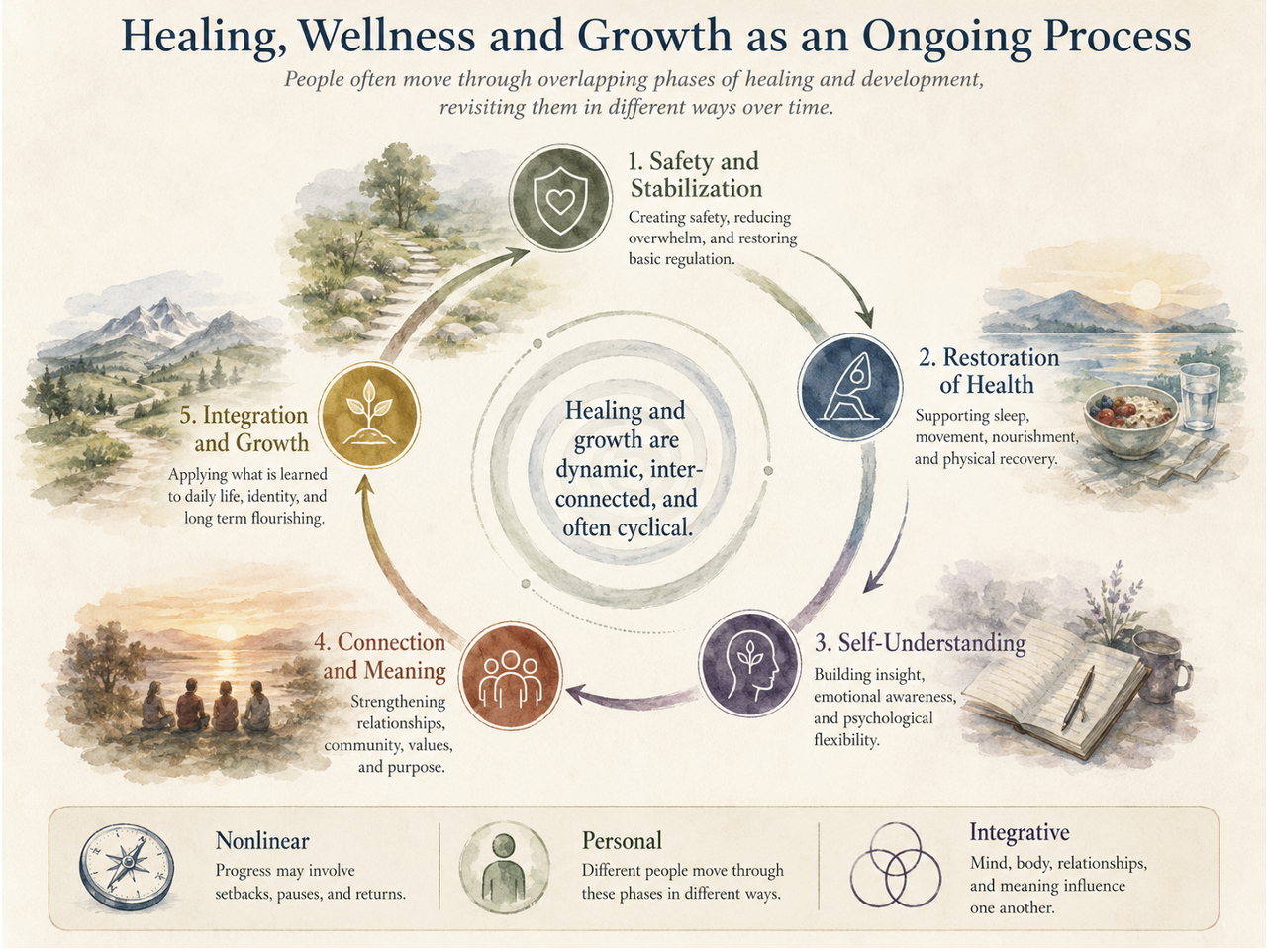
Figure
4. Healing and growth as an ongoing process. The phases are illustrative and do
not prescribe a universal clinical sequence.
Illustrative pathway examples
The following examples are hypothetical. They are not clinical recommendations, accounts of real individuals, or proof that the suggested combinations have been tested. Their purpose is to show how the same framework can lead to different questions rather than one standard wellness plan.
Exhaustion in a demanding life
Imagine a person who feels depleted and believes they need more discipline. Their schedule includes irregular work hours, caregiving, and little dependable time for rest. They have begun purchasing productivity tools and considering an intensive retreat, but have not clarified the nature of the exhaustion.
A whole person inquiry would avoid assuming that motivation is the main problem. It would consider the person's sleep opportunity, health concerns, emotional experience, daily demands, and available support. Relevant professional assessment may be needed. At the same time, practical questions about scheduling and caregiving remain important rather than becoming secondary to a medical explanation.
The eventual pathway might include clinical care, changes in demands, or help with responsibilities. Its success would be judged partly by whether ordinary life becomes more manageable. A retreat might still be personally appealing, but it should not be assumed to resolve the circumstances to which the person returns. This example applies the sleep, determinants, and behavior change perspectives discussed earlier. [106]
Isolation despite many activities
Imagine a person who attends classes and professional events but feels lonely. A simple count of social contacts suggests that they are highly connected. A closer conversation reveals that most interactions are brief, performance-oriented, or lacking in mutual trust.
The pathway question is not necessarily how to add more events. It may concern the quality and continuity of relationships, the person's opportunities for reciprocal contact, or barriers to feeling understood. A repeated shared activity could provide a setting for connection, but the activity would be evaluated by the relationships it permits rather than by attendance alone.
This example illustrates why loneliness, isolation, and social support should be distinguished. It also shows why a commercial community cannot establish its value merely by displaying a large membership count. The relevant outcome is the participant's experience of meaningful connection and the actual support available. [107]
Pain alongside a valued activity
Imagine a person living with persistent pain who wants to return to a creative or social activity. They are offered several explanations, each claiming that one method addresses the root cause. The competing claims make it difficult to decide what to do.
A person-centered inquiry would preserve the need for appropriate clinical evaluation while asking what the pain prevents and what the person values. A pathway might involve treatment, adaptation of the activity, and support for participation. If a complementary approach is considered, its evidence should be matched to the relevant pain condition and comparison rather than generalized from an unrelated study.
Progress might include a change in symptoms, greater participation, or less burden from managing the condition. Those outcomes should be recorded separately. Improvement in one area would not prove that the underlying cause had been eliminated. This example draws on patient-centered care and the condition-specific interpretation of exercise and acupuncture evidence. [108]
A search for meaning after a transition
Imagine a person whose long-standing role has ended. They are not primarily seeking symptom relief; they want a sense of direction. They are drawn to the promise of an experience that will reveal their true purpose immediately.
A meaning-focused pathway might instead begin by exploring what still matters, what the former role provided, and which possibilities are available now. Relationships, learning, creative participation, spiritual reflection, or contribution could each be relevant. The person may need time to discover which activities carry significance outside an initial burst of enthusiasm.
The goal would not be to manufacture constant certainty. It might be to develop a direction that is sufficiently meaningful and workable to guide action. The frameworks of meaning, psychological well-being, and self-determination help organize that inquiry without prescribing one answer. [109]
A powerful experience with uncertain consequences
Imagine a participant who leaves an immersive event convinced that they must immediately change work, relationships, and beliefs. They also feel confused and are unsure which impressions remain useful outside the event. The intensity of the experience has become the main evidence offered for its authority.
A careful integration conversation would separate what was felt, what is being inferred, and what actions are being considered. It would preserve room for uncertainty and for independent perspectives. If substantial distress or functional difficulty is present, appropriate clinical support may be needed. The participant would not be required to adopt the facilitator's interpretation or continue purchasing services.
The central lesson is that subjective significance and long-term benefit are different questions. Research on meaningful altered-state experiences can recognize the former without proving the latter in every case. Ethical support protects the participant's ongoing agency. [110]
Evaluating providers and programs
A credible provider should be able to explain the service clearly enough that a prospective participant can make an informed choice. The explanation should identify the intended goal, the activities involved, the provider's qualifications, relevant evidence, important limits, and the process for addressing problems. Vague promises of balance or transformation are not substitutes for that information.
Person-centered care makes this transparency part of the relationship: participants need enough information to judge whether the service fits their goals and circumstances. [111]
Claims and evidence
Ask what specific outcome the service is intended to improve. If the answer is a medical or psychological condition, ask which evidence concerns that condition and that intervention. A provider should not rely solely on a study of a different practice, an animal experiment, or a general paper about stress to support a precise treatment claim.
Ask what kind of evidence is being cited. Testimonials may describe genuine experiences, but they do not reveal how many people did not improve, experienced harm, or chose not to provide a testimonial. A theoretical explanation may make an intervention sound plausible without establishing that it is effective. Evidence becomes more informative when its design and limits are named.
Ask what the service is compared with. A claim that participants improved after attending does not establish that the program caused the improvement or that it is better than reasonable alternatives. The relevant alternative might be another treatment, a less expensive activity, or no immediate additional intervention. The comparison helps establish whether the added cost and effort are worthwhile.
Qualifications and accountability
Ask what the provider is qualified to do and how that qualification can be verified. Professional titles, training certificates, and lived experience can represent different forms of knowledge. None should be misrepresented as another. A person may have valuable experience without possessing the authority or competence to provide clinical treatment.
Ask who handles concerns and whether there is independent oversight. A service whose only complaint process is a conversation with the person being complained about offers limited accountability. The appropriate oversight varies by profession and location, so readers should verify the arrangements relevant to the actual provider rather than rely on a generic label.
Ask whether the provider has financial interests in products, referrals, repeat attendance, or affiliated services they recommend. A financial interest does not automatically invalidate advice, but disclosure helps the participant evaluate it. The participant should be able to understand when education becomes marketing.
Consent and practical arrangements
Ask what participation involves before agreeing. This includes group disclosure, touch, strenuous activity, changes in routine, spiritual framing, or any other element that may affect willingness to participate. Consent should be specific enough to be meaningful and should allow changes of mind.
Ask how a person can pause, decline an activity, or leave. The answer should not depend on accepting the provider's interpretation of discomfort. A participant may decide an activity is unsuitable even if others find it valuable. Respecting that decision is consistent with autonomy rather than evidence of a weak program. [112]
Ask about the full cost, likely time commitment, cancellation terms, privacy practices, and follow-up. These details affect the real burden of a pathway. A service that is beneficial in principle may still be impractical for a particular person. Transparency allows that decision to be made before substantial commitment.
Ethics safety and responsible communication
The ethical quality of a pathway is not separate from its value. A program can generate positive testimonials while also using coercive practices or making misleading claims. A broad wellness framework should therefore evaluate both outcomes and the conditions under which participation occurs.
Respect for autonomy includes understandable information, meaningful choice, and freedom to question. Care includes recognizing limits, responding to adverse effects, and making appropriate referrals. Fairness includes attention to access, cultural context, and the distribution of burdens. These principles align with the person-centered and public health perspectives that structure the article. [113]
Avoiding blame and dependency
Health difficulties should not be explained automatically as failures of belief, discipline, openness, or spiritual development. Such explanations can conceal an ineffective intervention or ignore conditions beyond the person's control. They can also make it harder for a participant to report that a program is not helping.
A provider should be able to recognize nonresponse without turning it into a character judgment. They should also be able to discuss ending or changing the service. A pathway designed to strengthen agency should not require permanent dependence on one person, group, or explanatory system.
Boundaries and vulnerability
Some pathways involve disclosure, altered states, close physical contact, or strong emotional experiences. These features can increase the importance of clear boundaries and independent accountability. The fact that a setting is spiritual, informal, or outside conventional health care does not make consent less important.
Participants should not have to accept intimate contact, financial commitments, public disclosure, or particular beliefs to prove trust. A leader's interpretation of what is healing does not override the participant's right to decline. Where a service is clinical, the relevant professional standards also apply and need to be verified in the actual setting.
Communicating uncertainty honestly
Responsible language preserves the difference between “may help,” “was associated with,” “improved an outcome in a study,” and “is established treatment for this condition.” Those phrases carry different levels of evidence. Replacing them all with “proven to heal” makes an article easier to market but less trustworthy.
The same care applies to negative claims. A limited evidence base does not establish that nobody can find value in a practice. It does restrict what a provider can responsibly promise. A person may choose an activity for enjoyment, cultural participation, or meaning without needing a medical justification. The claim becomes more demanding when treatment, prevention, or biological repair is asserted.
Measuring progress without reducing the person to a score
Measurement can help clarify whether a pathway is useful, but the choice of measure shapes what becomes visible. A symptom scale can detect change in a clinical concern. A functioning measure can show whether daily activity is easier. A well-being measure can capture aspects of life satisfaction or meaning. None alone represents the whole person. [114]
The outcome should match the original goal. If a program claims to improve social connection, attendance and satisfaction are incomplete measures. If it claims to treat a disorder, a report of feeling inspired is insufficient. If the goal is meaningful participation, a biological marker may be interesting but indirect. Clear matching between claim and outcome protects against substituting an easy-to-measure result for the one that matters.
Several perspectives on change
The person's own account is essential, particularly for pain, meaning, distress, and quality of life. It can be complemented by other information when appropriate, such as participation, clinical assessment, or the burden of care. Differences among these perspectives deserve inquiry rather than automatic dismissal.
For example, a person may report fewer symptoms but feel that a program has consumed too much time or money. Another may report continuing symptoms while being better able to participate in family life. A whole person review can acknowledge both dimensions. It need not force every outcome into a single verdict of success or failure.
Timing also matters. Immediate relief may be valuable, but a claim of lasting change requires follow-up. Conversely, a pathway directed at learning or adaptation may not produce an immediate dramatic effect. The evaluation period should fit the goal and evidence, while still allowing earlier review if the approach is burdensome or harmful.
Burden and unwanted effects
An honest review asks about more than benefits. The person may experience unwanted effects, opportunity costs, financial strain, or conflict with other care. These outcomes can change whether a pathway is worthwhile even when some benefit is present. A service should welcome that information rather than seek only positive stories.
Measurement also needs proportion. Constant self-monitoring can turn ordinary life into an evaluation project. A practical approach gathers enough information to guide decisions without making tracking the main activity. The appropriate balance depends on the clinical context and the person's preferences; there is no universal wellness dashboard that everyone must maintain.
Research limits and unanswered questions
Research across these fields leaves several practical questions unresolved. Evidence about a defined intervention may be more informative than evidence about a loosely specified wellness category. Even when benefits are demonstrated, their durability, accessibility, and distribution across different groups need further study.
For combined programs, researchers need to establish which components contribute to benefit and which add burden. They also need to examine unwanted effects, outcomes that participants value, and the influence of cost and access outside research settings. The whole person research workshop identifies methodological challenges relevant to these questions. [115]
Studying complex interventions
A program can be evaluated as a package, but that leaves questions about its components and delivery. Researchers may need designs that examine mechanisms, compare combinations, or study implementation in ordinary services. Complexity does not make evaluation impossible. It means that the research question and method must be aligned rather than expecting one design to answer every question. [116]
The distinction between efficacy and real-world usefulness also matters. An intervention delivered with extensive resources and carefully selected participants may work differently where time, training, or access is limited. Translation requires attention to what the program actually needs in order to be delivered responsibly, not only whether its name can be adopted elsewhere.
Better personalization and broader representation
Personalization research needs reliable prediction rather than attractive subgroup stories. The work by Kent and colleagues and by van Klaveren and colleagues highlights both the promise and the risk of estimating differences in treatment effects. Models need appropriate validation before being used to allocate care confidently. [117]
Research also needs to account for people whose circumstances differ from those most easily recruited. A program's accessibility, language, cost, and demands can shape who participates and who is missing from the evidence. The public health perspective makes those exclusions relevant to interpretation rather than treating them as administrative details. [118]
Conclusion
Healing, wellness, and growth describe overlapping but distinct human aims. Relief from symptoms matters. So do meaningful relationships, participation, dignity, learning, and the conditions that make a life livable. Together, these aims call for attention to both personal experience and the conditions of daily life. [119]
The most useful pathway begins with a clear understanding of the person's concern and desired outcome. It considers evidence, safety, preferences, and practical constraints. It distinguishes treatment from support and personal development, coordinates relevant help, and remains open to revision. It also recognizes that some barriers require changes in institutions and environments rather than more effort from the individual. [120]
Growth does not have to be dramatic to matter. Healing does not have to mean cure. Well-being does not require constant happiness or independence from others. A person may be moving toward a better life by receiving care, setting a boundary, maintaining a valued relationship, adapting an activity, or finding a workable way to live with uncertainty.
Reference annotations
Bracketed numbers in the article correspond to the numbered annotations below. Source numbers point to the full bibliography. An annotation identifies the basis of the associated discussion; illustrative examples and ethical applications are identified as such in the text.
1. WHO (2025), Mental health (Source 1); WHO (2025), Social determinants of health equity (Source 3); Borrell-Carrio, Suchman, and Epstein (2004), The biopsychosocial model (Source 4); VanderWeele (2017), Human flourishing (Source 8).
2. Borrell-Carrio, Suchman, and Epstein (2004), The biopsychosocial model (Source 4); Las Heras, Grau-Grau, and Rofcanin, editors (2023), Human Flourishing (Source 37). The discussion of palliative care in Human Flourishing addresses well-being and dignity when cure is not possible.
3. WHO (2009), Milestones in Health Promotion and the Ottawa Charter (Source 5); WHO (2005), Preventing Chronic Diseases (Source 18).
4. Ryff (2014), Psychological well-being (Source 19); Ryan and Deci (2000), Self-determination theory (Source 20).
5. WHO (2025), Social determinants of health equity (Source 3); Solar and Irwin (2010), Social determinants framework (Source 12).
6. WHO (2025), Mental health (Source 1); Ryff (2014), Psychological well-being (Source 19).
7. VanderWeele (2017), Human flourishing (Source 8).
8. Ryff (2014), Psychological well-being (Source 19).
9. Ryan and Deci (2000), Self-determination theory (Source 20).
10. Seligman (2018), PERMA (Source 41).
11. Ryff (2014), Psychological well-being (Source 19); Las Heras, Grau-Grau, and Rofcanin, editors (2023), Human Flourishing (Source 37). Ryff discusses eudaimonia across adulthood; other chapters consider work, family, fatherhood, and palliative care.
12. Borrell-Carrio, Suchman, and Epstein (2004), The biopsychosocial model (Source 4).
13. NCCIH (2021), Strategic Plan FY 2021–2025 (Source 6).
14. Plsek and Greenhalgh (2001), Complexity in health care (Source 61).
15. Maizes, Rakel, and Niemiec (2009), Integrative Medicine and Patient-Centered Care (Source 48); Epstein and Street (2011), Patient-centered care (Source 49); Mead and Bower (2000), Patient-centredness framework (Source 50).
16. NCCIH (2021), Whole person research workshop summary (Source 63).
17. Solar and Irwin (2010), Social determinants framework (Source 12).
18. WHO (2025), Social determinants of health equity (Source 3); WHO and Calouste Gulbenkian Foundation (2014), Social Determinants of Mental Health (Source 27).
19. WHO (2009), Milestones in Health Promotion and the Ottawa Charter (Source 5).
20. Lee and Kim (2015), Community well-being (Source 28).
21. Frankl (1992), Man's Search for Meaning (Source 38); Holt-Lunstad, Smith, and Layton (2010), Social relationships and mortality (Source 25); Hofmann and colleagues (2012), CBT review of meta-analyses (Source 22); Mitchell and colleagues (2021), MDMA-assisted therapy trial for severe PTSD (Source 55); NCCIH (2021), Whole person research workshop summary (Source 63).
22. Hill and Turiano (2014), Purpose and mortality (Source 36).
23. Goyal and colleagues (2014), Meditation programs review (Source 42); Vickers and colleagues (2012), Acupuncture for chronic pain (Source 47).
24. Rohricht (2009), Body oriented psychotherapy review (Source 45); Mitchell and colleagues (2021), MDMA-assisted therapy trial for severe PTSD (Source 55); NCCIH (2021), Strategic Plan FY 2021–2025 (Source 6).
25. Kent, Steyerberg, and van Klaveren (2018), Personalized evidence based medicine (Source 11).
26. Precision Medicine Initiative Working Group (2015), Cohort program report (Source 10).
27. van Klaveren and colleagues (2019), Treatment-effect heterogeneity and mistargeting (Source 9).
28. Epstein and Street (2011), Patient-centered care (Source 49); Mead and Bower (2000), Patient-centredness framework (Source 50).
29. WHO (2020), Physical activity and sedentary behaviour guidelines (Source 13); Warburton, Nicol, and Bredin (2006), Physical activity and health (Source 14); Pedersen and Saltin (2015), Exercise as medicine (Source 51).
30. Pedersen and Saltin (2015), Exercise as medicine (Source 51).
31. Watson and colleagues (2015), Adult sleep consensus methodology (Source 15).
32. Dietary Guidelines Advisory Committee (2020), Scientific report (Source 16); Katz and Meller (2014), Dietary patterns and health (Source 17).
33. Solar and Irwin (2010), Social determinants framework (Source 12).
34. WHO (2005), Preventing Chronic Diseases (Source 18).
35. Mateos-Aparicio and Rodriguez-Moreno (2019), Brain plasticity (Source 2).
36. Ryan and Deci (2000), Self-determination theory (Source 20); Las Heras, Grau-Grau, and Rofcanin, editors (2023), Human Flourishing (Source 37). Colin Strong, Human Flourishing Through Behaviour Change, pp. 85–96.
37. de Vos, Mason, and Kuypers (2021), Psychedelics and neuroplasticity (Source 58).
38. WHO (2025), Mental health (Source 1).
39. Hofmann and colleagues (2012), CBT review of meta-analyses (Source 22).
40. Hayes and colleagues (2006), Acceptance and commitment therapy (Source 23); Kashdan and Rottenberg (2010), Psychological flexibility (Source 24).
41. Hayes and colleagues (2006), Acceptance and commitment therapy (Source 23).
42. Southwick and colleagues (2014), Resilience (Source 21); Mitchell and colleagues (2021), MDMA-assisted therapy trial for severe PTSD (Source 55).
43. Southwick and colleagues (2014), Resilience (Source 21).
44. Epstein and Street (2011), Patient-centered care (Source 49); Mead and Bower (2000), Patient-centredness framework (Source 50).
45. Ryff (2014), Psychological well-being (Source 19); Frankl (1992), Man's Search for Meaning (Source 38).
46. Holt-Lunstad, Smith, and Layton (2010), Social relationships and mortality (Source 25); Holt-Lunstad and colleagues (2015), Loneliness and social isolation (Source 26).
47. Coan and Maresh (2014), Social baseline theory (Source 29).
48. Lee and Kim (2015), Community well-being (Source 28).
49. Las Heras, Grau-Grau, and Rofcanin, editors (2023), Human Flourishing (Source 37). Barraza, Las Heras, and Rofcanin, Work, Family, and Human Flourishing, pp. 97–116.
50. WHO (2025), Social determinants of health equity (Source 3); Solar and Irwin (2010), Social determinants framework (Source 12); Las Heras, Grau-Grau, and Rofcanin, editors (2023), Human Flourishing (Source 37). The work and family discussion supplies the role-based context; the WHO sources address structural conditions.
51. Las Heras, Grau-Grau, and Rofcanin, editors (2023), Human Flourishing (Source 37). Marc Grau-Grau, Fatherhood Involvement as a Source of Human Flourishing, pp. 149–162.
52. Twohig-Bennett and Jones (2018), Greenspace exposure and health (Source 30); Capaldi, Dopko, and Zelenski (2014), Nature connectedness and happiness (Source 31).
53. Kaplan (1995), Restorative benefits of nature (Source 32).
54. Ulrich (1983), Aesthetic and affective responses to nature (Source 33); Kellert (1995), Biophila hypothesis and the good life (Source 35).
55. Srinivasan, O'Fallon, and Dearry (2003), Built environment and public health (Source 34).
56. Kellert (1995), Biophila hypothesis and the good life (Source 35).
57. Steger (2017), Meaning in life and wellbeing (Source 54).
58. Hill and Turiano (2014), Purpose and mortality (Source 36).
59. VanderWeele (2017), Human flourishing (Source 8); Las Heras, Grau-Grau, and Rofcanin, editors (2023), Human Flourishing (Source 37).
60. Frankl (1992), Man's Search for Meaning (Source 38).
61. Park, Peterson, and Seligman (2004), Character strengths and well-being (Source 53); Bolier and colleagues (2013), Positive psychology interventions (Source 52).
62. Bolier and colleagues (2013), Positive psychology interventions (Source 52).
63. Seligman (2018), PERMA (Source 41).
64. Las Heras, Grau-Grau, and Rofcanin, editors (2023), Human Flourishing (Source 37). Toussaint, Worthington, Webb, Wilson, and Williams, Forgiveness in Human Flourishing, pp. 117–132.
65. Csikszentmihalyi (2014), Flow and the Foundations of Positive Psychology (Source 40).
66. Las Heras, Grau-Grau, and Rofcanin, editors (2023), Human Flourishing (Source 37). The volume includes chapters on fashion, literature, and architecture as contexts for considering flourishing.
67. Ryan and Deci (2000), Self-determination theory (Source 20); Csikszentmihalyi (2014), Flow and the Foundations of Positive Psychology (Source 40).
68. Ryan and Deci (2000), Self-determination theory (Source 20); Las Heras, Grau-Grau, and Rofcanin, editors (2023), Human Flourishing (Source 37). Colin Strong, Human Flourishing Through Behaviour Change, pp. 85–96.
69. Grossman and colleagues (2004), Mindfulness-based stress reduction (Source 39); Goyal and colleagues (2014), Meditation programs review (Source 42).
70. Goyal and colleagues (2014), Meditation programs review (Source 42).
71. Hayes and colleagues (2006), Acceptance and commitment therapy (Source 23); Kashdan and Rottenberg (2010), Psychological flexibility (Source 24).
72. Goyal and colleagues (2014), Meditation programs review (Source 42).
73. Russo, Santarelli, and O'Rourke (2017), Slow breathing physiology (Source 43); Joseph and colleagues (2005), Slow breathing and hypertension (Source 44).
74. Rohricht (2009), Body oriented psychotherapy review (Source 45).
75. Epstein and Street (2011), Patient-centered care (Source 49); Mead and Bower (2000), Patient-centredness framework (Source 50).
76. Porges (2011), The Polyvagal Theory (Source 46).
77. Institute of Medicine (2009), Integrative Medicine and the Health of the Public (Source 7); Maizes, Rakel, and Niemiec (2009), Integrative Medicine and Patient-Centered Care (Source 48); Jonas and colleagues (2013), Evolution of complementary and alternative medicine (Source 62).
78. NCCIH (2021), Strategic Plan FY 2021–2025 (Source 6).
79. Epstein and Street (2011), Patient-centered care (Source 49); Mead and Bower (2000), Patient-centredness framework (Source 50).
80. Vickers and colleagues (2012), Acupuncture for chronic pain (Source 47).
81. Maizes, Rakel, and Niemiec (2009), Integrative Medicine and Patient-Centered Care (Source 48); Epstein and Street (2011), Patient-centered care (Source 49); NCCIH (2021), Whole person research workshop summary (Source 63).
82. Las Heras, Grau-Grau, and Rofcanin, editors (2023), Human Flourishing (Source 37); Ryan and Deci (2000), Self-determination theory (Source 20). See Colin Strong, Human Flourishing Through Behaviour Change, in Source 37.
83. Ryan and Deci (2000), Self-determination theory (Source 20).
84. Las Heras, Grau-Grau, and Rofcanin, editors (2023), Human Flourishing (Source 37). Colin Strong, Human Flourishing Through Behaviour Change, pp. 85–96.
85. Kashdan and Rottenberg (2010), Psychological flexibility (Source 24).
86. Ryan and Deci (2000), Self-determination theory (Source 20); Epstein and Street (2011), Patient-centered care (Source 49).
87. Epstein and Street (2011), Patient-centered care (Source 49); Mead and Bower (2000), Patient-centredness framework (Source 50).
88. NCCIH (2021), Whole person research workshop summary (Source 63).
89. Ryan and Deci (2000), Self-determination theory (Source 20); Kashdan and Rottenberg (2010), Psychological flexibility (Source 24); Las Heras, Grau-Grau, and Rofcanin, editors (2023), Human Flourishing (Source 37). Colin Strong, Human Flourishing Through Behaviour Change, pp. 85–96.
90. Mitchell and colleagues (2021), MDMA-assisted therapy trial for severe PTSD (Source 55); Wilkinson and colleagues (2018), Intravenous ketamine and suicidal ideation (Source 56); Luoma and colleagues (2020), Psychedelic-assisted therapy meta-analysis (Source 57); de Vos, Mason, and Kuypers (2021), Psychedelics and neuroplasticity (Source 58); Griffiths and colleagues (2008), Psilocybin experience and later personal meaning (Source 59); Nour and colleagues (2016), Ego-Dissolution Inventory (Source 60).
91. Mitchell and colleagues (2021), MDMA-assisted therapy trial for severe PTSD (Source 55).
92. Mitchell and colleagues (2021), MDMA-assisted therapy trial for severe PTSD (Source 55); Luoma and colleagues (2020), Psychedelic-assisted therapy meta-analysis (Source 57).
93. Luoma and colleagues (2020), Psychedelic-assisted therapy meta-analysis (Source 57).
94. Wilkinson and colleagues (2018), Intravenous ketamine and suicidal ideation (Source 56).
95. de Vos, Mason, and Kuypers (2021), Psychedelics and neuroplasticity (Source 58).
96. Griffiths and colleagues (2008), Psilocybin experience and later personal meaning (Source 59).
97. Nour and colleagues (2016), Ego-Dissolution Inventory (Source 60).
98. VanderWeele (2017), Human flourishing (Source 8); Frankl (1992), Man's Search for Meaning (Source 38); Steger (2017), Meaning in life and wellbeing (Source 54).
99. Griffiths and colleagues (2008), Psilocybin experience and later personal meaning (Source 59); Nour and colleagues (2016), Ego-Dissolution Inventory (Source 60).
100. Ryff (2014), Psychological well-being (Source 19); Las Heras, Grau-Grau, and Rofcanin, editors (2023), Human Flourishing (Source 37). Rodríguez-Prat and Monforte-Royo, Human Flourishing Until the End: The Core Values of Palliative Care, pp. 133–148.
101. Borrell-Carrio, Suchman, and Epstein (2004), The biopsychosocial model (Source 4); Epstein and Street (2011), Patient-centered care (Source 49).
102. Ryff (2014), Psychological well-being (Source 19).
103. Las Heras, Grau-Grau, and Rofcanin, editors (2023), Human Flourishing (Source 37). Rodríguez-Prat and Monforte-Royo, Human Flourishing Until the End: The Core Values of Palliative Care, pp. 133–148.
104. Borrell-Carrio, Suchman, and Epstein (2004), The biopsychosocial model (Source 4); WHO (2009), Milestones in Health Promotion and the Ottawa Charter (Source 5); Epstein and Street (2011), Patient-centered care (Source 49).
105. NCCIH (2021), Strategic Plan FY 2021–2025 (Source 6); NCCIH (2021), Whole person research workshop summary (Source 63).
106. Watson and colleagues (2015), Adult sleep consensus methodology (Source 15); Solar and Irwin (2010), Social determinants framework (Source 12); Las Heras, Grau-Grau, and Rofcanin, editors (2023), Human Flourishing (Source 37). Colin Strong, Human Flourishing Through Behaviour Change, pp. 85–96.
107. Holt-Lunstad, Smith, and Layton (2010), Social relationships and mortality (Source 25); Holt-Lunstad and colleagues (2015), Loneliness and social isolation (Source 26); Lee and Kim (2015), Community well-being (Source 28).
108. Epstein and Street (2011), Patient-centered care (Source 49); Pedersen and Saltin (2015), Exercise as medicine (Source 51); Vickers and colleagues (2012), Acupuncture for chronic pain (Source 47).
109. Steger (2017), Meaning in life and wellbeing (Source 54); Ryff (2014), Psychological well-being (Source 19); Ryan and Deci (2000), Self-determination theory (Source 20).
110. Griffiths and colleagues (2008), Psilocybin experience and later personal meaning (Source 59); Nour and colleagues (2016), Ego-Dissolution Inventory (Source 60); Epstein and Street (2011), Patient-centered care (Source 49).
111. Epstein and Street (2011), Patient-centered care (Source 49); Mead and Bower (2000), Patient-centredness framework (Source 50).
112. Ryan and Deci (2000), Self-determination theory (Source 20); Epstein and Street (2011), Patient-centered care (Source 49).
113. WHO (2009), Milestones in Health Promotion and the Ottawa Charter (Source 5); Epstein and Street (2011), Patient-centered care (Source 49); Mead and Bower (2000), Patient-centredness framework (Source 50).
114. VanderWeele (2017), Human flourishing (Source 8); Ryff (2014), Psychological well-being (Source 19); NCCIH (2021), Whole person research workshop summary (Source 63).
115. NCCIH (2021), Whole person research workshop summary (Source 63).
116. Plsek and Greenhalgh (2001), Complexity in health care (Source 61); NCCIH (2021), Whole person research workshop summary (Source 63).
117. Kent, Steyerberg, and van Klaveren (2018), Personalized evidence based medicine (Source 11); van Klaveren and colleagues (2019), Treatment-effect heterogeneity and mistargeting (Source 9).
118. WHO (2025), Social determinants of health equity (Source 3); Solar and Irwin (2010), Social determinants framework (Source 12).
119. Borrell-Carrio, Suchman, and Epstein (2004), The biopsychosocial model (Source 4); VanderWeele (2017), Human flourishing (Source 8); Ryff (2014), Psychological well-being (Source 19).
120. WHO (2009), Milestones in Health Promotion and the Ottawa Charter (Source 5); Solar and Irwin (2010), Social determinants framework (Source 12); Epstein and Street (2011), Patient-centered care (Source 49).
Sources and bibliography
The following 63 sources are identified by number in the reference annotations. Links lead to publications, official report pages, publisher or catalog records, or the identified journal version. Some destinations require institutional access.
1. World Health Organization. (2025). Mental health. Source page
2. Mateos-Aparicio, P., & Rodriguez-Moreno, A. (2019). The impact of studying brain plasticity. Frontiers in Cellular Neuroscience, 13, Article 66. Source page
3. World Health Organization. (2025). World report on social determinants of health equity. Source page
4. Borrell-Carrio, F., Suchman, A. L., & Epstein, R. M. (2004). The biopsychosocial model 25 years later: Principles, practice, and scientific inquiry. Annals of Family Medicine, 2(6), 576-582. Source page
5. World Health Organization. (2009). Milestones in Health Promotion: Statements from Global Conferences. Geneva: World Health Organization. Ottawa Charter for Health Promotion, pp. 1-5. Source page
6. National Center for Complementary and Integrative Health. (2021). NCCIH Strategic Plan FY 2021-2025: Mapping a Pathway to Research on Whole Person Health. Bethesda, MD: U.S. Department of Health and Human Services, National Institutes of Health. Source page
7. Institute of Medicine. (2009). Integrative Medicine and the Health of the Public: A Summary of the February 2009 Summit. Washington, DC: The National Academies Press. Source page
8. VanderWeele, T. J. (2017). On the promotion of human flourishing. Proceedings of the National Academy of Sciences, 114(31), 8148-8156. Source page
9. van Klaveren, D., Balan, T. A., Steyerberg, E. W., & Kent, D. M. (2019). Models with interactions overestimated heterogeneity of treatment effects and were prone to treatment mistargeting. Journal of Clinical Epidemiology, 114, 72-83. Source page
10. Precision Medicine Initiative Working Group. (2015). The Precision Medicine Initiative Cohort Program: Building a Research Foundation for 21st Century Medicine. Report to the Advisory Committee to the Director, National Institutes of Health. Source page
11. Kent, D. M., Steyerberg, E. W., & van Klaveren, D. (2018). Personalized evidence based medicine: Predictive approaches to heterogeneous treatment effects. BMJ, 363, k4245. Source page
12. Solar, O., & Irwin, A. (2010). A Conceptual Framework for Action on the Social Determinants of Health. Geneva: World Health Organization. Social Determinants of Health Discussion Paper 2. Source page
13. World Health Organization. (2020). WHO Guidelines on Physical Activity and Sedentary Behaviour. Geneva: World Health Organization. Source page
14. Warburton, D. E. R., Nicol, C. W., & Bredin, S. S. D. (2006). Health benefits of physical activity: The evidence. CMAJ, 174(6), 801-809. Source page
15. Watson, N. F., et al. (2015). Joint Consensus Statement of the American Academy of Sleep Medicine and Sleep Research Society on the Recommended Amount of Sleep for a Healthy Adult: Methodology and Discussion. Journal of Clinical Sleep Medicine, 11(8), 931-952. Source page
16. Dietary Guidelines Advisory Committee. (2020). Scientific Report of the 2020 Dietary Guidelines Advisory Committee. Advisory Report to the Secretary of Agriculture and Secretary of Health and Human Services. Source page
17. Katz, D. L., & Meller, S. (2014). Can we say what diet is best for health? Annual Review of Public Health, 35, 83-103. Source page
18. World Health Organization. (2005). Preventing Chronic Diseases: A Vital Investment. Geneva: World Health Organization. Source page
19. Ryff, C. D. (2014). Psychological well-being revisited: Advances in science and practice. Psychotherapy and Psychosomatics, 83(1), 10-28. Source page
20. Ryan, R. M., & Deci, E. L. (2000). Self-determination theory and the facilitation of intrinsic motivation, social development, and well-being. American Psychologist, 55(1), 68-78. Source page
21. Southwick, S. M., Bonanno, G. A., Masten, A. S., Panter-Brick, C., & Yehuda, R. (2014). Resilience definitions, theory, and challenges: Interdisciplinary perspectives. European Journal of Psychotraumatology, 5, 25338. Source page
22. Hofmann, S. G., Asnaani, A., Vonk, I. J. J., Sawyer, A. T., & Fang, A. (2012). The efficacy of cognitive behavioral therapy: A review of meta-analyses. Cognitive Therapy and Research, 36(5), 427-440. Source page
23. Hayes, S. C., Luoma, J. B., Bond, F. W., Masuda, A., & Lillis, J. (2006). Acceptance and Commitment Therapy: Model, processes and outcomes. Behaviour Research and Therapy, 44(1), 1-25. Source page
24. Kashdan, T. B., & Rottenberg, J. (2010). Psychological flexibility as a fundamental aspect of health. Clinical Psychology Review, 30(7), 865-878. Source page
25. Holt-Lunstad, J., Smith, T. B., & Layton, J. B. (2010). Social relationships and mortality risk: A meta-analytic review. PLoS Medicine, 7(7), e1000316. Source page
26. Holt-Lunstad, J., Smith, T. B., Baker, M., Harris, T., & Stephenson, D. (2015). Loneliness and social isolation as risk factors for mortality: A meta-analytic review. Perspectives on Psychological Science, 10(2), 227-237. Source page
27. World Health Organization & Calouste Gulbenkian Foundation. (2014). Social Determinants of Mental Health. Geneva: World Health Organization. Source page
28. Lee, S. J., & Kim, Y. (2015). Searching for the meaning of community well-being. In S. J. Lee, Y. Kim, & R. Phillips (Eds.), Community Well-Being and Community Development: Conceptions and Applications (pp. 9-23). Springer International Publishing. Source page
29. Coan, J. A., & Maresh, E. L. (2014). Social baseline theory and the social regulation of emotion. In J. J. Gross (Ed.), Handbook of Emotion Regulation (2nd ed., pp. 221-236). Guilford Press. Source page for the containing handbook
30. Twohig-Bennett, C., & Jones, A. (2018). The health benefits of the great outdoors: A systematic review and meta-analysis of greenspace exposure and health outcomes. Environmental Research, 166, 628-637. Source page
31. Capaldi, C. A., Dopko, R. L., & Zelenski, J. M. (2014). The relationship between nature connectedness and happiness: A meta-analysis. Frontiers in Psychology, 5, Article 976. Source page
32. Kaplan, S. (1995). The restorative benefits of nature: Toward an integrative framework. Journal of Environmental Psychology, 15(3), 169-182. Source page
33. Ulrich, R. S. (1983). Aesthetic and affective response to natural environment. In I. Altman & J. Wohlwill (Eds.), Human Behavior and Environment, Vol. 6: Behavior and the Natural Environment (pp. 85-125). Plenum Press. Source page
34. Srinivasan, S., O'Fallon, L. R., & Dearry, A. (2003). Creating healthy communities, healthy homes, healthy people: Initiating a research agenda on the built environment and public health. American Journal of Public Health, 93(9), 1446-1450. Source page
35. Kellert, S. R. (1995). The Biophila Hypothesis: Aristotelian Echoes of the 'Good Life'. In S. Ito & Y. Yasuda (Eds.), Nature and Humankind in the Age of Environmental Crisis (pp. 201–221). International Research Center for Japanese Studies. International Symposium 6. Source page
36. Hill, P. L., & Turiano, N. A. (2014). Purpose in life as a predictor of mortality across adulthood. Psychological Science, 25(7), 1482-1486. Source page
37. Las Heras, M., Grau-Grau, M., & Rofcanin, Y. (Eds.). (2023). Human Flourishing: A Multidisciplinary Perspective on Neuroscience, Health, Organizations and Arts. Springer Nature. Source page
38. Frankl, V. E. (1992). Man's Search for Meaning: An Introduction to Logotherapy (4th ed.). Beacon Press. Original work published 1946. Source catalog record for the fourth edition
39. Grossman, P., Niemann, L., Schmidt, S., & Walach, H. (2004). Mindfulness-based stress reduction and health benefits: A meta-analysis. Journal of Psychosomatic Research, 57(1), 35-43. Source page
40. Csikszentmihalyi, M. (2014). Flow and the Foundations of Positive Psychology. Springer. Source page
41. Seligman, M. E. P. (2018). PERMA and the building blocks of well-being. The Journal of Positive Psychology, 13(4), 333-335. Source page
42. Goyal, M., et al. (2014). Meditation programs for psychological stress and well-being: A systematic review and meta-analysis. JAMA Internal Medicine, 174(3), 357-368. Source page
43. Russo, M. A., Santarelli, D. M., & O'Rourke, D. (2017). The physiological effects of slow breathing in the healthy human. Breathe, 13(4), 298-309. Source page
44. Joseph, C. N., Porta, C., Casucci, G., Casiraghi, N., Maffeis, M., Rossi, M., & Bernardi, L. (2005). Slow breathing improves arterial baroreflex sensitivity and decreases blood pressure in essential hypertension. Hypertension, 46(4), 714-718. Source page
45. Rohricht, F. (2009). Body oriented psychotherapy. The state of the art in empirical research and evidence-based practice: A clinical perspective. Body, Movement and Dance in Psychotherapy, 4(2), 135-156. Source page
46. Porges, S. W. (2011). The Polyvagal Theory: Neurophysiological Foundations of Emotions, Attachment, Communication, and Self-Regulation. W. W. Norton & Company. Source page
47. Vickers, A. J., et al. (2012). Acupuncture for chronic pain: Individual patient data meta-analysis. Archives of Internal Medicine, 172(19), 1444-1453. Source page
48. Maizes, V., Rakel, D., & Niemiec, C. (2009). Integrative Medicine and Patient-Centered Care. Commissioned paper for the Institute of Medicine Summit on Integrative Medicine and the Health of the Public. Washington, DC: Institute of Medicine. Source page for the published journal version The commissioned paper was the version consulted; the link identifies its related 2009 Explore journal publication.
49. Epstein, R. M., & Street, R. L., Jr. (2011). The values and value of patient-centered care. Annals of Family Medicine, 9(2), 100-103. Source page
50. Mead, N., & Bower, P. (2000). Patient-centredness: A conceptual framework and review of the empirical literature. Social Science & Medicine, 51(7), 1087-1110. Source page
51. Pedersen, B. K., & Saltin, B. (2015). Exercise as medicine - evidence for prescribing exercise as therapy in 26 different chronic diseases. Scandinavian Journal of Medicine & Science in Sports, 25(Suppl. 3), 1-72. Source page
52. Bolier, L., Haverman, M., Westerhof, G. J., Riper, H., Smit, F., & Bohlmeijer, E. (2013). Positive psychology interventions: A meta-analysis of randomized controlled studies. BMC Public Health, 13, 119. Source page
53. Park, N., Peterson, C., & Seligman, M. E. P. (2004). Strengths of character and well-being. Journal of Social and Clinical Psychology, 23(5), 603-619. Source page
54. Steger, M. F. (2017). Meaning in life and wellbeing. In M. Slade, L. Oades, & A. Jarden (Eds.), Wellbeing, Recovery and Mental Health (pp. 75-85). Cambridge University Press. Source page
55. Mitchell, J. M., et al. (2021). MDMA-assisted therapy for severe PTSD: A randomized, double-blind, placebo-controlled phase 3 study. Nature Medicine, 27(6), 1025-1033. Source page
56. Wilkinson, S. T., et al. (2018). The effect of a single dose of intravenous ketamine on suicidal ideation: A systematic review and individual participant data meta-analysis. American Journal of Psychiatry, 175(2), 150-158. Source page
57. Luoma, J. B., Chwyl, C., Bathje, G. J., Davis, A. K., & Lancelotta, R. (2020). A meta-analysis of placebo-controlled trials of psychedelic-assisted therapy. Journal of Psychoactive Drugs, 52(4), 289-299. Source page
58. de Vos, C. M. H., Mason, N. L., & Kuypers, K. P. C. (2021). Psychedelics and neuroplasticity: A systematic review unraveling the biological underpinnings of psychedelics. Frontiers in Psychiatry, 12, 724606. Source page
59. Griffiths, R. R., Richards, W. A., Johnson, M. W., McCann, U. D., & Jesse, R. (2008). Mystical-type experiences occasioned by psilocybin mediate the attribution of personal meaning and spiritual significance 14 months later. Journal of Psychopharmacology, 22(6), 621-632. Source page
60. Nour, M. M., Evans, L., Nutt, D., & Carhart-Harris, R. L. (2016). Ego-dissolution and psychedelics: Validation of the Ego-Dissolution Inventory (EDI). Frontiers in Human Neuroscience, 10, 269. Source page
61. Plsek, P. E., & Greenhalgh, T. (2001). The challenge of complexity in health care. BMJ, 323(7313), 625-628. Source page
62. Jonas, W. B., Eisenberg, D., Hufford, D., & Crawford, C. (2013). The evolution of complementary and alternative medicine (CAM) in the USA over the last 20 years. Forschende Komplementarmedizin, 20(1), 65-72. Source page
63. National Center for Complementary and Integrative Health. (2021). Methodological Approaches for Whole Person Research Workshop Summary. National Institutes of Health. Bethesda, MD: NCCIH. Source page