Psychedelics and Mental Health: What Does the Evidence Actually Show?
How strong is the scientific evidence behind the mental-health claims people routinely hear about psychedelics?
Psychedelics are often discussed as though they were one medicine producing one kind of result. The research does not support that simplification. Psilocybin, LSD, ayahuasca or DMT, MDMA, ketamine, ibogaine, and low-dose “microdosing” practices differ in pharmacology, risk, legal status, therapeutic setting, and maturity of evidence. A carefully screened patient receiving a measured dose with preparation, hours of clinical support, and follow-up psychotherapy is not undergoing the same intervention as a person taking an unknown substance without supervision.
The most accurate summary is therefore neither “psychedelics work” nor “the evidence is only hype.” Meaningful human evidence exists in several mental-health domains, and some controlled trials have produced effects large enough to justify serious clinical research. But the confidence warranted by those results varies sharply. Depression has encouraging controlled evidence across several compounds but unresolved questions about blinding, durability, and real-world delivery. Anxiety evidence overlaps heavily with depression and serious-illness research. For PTSD, the most developed signal belongs to MDMA-assisted therapy, not classic psychedelics as a class. Substance-use research is promising for alcohol and tobacco but still small and uneven. In life-threatening illness, benefits for anxiety and depression are plausible, yet the highest-rigor review in the supplied evidence judged certainty low to very low. [1]
This article evaluates what the evidence can presently support, what it cannot, and why spectacular trial results do not automatically translate into routine treatment.
 Figure 1. A
purpose-designed therapy room illustrates how supervised psychedelic-assisted
treatment is studied as a structured setting, not a drug-only intervention
Figure 1. A
purpose-designed therapy room illustrates how supervised psychedelic-assisted
treatment is studied as a structured setting, not a drug-only intervention
Contents
1.
Overview
2.
Scope and terminology
3.
How evidence strength is judged
4.
Depression
5.
Anxiety disorders
6.
Post-traumatic stress disorder
7.
Substance-use disorders
8.
Anxiety, depression, and
existential distress in life-threatening illness
9.
Safety and adverse outcomes
10.
Why the treatment context
matters
11.
Mechanisms: plausible is not
proven
12.
What the evidence still cannot
answer
13.
Conclusion
14.
See also
15.
References
16.
Citations
17.
Sources
18.
Image recommendations
Overview
Psychedelic mental-health research is best understood as a collection of related research programs rather than a single field with a single verdict. The clearest positive results come from supervised, time-limited interventions embedded in structured care. The weaker evidence often comes from retrospective surveys, uncontrolled studies, self-selected online samples, or reviews that combine pharmacologically distinct substances.
Three distinctions prevent most misinterpretation.
First, compound matters. Psilocybin and LSD are classic serotonergic psychedelics. MDMA is usually described as an entactogen; ketamine is a dissociative anesthetic with an established medical history; ibogaine has distinctive cardiac risks. Combining them under the word “psychedelic” may be convenient culturally, but it can obscure which treatment produced which result. PTSD reviews illustrate this problem especially well: positive results are concentrated in MDMA-assisted therapy, whereas evidence for psilocybin or LSD in PTSD remains preliminary. [2]
Second, the intervention matters. Many clinical studies test a package: screening, preparation, a controlled environment, one or more drug sessions, continuous support, and integration afterward. The drug is a central component, but the trial does not isolate it from the relationship, expectations, music, attention, and psychotherapy surrounding it. The scientifically defensible term is often “psychedelic-assisted therapy,” not simply “a psychedelic.” [3]
Third, study design matters. Randomized controlled trials can estimate treatment effects better than testimonials or cross-sectional surveys, but psychedelic trials have an unusual vulnerability: participants and therapists can often guess who received the active drug. This “functional unblinding” can magnify expectations, alter therapist behavior, and weaken the meaning of a placebo comparison. Small samples, selective recruitment, short follow-up, and inconsistent adverse-event reporting further reduce certainty. [4]
Evidence at a glance
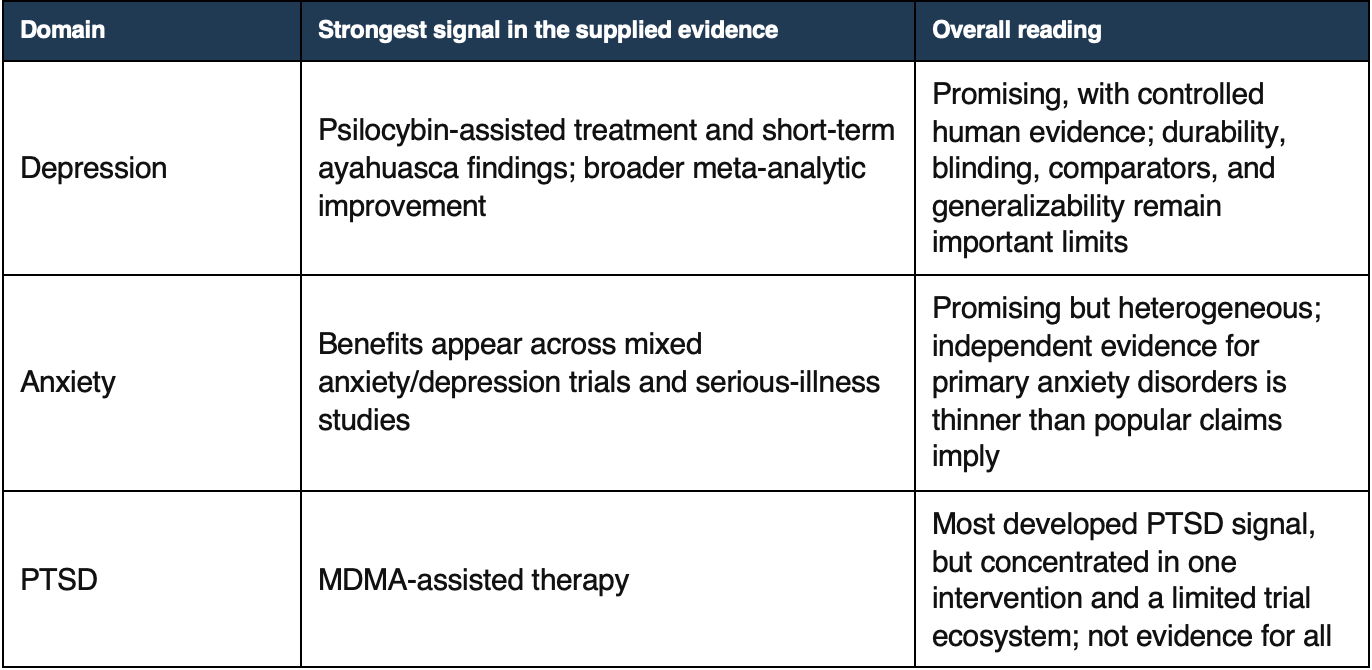
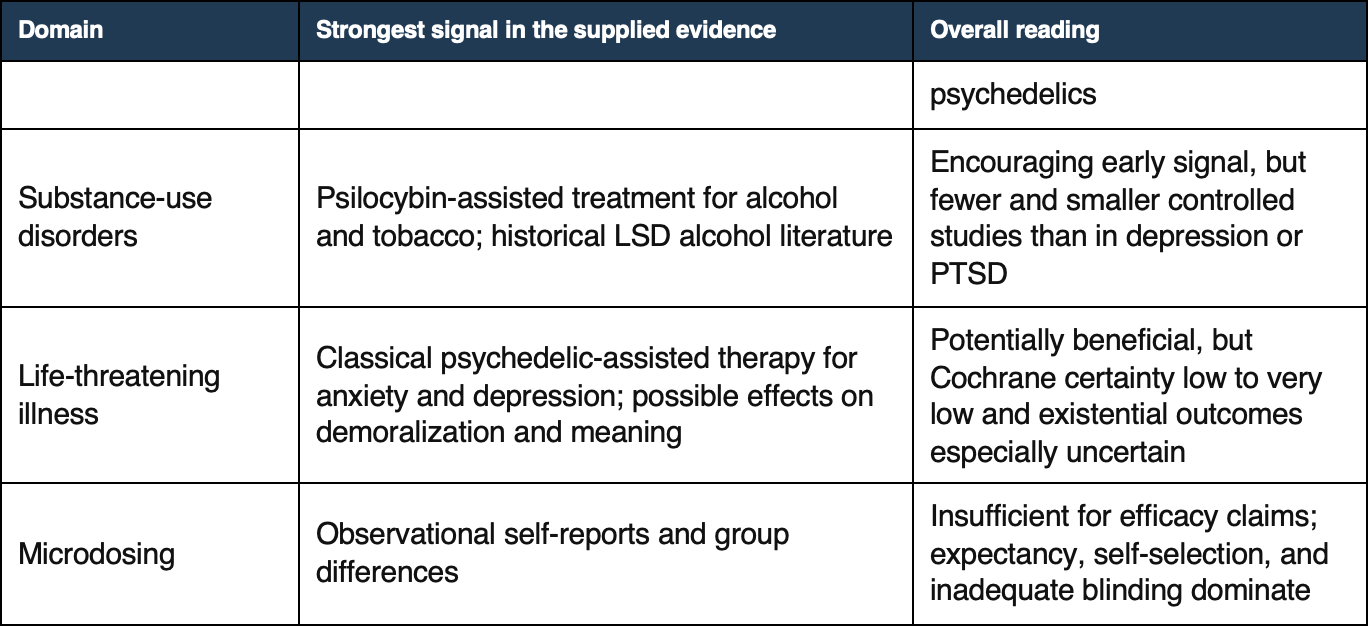
Another way to read the table is as a map of evidence maturity. A signal begins with case reports, uncontrolled studies, or observational associations. It becomes more persuasive when randomized trials reproduce it against credible comparators. Clinical efficacy is still not the final step: an intervention must also work in broader populations, compare favorably with available care, remain safe under ordinary conditions, and be deliverable at reasonable cost. Much psychedelic research sits between promising signal and controlled efficacy. Very little has yet established routine effectiveness at scale.
Scope and terminology
The word psychedelic is used broadly in public conversation. For evidence evaluation, narrower categories are necessary.
Classic psychedelics—including psilocybin, LSD, mescaline, and DMT-containing preparations such as ayahuasca—act principally through serotonin 5-HT2A receptor signaling. They can produce marked changes in perception, emotion, self-experience, and meaning. MDMA has different acute effects and pharmacology, commonly increasing feelings of trust, closeness, and reduced fear in a therapeutic setting. Ketamine is neither a classic psychedelic nor an entactogen; it has rapid antidepressant effects and a distinct evidence and safety history. Ibogaine is also pharmacologically atypical and requires special attention to cardiac toxicity. [5]
The term psychedelic-assisted therapy refers to more than administering a substance. Although protocols vary, clinical programs commonly include medical and psychiatric screening, preparatory meetings, one or more monitored dosing sessions, and subsequent integration. The intensity and theoretical orientation of psychotherapy differ across trials. That variability is not a minor detail: it makes it difficult to determine how much benefit is attributable to drug action, therapeutic support, expectation, or their interaction.
This review focuses on meaningful human research for depression, anxiety, PTSD, substance-use disorders, and distress associated with life-threatening illness. It also uses population, qualitative, mechanistic, and implementation studies to evaluate safety and interpretation. Naturalistic use and microdosing are discussed only where they answer a different question; they are not treated as substitutes for clinical trials.
How evidence strength is judged
Evidence strength is not the same thing as effect size. A small, biased trial can report a large effect. A larger, well-controlled trial can report a modest effect with greater certainty. To judge the psychedelic literature, at least seven questions matter:
·
Was the study randomized, and
was the comparator credible?
·
Could participants, therapists,
or raters tell who received the active intervention?
·
Was the sample large and
representative enough to support the claim?
·
Were outcomes prespecified,
clinically meaningful, and measured by blinded assessors?
·
How long did follow-up last, and
were relapses, redosing, or additional treatments documented?
·
Were adverse events collected
systematically, including after the acute session?
·
Has the result been replicated
by independent teams and in ordinary care settings?
Systematic reviews and meta-analyses are valuable, but they do not repair weak underlying trials. They can also count substantially overlapping studies, creating the impression of multiple independent confirmations. The P3 package, for example, contains several reviews drawing on many of the same MDMA trials; their broadly consistent findings increase confidence in the direction of the signal, but their participant totals should not be added together. [6]
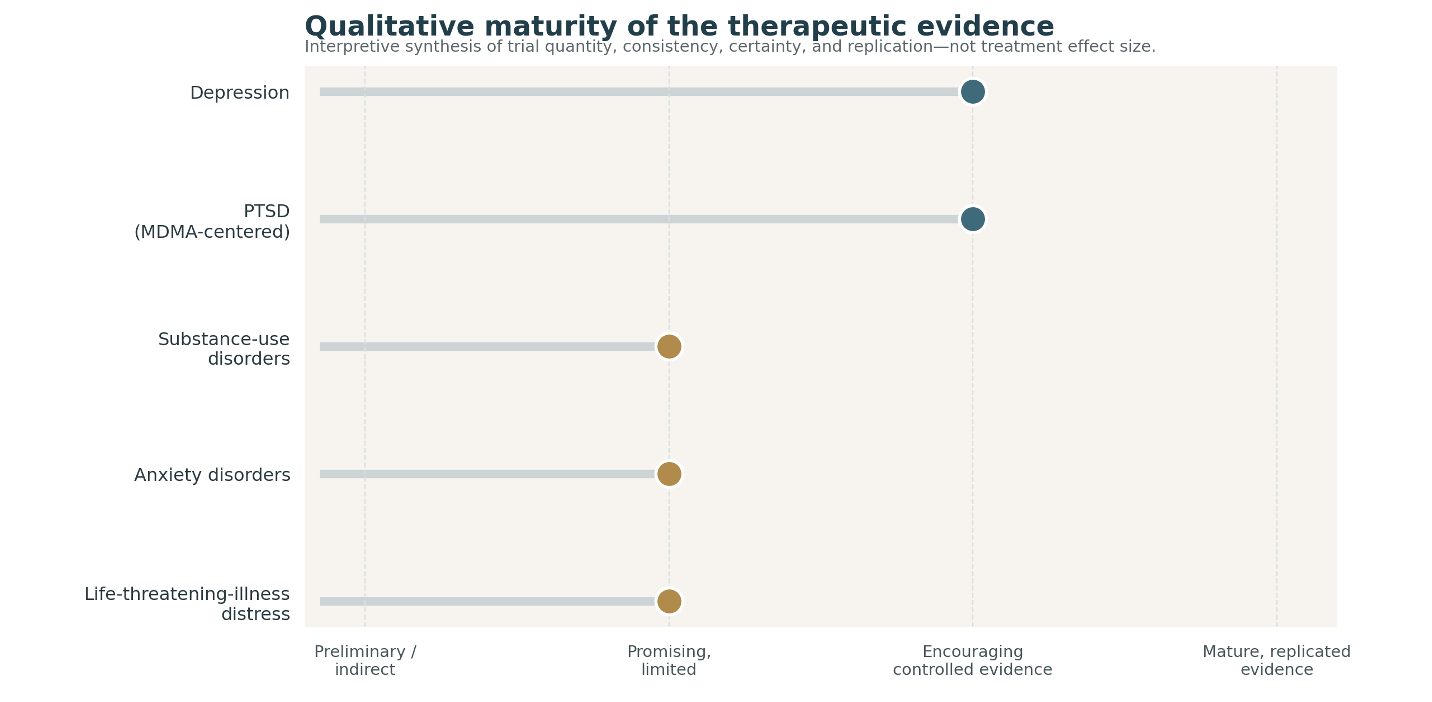 Figure 2. Qualitative evidence maturity across the
article’s major therapeutic domains. Positions summarize the quantity,
consistency, certainty, and replication of the supplied human evidence; they
are not pooled effect sizes or clinical rankings. [7]
Figure 2. Qualitative evidence maturity across the
article’s major therapeutic domains. Positions summarize the quantity,
consistency, certainty, and replication of the supplied human evidence; they
are not pooled effect sizes or clinical rankings. [7]
The same principle applies across diagnoses. Many early trials recruit participants who are medically stable, motivated, open to psychedelic treatment, and without conditions believed to increase risk. Results in these selected groups may not generalize to people with complex comorbidity, unstable housing, limited support, active psychosis risk, severe personality pathology, or interacting medications.
Statistical significance is only one part of the judgment. Readers also need the absolute size of improvement, confidence intervals, response and remission definitions, dropout, missing data, adverse events, and whether changes were large enough to matter in daily life. A statistically significant average can conceal nonresponse or deterioration in a minority. Conversely, a trial may be too small to detect a meaningful difference even when the point estimate favors treatment. The correct response to uncertainty is not to declare success or failure prematurely, but to state what range of effects remains compatible with the data.
Finally, evidence must be dated. Trial pipelines, regulatory decisions, and unpublished results change. A review can be rigorous and still represent the field only through its search date. This article therefore uses the newest high-level syntheses in the supplied packages as anchors while preserving older reviews for historical development, methodology, and context.
Depression
Depression is one of the most studied potential indications. The literature includes open-label studies, randomized trials, treatment-resistant populations, comparative trials, and meta-analyses. Across this mixed body of evidence, a real antidepressant signal is plausible. The harder questions concern its size under credible blinding, its durability, its dependence on psychotherapy, and how it compares with established treatments.
One small randomized placebo-controlled trial of ayahuasca in treatment-resistant depression reported lower depression scores at days one, two, and seven. At day seven, response was 64% with ayahuasca and 27% with placebo; remission was 36% versus 7%, but the remission comparison narrowly missed conventional statistical significance. The study included only 29 participants, and its supportive setting may have contributed to improvement in both groups. It is evidence of a short-term signal, not proof of durable superiority. [8]
Analysis reported large pooled effects for anxiety and depression across nine heterogeneous trials, with benefits both within and beyond one week. Yet pooling across psilocybin, ayahuasca, and LSD, different diagnoses, session structures, and outcome measures makes the average difficult to translate into a treatment decision. The authors found no significant efficacy difference among compounds, but absence of a detected moderator is not evidence that the drugs are interchangeable; the comparisons were not direct head-to-head tests. [9]
The evidence is stronger for supervised treatment than for casual use. Retrospective surveys find that many people attribute improvements in depression, anxiety, or well-being to naturalistic psychedelic experiences. One survey of 2,510 adults reported perceived improvement but also found that 13% attributed at least one harm to psychedelic use. Such studies can identify experiences and hypotheses, but they cannot establish that the substance caused improvement: people self-select, remember selectively, use different doses and substances, and may be especially likely to participate after meaningful experiences. [10]
Microdosing claims are even less secure. Cross-sectional studies report that microdosers differ from non-microdosers on distress, attitudes, personality, or creativity measures, and qualitative participants describe both benefits and difficulties. These comparisons are highly exposed to expectancy, selection, lifestyle differences, uncertain dose composition, and reverse causation. They show what users report, not that repeated sub-perceptual doses treat depression. [11]
What, then, can be said? Psilocybin-assisted and other psychedelic interventions have produced rapid antidepressant effects in controlled human research, including treatment-resistant samples. That justifies larger comparative trials. It does not yet establish that a single session is a durable cure, that the drug works independently of intensive support, or that unsupervised use offers the same benefit-risk balance. The most defensible label is promising clinical evidence with material design and implementation uncertainties.
Depression research also needs better comparison with existing care. “Treatment resistant” can describe people with very different histories: inadequate medication trials, multiple well-delivered therapies, chronic depression, bipolar-spectrum features, trauma, or severe social adversity. Trials should report prior treatment carefully and compare psychedelic-assisted therapy not only with inert or low-dose controls but with credible evidence-based alternatives. A treatment may be valuable even if it is not superior on average—for example, if it works faster, helps a subgroup, or offers an acceptable option to people who decline conventional treatment—but those are empirical questions, not assumptions.
Relapse and maintenance remain central. Rapid improvement after one or two sessions attracts attention, yet depression commonly recurs. Studies must document subsequent medication, psychotherapy, booster sessions, and life events rather than attributing every later outcome to the original dose. The field also needs agreed definitions of response, remission, sustained response, and clinically important deterioration.
Anxiety disorders
Anxiety appears throughout the psychedelic literature, but the category conceals several different questions. Some trials enroll people with a primary anxiety disorder. Others measure anxiety as a secondary outcome in depression, PTSD, or serious illness. Still others study death anxiety, generalized distress, or retrospective self-reported change after naturalistic use.
A clinical review identified nine small trials involving ayahuasca, ketamine, LSD, MDMA, or psilocybin and generally reported anxiety reductions without severe adverse events. Individual studies were commonly very small and heterogeneous, however, and difficult blinding created high risk of bias. A positive pattern across small studies is worth investigating, but it is not equivalent to a mature evidence base for each diagnosed anxiety disorder. [12]
The strongest quantitative anxiety estimates in the supplied files come partly from serious-illness research. The 2024 Cochrane review found that classical psychedelic-assisted therapy may reduce trait anxiety and state anxiety compared with control in people with life-threatening disease. The reported mean differences favored treatment, but the review rated this evidence low certainty. MDMA estimates came from one 18-person study and were very uncertain. [13]
Mechanistic studies propose several ways anxiety could improve: increased psychological flexibility, altered threat processing, a powerful emotionally meaningful experience, or reduced fear of death. Retrospective mediation analyses found that psychological flexibility statistically accounted for associations between acute mystical or insight effects and reported decreases in depression and anxiety. Another study linked reduced fear of death to relationships between mystical experience and well-being. Because these studies measured past experiences retrospectively, they cannot prove that the proposed mediator caused improvement. [14]
For primary anxiety disorders, the correct conclusion is therefore cautious. There is a credible therapeutic signal, especially when anxiety is embedded in depression or serious illness, but disorder-specific evidence is relatively thin. Claims should identify the diagnosis, compound, support model, comparator, and follow-up rather than saying simply that “psychedelics treat anxiety.”
This is particularly important because anxiety disorders are not a single condition. Panic disorder, social anxiety disorder, generalized anxiety disorder, obsessive-compulsive disorder, and phobic disorders have different symptom patterns and established treatments. Evidence obtained from cancer-related anxiety or mixed depression-anxiety samples cannot be automatically transferred to each diagnosis. Future trials should use diagnostic interviews, disorder-specific outcomes, credible active controls, and comparisons with well-delivered psychotherapy.
Post-traumatic stress disorder
PTSD is often included in broad claims about psychedelic therapy, but the positive evidence is not broadly distributed. In the supplied research, MDMA-assisted therapy is the leading PTSD intervention. Ketamine findings are mixed, and qualifying controlled evidence for classic psychedelics is sparse.
A 2020 systematic review using GRADE found moderate-certainty evidence for MDMA plus psychotherapy, while grading ketamine evidence from low to very low depending on the treatment configuration. The review found no qualifying LSD or psilocybin PTSD efficacy trials under its criteria. [15]
A 2026 PTSD-specific systematic review and meta-analysis included 11 randomized trials and 358 participants across MDMA, ketamine, and cannabidiol. Eight trials were meta-analyzed. MDMA was associated with a large reduction in PTSD severity (Hedges’ g 0.82), higher clinical response (risk ratio 3.16), and a greater likelihood of no longer meeting diagnostic criteria at the measured endpoint (risk ratio 1.73). The pooled ketamine effect was small and not statistically significant, and one cannabidiol trial showed no clear benefit. [16]
These are clinically important findings, but four qualifications are essential. First, 358 participants across several interventions remains a small evidence base. Second, a limited set of MDMA trials contributes disproportionately to the result. Third, losing a diagnosis at an endpoint is not the same as permanent recovery. Fourth, treatment included extensive psychological support; the evidence does not establish the same outcome for MDMA alone.
Mechanistically, researchers propose that MDMA may reduce fear and defensiveness enough to permit engagement with traumatic memories, while psychedelic-related interventions may influence neuroplasticity, extinction learning, reconsolidation, and emotional processing. A careful memory review found that acute psychedelics may enhance extinction learning but can also strengthen fear conditioning under some conditions. The evidence does not support slogans about “erasing trauma.” Timing, learning context, memory system, and compound all matter. [17]
Naturalistic evidence also warns against assuming that every intense experience is therapeutic. A 2026 survey specifically recruited 243 people who reported persistent aftereffects following a distressing psychedelic experience. Within that selected sample, 31.3% met self-report PTSD criteria, and some symptoms persisted for years. Because recruitment targeted adverse experiences, the figure cannot be generalized as a population rate. Its value is different: it demonstrates that persistent trauma-like outcomes can occur and deserve clinical recognition. [18]
The evidence-based conclusion for PTSD is precise: MDMA-assisted therapy has a substantial and comparatively mature efficacy signal, but the database remains limited and does not validate “psychedelics” generally as PTSD treatment.
PTSD trials must also be interpreted against the condition’s existing treatment landscape. Trauma-focused psychotherapies can be highly effective, but dropout, incomplete response, access barriers, and patient preference leave substantial unmet need. A new intervention should therefore be judged not only against a control condition but against well-delivered established care. Important comparative outcomes include symptom change, loss of diagnosis, functioning, sleep, substance use, suicidality, treatment completion, patient preference, and durability.
The psychotherapy component requires unusually careful governance. Trauma treatment involves memory, trust, dissociation, shame, and vulnerability; an acutely altered participant may be highly suggestible and dependent on facilitators. Preparation, consent, touch boundaries, management of dissociation, adverse-event response, and integration should be explicit and auditable. A trauma-informed qualitative review identifies therapeutic relationship, preparation, environment, meaning-making, and adverse-event management as recurring themes, but qualitative convergence does not prove which protocol produces the best outcomes. [19]
The field should also separate regulatory success from scientific evidence. A positive meta-analysis does not by itself establish that manufacturing, therapist training, monitoring, data integrity, and post-approval safety systems are adequate. Conversely, a regulatory setback does not erase positive trial findings. It signals that the total evidence and proposed delivery system must withstand scrutiny beyond symptom averages.
Substance-use disorders
Research on alcohol, tobacco, and other substance-use disorders is historically important and clinically promising, but smaller than public enthusiasm sometimes suggests. The most credible modern studies generally pair a psychedelic session with a structured behavioral treatment rather than substituting a drug experience for addiction care.
 Figure 3. Substance-use
research commonly combines a psychedelic session with counseling, motivational
work, or relapse-prevention support. Conceptual editorial image generated for
this article; fictional participants.
Figure 3. Substance-use
research commonly combines a psychedelic session with counseling, motivational
work, or relapse-prevention support. Conceptual editorial image generated for
this article; fictional participants.
Reviews in the evidence packages identify addiction as one of the more developed behavior-change applications, with signals from psilocybin-assisted interventions for alcohol and tobacco use and older LSD research for alcohol problems. Proposed pathways include increased motivation, a disruption of rigid behavioral patterns, heightened salience of personal values, and an opportunity to engage more deeply with established interventions such as cognitive behavioral therapy or motivational interviewing. [20]
Still, the field faces recurring limitations: small samples, limited blinding, variable psychosocial treatment, different definitions of abstinence or response, and few independent replications. Ibogaine is frequently discussed in relation to opioid use, but its cardiac risk and the uneven quality of clinical evidence make broad therapeutic claims inappropriate. [21]
Population associations cannot substitute for treatment trials. In a 2017 U.S. survey analysis, lifetime peyote or mescaline exposure was associated with lower adjusted odds of past-year drug or alcohol use disorder, while lifetime LSD and psilocybin associations did not remain significant after correction for multiple testing; recent LSD use was associated with higher odds. These nonrandomized findings may reflect cultural context, selection, polysubstance patterns, or other confounding. They do not show that taking peyote or mescaline treats addiction. [22]
The most defensible conclusion is that psychedelic-assisted approaches to alcohol and tobacco disorders have encouraging early human evidence, while evidence for other substances and for scalable real-world treatment remains preliminary. Larger multisite trials should compare the complete treatment package with credible active controls and established addiction care.
This domain also requires attention to what “success” means. Abstinence, reduced heavy-use days, craving, treatment retention, quality of life, and harm reduction are different outcomes. A dramatic personal experience may increase motivation without producing sustained behavioral change, while a modest reduction in use may still be clinically meaningful. Future trials should prespecify outcomes, verify substance use when feasible, report concurrent treatment, and follow participants long enough to distinguish an early motivational surge from durable recovery.
Addiction research also illustrates why therapy context cannot be treated as a decorative extra. Participants often receive motivational enhancement, cognitive behavioral therapy, smoking-cessation counseling, or relapse-prevention support. These interventions have their own evidence base. If the combined package outperforms control, the result supports the package; it does not prove that a psychedelic session alone treats addiction. Determining whether the drug adds value, for whom, and at what cost requires comparison with equally intensive non-psychedelic care.
Anxiety, depression, and existential distress in life-threatening illness
This domain deserves separate treatment because its outcomes, populations, and therapeutic aims are not identical to those in primary mood or anxiety disorders. A person living with cancer or another life-threatening condition may experience diagnosable depression or anxiety, but may also face demoralization, hopelessness, death anxiety, loss of identity, spiritual struggle, disrupted relationships, uncertainty about the future, or a painful sense that life no longer has coherence or purpose. These forms of suffering can coexist while requiring different kinds of response.
Palliative care has always addressed more than symptom scores. Its clinical task includes relief of physical suffering, communication, family support, practical decision-making, dignity, and the psychological, social, and spiritual dimensions of serious illness. Psychedelic research enters this field with an unusually ambitious claim: that one or a few supported drug experiences might not merely reduce anxiety or depression but alter how a person relates to illness, mortality, meaning, and the remaining time of life. That possibility explains much of the field’s appeal—and why the evidence must be interpreted with exceptional care.

Figure 4. Existential
distress is addressed within comprehensive palliative care, including honest
communication, symptom relief, relationships, dignity, and spiritual or
meaning-centered support.
What “existential distress” means
Existential distress is an umbrella term rather than a single universally agreed diagnosis. In the supplied literature it includes several partially overlapping constructs:
·
Demoralization: helplessness, hopelessness,
loss of meaning, and a sense of failure or inability to cope.
·
Death anxiety: fear or apprehension concerning
dying, nonexistence, suffering, separation, or what may happen after death.
·
Loss of meaning or purpose: difficulty
locating value, coherence, identity, or reasons for continued engagement with
life.
·
Spiritual distress: conflict,
disconnection, guilt, abandonment, or crisis involving religious or
nonreligious sources of significance.
·
Illness anxiety: fear focused on progression,
symptoms, treatment, disability, or uncertainty.
·
Reduced quality of life: impaired
physical, emotional, social, or role functioning and a diminished capacity to
experience valued life.
These outcomes are related but not interchangeable. A person can be clinically depressed without reporting a loss of meaning. Another may not meet criteria for depression yet feel profoundly demoralized by dependency, altered identity, or impending death. A reduction on an anxiety scale does not necessarily establish reconciliation with mortality, and a spiritually significant experience does not necessarily improve daily functioning. Any article that combines these outcomes into a single category of “end-of-life distress” risks overstating what was actually measured.
The distinction also matters ethically. Medicine is accustomed to treating symptoms and functional impairment. Whether health care should try to generate meaning, spiritual transformation, or acceptance is more contested. One ethical analysis argues that psychedelic experiences may respond to meaninglessness while explicitly asking whether meaning itself is properly a medical concern. That is a philosophical and ethical proposal, not a demonstrated treatment mechanism. [23]
Measurement should therefore begin with a clear account of what kind of suffering is being targeted. Depression inventories, anxiety scales, demoralization measures, spiritual well-being instruments, and quality-of-life questionnaires overlap, but each asks a different question. A patient may become less frightened while remaining demoralized, or regain a sense of purpose without meeting criteria for psychiatric remission. Trials that select one favorable scale from many outcomes can make a broad existential claim appear better supported than it is. Future reports should identify primary outcomes in advance, publish all prespecified results, and explain whether changes exceed thresholds that patients regard as meaningful. Patient-defined goals—such as completing a conversation, reconnecting with family, tolerating uncertainty, or participating in care decisions—can complement standardized measures without being treated as substitutes for them. This approach would make the evidence more clinically intelligible while preserving the complexity of serious-illness experience. [24]
Modern clinical studies, especially with psilocybin and LSD,
have repeatedly produced promising signals in people with cancer or other
serious illness. Reviews describe reductions in anxiety and depression and
possible improvements in quality of life, spiritual well-being, demoralization,
or acceptance. Some studies report effects lasting beyond the acute session.
The treatment typically includes preparation, a monitored dosing day, and
integration rather than drug administration alone. [25] These findings are
important because distress in serious illness can be difficult to treat and
because a time-limited intervention could be valuable when life expectancy,
treatment burden, or access makes months of therapy impractical. But the
clinical samples are generally small, highly selected, and dominated by people
with cancer. Participants are often medically stable enough to undergo a long
session, willing to receive a psychedelic, and treated by specialized teams in
carefully controlled environments. These features increase internal safety but
limit generalizability to frailer patients, people with cognitive impairment,
those near active dying, and patients with complex psychiatric or
cardiovascular risk. The studies also differ
in compound, dose, comparator, psychotherapy, therapist training, setting,
outcome instruments, follow-up, and disease stage. Some use low-dose versions
of the same drug as a comparator, some use an active placebo, and some use crossover
designs. Because the unmistakable acute effects often reveal treatment
assignment, neither participants nor therapists are likely to remain fully
blinded. In a domain where hope, attention, meaning, and therapeutic
relationship can strongly influence reported well-being, expectancy is not a
technical footnote; it is a central rival explanation that trials must measure. The 2024 Cochrane review is the most conservative evidence
anchor in the supplied collection. It included six randomized trials, 149
randomized participants, and 140 analyzed participants. For classical
psychedelic-assisted therapy, pooled results favored treatment for trait
anxiety, state anxiety, and depression. The review reported a mean difference
of -8.41 points for trait anxiety and -9.04 for state anxiety on the
State-Trait Anxiety Inventory, and a mean difference of -4.92 on the Beck
Depression Inventory. These estimates suggest potentially meaningful symptom
relief, but the certainty was rated low. [26] Evidence concerning MDMA
in this population was especially uncertain because it came from one small
study with 18 participants and confidence intervals included no effect. For
demoralization, one favorable finding involved only 28 participants. Other existential
and quality-of-life measures were mixed or supported by very small datasets.
This is why “potentially beneficial” and “proven effective” are not
interchangeable descriptions. The review reported no treatment-related serious or grade
3/4 adverse events in the included randomized trials, while common acute
effects were generally transient. That finding is reassuring within those
selected samples. It does not establish that rare events are absent, that
medically frail patients face the same risks, or that implementation outside
expert centers would reproduce the same safety profile. Cochrane rated parts of
the safety evidence very uncertain because small trials cannot reliably identify
uncommon or delayed harms. [27] Several methodological
problems lowered certainty: small samples, functional unblinding, expectancy
effects, crossover carryover, inconsistent outcome definitions, and incomplete
reporting. Crossover studies are particularly challenging when an experience
may produce lasting psychological change; once a participant crosses from
placebo to active treatment, the first experience can influence later
expectations and outcomes. In addition, many studies were not designed to
distinguish the pharmacological effect from the intensive attention and
psychotherapy surrounding it. The timing of measurement also changes what a trial can
legitimately conclude. An improvement recorded the day after dosing may reflect
acute emotional intensity, relief, attention, or expectancy; an effect several
weeks later is more relevant to sustained clinical benefit. Yet long follow-up
is especially difficult in progressive illness because health status,
treatment, prognosis, medication, caregiving, and bereavement can change
quickly. Attrition may also be informative rather than random: participants who
become sicker, disappointed, or overwhelmed may be least able to complete
questionnaires. Reports should therefore show who was assessed at each time
point, why data are missing, what additional care occurred, and whether
analyses are robust to plausible outcomes among those lost to follow-up.
Without that transparency, durability can be overstated even when the original
short-term signal is genuine. [28] A broader 2026 systematic review and network meta-analysis
reported moderate-to-large pooled improvements in depression and anxiety and
generated rankings that favored psilocybin for depression and LSD for anxiety.
Direct head-to-head differences, however, were not statistically significant.
Network rankings are built partly from indirect comparisons across different
studies and should not be treated as proof of compound superiority. [29] The difference in tone
between this analysis and Cochrane does not necessarily mean one review is
wrong. Reviews can reach different conclusions because they include different
studies, group outcomes differently, select different time points, use different
statistical models, and apply different rules for judging bias and certainty. A
pooled effect can be statistically large while confidence in that estimate
remains low. Cochrane’s contribution is not merely another number; it
explicitly grades how much trust the available trials deserve. This distinction should
govern the final wording. The evidence supports saying that classical
psychedelic-assisted therapy may reduce
anxiety and depression in selected people with life-threatening disease. It
does not yet support saying that psychedelic therapy reliably resolves
existential suffering, works across palliative populations, or is superior to
established psychosocial and pharmacological care. One of the most distinctive hypotheses in this literature is
that the subjective experience may itself be therapeutically important.
Participants sometimes describe unity, transcendence, sacredness, emotional
breakthrough, altered self-boundaries, or a powerful sense of meaning.
Retrospective studies associate mystical-type experience with improved
well-being and propose that reduced fear of death may mediate part of that
relationship. [30] These findings are
suggestive, not causal. People who remember an experience as meaningful may
also be more likely to report improvement. Measures are usually completed after
the event, and people selected for research or surveys may already view psychedelic
experience favorably. Statistical mediation does not prove the temporal chain
“experience caused reduced death anxiety, which caused improved well-being.”
Nor does it establish that a mystical experience is necessary, desirable, or
ethically appropriate for every patient. The language of “ego
dissolution” or “acceptance of death” can also become reductive. A dying
person’s fear may be proportionate to pain, unfinished responsibilities, family
separation, financial insecurity, discrimination, or inadequate care. Those
problems cannot be solved solely by changing consciousness. An intervention
that helps some people reinterpret mortality should complement—not replace—pain
control, honest prognostic communication, social work, spiritual care, family
support, and access to high-quality palliative treatment.What the clinical studies report
The Cochrane review: possible benefit,
low confidence
Why reviews can sound more confident
than Cochrane
Meaning, mystical experience, and death
anxiety
 Figure 5. Existential care
requires listening, dignity, and attention to the patient’s own values;
psychedelic treatment, where studied, remains one possible component of
comprehensive palliative support.
Figure 5. Existential care
requires listening, dignity, and attention to the patient’s own values;
psychedelic treatment, where studied, remains one possible component of
comprehensive palliative support.
Cultural and spiritual pluralism further complicates interpretation. Concepts such as transcendence, surrender, sacredness, ego dissolution, or a “good death” do not carry the same meaning across religious traditions, Indigenous communities, secular worldviews, families, or individuals. A therapeutic team can unintentionally privilege its own vocabulary and mistake agreement, emotional intensity, or gratitude for genuine benefit. Preparation and integration should invite the patient’s language rather than supply a required metaphysical explanation. Researchers should document how spiritual support is offered, whether chaplains or culturally relevant advisers are available, and whether participants feel free to reject the meanings proposed by therapists or study materials. Respectful care includes the possibility that a patient values ordinary presence, symptom relief, family duty, protest, uncertainty, or continued fear more than transformation. [31]
Durability and what improvement means
Several studies suggest that benefits may persist for weeks or months after one or a few sessions. Durability is clinically attractive, but the evidence remains difficult to interpret. Follow-up periods vary, samples shrink over time, additional care may occur, and the meaning of a stable questionnaire score changes when disease progresses. A durable reduction in anxiety may be valuable even if symptoms later recur, but it should not be described as permanent transformation.
Outcome selection matters as well. Researchers should distinguish symptom response, remission, reliable change, quality of life, functioning, peacefulness, communication with family, treatment decision-making, and use of health services. A statistically significant scale difference may or may not be noticeable to patients. Conversely, a meaningful conversation, restored relationship, or renewed engagement with life might not be captured by standard psychiatric measures. Mixed-method research can help, but qualitative testimony cannot substitute for controlled estimates of benefit and harm.
Ethical and implementation questions
The palliative-care setting raises questions that extend beyond efficacy. Patients facing limited time may accept more uncertainty, yet serious illness can also increase vulnerability to therapeutic misconception, financial exploitation, spiritual suggestion, or pressure to pursue a “transformative” death. Consent must make clear that benefit is uncertain and that difficult or disappointing experiences are possible. Clinicians should not imply that fear, grief, anger, or ambivalence represents failure to accept death.
The intervention is resource intensive. Preparation, medical review, medication management, many hours of monitoring, two-person staffing in some protocols, emergency planning, and integration require trained teams and coordination with oncology, psychiatry, nursing, pharmacy, and palliative care. Home-based treatment has been described in a single case, but one observation cannot establish general feasibility or safety. [32]
Equity is equally important. Existing samples underrepresent racial, socioeconomic, diagnostic, and care-setting diversity. Legal barriers, travel, cost, insurance coverage, mistrust rooted in research abuses, and the scarcity of culturally responsive clinicians could concentrate access among affluent patients near academic centers. Reviews call for attention to representation, accessibility, Indigenous rights, reciprocity, and workforce development, but these are primarily recommendations rather than measured implementation outcomes. [33]
What better research would look like
The next generation of studies should include larger multisite samples; transparent preregistration; credible active comparators; systematic measurement of expectancy and blinding; standardized adverse-event reporting; longer follow-up; and outcomes chosen with patients, caregivers, and palliative clinicians. Trials should enroll people with illnesses beyond cancer and report disease stage, prognosis, concurrent treatment, medication changes, and additional psychosocial care.
Comparators should reflect the clinical question. A low-dose psychedelic or active placebo can help estimate a pharmacological contribution, but it may not answer whether the full program offers more value than high-quality palliative psychotherapy, meaning-centered therapy, dignity therapy, medication management, spiritual care, or another intensive supportive intervention. Comparative trials could evaluate benefit, burden, speed of response, durability, patient preference, caregiver outcomes, and cost. No psychedelic study should be interpreted as showing that ordinary palliative care has failed unless participants actually received adequate evidence-based care.
Caregiver and family effects deserve explicit measurement. Serious illness occurs within relationships, and changes in communication, emotional availability, conflict, or preparation for death may affect more than the patient. A beneficial session could support important conversations; a destabilizing session could also create new caregiving burdens. Trials should document family involvement, caregiver distress, bereavement outcomes, and whether therapeutic narratives create pressure on relatives to validate a particular interpretation of the experience.
Researchers should also examine timing. An intervention offered soon after diagnosis addresses a different clinical situation from one offered after recurrence, during treatment failure, in hospice, or near active dying. Medical stability, available time for integration, cognitive capacity, concurrent medications, and the meaning of hope change across these stages. Reporting only “life-threatening illness” collapses clinically important differences. Timing studies could help identify when potential benefit is plausible and when burden or risk is likely to outweigh it.
Finally, studies should prespecify how they will handle disappointment and nonresponse. The cultural story surrounding psychedelics can make an ordinary, confusing, or frightening session feel like personal failure. Participants who do not improve may need additional care rather than a suggestion that they resisted surrender or failed to integrate. Ethical protocols should include follow-up for difficult experiences, referral pathways, and language that normalizes varied responses.
A stronger evidence base must also record burdens that may be easy to miss when attention centers on symptom reduction. Preparation and dosing can consume scarce time and energy; travel, medication changes, overnight arrangements, caregiver absence from work, and the emotional labor of integration may matter greatly to a person with advanced illness. Some patients may experience transient fear or confusion yet still judge the intervention worthwhile, whereas others may show a favorable questionnaire change but regret the experience. Benefit–burden assessment should therefore include patient preference, caregiver impact, opportunity cost, and the amount of additional clinical support required. Reporting these outcomes would help distinguish an intervention that works under research conditions from one that is acceptable, feasible, and equitable in ordinary palliative care. [34]
Research should also compare different support models and determine which components are essential. Head-to-head comparisons are needed before assigning different compounds to different outcomes. Pragmatic trials should evaluate feasibility, cost, staff burden, equity, caregiver effects, and integration with ordinary palliative systems. Studies of home treatment, hospice settings, and medically frail patients should proceed cautiously with explicit stopping rules and independent safety oversight.
The strongest overall conclusion is therefore deliberately bounded: psychedelic-assisted therapy may reduce anxiety and depression and may influence some dimensions of existential distress in selected people with life-threatening disease. The signal is clinically important, but certainty is low to very low, the evidence is concentrated in small oncology samples, and the treatment must be understood as a complex supported intervention rather than a drug-only cure for fear of death.
Safety and adverse outcomes
Safety claims depend heavily on the population and setting being described. In modern trials, carefully screened participants usually receive known doses, medical monitoring, continuous support, and follow-up. Within those conditions, serious acute adverse events have been uncommon in the small studies summarized here, while transient anxiety, headache, nausea, increased blood pressure, fatigue, and challenging psychological experiences are more typical.
That finding should not be translated into “psychedelics are safe.” Small trials cannot reliably detect rare harms. Screening removes some higher-risk people. Adverse-event definitions and collection methods vary. Follow-up may be too short to identify persistent symptoms. Risks also differ by compound: ibogaine can affect cardiac conduction; MDMA creates cardiovascular and thermoregulatory concerns; serotonergic psychedelics may be destabilizing for people vulnerable to psychosis or mania; interactions and adulterated substances complicate unsupervised use. [35]
Naturalistic studies supply a necessary counterweight. In one prospective observational cohort, 16.4% of 807 participants met a study-defined threshold for worsened mental health four weeks after psychedelic use. A very small subgroup reporting a personality-disorder history appeared at elevated risk, but the estimate was imprecise and based on only 16 people. These results should not be generalized directly to screened clinical therapy, yet they show that average improvement can coexist with meaningful deterioration in a minority. [36]
Large cross-sectional population studies did not find that lifetime classic psychedelic use was associated with increased rates of measured past-year mental-health problems after adjustment. Those studies are reassuring at a broad level but cannot establish safety or causality. Exposure and outcomes were self-reported, rare outcomes may be missed, and conclusions depend on how polysubstance use and confounding are modeled. [37]
Safety is therefore conditional, not absolute. The fairest conclusion is that screened clinical administration has shown acceptable short-term tolerability in studied samples, while rare, delayed, compound-specific, and community-setting harms remain incompletely measured.
Several kinds of harm require separate surveillance. Acute physiological events include hypertension, tachycardia, nausea, overheating, impaired coordination, and drug interactions. Acute psychological events include panic, paranoia, confusion, dissociation, and behavior that could become dangerous without supervision. Delayed outcomes may include prolonged anxiety, mood destabilization, psychotic or manic symptoms in vulnerable people, persistent perceptual disturbance, sleep disruption, functional decline, or trauma-like responses after frightening experiences. Interpersonal harms—including boundary violations, coercion, dependency, financial exploitation, and misuse of spiritual authority—may not appear in conventional adverse-event tables at all.
Risk communication should use denominators and context. A percentage drawn from a survey recruiting people with adverse experiences cannot estimate population incidence. A trial reporting no serious event cannot prove the risk is zero. A large population survey finding no adjusted association with broad mental-health outcomes cannot exclude rare harms in predisposed individuals. Each design answers a different question, and combining them carelessly creates either false reassurance or exaggerated alarm.
Screening is itself part of the safety system, but exclusion creates an evidence gap. People with psychosis or bipolar risk, severe personality pathology, significant cardiovascular disease, pregnancy, interacting medications, active suicidality, or unstable substance use are often excluded. Clinicians therefore have the least direct trial evidence for some of the people who may face the greatest risk. Research should report exclusions transparently and avoid presenting findings from selected samples as universal.
Why the treatment context matters
Psychedelic-assisted therapy is unusually context sensitive. Preparation can shape expectations and help a participant respond to fear or disorientation. The dosing environment can influence perceived safety. A therapist’s conduct, boundaries, touch policies, and response to vulnerability can affect both benefit and harm. Integration may help a person translate an intense experience into behavior and meaning, although its independent contribution has not been established.
Qualitative synthesis across trauma-focused and psychedelic therapy literature identifies recurring themes: therapeutic relationship, preparation, management of adverse experiences, environment, meaning-making, and integration. Editorial and implementation reviews similarly argue that dose alone cannot explain outcomes. [38]
This creates a scientific and practical problem. More standardization can make trials reproducible, but rigid standardization may ignore individual and cultural needs. More therapist flexibility may improve care, but it makes replication and quality control harder. Intensive sessions also require facilities, trained personnel, hours of monitoring, and follow-up—costs that could limit access or widen inequity. [39]
The context should neither be romanticized nor treated as noise. It is part of the intervention and must be defined, measured, and governed.
Better trials can begin to separate contextual effects without pretending they are fully separable. Researchers can standardize minimum preparation and safety procedures, record therapist contact time, measure alliance and expectancy, publish manuals, and compare different support intensities. Session recordings—with appropriate consent and privacy protection—could permit fidelity and boundary review. Independent raters can assess outcomes even when participants and session therapists cannot remain blinded.
The relational component also raises a workforce question. Competence requires more than familiarity with altered states. Clinicians may need training in diagnosis, medical screening, crisis response, trauma, ethics, cultural humility, and the limits of their professional scope. A compelling personal psychedelic history is not a substitute for clinical competence. Systems should include supervision, complaint mechanisms, incident reporting, and clear separation between therapy, spiritual direction, and commercial persuasion.
Integration is frequently described as essential, but the term can refer to very different activities: reviewing the session, emotional processing, translating insights into behavior, addressing difficult aftereffects, or connecting a participant with ongoing care. Trials should define what integration consists of, who delivers it, how much is provided, and whether additional treatment is allowed. Until its independent contribution is tested, integration should be presented as a plausible and ethically important support component rather than a proven mechanism of durable benefit.
Mechanisms: plausible is not proven
Psychedelic therapies are associated with several plausible mechanisms: serotonin receptor signaling, changes in network dynamics, synaptic plasticity, emotional learning, psychological flexibility, memory reconsolidation, mystical-type experience, and changes in meaning or self-processing. These explanations operate at different levels and should not be collapsed into one story.
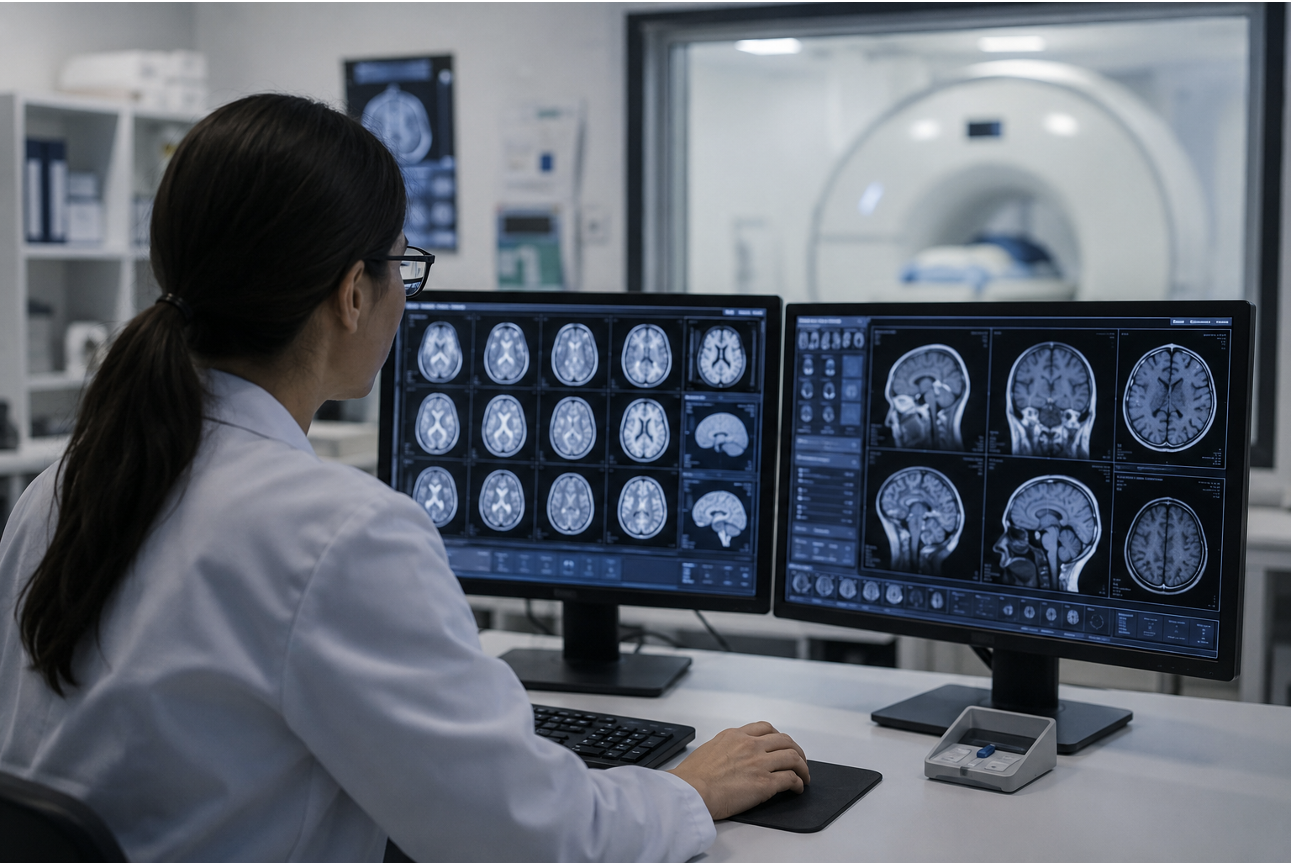 Figure 6. Brain imaging can
generate hypotheses about treatment mechanisms, but a neural correlate is not
proof that the measured change caused clinical recovery.
Figure 6. Brain imaging can
generate hypotheses about treatment mechanisms, but a neural correlate is not
proof that the measured change caused clinical recovery.
Evidence that a drug changes a brain measure does not prove that the change mediates clinical recovery. A correlation between mystical experience and improvement does not prove that mystical experience is necessary. Retrospective mediation cannot establish the order of cause and effect. Preclinical “psychoplastogen” findings may guide drug development, including interest in non-hallucinogenic analogues, but human clinical equivalence remains untested. [40]
Mechanistic pluralism is more honest. Pharmacology may create a temporary state in which learning, emotion, relationship, and meaning become unusually salient. What happens in that state may depend on the participant, therapist, setting, diagnosis, culture, and subsequent behavior. This is a synthesis of the evidence, not a settled causal model.
Mechanism claims should therefore be evaluated with the same discipline as efficacy claims. A credible mediator should be measured before the outcome, change in response to treatment, predict later improvement, and ideally be experimentally manipulated. Brain imaging studies need adequate samples, correction for multiple testing, prespecified regions or networks, and replication. Psychological accounts need to distinguish state effects during intoxication from enduring changes in behavior or symptoms. Without those steps, mechanisms remain useful models rather than verified explanations.
The interest in non-hallucinogenic analogues exposes a fundamental uncertainty. If compounds can produce therapeutic plasticity without a marked altered state, subjective experience may be less necessary than many current theories assume. A systematic review found only five animal studies and one human case report, so this question remains largely preclinical. At present, neither a purely biological “brain reset” narrative nor a purely experiential “mystical breakthrough” narrative is established. [41]
What the evidence still cannot answer
Several gaps recur across all four evidence packages.
Long-term effectiveness. Some benefits persist for weeks or months, but controlled follow-up is often short or inconsistent. The optimal schedule for redosing, maintenance, psychotherapy, and relapse prevention remains uncertain.
Comparative effectiveness. Few studies directly compare compounds, psychedelic-assisted therapy with established first-line treatment, or different psychotherapy models. Network rankings and cross-study effect sizes cannot replace head-to-head trials.
The role of expectancy and subjective experience. Active placebos rarely reproduce the unmistakable effects of a full psychedelic dose. Trials need systematic blinding checks and expectancy measurement. Whether altered experience is necessary for benefit remains unresolved.
Who benefits and who is harmed. Samples often underrepresent racial and ethnic minorities, lower-income patients, older adults, people with complex comorbidity, and those outside academic centers. Sex hormones are plausible modifiers of response, but direct human data across hormonal states are largely absent. [42]
Cognitive outcomes. A systematic review found acute cognitive effects were frequently detrimental or neutral and highly dependent on substance, dose, domain, and timing. It found only one qualifying PTSD cognition study and none in major depression, showing how little is known about clinically relevant cognition. [43]
Rare and delayed harms. Trials are underpowered for psychosis, mania, persistent perceptual changes, prolonged distress, suicidality, exploitation, and other uncommon outcomes. Naturalistic surveillance and standardized adverse-event reporting are necessary.
Implementation and equity. Treatment time, workforce, cost, regulation, training, cultural competence, and reciprocity are not peripheral concerns. A treatment can be efficacious in a trial and still be inaccessible, unsafe, or ineffective at scale.
Outcome reporting and nonresponse. Publications naturally emphasize average improvement and headline response rates. The field needs consistent reporting of nonresponse, worsening, dropout, protocol deviations, rescue treatment, and the experiences of participants who did not find the session meaningful. Individual participant data could help identify heterogeneous treatment effects without relying on small, unstable subgroup analyses.
Independence and conflicts of interest. Commercial investment can fund expensive trials and infrastructure, but it also increases the need for transparent protocols, accessible data, independent replication, adverse-event adjudication, and disclosure of investigator or therapist relationships. A treatment model that depends on proprietary training, clinics, or compounds should be evaluated for both scientific validity and the consequences of market structure.
Cultural translation. Psychedelic practices have histories extending beyond modern clinical research. Respectful scholarship should distinguish Indigenous ceremonial knowledge, underground practice, religious use, wellness markets, and regulated medical treatment rather than treating them as a single tradition. Clinical evidence cannot validate every cultural claim, and biomedical adoption should not erase questions of sovereignty, reciprocity, and appropriation.
Patient priorities. Researchers should involve patients and affected communities in choosing outcomes. Symptom scales are essential, but people may also care about relationships, work, caregiving, sleep, agency, medication burden, spiritual well-being, or the ability to tolerate uncertainty. Patient-centered outcomes can broaden relevance without lowering methodological standards.
Conclusion
The evidence behind psychedelic mental-health claims is neither empty nor mature enough to justify sweeping conclusions. There are credible human efficacy signals. Depression research is promising but methodologically vulnerable. Anxiety findings are encouraging, though often embedded in mixed diagnoses or serious illness. MDMA-assisted therapy has the strongest PTSD-specific evidence in the supplied literature, while evidence for classic psychedelics in PTSD is much thinner. Alcohol- and tobacco-use research warrants larger trials. In life-threatening illness, psychedelic-assisted therapy may reduce anxiety and depression and may affect existential distress, but the highest-rigor review rated certainty low to very low.
Across conditions, the same cautions recur: small and selected samples, functional unblinding, expectancy, overlapping reviews, variable psychotherapy, limited diversity, short follow-up, and incomplete measurement of rare harms. Positive trial averages do not mean everyone improves, and favorable clinical tolerability does not establish safety in unsupervised or poorly screened settings.
The central lesson is precision. Claims should name the compound, diagnosis, treatment package, study design, comparator, follow-up period, and evidence certainty. When described that way, psychedelics are not miracle cures and not merely hype. They are a family of experimental and emerging interventions with some genuinely important results—and a large amount of scientific work still to do.
Existential distress in life-threatening illness makes that lesson especially clear. The possibility that a supported psychedelic experience could reduce fear, restore meaning, or help a person engage more fully with remaining life is clinically and humanly significant. Yet hope must remain proportional to evidence. The existing literature is too small and selective to promise transformation, too heterogeneous to identify the best compound or therapy model, and too uncertain to replace comprehensive palliative care. The appropriate response is neither dismissal nor premature normalization, but rigorous research combined with humility toward the complexity of suffering at the end of life.
For readers, clinicians, and policymakers, the practical question is not whether psychedelics are “good” or “bad.” It is whether a specific intervention has shown a favorable balance of benefit, burden, and risk for a specific population under defined conditions—and whether that balance persists when the intervention leaves an expert research center. That is the standard by which the field should ultimately be judged.
Reference notation
Inline bracketed numbers refer directly to the numbered source list below, following a compact encyclopedia-style citation model. Multiple numbers after a statement mean that it is supported by more than one source.
Source list
[1] Ira Byock (2018). “Taking Psychedelics Seriously.” Journal of Palliative Medicine 21(4):417-421. DOI: 10.1089/jpm.2017.0684.
[2] Lauren Slater (2012). “How Psychedelic Drugs Can Help Patients Face Death.” The New York Times Magazine. Stable link.
[3] Nathan Emmerich (2024). “Responding to existential distress at the end of life: Psychedelics and psychedelic experiences and/as medicine.” Neuroethics 17:37. DOI: 10.1007/s12152-024-09571-4.
[4] Stephen Ross; Manish Agrawal; Roland R. Griffiths; Charles Grob; Ann Berger; Jack E. Henningfield (2022). “Psychedelic-assisted psychotherapy to treat psychiatric and existential distress in life-threatening medical illnesses and palliative care.” Neuropharmacology 216:109174. DOI: 10.1016/j.neuropharm.2022.109174.
[5] Sarah Kratina; Carol Strike; Robert Schwartz; Ayah Nayfeh; Sydney Jopling; Chris Lo; Brian Rush (2025). “A protocol for a scoping review of variations among psychedelic interventions for psychological suffering associated with the end-of-life.” PLOS ONE 20(5):e0318343. DOI: 10.1371/journal.pone.0318343.
[6] Daniele Almeida Soares; Alessandro Gonçalves Campolina (2026). “Psychedelic-Assisted Interventions in Palliative Care: A Narrative Overview and Critical Evaluation.” Healthcare 14(11):1550. DOI: 10.3390/healthcare14111550.
[7] David B. Yaden; Sandeep M. Nayak; Natalie Gukasyan; Brian T. Anderson; Roland R. Griffiths (2022). “The Potential of Psychedelics for End of Life and Palliative Care.” Current Topics in Behavioral Neurosciences 56:169-184. DOI: 10.1007/7854_2021_278.
[8] Emily Whinkin; Moira Opalka; Conor Watters; Atara Jaffe; Sunil Aggarwal (2023). “Psilocybin in Palliative Care: An Update.” Current Geriatrics Reports 12:50-59. DOI: 10.1007/s13670-023-00383-7.
[9] Hongyuan Li; Xiaohui Wang (2025). “Exploring End-of-Life Experiences and Consciousness through the Lens of Psychedelics.” ACS Pharmacology & Translational Science 8:907-909. DOI: 10.1021/acsptsci.5c00118.
[10] Xuepeng Jing; Nicholas R. Hoeh; David B. Menkes (2023). “Psychedelic medicines for end-of-life care: Pipeline clinical trial review 2022.” Palliative & Supportive Care 21:697-704. DOI: 10.1017/S147895152300069X.
[11] Mattia Marchi; Riccardo Farina; Karim Rachedi; Francesca Laonigro; Marija Franka Zuljevic; Luca Pingani; Silvia Ferrari; Metten Somers; Marco P. M. Boks; Gian M. Galeazzi (2026). “Psychedelics as an intervention for psychological, existential distress in terminally ill patients: A systematic review and network meta-analysis.” Journal of Psychopharmacology 40(1):119-133. DOI: 10.1177/02698811241303594.
[12] Aron Amaev (2024). “The Effects of Psychedelic-Assisted Therapy on Illness and Death Anxiety.” University of Toronto, Institute of Medical Science (Master of Medical Science thesis). DOI: [Not assigned / verification required](Stable repository URL: verification required). Title, author, institution, degree, year verified in PDF; DOI and stable repository URL verification required.
[13] Sivan Schipper; Kabir Nigam; Yasmin Schmid; Vanessa Piechotta; Michael Ljuslin; Yvan Beaussant; Guido Schwarzer; Christopher Boehlke (2024). “Psychedelic-assisted therapy for treating anxiety, depression, and existential distress in people with life-threatening diseases.” Cochrane Database of Systematic Reviews, Issue 9, CD015383. DOI: 10.1002/14651858.CD015383.pub2.
[14] Federico Seragnoli; Geo Martignoni; Entela Martignoni; Silke Bachmann; Elisa Rabitti; Silvio Cavuto; Zoe Dubus; Louise Penzenstadler; Gabriel Thorens; Joel Billieux; Daniele Zullino (2024). “Psychedelic-assisted therapy for palliative care within a home treatment setting: A case report.” Clinical Case Reports 12:e9305. DOI: 10.1002/ccr3.9305.
[15] Megan Miller; Molly Meyers; Annona Martin; Stephanie Napolitano; Caroline Dorsen; Andrew Penn; William E. Rosa (2025). “A Rapid Review of Psychedelic-Assisted Therapy in the Context of Palliative Care.” Journal of Hospice & Palliative Nursing 27(2):E97. DOI: 10.1097/NJH.0000000000001113.
[16] Ana Claudia Mesquita Garcia; Lucas de Oliveira Maia (2022). “The therapeutic potential of psychedelic substances in Hospice and Palliative Care.” Progress in Palliative Care 30(1):1-3. DOI: 10.1080/09699260.2022.2001140.
[17] Raison, Charles L.; Jain, Rakesh; Penn, Andrew D.; Cole, Steven P.; Jain, Saundra (2022). “Effects of Naturalistic Psychedelic Use on Depression, Anxiety, and Well-Being: Associations With Patterns of Use, Reported Harms, and Transformative Mental States.” Frontiers in Psychiatry. DOI: 10.3389/fpsyt.2022.831092.
[18] Davis, Alan K.; Barrett, Frederick S.; Griffiths, Roland R. (2020). “Psychological flexibility mediates the relations between acute psychedelic effects and subjective decreases in depression and anxiety.” Journal of Contextual Behavioral Science. DOI: 10.1016/j.jcbs.2019.11.004.
[19] Chen, Margery J.Q.; Chen-Li, David; Chisamore, Noah; Husain, M. Ishrat; Di Vincenzo, Joshua D.; Mansur, Rodrigo B.; Phan, Lee; Johnson, Danica; McIntyre, Roger S.; Rosenblat, Joshua D. (2025). “Non-hallucinogenic psychedelics for mood and anxiety disorders: A systematic review.” Psychiatry Research. DOI: 10.1016/j.psychres.2025.116532.
[20] Feulner, Leah; Sermchaiwong, Thanpicha; Rodland, Nathan; Galarneau, David (2023). “Efficacy and Safety of Psychedelics in Treating Anxiety Disorders.” Ochsner Journal. DOI: 10.31486/toj.23.0076.
[21] Moreton, Sam G.; Szalla, Luke; Menzies, Rachel E.; Arena, Andrew F. (2020). “Embedding existential psychology within psychedelic science: reduced death anxiety as a mediator of the therapeutic effects of psychedelics.” Psychopharmacology. DOI: 10.1007/s00213-019-05391-0.
[22] dos Santos, Rafael Guimarães; Bouso, José Carlos; Hallak, Jaime E. C. (2019). “Serotonergic hallucinogens/psychedelics could be promising treatments for depressive and anxiety disorders in end-stage cancer.” BMC Psychiatry. DOI: 10.1186/s12888-019-2288-z.
[23] Rootman, Joseph M.; Kryskow, Pamela; Harvey, Kalin; Stamets, Paul; Santos-Brault, Eesmyal; Kuypers, Kim P. C.; Polito, Vince; Bourzat, Francoise; Walsh, Zach (2021). “Adults who microdose psychedelics report health related motivations and lower levels of anxiety and depression compared to non-microdosers.” Scientific Reports. DOI: 10.1038/s41598-021-01811-4.
[24] Moreton, Sam G.; Arena, Andrew F. A.; Foy, Yolanda; Menzies, Rachel E. (2023). “Reduced death anxiety as a mediator of the relationship between acute subjective effects of psychedelics and improved subjective well-being.” Death Studies. DOI: 10.1080/07481187.2023.2169848.
[25] dos Santos, Rafael G.; Bouso, José Carlos; Alcázar-Córcoles, Miguel Ángel; Hallak, Jaime E. C. (2018). “Efficacy, tolerability, and safety of serotonergic psychedelics for the management of mood, anxiety, and substance-use disorders: a systematic review of systematic reviews.” Expert Review of Clinical Pharmacology. DOI: 10.1080/17512433.2018.1511424.
[26] Nichols, David E.; Johnson, Matthew W.; Nichols, Charles D. (2017). “Psychedelics as Medicines: An Emerging New Paradigm.” Clinical Pharmacology & Therapeutics. DOI: 10.1002/cpt.557.
[27] Leger, Robert F.; Unterwald, Ellen M. (2021). “Assessing the effects of methodological differences on outcomes in the use of psychedelics in the treatment of anxiety and depressive disorders: A systematic review and meta-analysis.” Journal of Psychopharmacology. DOI: 10.1177/02698811211044688. Volume/final pagination verification required; DOI/year verified in PDF
[28] Gao, Chenshu; Cheng, Heming (2025). “Psychedelics for anxiety disorders: Challenges and opportunities.” Fundamental Research. DOI: 10.1016/j.fmre.2025.07.008.
[29] King, Franklin IV; Hammond, Rebecca (2021). “Psychedelics as Reemerging Treatments for Anxiety Disorders: Possibilities and Challenges in a Nascent Field.” Focus. DOI: 10.1176/appi.focus.20200047.
[30] Schipper, Sivan; Nigam, Kabir; Schmid, Yasmin; Piechotta, Vanessa; Ljuslin, Michael; Beaussant, Yvan; Schwarzer, Guido; Boehlke, Christopher (2024). “Psychedelic-assisted therapy for treating anxiety, depression, and existential distress in people with life-threatening diseases.” Cochrane Database of Systematic Reviews. DOI: 10.1002/14651858.CD015383.pub2.
[31] Schimmers, Nina; Breeksema, Joost J.; Smith-Apeldoorn, Sanne Y.; Veraart, Jolien; van den Brink, Wim; Schoevers, Robert A. (2022). “Psychedelics for the treatment of depression, anxiety, and existential distress in patients with a terminal illness: a systematic review.” Psychopharmacology. DOI: 10.1007/s00213-021-06027-y.
[32] Palhano-Fontes, Fernanda; Barreto, Dayanna; Onias, Heloisa; Andrade, Katia C.; Novaes, Morgana M.; Pessoa, Jessica A.; Mota-Rolim, Sergio A.; Osório, Flávia L.; Sanches, Rafael; dos Santos, Rafael G.; Tófoli, Luís Fernando; Silveira, Gabriela de Oliveira; Yonamine, Mauricio; Riba, Jordi; Santos, Francisco R.; Silva-Junior, Antonio A.; Alchieri, João C.; Galvão-Coelho, Nicole L.; Lobão-Soares, Bruno; Hallak, Jaime E. C.; Arcoverde, Emerson; Maia-de-Oliveira, João P.; Araújo, Dráulio B. (2019). “Rapid antidepressant effects of the psychedelic ayahuasca in treatment-resistant depression: a randomized placebo-controlled trial.” Psychological Medicine. DOI: 10.1017/S0033291718001356.
[33] Bajer, J. M., Włodarczyk, A., Kulawinek, H., Obersztyn, J., Kasparek, K., Czech, M., Kasparek, G., Szczecińska, A., Glanert, W., Mliczek, A., & Mrozek, P. (2026). “Psychedelic Therapies in the Management of Post-Traumatic Stress Disorder: A Narrative Review.” Journal of Education, Health and Sport, 94, 73071. DOI: 10.12775/JEHS.2026.94.73071.
[34] Velit-Salazar, M. R., Shiroma, P. R., & Cherian, E. (2024). “A Systematic Review of the Neurocognitive Effects of Psychedelics in Healthy Populations: Implications for Depressive Disorders and Post-Traumatic Stress Disorder.” Brain Sciences, 14, 248. DOI: 10.3390/brainsci14030248.
[35] Krediet, E.; Bostoen, T.; Breeksema, J.; van Schagen, A.; Passie, T.; Vermetten, E. (2020). “Reviewing the Potential of Psychedelics for the Treatment of PTSD.” International Journal of Neuropsychopharmacology 23(6):385-400. DOI: 10.1093/ijnp/pyaa018.
[36] Mohamed, A.; Touheed, S.; Ahmed, M.; Hor, M.; Fatima, S. (2022). “The Efficacy of Psychedelic-Assisted Therapy in Managing Post-traumatic Stress Disorder (PTSD): A New Frontier?.” Cureus 14(10):e30919. DOI: 10.7759/cureus.30919.
[37] Hoyer, D. (2025). “Psychedelics, entactogens and psychoplastogens for depression and related disorders.” British Journal of Pharmacology. DOI: 10.1111/bph.70088. Final volume/issue/pages not present on the supplied first page: verification required.
[38] Evens, R., Uyar, A., Gosslau, E., Dambeck, F., Repantis, D., Wolff, M., & Lueken, U. (2026). “Post-traumatic stress disorder symptoms following psychedelic use: a naturalistic survey study.” Psychological Medicine, 56, e88, 1-19. DOI: 10.1017/S0033291726103754.
[39] Siegel, A. N., Meshkat, S., Benitah, K., Lipsitz, O., Gill, H., Lui, L. M. W., Teopiz, K. M., McIntyre, R. S., & Rosenblat, J. D. (2021). “Registered clinical studies investigating psychedelic drugs for psychiatric disorders.” Journal of Psychiatric Research, 139, 71-81. DOI: 10.1016/j.jpsychires.2021.05.019.
[40] Varker, T.; Watson, L.; Gibson, K.; Forbes, D.; O'Donnell, M. L. (2021). “Efficacy of Psychoactive Drugs for the Treatment of Posttraumatic Stress Disorder: A Systematic Review of MDMA, Ketamine, LSD and Psilocybin.” Journal of Psychoactive Drugs 53(1):85-95. DOI: 10.1080/02791072.2020.1817639.
[41] Bahji, A.; Lunsky, I.; Gutierrez, G.; Vazquez, G. (2025). “Efficacy and Safety of Four Psychedelic-Assisted Therapies for Adults with Symptoms of Depression, Anxiety, and Posttraumatic Stress Disorder: A Systematic Review and Meta-Analysis.” Journal of Psychoactive Drugs 57(1):1-16. DOI: 10.1080/02791072.2023.2278586.
[42] Reiff, C. M.; Richman, E. E.; Nemeroff, C. B.; Carpenter, L. L.; Widge, A. S.; Rodriguez, C. I.; Kalin, N. H.; McDonald, W. M.; Work Group on Biomarkers and Novel Treatments (2021). “Psychedelics and Psychedelic-Assisted Psychotherapy.” Focus 19(1):95-115. DOI: 10.1176/appi.focus.19104.
[43] Dodds, C., Dawson, R., Lim, A., Tye, S., & Nasrallah, F. (2025). “Novel psychedelic interventions for post-traumatic stress disorder and their promise for precision medicine.” Therapeutic Advances in Psychopharmacology, 15, 1-25. DOI: 10.1177/20451253251396255.
[44] Mitter, F., Sheptooha, A., Leung, J., Ketheesan, S., & Akosile, W. (2026). “Psychedelic-Assisted Psychotherapy for the Treatment of PTSD: A Systematic Review and Meta-Analysis.” Psychoactives, 5, 16. DOI: 10.3390/psychoactives5020016.
[45] Doss, M. K., DeMarco, A., Dunsmoor, J. E., Cisler, J. M., Fonzo, G. A., & Nemeroff, C. B. (2024). “How Psychedelics Modulate Multiple Memory Mechanisms in Posttraumatic Stress Disorder.” Drugs. DOI: 10.1007/s40265-024-02106-4. Title/authors/year/DOI verified from PDF p. 1; final volume/issue/pages not visible in supplied citation header: verification required.
[46] Modlin, N. L., Creed, M., Sarang, M., Maggio, C., Rucker, J. J., & Williamson, V. (2024). “Trauma-Informed Care in Psychedelic Therapy Research: A Qualitative Literature Review of Evidence-Based Psychotherapy Interventions in PTSD and Psychedelic Therapy Across Conditions.” Neuropsychiatric Disease and Treatment, 20, 109-135. DOI: 10.2147/NDT.S432537.
[47] Glatman Zaretsky, T.; Jagodnik, K. M.; Barsic, R.; Hernandez Antonio, J.; Bonanno, P. A.; MacLeod, C.; Pierce, C.; Carney, H.; Morrison, M. T.; Saylor, C.; Danias, G.; Lepow, L.; Yehuda, R. (2024). “The Psychedelic Future of Post-Traumatic Stress Disorder Treatment.” Current Neuropharmacology 22(4):636-735. DOI: 10.2174/1570159X22666231027111147.
[48] Rabinowitz, J., Lev-Ran, S., & Gross, R. (2023). “The association between naturalistic use of psychedelics and co-occurring substance use disorders.” Frontiers in Psychiatry, 13, 1066369. DOI: 10.3389/fpsyt.2022.1066369.
[49] Pål-Ørjan Johansen; Teri Suzanne Krebs (2015). “Psychedelics not linked to mental health problems or suicidal behavior: A population study.” Journal of Psychopharmacology. DOI: 10.1177/0269881114568039.
[50] Ragnar Nesvåg; Jørgen G. Bramness; Eivind Ystrom (2015). “The link between use of psychedelic drugs and mental health problems.” Journal of Psychopharmacology 29(9):1035-1040. DOI: 10.1177/0269881115596156.
[51] Pedro J. Teixeira; Matthew W. Johnson; Christopher Timmermann; Rosalind Watts; David Erritzoe; Hannah Douglass; Hannes Kettner; Robin L. Carhart-Harris (2022). “Psychedelics and health behaviour change.” Journal of Psychopharmacology 36(1):12-19. DOI: 10.1177/02698811211008554.
[52] Teri S. Krebs; Pål-Ørjan Johansen (2013). “Psychedelics and Mental Health: A Population Study.” PLOS ONE 8(8):e63972. DOI: 10.1371/journal.pone.0063972.
[53] Daniel Perkins; Jerome Sarris; Susan Rossell; Yvonne Bonomo; David Forbes; Christopher Davey; Daniel Hoyer; Colleen Loo; Greg Murray; Sean Hood; Violeta Schubert; Nicole Leite Galvão-Coelho; Meaghen O'Donnell; Olivia Carter; Paul Liknaitzky; Martin Williams; Dan Siskind; David Penington; Michael Berk; David Castle (2021). “Medicinal psychedelics for mental health and addiction: Advancing research of an emerging paradigm.” Australian & New Zealand Journal of Psychiatry 55(12):1127-1133. DOI: 10.1177/0004867421998785.
[54] Rebecca S. Ryan; Alex Copello; Andrew P. Fox (2023). “Experiences of microdosing psychedelics in an attempt to support wellbeing and mental health.” BMC Psychiatry 23:160. DOI: 10.1186/s12888-023-04628-9.
[55] Thomas Anderson; Rotem Petranker; Daniel Rosenbaum; Cory R. Weissman; Le-Anh Dinh-Williams; Katrina Hui; Emma Hapke; Norman A. S. Farb (2019). “Microdosing psychedelics: personality, mental health, and creativity differences in microdosers.” Psychopharmacology 236:731-740. DOI: 10.1007/s00213-018-5106-2.
[56] Johannes Thrul; Albert Garcia-Romeu (2021). “Whitewashing psychedelics: racial equity in the emerging field of psychedelic-assisted mental health research and treatment.” Drugs: Education, Prevention and Policy 28(3):211-214. DOI: 10.1080/09687637.2021.1897331.
[57] Lena K. L. Oestreich; Nathalie M. Rieser (2026). “Psychedelics in Mental Health: Opportunities and Challenges.” Brain and Behavior 16:e71574. DOI: 10.1002/brb3.71574.
[58] Alessia Marrocu; Hannes Kettner; Brandon Weiss; Richard J. Zeifman; David Erritzoe; Robin L. Carhart-Harris (2024). “Psychiatric risks for worsened mental health after psychedelic use.” Journal of Psychopharmacology 38(3):225-235. DOI: 10.1177/02698811241232548.
[59] Kerem Kemal Soylemez; Emma Marie de Boo; Aysil Susuzlu; Joanne Lusher (2025). “The Role of Psychedelics in Contemporary Psychological and Interdisciplinary Inquiry.” Journal of Personalized Medicine 15:450. DOI: 10.3390/jpm15100450.
[60] Kim P. C. Kuypers; Natasha L. Mason; Aurelie Carlier; Iva Totomanova; Eline C. H. M. Haijen-Bongers (2026). “Psychedelics and women's mental health: the effects of female sex hormones on psychedelics' efficacy and tolerability.” Molecular Psychiatry (advance online publication; volume/issue verification required). DOI: 10.1038/s41380-026-03801-2. DOI/authors/title/year verified in PDF; volume/issue verification required
[61] Nadia R. P. W. Hutten; Natasha L. Mason; Patrick C. Dolder; Kim P. C. Kuypers (2019). “Self-Rated Effectiveness of Microdosing With Psychedelics for Mental and Physical Health Problems Among Microdosers.” Frontiers in Psychiatry 10:672. DOI: 10.3389/fpsyt.2019.00672.
[62] Nataliya Vorobyeva; Alena A. Kozlova (2022). “Three Naturally-Occurring Psychedelics and Their Significance in the Treatment of Mental Health Disorders.” Frontiers in Pharmacology 13:927984. DOI: 10.3389/fphar.2022.927984.
[63] Maxemiliano V. Vargas; Retsina Meyer; Arabo A. Avanes; Mark Rus; David E. Olson (2021). “Psychedelics and Other Psychoplastogens for Treating Mental Illness.” Frontiers in Psychiatry 12:727117. DOI: 10.3389/fpsyt.2021.727117.