A Guide to Microdosing Coaching and Psychedelic Integration Support
Contents
Overview
Key takeaways
What
microdosing means
Why people
microdose
What controlled
studies show
Microdosing is
not high-dose psychedelic-assisted therapy
What
integration actually is
The
skills-over-substances model
Safety, risk,
and red flags
How to evaluate
a microdosing or integration coach
What a
responsible integration plan can include
Evidence map:
how to read the research
Outcome-by-outcome:
what seems most and least supported
Coaching,
therapy, facilitation, peer support, and navigation
A practical
pre-publication checklist for readers
Common
questions
The research
frontier
Conclusion
Overview
Microdosing is one of the most talked-about practices in the modern psychedelic revival, but it is also one of the easiest to misunderstand. In popular culture, it is often described as a small, almost invisible dose of LSD or psilocybin taken repeatedly to improve mood, creativity, focus, productivity, or emotional balance. In research, the picture is more careful: microdosing usually refers to repeated use of low, sub-hallucinogenic or near-threshold doses of a psychedelic, most often LSD or psilocybin, in a way intended not to disrupt ordinary daily functioning. The scientific evidence is real, but still early, mixed, and strongly shaped by expectation, context, self-selection, and study design. [1]
Integration is the other half of the conversation. It is the process of making sense of psychedelic, emotional, spiritual, or psychologically meaningful experiences and turning insight into behavior, relationships, values, health practices, and life structure. Integration can follow a high-dose psychedelic session, a challenging nonclinical experience, a retreat, a breathwork session, or a period of microdosing. At its best, integration is less about chasing states and more about building skills: emotional regulation, honest self-reflection, psychological flexibility, community support, rest, nature contact, and decision-making capacity. [2]
For readers
looking for professional support, Psychedelist maintains a directory where
users can browse
microdosing and integration coaches on Psychedelist. This article is
designed to help readers understand what such support can and cannot
responsibly offer, what the evidence actually says, and how to evaluate
providers with clarity rather than hype.
Figure 1. In-person microdosing support and psychedelic integration coaching.
Key takeaways
First, microdosing is not the same as psychedelic-assisted therapy. Most strong clinical evidence for psilocybin involves supervised, high-dose or moderate-to-high-dose sessions with psychological support, not unsupervised microdosing. Depression, cancer-related distress, and alcohol use disorder trials suggest that psilocybin-assisted therapy may produce meaningful clinical effects in selected populations, but those findings cannot simply be transferred to microdosing. [3]
Second, survey and observational studies often find that microdosers report better mood, lower depression and anxiety, greater creativity, improved focus, and health-related motivations. These studies are valuable because they describe real-world practice, but they cannot prove that microdosing itself caused the improvements. People who choose to microdose are often highly motivated, optimistic about benefits, and different from non-microdosers in important ways. [4]
Third, controlled studies have been more cautious. Some low-dose LSD studies show acute changes in mood, perception, pain, time perception, sleep, or subjective drug effect. Repeated low-dose studies generally have not shown robust enduring improvements in mood or cognition in healthy adults, although one 2024 sleep study found increased sleep duration on the night after LSD microdosing. [5]
Fourth, expectation is not a side issue. In psychedelic research, expectancy, placebo response, set and setting, blinding failure, and participant beliefs are central scientific variables. Microdosing may include pharmacological effects, psychological effects, ritual effects, and expectancy effects at the same time. The responsible question is not whether the experience is real to the person, but what caused it, how reliable it is, and whether benefits outweigh risks. [6]
Fifth, integration support is often most useful when it focuses on practical change: sleep, values, stress reduction, relationships, nature, music, somatic awareness, peer support, navigation of care, and shared decision-making. These supports are not substitutes for licensed medical or mental health care, but they can help people organize change around skills rather than substances. [7]
What microdosing means
A standard psychedelic dose is typically intended to produce a major alteration in consciousness. A microdose is intended to be much smaller. The phrase is used inconsistently, but reviews commonly describe microdosing as repeated, low-dose use that produces minimal, subtle, or no overt psychedelic effects. Many community reports describe intermittent schedules, while controlled studies have used specific low doses under laboratory or structured trial conditions. [1]
The two most discussed substances are LSD and psilocybin. Both are classic serotonergic psychedelics whose defining psychedelic effects are associated primarily with serotonin 5-HT2A receptor activity, although their pharmacology is broader and their effects are shaped by psychological and environmental context. [8] Psilocybin remains federally controlled in the United States, and DEA materials describe psilocybin and LSD within the controlled-substance framework. [9] FDA guidance, however, also recognizes that psychedelic drug development is an active clinical research field and that these compounds present distinctive study-design challenges because they can produce intense subjective effects and may be paired with psychological interventions. [10]
A careful
definition matters because microdosing research is often compared with
high-dose psychedelic therapy research. That comparison can be misleading. A
microdose may be chosen to avoid major alterations in perception. A therapeutic
psilocybin session in a clinical trial is usually designed around a much
stronger experience, careful screening, preparation, several hours of support,
and follow-up integration. [11]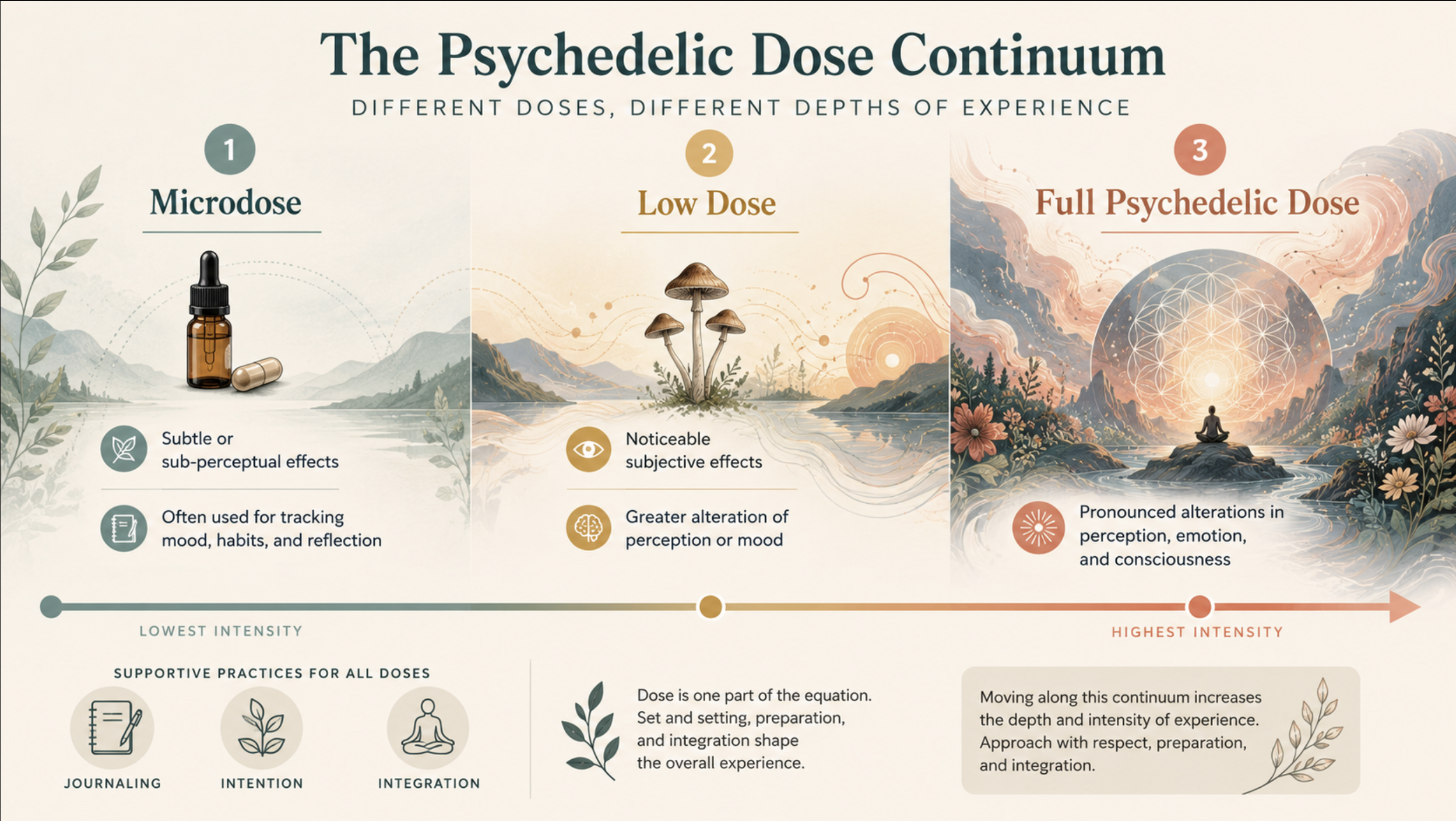
Figure 2. The psychedelic dose continuum: microdosing, low-dose effects, and full psychedelic experiences.
A useful way to understand the definition problem is to separate three ideas that are often blended together: a microdose, a low dose, and a threshold dose. A microdose usually means a repeated dose intended to be below the level of obvious intoxication or a full psychedelic state. A low dose may still be perceptible, and a threshold dose may produce subtle changes in mood, body sensation, attention, or perception. In real-world use, people often call all three of these experiences microdosing. In research, that matters because a study of a barely noticeable dose is not the same as a study of a dose that participants can reliably feel. Once participants can feel the dose, expectancy and blinding problems become much more important. [62]
Dose uncertainty is another reason lay readers should be cautious. LSD is commonly discussed in micrograms, while psilocybin mushroom use is often discussed in grams of dried material, but dried mushrooms vary in potency, storage conditions, species, preparation, and chemical composition. Even when a person believes they are taking the same amount each time, the active compound exposure may not be consistent. This makes self-experimentation very different from a clinical trial using measured, investigator-supplied material. It also means that popular statements such as 'one-tenth of a dose' can sound precise while hiding major variability. A professional coach or educator should be able to explain this uncertainty rather than presenting a universal formula. [60]
LSD and psilocybin also should not be treated as interchangeable. Both are classic psychedelics, but they differ in duration, pharmacology, subjective profile, dose measurement, and the kind of evidence available. Much of the most controlled microdosing evidence involves low-dose LSD, while many public discussions center on psilocybin mushrooms. Conversely, much of the strongest clinical evidence for depression involves supervised psilocybin sessions at substantially higher doses with psychological support, not unsupervised repeated microdoses. A careful article therefore has to keep substance, dose, setting, and goal separate. Otherwise readers may mistakenly import conclusions from one research context into another. [8]
Why people microdose
Real-world microdosing studies show a consistent pattern: people report using microdoses for mood, anxiety, focus, creativity, energy, self-understanding, productivity, and general well-being. Anderson and colleagues developed an empirical codebook from community reports and found commonly reported benefits such as improved mood and focus, while also identifying challenges such as physiological discomfort and increased anxiety. [12] Hutten and colleagues found that performance enhancement was a common motive, with LSD and psilocybin among the most commonly reported substances. [13] Cameron and colleagues reported that microdosers attributed the practice to improvements in mood, anxiety, memory, attention, and sociability. [14]
Other observational work adds nuance. Polito and Stevenson tracked daily functioning over six weeks and found increases in reported psychological functioning on dosing days, but more limited evidence for durable residual effects. [15] Kaertner and colleagues found that positive expectations predicted later improvements in mental-health outcomes, which suggests that expectancy may help drive some of the benefits reported by microdosers. [16] Rootman and colleagues reported that microdosers described health-related motivations and, among those with mental health concerns, lower depression, anxiety, and stress compared with non-microdosers; a later study reported greater observed one-month improvements in mood and mental health among psilocybin microdosers compared with non-microdosing controls. [17]
These studies should not be dismissed. They describe the people, motives, perceived benefits, and difficulties that clinical researchers and coaches need to understand. But they should also not be overread. Self-selected microdosers are not randomly assigned clinical trial participants. They may change sleep, exercise, diet, meditation, social habits, journaling, therapy, or expectations at the same time. When people begin a practice that feels meaningful, hopeful, and intentional, multiple systems can change together. [18]
That motivation can create both opportunity and risk. The opportunity is that a person who is motivated to change may also be open to sleep improvement, journaling, therapy, exercise, communication repair, values clarification, and healthier routines. The risk is that the substance becomes a symbol for all hoped-for change, while the ordinary work of change is neglected. A person may attribute every good day to the microdose and every difficult day to needing a different protocol. Integration support should help separate signal from story: What actually changed? What else was happening that week? What did sleep, stress, exercise, conflict, expectation, or social support contribute? [18]
What controlled studies show
Controlled studies are more difficult, more expensive, and less naturalistic, but they are crucial because they help separate pharmacological effects from expectancy effects. Szigeti and colleagues used a self-blinding citizen-science design in which participants incorporated placebo control into their own microdosing routine. Psychological outcomes improved in both the microdose and placebo groups, and the authors concluded that many anecdotal benefits could be explained by placebo effects. [19]
Psilocybin microdosing trials have also produced cautious results. Cavanna and colleagues conducted a double-blind placebo-controlled study of psilocybin mushroom microdosing and found noticeable subjective effects and altered EEG rhythms, but no evidence supporting enhanced well-being, creativity, or cognitive function; the authors concluded that expectation likely underlies at least some reported benefits. [20] Marschall and colleagues conducted a preregistered field and laboratory study and reported that psilocybin microdosing did not affect emotion-related symptoms and processing in the way anecdotal claims would predict. [21]
Low-dose LSD studies show that small doses can be active, but not necessarily transformative. Hutten and colleagues found selective acute effects on mood and cognition in healthy volunteers, including increased positive mood at some doses, but also increases in anxiety or confusion at some dose levels. [22] Family and colleagues found that repeated low doses of LSD in older healthy volunteers were generally tolerated in that phase 1 trial, with no impairment on cognition, balance, or proprioception measures. [23] de Wit and colleagues found that repeated low doses of LSD produced modest subjective drug effects but did not improve mood or most cognitive or emotional task outcomes in healthy adults. [24]
More recent reviews conclude that controlled LSD microdosing studies show acute effects on physiology, subjective state, sleep, neural connectivity, social cognition, pain, or time perception, but repeated dosing has not yet shown durable mood or cognition benefits in healthy samples. [25] Murphy and colleagues reported transient dose-day increases in several positive daily ratings in a home-administered LSD trial, but no credible enduring change in baseline-to-six-week psychometric or cognitive outcomes; anxiety led to withdrawal for several participants in the LSD group. [26] Allen and colleagues found that participants receiving LSD slept about 24 minutes longer on the night after microdosing compared with placebo, without reductions in sleep on dosing day, making sleep one of the more interesting objective outcomes in the controlled literature. [27]
The fairest summary is this: microdosing is not inert, but the strongest popular claims outrun the current evidence. It may produce subtle acute effects, and some people may experience meaningful subjective benefits. But controlled studies have not yet established microdosing as a reliable treatment for depression, anxiety, trauma, addiction, ADHD, creativity problems, or productivity. Claims should be proportional to evidence. [28]
The controlled evidence is best understood as a sequence of
increasingly demanding questions. First, can people detect low doses? In
several studies, higher low-dose ranges can produce perceptible subjective
effects. Second, do those doses create acute changes? Some studies suggest
acute changes in mood, anxiety, attention, perception, pain, time perception,
sleep, or physiology. Third, do repeated doses create durable improvements?
That question is much less settled. Fourth, do the effects remain when expectancy,
blinding, and placebo response are carefully considered? The answer is mixed
and still developing. This layered view is more accurate than asking whether
microdosing simply 'works' or 'does not work.' [65]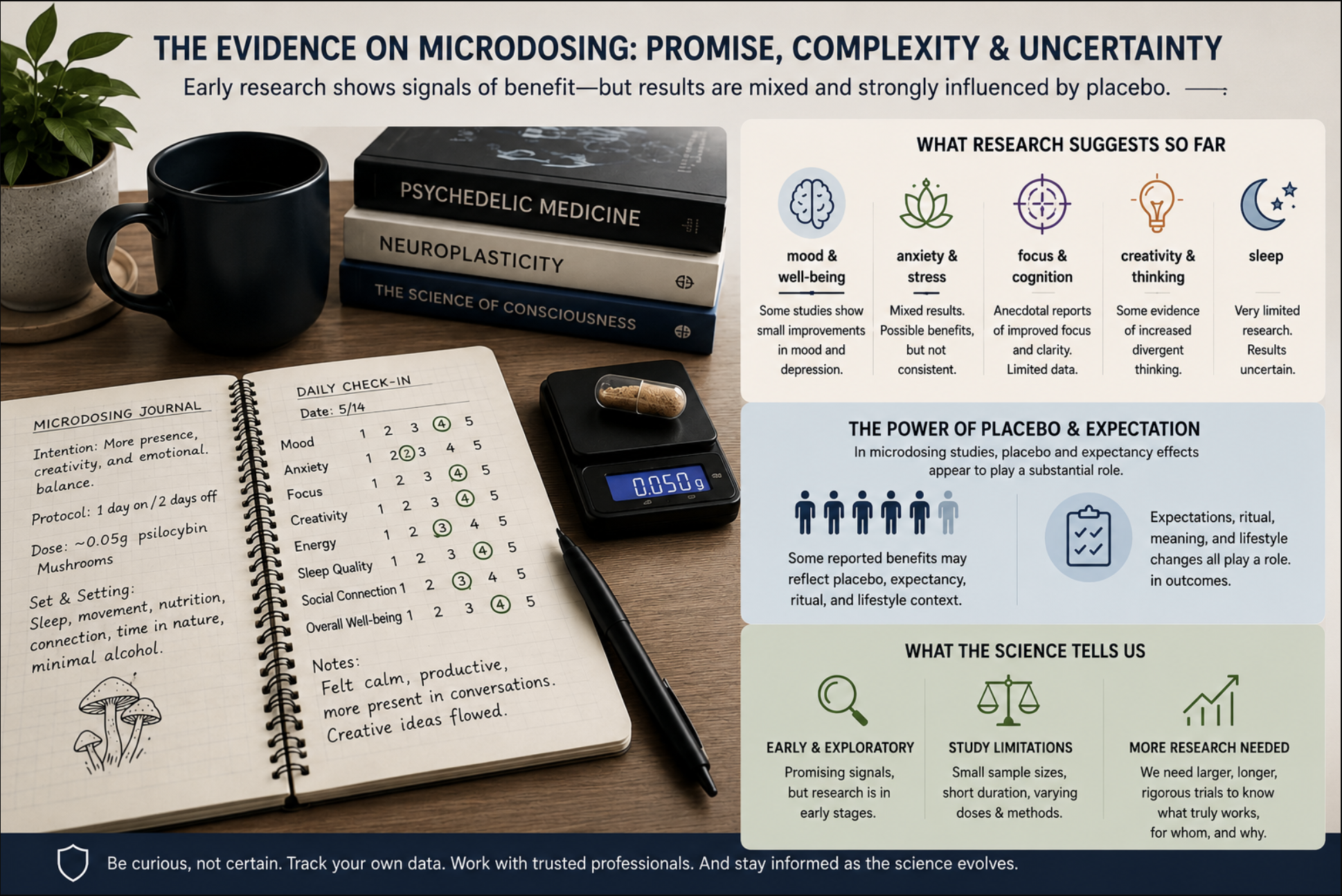
Figure 3. The evidence on microdosing: promising signals, mixed controlled findings, and the role of placebo and expectancy.
The blinding problem is not a technical footnote. In ordinary medication trials, a placebo can often be made to look identical to the active drug. With psychedelics, even low doses may create body sensations, mood changes, or perceptual cues that allow participants to guess their condition. If a participant believes they received the active substance, that belief can itself alter attention, mood, motivation, reporting, and behavior. In a field surrounded by intense media narratives, participant expectations may be unusually powerful. Good research therefore has to measure expectancy, assess whether blinding held, and interpret positive results in light of what participants believed they received. [63]
Microdosing is not high-dose psychedelic-assisted therapy
The strongest modern psilocybin findings come from psychedelic-assisted therapy trials, not microdosing studies. Goodwin and colleagues studied single-dose psilocybin for treatment-resistant depression and found that 25 mg reduced depression scores more than a 1 mg control dose at three weeks, though adverse events occurred and longer trials were needed. [29] Carhart-Harris and colleagues compared psilocybin with escitalopram for depression and did not find a statistically significant difference on the primary depression outcome at six weeks, although several secondary outcomes favored psilocybin and required cautious interpretation. [30] Davis and colleagues reported large antidepressant effects in a randomized waiting-list trial of psilocybin-assisted therapy for major depressive disorder. [31]
Other clinical trials extend the picture. Griffiths and colleagues found that high-dose psilocybin produced substantial and sustained reductions in depression and anxiety among patients with life-threatening cancer, with many participants maintaining clinically significant improvements at six months. [32] Bogenschutz and colleagues reported that psilocybin-assisted psychotherapy reduced the percentage of heavy drinking days in adults with alcohol use disorder compared with active placebo plus psychotherapy. [33] Reviews by Reiff and colleagues emphasize that randomized trials support promising effects for MDMA in PTSD and psilocybin in depression and cancer-related anxiety, while the overall evidence base remains insufficient for routine clinical use outside approved or legal settings. [34]
This distinction matters for readers. A person should not assume that low repeated doses will reproduce the effects seen in trials involving high-dose psilocybin, extensive preparation, trained support, medical screening, a controlled setting, and integration. The dose is different, the psychology is different, and the care model is different. [35]
This distinction also protects readers from inappropriate self-comparison. Someone may read about treatment-resistant depression trials and assume that a microdosing coach can reproduce those outcomes through a casual wellness protocol. That is not what the evidence shows. A coach may help with reflection, tracking, harm-reduction education, values, and integration within scope, but that is not the same as delivering a clinical trial protocol or treating a diagnosed psychiatric disorder. A person with major depression, suicidality, bipolar disorder, psychosis risk, complex trauma, or medication complexity needs qualified clinical assessment, not a simplified interpretation of psychedelic headlines. [35]
What integration actually is
Integration is often described as what happens after the experience, but that is too narrow. A better definition is the process by which a person connects insight, emotion, memory, values, body awareness, and behavior into a more coherent life. Integration may involve preparation before a psychedelic experience, support during the aftermath, and long-term behavioral change. It can also be useful for people who never take a psychedelic but are trying to make meaning from intense experiences, grief, trauma, spiritual openings, retreats, or major life transitions. [36]
Gorman and colleagues describe psychedelic harm reduction and integration as a transtheoretical clinical approach for working with people who use or are considering psychedelics in any context. The emphasis is compassionate, non-stigmatizing, and practical: assessment, preparation, working with difficult experiences, and helping patients reduce harm without forcing abstinence-only assumptions. [37] Professional practice guidelines emphasize competence, scope of practice, informed consent, safety planning, boundaries, cultural humility, and continuing care. [38] Lee and colleagues highlight informed-consent issues in psychedelic-assisted psychotherapy, including the need to discuss challenging experiences, rescue medications, and the way decisions are made when a participant is distressed. [39]
In plain language, integration asks: What did this experience reveal? What might be projection, expectation, fear, or fantasy? What needs to change in daily life? What support is needed? What is the safest next step? Who is qualified to help? What medical or psychiatric care should not be delayed? The work is less glamorous than the experience, but usually more important.
Preparation is part of integration because the meaning of an experience is shaped before it happens. A person brings expectations, fears, hopes, diagnoses, relationships, habits, sleep debt, stress levels, and cultural stories into the process. A grounded preparation conversation may include goals, medical and legal context, current supports, red flags, emotional regulation tools, and plans for what to do if confusion or distress arises. It may also include clarifying intention in a modest way. An intention is not a demand that the experience produce a specific result. It is a compass for attention, such as becoming more honest, noticing avoidance, softening defensiveness, or reconnecting with neglected values. [59]
Tracking is useful when it is humble. A journal, mood log, sleep record, symptom scale, or values checklist can help a person notice patterns over time. But tracking can also become obsessive or misleading if every ordinary fluctuation is interpreted through the substance. Responsible tracking asks about the whole ecology of the week: sleep, food, exercise, stress, conflict, therapy, work demands, menstrual cycle, social support, alcohol or other substance use, and meaningful activity. This is especially important in microdosing because reported effects are often subtle and because expectancy can shape perception. The goal is not to prove a preferred story. The goal is to learn what is actually helping. [62]
Reflection is the bridge between experience and behavior. A
meaningful experience may reveal grief, guilt, love, fear, gratitude,
resentment, spiritual longing, or a neglected responsibility. Integration asks
how that material should be handled in ordinary life. Does it require an
apology, a boundary, a therapy referral, a health appointment, a sleep routine,
a conversation with a partner, or a change in substance use? Without this
translation, insight can remain emotionally vivid but practically weak. A coach,
therapist, peer supporter, or group can help the person slow down, test
interpretations, and convert insight into specific next steps. [56]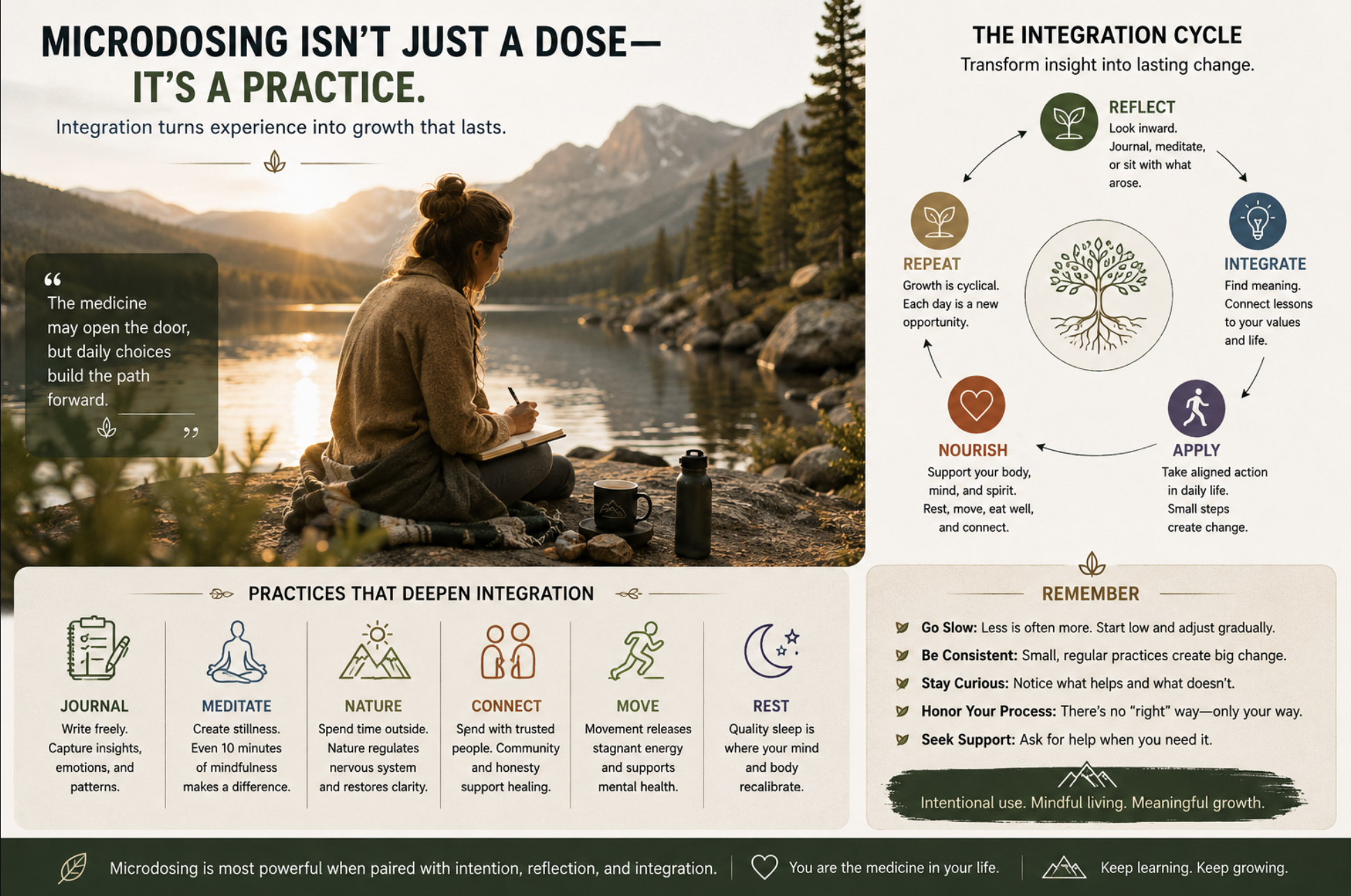
Figure 4. Microdosing integration as an ongoing practice: reflection, application, nourishment, and repeated adjustment over time.
The skills-over-substances model
A strong integration model should not make the substance the hero. Psychedelist’s educational approach is better organized around skills over substances: the idea that long-term mental, emotional, and spiritual growth depends on trainable human capacities, not only on altered states. Psychological flexibility is a useful scientific anchor for this idea. Hayes and colleagues describe Acceptance and Commitment Therapy as a model focused on acceptance, values, committed action, and flexible responding. [40] A-Tjak and colleagues found that ACT outperformed control conditions in a meta-analysis across clinically relevant mental and physical health problems, and Kashdan and Rottenberg describe psychological flexibility as a fundamental aspect of health. [41]
For a microdosing or integration coach, this means the practical goal is not to keep a client fascinated by microdosing. The goal is to help the client become more able to notice emotions without being ruled by them, name values, build habits, reduce avoidance, repair relationships, make decisions, and seek licensed care when needed. These are measurable life skills. They also reduce the risk that psychedelic interest becomes another form of escape. [42]
Sleep is one obvious foundation. Adults should generally sleep seven or more hours per night on a regular basis to support optimal health, and short sleep is associated with adverse outcomes across multiple health domains. [43] If someone reports anxiety, low mood, irritability, or poor attention while sleeping five hours a night, integration should begin with basic physiology before attributing everything to medicine, spirituality, or protocol design. [44]
Music, sound, nature, retreats, peer support, and navigation can also be part of a broader integration ecosystem. A JAMA Network Open meta-analysis found music interventions were associated with clinically meaningful improvements in mental health-related quality of life, while de Witte and colleagues found music therapy had medium-to-large effects on stress-related outcomes. [45] Singing bowl meditation was associated with improvements in mood, tension, and well-being in an observational study, and vibroacoustic therapy has been explored as a pain-related intervention. [46] Nature exposure is associated with health and mental-health benefits across a growing body of evidence, and residential retreats appear to have potential health benefits, though retreat research remains heterogeneous and methodologically limited. [47]
Finally, integration is social. Patient navigation, decision aids, health literacy, shared decision-making, peer support, and system navigation all matter because people rarely heal in isolation. Reviews suggest that patient navigators can improve process outcomes for chronic disease, decision aids improve knowledge and decision quality, and peer support may contribute to recovery-related outcomes for some people with mental illness. [48] These fields are not psychedelic-specific, but they help define what ethical support should look like: informed, collaborative, connected, and humble.
The skills-over-substances model also gives readers a way to evaluate success. The question is not simply whether someone had an interesting experience or felt better for a day. The deeper question is whether the person became more able to live well. Are they sleeping better, communicating more honestly, avoiding less, asking for help sooner, returning to meaningful work, building community, repairing relationships, or making safer decisions? Psychological flexibility is useful here because it focuses on the capacity to feel difficult things while still acting in line with values. In this model, microdosing is at most a possible input. The durable outcome is a more skillful life. [42]
Safety, risk, and red flags
The safest psychedelic research settings use careful screening, preparation, support, monitoring, and follow-up. Johnson, Richards, and Griffiths described safety guidelines for human hallucinogen research, and Studerus and colleagues found that moderate psilocybin doses in screened, prepared, healthy participants in controlled settings were associated with an acceptable level of risk, with acute adverse reactions managed by interpersonal support and no long-term impairment observed in their sample. [49] These findings are reassuring for research contexts, not permission to generalize safety to every person, product, provider, or environment. [50]
Risks include anxiety, panic, dysphoria, confusion, physiological discomfort, sleep disruption or sleep changes, impaired judgment, legal consequences, product uncertainty, mushroom misidentification, and worsening symptoms in vulnerable people. Community microdosing studies report challenges, including increased anxiety and physical discomfort. [51] Controlled studies also report anxiety-related concerns, including withdrawals in one home-administered LSD trial. [26]
There are also ethical risks. A coach who promises cures, minimizes contraindications, encourages secrecy from physicians, dismisses psychiatric history, sells certainty, pressures clients into dosing, blurs sexual or financial boundaries, or discourages evidence-based care is not practicing responsibly. Professional guidelines emphasize boundaries, competence, informed consent, scope, safety, and accountability. [36]
Readers should be especially careful when there is a personal or family history of psychosis or mania, unstable suicidality, severe dissociation, complex medication regimens, pregnancy, serious cardiovascular concerns, substance use instability, or active legal risk. This article is educational and does not provide medical instructions. A responsible coach should know when to refer to licensed medical, psychiatric, psychological, or emergency support. [52]
Safety should include adverse psychological states that are not always captured by simple checklists. Increased anxiety, irritability, insomnia, emotional flooding, grandiose certainty, impulsive decisions, spiritual confusion, derealization, or relationship disruption may all matter. Even when a reaction is not a medical emergency, it may require slowing down, stopping the practice, seeking clinical support, or involving trusted people. Responsible support does not romanticize destabilization as proof that healing is happening. Difficulty can become useful when it is contained, consented to, paced, and integrated. Difficulty without containment can become harm. [81]
Product and legal risks also belong in the safety conversation. Outside approved research or regulated medical settings, people may not know exactly what they possess, how strong it is, whether it is contaminated, or what legal consequences apply. Regulatory sources and drug scheduling materials are not sufficient to guide personal decisions, but they do establish that psychedelics remain legally and medically complex in many jurisdictions. A provider who treats legality, sourcing, purity, or dosing as trivial is not demonstrating professionalism. A reader should look for humility, referral readiness, and clear boundaries rather than bravado. [88]
How to evaluate a microdosing or integration coach
A good coach does not need to sound mystical, clinical, or certain. A good coach needs to be honest about scope. Some are licensed clinicians; many are not. Some work only with integration, meaning they help clients process experiences that have already occurred. Others discuss microdosing education, preparation, intention setting, behavior change, or harm reduction. The title alone does not define competence. The questions below help readers evaluate support. [53]
Ask what the provider is licensed or trained to do. Ask whether they are a therapist, physician, nurse practitioner, coach, peer supporter, minister, facilitator, or educator. Ask what they do when a client presents with severe depression, suicidality, mania, psychosis risk, trauma instability, medication complexity, or substance use disorder. Ask whether they carry insurance, use written informed consent, maintain confidentiality, document boundaries, and provide referrals. [36]
Ask how they understand evidence. A responsible provider should be able to say that controlled microdosing evidence is mixed, that expectancy plays a role, that high-dose psilocybin therapy trials cannot be treated as proof of microdosing efficacy, and that legal status varies by jurisdiction. If a provider speaks as though microdosing is already proven for every condition, that is a warning sign. [54]
Ask what integration looks like in daily life. Strong answers will include sleep, values, journaling, relationships, nervous-system regulation, community, nature, music, creative expression, exercise, therapy referrals when appropriate, and decision-making support. Weak answers will focus only on dosing, products, or dramatic stories. [7]
Ask about consent and stopping. A client should be free to pause, change direction, decline a recommendation, or seek another opinion. In psychedelic-related work, consent must be ongoing, not a one-time signature. [55]
A strong provider also distinguishes education from instruction. There is a difference between explaining what the research says about common microdosing ranges and telling a person exactly what illegal substance to take, how much to take, and how to obtain it. There is a difference between helping someone reflect on an experience and claiming to treat depression, PTSD, addiction, or trauma without the license and training to do so. There is a difference between peer support and psychotherapy. These distinctions may seem subtle to consumers, but they are central to ethical practice. [55]
For readers using the Psychedelist listing page for microdosing and integration coaches, the directory should be treated as a starting point for discernment, not a substitute for evaluation. A listing can help people discover providers, compare approaches, and begin asking better questions. It should not lead readers to assume that every provider has the same credentials, scope, or evidence base. The article’s role is therefore to prepare readers before they click: understand the evidence, know the red flags, clarify goals, and ask direct questions about training, boundaries, safety, and referral pathways. [74]
What a responsible integration plan can include
A responsible integration plan begins with goals. Is the person trying to reduce avoidance, process grief, improve relationships, recover from a difficult experience, prepare for a legal retreat, make sense of a spiritual opening, or build healthier routines? The goal determines the support. Vague transformation language is not enough. [56]
Second, it includes a safety map. The map identifies medical or psychiatric concerns, medications, sleep, substance use, social support, crisis contacts, legal context, and referral pathways. A coach who is not licensed to treat a condition should not pretend to treat it. [57]
Third, it includes practices that translate insight into behavior. Examples include values clarification, implementation plans, therapy referrals, reflective writing, body-based regulation, music or sound practices, time in nature, peer support, family communication, and shared decision-making tools. The purpose is not to create a rigid lifestyle ideology, but to help the person make safer, more coherent choices. [58]
Fourth, it includes reality testing. Psychedelic and psychedelic-adjacent experiences can feel profound, but profundity is not the same as accuracy. Integration should help a person distinguish useful insight from impulsive certainty. This is especially important after experiences involving grandiosity, paranoia, cosmic certainty, sudden relationship decisions, or major life changes. [59]
Fifth, it includes community and continuity. A single conversation may help, but durable change usually requires repetition, relationships, and systems. Peer support, navigation, and shared decision-making research all point toward the value of support structures that help people stay engaged and informed over time. [48]
A plan can also include a decision point. Before beginning any practice, the person can decide what would count as a reason to pause, seek medical advice, change course, or stop. Examples might include worsening anxiety, impaired sleep, conflict escalation, risky behavior, obsessive focus on dosing, or neglect of ordinary responsibilities. This protects the person from chasing a hoped-for breakthrough while ignoring evidence that the approach is not helping. Shared decision-making research is relevant here because good support helps people understand options, risks, values, and uncertainty rather than pushing them toward a predetermined choice. [78]
Finally, a responsible plan includes integration beyond the individual. If an experience points toward repairing a relationship, reducing isolation, changing work patterns, seeking therapy, joining a support group, spending time in nature, or developing a creative practice, then the next step should involve real-world structure. Integration is not only an internal conversation. It is the reorganization of life around what has been learned. That reorganization may be small and practical: one honest conversation, one sleep boundary, one therapy appointment, one weekly walk, one peer-support meeting, or one reduced avoidance pattern repeated long enough to become part of the person’s life. [80]
Evidence map: how to read the research
A reader can become confused because different kinds of studies answer different kinds of questions. Government and regulatory sources explain legal status, drug-development standards, and clinical-trial expectations; they do not prove that a practice works. [60] Pharmacology reviews explain receptors, mechanisms, and historical context; they do not tell a specific reader whether microdosing will help them. [8] Safety guidelines and pooled clinical studies help define the conditions under which psychedelic research has been conducted more safely, but they are not guarantees for community use. [61]
Observational and survey studies are especially useful for understanding why people microdose, what they believe they experience, what benefits they report, and what challenges arise in the real world. [4] These studies can reveal patterns that laboratory trials might miss, including community motivations, intention, substance-testing behavior, perceived productivity, or the role of online communities. But they cannot fully remove self-selection, expectancy, placebo response, lifestyle changes, or the possibility that people who already feel open, creative, or health-oriented are more likely to microdose in the first place. [62]
Randomized and placebo-controlled trials are better for causality, but they also have limits. Laboratory conditions can feel artificial, small samples may miss rare adverse events, and short studies may not capture the way people use microdosing over months in their ordinary lives. Blinding is also hard: if a low dose is noticeable, participants may guess what they received; if it is not noticeable, the study may be testing a dose below the threshold of subjective effect. [63]
The best reading of the evidence is therefore layered. Microdosing is a real community practice with real reported benefits and challenges. It has plausible pharmacology and some measurable acute effects. But it is not yet a proven treatment model. Integration, by contrast, is broader than microdosing and can be supported by established fields such as psychological flexibility, music therapy, nature exposure, peer support, patient navigation, and shared decision-making. [7]
Outcome-by-outcome: what seems most and least supported
Mood and emotional well-being are the most commonly reported reasons people microdose. Surveys and prospective observational studies often report improvements in mood, anxiety, depression, or general mental health. [64] Controlled studies are more mixed. Low-dose LSD can produce acute changes in positive mood or dose-day well-being ratings in some trials, but repeated low-dose studies in healthy adults generally have not shown lasting baseline-to-follow-up improvements in mood. [65] For clinical depression, the stronger evidence belongs to supervised psilocybin-assisted therapy, not microdosing. [66]
Anxiety is complicated because it can be both a target and a side effect. Many microdosers hope to reduce anxiety, and observational work reports lower anxiety among some microdosing groups. [67] Yet microdosing studies and surveys also identify increased anxiety as a challenge, and controlled LSD work has reported anxiety-related adverse effects in some participants. [68] A responsible provider should therefore ask not only whether the client wants less anxiety, but whether their nervous system, history, sleep, medication profile, and support system make experimentation more or less risky. [36]
Creativity and productivity are among the most culturally visible claims. Observational studies and surveys often include creativity, focus, and performance enhancement as reported benefits or motives. [69] However, controlled studies have not established reliable creativity or cognitive enhancement. Cavanna and colleagues did not find support for enhanced creativity or cognitive function after low-dose psilocybin mushrooms, and de Wit and colleagues did not find broad cognitive improvements after repeated low-dose LSD. [70] This does not mean no individual ever feels more creative; it means the evidence does not yet support a general promise. [28]
Attention and cognition also remain unsettled. Some low-dose LSD work found reduced attentional lapses or acute task effects, while reviews describe effects on perception, time perception, pain, and neural measures. [71] But the durable, practical claim that microdosing improves everyday focus or intelligence is not established. This is especially important for marketing ethics: a provider should not sell microdosing as a proven cognitive enhancer. [72]
Sleep may become one of the most interesting research areas. Allen and colleagues found increased sleep duration the night after LSD microdosing, and adult sleep consensus guidance supports the broader importance of adequate sleep for health. [44] Even here, the evidence should be interpreted carefully: increased sleep duration in healthy male volunteers does not automatically mean microdosing is a sleep treatment, nor does it define what happens with psilocybin, women, older adults, people with insomnia, or people with psychiatric conditions. [73]
Substance use, grief, existential distress, and depression are better supported in high-dose or psychedelic-assisted therapy research than in microdosing. Psilocybin-assisted psychotherapy has shown promising outcomes in alcohol use disorder, major depressive disorder, treatment-resistant depression, and cancer-related anxiety and depression in selected trials. [3] These studies are important for the field but should not be borrowed as proof for unsupervised low-dose use.
Mood and emotional distress are the most visible claims, but they are also the most vulnerable to expectancy effects. Observational studies often find that microdosers report lower depression, anxiety, or stress, and some prospective studies find improvements over time. Controlled studies, however, have not yet established microdosing as a reliable treatment for depression or anxiety. The safest interpretation is that some people may experience mood-related benefits, but the current evidence does not justify replacing established mental health care with microdosing. For individuals with significant symptoms, microdosing should not become a way to avoid assessment, therapy, medication review, or crisis support when those are needed. [84]
Creativity, focus, and productivity claims also need careful language. Many users report feeling more creative, mentally flexible, energetic, or focused. Some studies show acute changes in self-rated creativity or cognitive state, while other controlled findings are small, inconsistent, or absent. This distinction matters because subjective creativity and objective performance are not identical. A person may feel more inspired without producing better work, or may benefit creatively because a ritualized practice changes attention, motivation, and expectation. A responsible article can recognize that people often value these subjective changes while still refusing to overstate the evidence for durable cognitive enhancement. [68]
Sleep is an especially interesting emerging area because it is measurable and foundational. One controlled trial found that participants in the LSD microdosing group slept longer the night after dosing, without a simple reduction in sleep on dosing days. This does not prove broad therapeutic value, and the study population was limited, but it shows why the field should measure objective outcomes rather than relying only on mood reports. Sleep also reminds readers that even subtle interventions can affect whole-body rhythms. If a person’s sleep worsens, improves, or shifts, that is not a side detail; it may become central to whether the overall pattern is helpful. [73]
Coaching, therapy, facilitation, peer support, and navigation
The psychedelic
support landscape uses many titles, and readers should not treat them as
interchangeable. A licensed therapist may provide psychotherapy within a
defined professional scope. A physician or prescribing clinician may evaluate
medical issues, medications, diagnosis, and treatment. A facilitator may
support a ceremony or session in a legal or religious context, depending on
jurisdiction and model. A coach may help with goals, habits, preparation,
reflection, and integration but usually cannot diagnose or treat medical or
psychiatric conditions unless separately licensed. A peer supporter may draw on
lived experience and mutual support. A navigator may help someone locate
services, understand options, and connect with appropriate care. [74]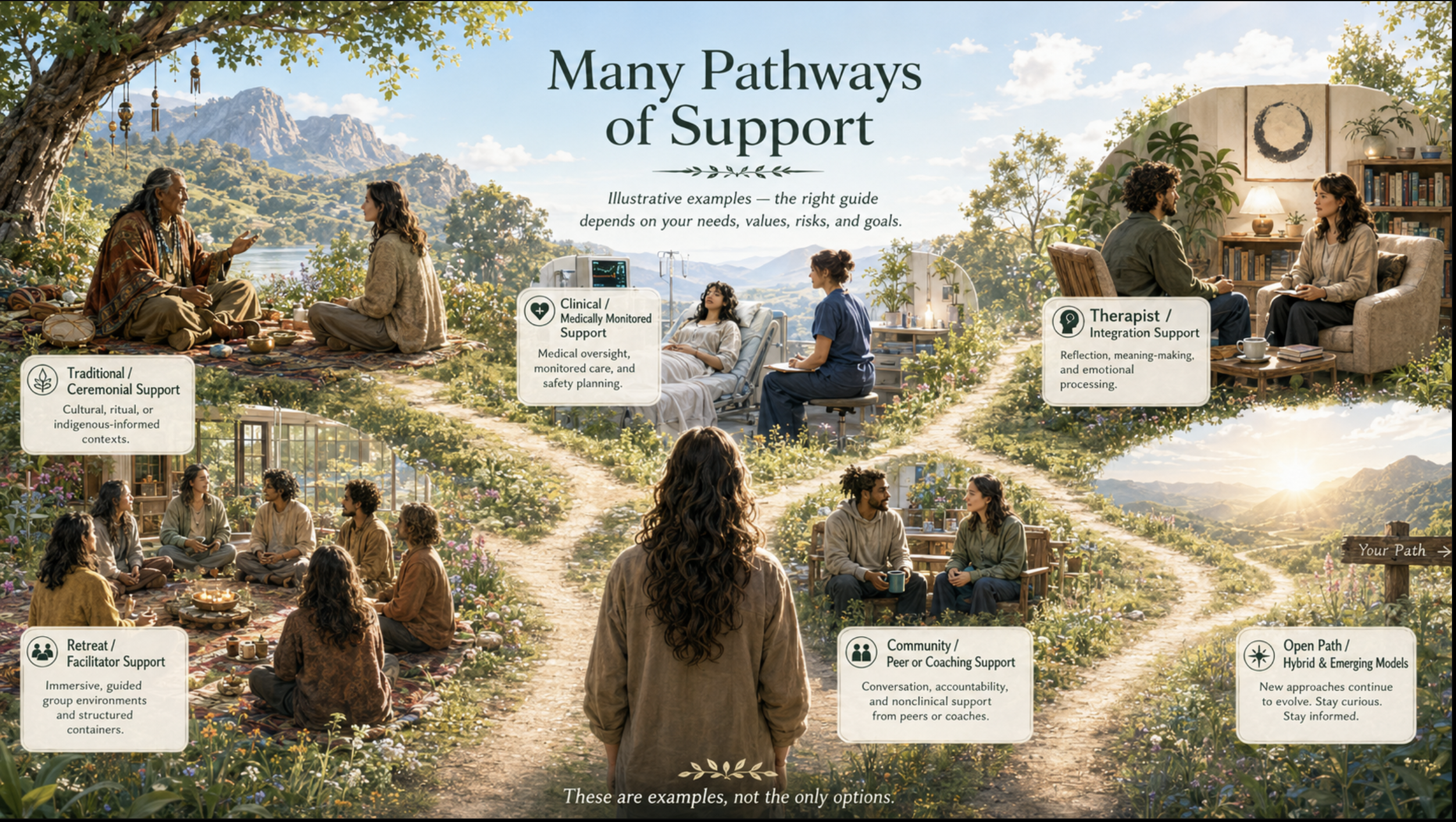
Figure 5. Many pathways of support: different models may include clinical care, therapy, coaching, peer support, retreat facilitation, traditional ceremonial contexts, and emerging hybrid approaches.
These distinctions are not bureaucratic details; they protect the client. If a person has panic disorder, bipolar risk, psychosis risk, suicidal ideation, trauma instability, medication questions, or addiction concerns, a coach who behaves like a clinician can create danger. Conversely, a clinician who dismisses the client’s meaning-making, spiritual language, or community context may fail to support integration. The strongest care ecosystems know when to collaborate. [74]
Peer support deserves special attention. Peer support can reduce isolation, increase hope, and help people feel understood by others with lived experience. General mental-health peer-support reviews show promise but also mixed effects depending on outcomes and study design. [75] For psychedelic integration, peer groups can be valuable when they are boundaried, non-coercive, non-grandiose, and clear that shared experience is not the same as medical authority. [76]
Patient navigation and system navigation are also relevant because many people interested in psychedelics are trying to cross fragmented systems: therapy, psychiatry, retreats, coaching, legal questions, spiritual communities, and medical care. Reviews of patient navigation and system navigation suggest these models can improve access or process outcomes in some settings. [77] In psychedelic-adjacent care, navigation may be as important as inspiration: helping a person find the right level of care can prevent harm. [78]
A practical checklist for readers
A reader considering microdosing education or integration support can use the following checklist before choosing a provider. The point is not to create fear; it is to slow the process enough for informed choice. [79]
Clarify the goal. The goal should be more specific than healing, awakening, or optimization. Examples include grief processing, emotional regulation, reducing avoidance, preparing for a legal retreat, understanding a prior experience, building a sleep routine, making a values-based decision, or finding appropriate clinical care. [80]
Clarify the provider’s role. Ask whether the person is a licensed clinician, coach, facilitator, clergy member, peer supporter, educator, or navigator. Ask what they are not qualified to do. The best providers are not offended by scope questions. [36]
Clarify risk. Discuss mental health history, family psychiatric history, medications, sleep, substance use, legal setting, medical conditions, and emergency support. If a provider skips risk screening and moves immediately into a protocol, that is a red flag. [81]
Clarify evidence. A responsible provider should be able to explain that microdosing evidence is mixed, that observational benefits are not the same as causal proof, that placebo and expectancy matter, and that high-dose therapy trials do not prove microdosing benefits. [82]
Clarify integration practices. Ask what happens between sessions. Look for grounded practices: values clarification, journaling, sleep support, nature exposure, music or creative practice, communication skills, therapy referrals, peer support, and decision-making tools. [7]
Clarify consent and boundaries. The provider should have clear policies on touch, confidentiality, communication outside sessions, fees, refunds, crisis response, dual relationships, and termination. Psychedelic-related work can make people vulnerable, so boundaries are part of care. [83]
Common questions
Is microdosing proven to treat depression or anxiety? No. Some observational studies report lower depression, anxiety, or stress among microdosers, and some participants report meaningful benefits. [84] But controlled microdosing studies have not established microdosing as a treatment for depression or anxiety. The stronger clinical evidence for depression involves supervised psilocybin-assisted therapy, which is a different model. [66]
Is microdosing just placebo? The most careful answer is that expectancy and placebo effects clearly matter, but that does not prove every microdosing effect is only placebo. Self-blinding and expectancy studies show that belief can strongly shape outcomes. [85] Controlled reviews also show low doses can have measurable acute effects. [86] Microdosing likely sits at the intersection of pharmacology, expectation, intention, ritual, lifestyle change, and context. [87]
Can a microdosing coach prescribe a protocol? That depends on jurisdiction, licensure, substance, and scope. Many coaches are not medical prescribers and should not act as if they are. Educational discussion, harm-reduction support, and integration coaching are different from diagnosing, prescribing, or treating a disorder. [88]
What if someone had a difficult psychedelic experience months or years ago? Integration can still be relevant. A difficult experience may leave fear, confusion, spiritual questions, relationship disruption, or new insight that needs grounding. Support may include therapy, peer support, journaling, body-based regulation, sleep repair, and careful meaning-making. Severe or persistent symptoms should be referred to licensed care. [89]
How is integration different from ordinary therapy? Sometimes it is not sharply different. Integration may use ordinary therapeutic skills: emotional processing, values work, trauma-informed care, behavior change, and relationship repair. What makes it distinctive is the content: altered states, psychedelic experiences, spiritual meaning, ceremony, microdosing, existential shifts, and the risk of overinterpreting intense experiences. [36]
What should a provider never promise? A provider should not promise cure, guaranteed transformation, freedom from medication, spiritual superiority, trauma resolution, addiction recovery, or immunity from risk. Even in promising clinical trials, results vary and studies have inclusion criteria, screening, support, and adverse events. [90]
What is the most important integration skill? There is no single skill, but psychological flexibility is a strong candidate because it connects awareness, acceptance, values, and committed action. [42] In everyday language, this means learning to feel what is present, tell the truth about it, choose what matters, and act with care.
The research frontier
The next stage of microdosing research needs better definitions, better blinding, active placebos, patient populations, objective outcomes, longer follow-up, careful adverse-event tracking, and a clearer distinction between acute and durable effects. [91] It also needs humility. If microdosing helps some people, the field should identify who benefits, under what conditions, through what mechanisms, and with what risks. If benefits are largely expectancy-driven for some outcomes, that does not mean people are lying; it means the mind, body, ritual, hope, and context are powerful. [92]
Research should also examine integration itself. A psychedelic session, microdosing period, retreat, or meaningful altered state may open a learning window, but learning requires structure. The most important outcomes may not be mystical intensity or dose response alone, but whether people sleep better, communicate better, avoid less, seek appropriate care, reduce harmful behavior, and live more consistently with values. [7]
Conclusion
Microdosing deserves neither blind enthusiasm nor reflexive dismissal. The evidence shows a practice with widespread public interest, meaningful self-reported benefits, real uncertainties, plausible acute pharmacological effects, and strong expectancy and context effects. It is not yet an established treatment. It is not equivalent to high-dose psychedelic-assisted therapy. It is also not merely a joke or trend, because the people drawn to it are often trying to solve real problems in mood, meaning, attention, trauma, addiction, creativity, and life direction. [93]
Integration is where Psychedelist can contribute the most. The deeper question is not only whether a person microdoses. It is whether they become more honest, stable, connected, informed, flexible, and capable of building a life that supports healing and growth. That is the skills-over-substances standard. It is also the difference between chasing an experience and integrating a path.
Educational scope note: This article is educational and is not medical, psychiatric, legal, or dosing advice. Psychedelic laws, clinical eligibility, product risks, and professional scope of practice vary by jurisdiction and circumstance.
See also
Microdosing and integration coaches on Psychedelist
Psychedelic harm reduction and integration
Psychedelic-assisted therapy
How to evaluate psychedelic-adjacent providers
Whole-person support and integration planning
References
Citations
The numbered citations below correspond to the bracketed reference numbers used in the article. A single citation note may cite one or several works; the Sources section lists the full audited source bibliography.
1. Polito and Liknaitzky 2022; Polito and Liknaitzky 2024; Kuypers et al. 2019; Murphy, Muthukumaraswamy, and de Wit 2024.
2. APPA and BrainFutures 2023; Lee, Rosenbaum, and Buchman 2024; Gorman et al. 2021; Hayes et al. 2013; A-Tjak et al. 2015; Kashdan and Rottenberg 2010; McBrien et al. 2018; Stacey et al. 2024; Muscat et al. 2021; Shalaby and Agyapong 2020; Smit et al. 2023; Teggart et al. 2023.
3. Goodwin et al. 2022; Carhart-Harris et al. 2021; Griffiths et al. 2016; Davis et al. 2021; Bogenschutz et al. 2022.
4. Polito and Stevenson 2019; Kaertner et al. 2021; Rootman et al. 2021; Rootman et al. 2022; Anderson et al. 2019a; Anderson et al. 2019b; Hutten et al. 2019; Cameron, Nazarian, and Olson 2020; Petranker et al. 2022.
5. Szigeti et al. 2021; Cavanna et al. 2022; Marschall et al. 2022; Murphy, Muthukumaraswamy, and de Wit 2024; Murphy et al. 2023; de Wit et al. 2022; Hutten et al. 2020; Family et al. 2020; Allen et al. 2024.
6. Hartogsohn 2016; Aday et al. 2022; Polito and Liknaitzky 2024; Szigeti et al. 2021; Kaertner et al. 2021; Murphy, Muthukumaraswamy, and de Wit 2024.
7. Hayes et al. 2013; A-Tjak et al. 2015; Kashdan and Rottenberg 2010; Watson et al. 2015; McCrary et al. 2022; de Witte et al. 2022; Goldsby et al. 2017; Kantor et al. 2022; Jimenez et al. 2021; Naidoo, Schembri, and Cohen 2018; Bratman et al. 2019; McBrien et al. 2018; Stacey et al. 2024; Muscat et al. 2021; Shalaby and Agyapong 2020; Smit et al. 2023; Teggart et al. 2023.
8. Nichols 2016; Polito and Liknaitzky 2022; Kuypers et al. 2019.
9. DEA 2020; DEA Drug Scheduling n.d..
10. FDA 2023.
11. Johnson, Richards, and Griffiths 2008; Studerus et al. 2011; APPA and BrainFutures 2023; Goodwin et al. 2022; Carhart-Harris et al. 2021; Griffiths et al. 2016; Davis et al. 2021; Bogenschutz et al. 2022.
12. Anderson et al. 2019b.
13. Hutten et al. 2019.
14. Cameron, Nazarian, and Olson 2020.
15. Polito and Stevenson 2019.
16. Kaertner et al. 2021.
17. Rootman et al. 2021; Rootman et al. 2022.
18. Hartogsohn 2016; Polito and Liknaitzky 2022; Polito and Stevenson 2019; Kaertner et al. 2021; Petranker et al. 2022.
19. Szigeti et al. 2021.
20. Cavanna et al. 2022.
21. Marschall et al. 2022.
22. Hutten et al. 2020.
23. Family et al. 2020.
24. de Wit et al. 2022.
25. Murphy, Muthukumaraswamy, and de Wit 2024.
26. Murphy et al. 2023.
27. Allen et al. 2024.
28. Polito and Liknaitzky 2022; Polito and Liknaitzky 2024; Murphy, Muthukumaraswamy, and de Wit 2024.
29. Goodwin et al. 2022.
30. Carhart-Harris et al. 2021.
31. Davis et al. 2021.
32. Griffiths et al. 2016.
33. Bogenschutz et al. 2022.
34. Reiff et al. 2020.
35. FDA 2023; Johnson, Richards, and Griffiths 2008; Studerus et al. 2011; APPA and BrainFutures 2023; Goodwin et al. 2022; Carhart-Harris et al. 2021; Griffiths et al. 2016; Davis et al. 2021; Bogenschutz et al. 2022.
36. APPA and BrainFutures 2023; Lee, Rosenbaum, and Buchman 2024; Gorman et al. 2021.
37. Gorman et al. 2021.
38. APPA and BrainFutures 2023.
39. Lee, Rosenbaum, and Buchman 2024.
40. Hayes et al. 2013.
41. A-Tjak et al. 2015; Kashdan and Rottenberg 2010.
42. Hayes et al. 2013; A-Tjak et al. 2015; Kashdan and Rottenberg 2010.
43. Watson et al. 2015.
44. Allen et al. 2024; Watson et al. 2015.
45. McCrary et al. 2022; de Witte et al. 2022.
46. Goldsby et al. 2017; Kantor et al. 2022.
47. Jimenez et al. 2021; Naidoo, Schembri, and Cohen 2018; Bratman et al. 2019.
48. McBrien et al. 2018; Stacey et al. 2024; Muscat et al. 2021; Shalaby and Agyapong 2020; Smit et al. 2023; Teggart et al. 2023.
49. Johnson, Richards, and Griffiths 2008; Studerus et al. 2011.
50. FDA 2023; Johnson, Richards, and Griffiths 2008; Studerus et al. 2011.
51. Anderson et al. 2019b; Hutten et al. 2019; Petranker et al. 2022.
52. FDA 2023; Johnson, Richards, and Griffiths 2008; APPA and BrainFutures 2023; Lee, Rosenbaum, and Buchman 2024; Gorman et al. 2021.
53. APPA and BrainFutures 2023; Lee, Rosenbaum, and Buchman 2024; Gorman et al. 2021; McBrien et al. 2018; Stacey et al. 2024; Muscat et al. 2021.
54. FDA 2023; DEA 2020; DEA Drug Scheduling n.d.; Polito and Liknaitzky 2022; Polito and Liknaitzky 2024; Szigeti et al. 2021; Cavanna et al. 2022; Marschall et al. 2022; Kaertner et al. 2021; Murphy, Muthukumaraswamy, and de Wit 2024.
55. APPA and BrainFutures 2023; Lee, Rosenbaum, and Buchman 2024; Stacey et al. 2024; Muscat et al. 2021.
56. APPA and BrainFutures 2023; Lee, Rosenbaum, and Buchman 2024; Gorman et al. 2021; Hayes et al. 2013; A-Tjak et al. 2015; Kashdan and Rottenberg 2010.
57. FDA 2023; APPA and BrainFutures 2023; Lee, Rosenbaum, and Buchman 2024; Gorman et al. 2021; McBrien et al. 2018; Teggart et al. 2023.
58. Hayes et al. 2013; A-Tjak et al. 2015; Kashdan and Rottenberg 2010; McCrary et al. 2022; de Witte et al. 2022; Goldsby et al. 2017; Kantor et al. 2022; Jimenez et al. 2021; Naidoo, Schembri, and Cohen 2018; Bratman et al. 2019; McBrien et al. 2018; Stacey et al. 2024; Muscat et al. 2021; Shalaby and Agyapong 2020; Smit et al. 2023; Teggart et al. 2023.
59. Hartogsohn 2016; Aday et al. 2022; APPA and BrainFutures 2023; Lee, Rosenbaum, and Buchman 2024; Gorman et al. 2021.
60. FDA 2023; DEA 2020; DEA Drug Scheduling n.d..
61. Johnson, Richards, and Griffiths 2008; Studerus et al. 2011; APPA and BrainFutures 2023; Lee, Rosenbaum, and Buchman 2024; Gorman et al. 2021.
62. Polito and Liknaitzky 2022; Polito and Liknaitzky 2024; Kaertner et al. 2021; Petranker et al. 2022.
63. Aday et al. 2022; Polito and Liknaitzky 2024; Szigeti et al. 2021; Murphy, Muthukumaraswamy, and de Wit 2024.
64. Polito and Stevenson 2019; Kaertner et al. 2021; Rootman et al. 2021; Rootman et al. 2022; Anderson et al. 2019a; Anderson et al. 2019b; Cameron, Nazarian, and Olson 2020; Petranker et al. 2022.
65. Murphy, Muthukumaraswamy, and de Wit 2024; Murphy et al. 2023; de Wit et al. 2022; Hutten et al. 2020.
66. Goodwin et al. 2022; Carhart-Harris et al. 2021; Griffiths et al. 2016; Davis et al. 2021.
67. Rootman et al. 2021; Rootman et al. 2022; Cameron, Nazarian, and Olson 2020.
68. Anderson et al. 2019b; Hutten et al. 2019; Murphy et al. 2023; Hutten et al. 2020.
69. Polito and Stevenson 2019; Anderson et al. 2019a; Anderson et al. 2019b; Hutten et al. 2019; Cameron, Nazarian, and Olson 2020; Petranker et al. 2022.
70. Cavanna et al. 2022; de Wit et al. 2022.
71. Murphy, Muthukumaraswamy, and de Wit 2024; Hutten et al. 2020.
72. Aday et al. 2022; Polito and Liknaitzky 2022; Polito and Liknaitzky 2024; Murphy, Muthukumaraswamy, and de Wit 2024.
73. Murphy, Muthukumaraswamy, and de Wit 2024; Allen et al. 2024; Watson et al. 2015.
74. APPA and BrainFutures 2023; Lee, Rosenbaum, and Buchman 2024; Gorman et al. 2021; McBrien et al. 2018; Stacey et al. 2024; Muscat et al. 2021; Shalaby and Agyapong 2020; Smit et al. 2023; Teggart et al. 2023.
75. Shalaby and Agyapong 2020; Smit et al. 2023.
76. Gorman et al. 2021; Shalaby and Agyapong 2020; Smit et al. 2023.
77. McBrien et al. 2018; Teggart et al. 2023.
78. McBrien et al. 2018; Stacey et al. 2024; Muscat et al. 2021; Teggart et al. 2023.
79. APPA and BrainFutures 2023; Lee, Rosenbaum, and Buchman 2024; Gorman et al. 2021; Stacey et al. 2024; Muscat et al. 2021.
80. Hayes et al. 2013; A-Tjak et al. 2015; Kashdan and Rottenberg 2010; McBrien et al. 2018; Stacey et al. 2024; Muscat et al. 2021.
81. FDA 2023; Johnson, Richards, and Griffiths 2008; Studerus et al. 2011; APPA and BrainFutures 2023; Lee, Rosenbaum, and Buchman 2024; Gorman et al. 2021.
82. Polito and Liknaitzky 2022; Polito and Liknaitzky 2024; Szigeti et al. 2021; Cavanna et al. 2022; Marschall et al. 2022; Kaertner et al. 2021; Murphy, Muthukumaraswamy, and de Wit 2024.
83. APPA and BrainFutures 2023; Lee, Rosenbaum, and Buchman 2024.
84. Kaertner et al. 2021; Rootman et al. 2021; Rootman et al. 2022; Cameron, Nazarian, and Olson 2020.
85. Szigeti et al. 2021; Kaertner et al. 2021.
86. Murphy, Muthukumaraswamy, and de Wit 2024; Hutten et al. 2020; Allen et al. 2024.
87. Hartogsohn 2016; Aday et al. 2022; Polito and Liknaitzky 2022; Polito and Liknaitzky 2024.
88. FDA 2023; DEA 2020; DEA Drug Scheduling n.d.; APPA and BrainFutures 2023; Lee, Rosenbaum, and Buchman 2024; Gorman et al. 2021.
89. APPA and BrainFutures 2023; Lee, Rosenbaum, and Buchman 2024; Gorman et al. 2021; Shalaby and Agyapong 2020; Smit et al. 2023; Teggart et al. 2023.
90. Reiff et al. 2020; Goodwin et al. 2022; Carhart-Harris et al. 2021; Griffiths et al. 2016; Davis et al. 2021; Bogenschutz et al. 2022.
91. Aday et al. 2022; Polito and Liknaitzky 2022; Polito and Liknaitzky 2024; Kuypers et al. 2019; Murphy, Muthukumaraswamy, and de Wit 2024.
92. Hartogsohn 2016; Aday et al. 2022; Szigeti et al. 2021; Kaertner et al. 2021.
93. Polito and Liknaitzky 2022; Polito and Liknaitzky 2024; Kuypers et al. 2019; Polito and Stevenson 2019; Szigeti et al. 2021; Cavanna et al. 2022; Marschall et al. 2022; Kaertner et al. 2021; Rootman et al. 2021; Rootman et al. 2022; Anderson et al. 2019a; Anderson et al. 2019b; Hutten et al. 2019; Cameron, Nazarian, and Olson 2020; Petranker et al. 2022; Murphy, Muthukumaraswamy, and de Wit 2024.
Sources
[1] U.S. Food and Drug Administration. Psychedelic Drugs: Considerations for Clinical Investigations: Guidance for Industry: Draft Guidance. Silver Spring, MD: U.S. Department of Health and Human Services, Food and Drug Administration, Center for Drug Evaluation and Research, June 2023. (source page)
[2] Drug Enforcement Administration. Psilocybin. Drug Fact Sheet. Washington, DC: U.S. Department of Justice, Drug Enforcement Administration, April 2020. (source page)
[3] Drug Enforcement Administration. “Drug Scheduling.” U.S. Department of Justice, Drug Enforcement Administration, n.d. (source page)
[4] Nichols, David E. “Psychedelics.” Pharmacological Reviews 68, no. 2 (April 2016): 264-355. (source page)
[5] Johnson, Matthew W., William A. Richards, and Roland R. Griffiths. “Human Hallucinogen Research: Guidelines for Safety.” Journal of Psychopharmacology 22, no. 6 (2008): 603-620. (source page)
[6] Reiff, Collin M., Elon E. Richman, Charles B. Nemeroff, Linda L. Carpenter, Alik S. Widge, Carolyn I. Rodriguez, Ned H. Kalin, William M. McDonald, and the Work Group on Biomarkers and Novel Treatments, a Division of the American Psychiatric Association Council of Research. “Psychedelics and Psychedelic-Assisted Psychotherapy.” American Journal of Psychiatry 177, no. 5 (2020): 391-410. doi:10.1176/appi.ajp.2019.19010035. (source page)
[7] Hartogsohn, Ido. “Set and Setting, Psychedelics and the Placebo Response: An Extra-Pharmacological Perspective on Psychopharmacology.” Journal of Psychopharmacology 30, no. 12 (2016): 1259-1267. (source page)
[8] Studerus, Erich, Michael Kometer, Felix Hasler, and Franz X. Vollenweider. “Acute, Subacute and Long-Term Subjective Effects of Psilocybin in Healthy Humans: A Pooled Analysis of Experimental Studies.” Journal of Psychopharmacology 25, no. 11 (2011): 1434-1452. (source page)
[9] Aday, Jacob S., Boris D. Heifets, Steven D. Pratscher, Ellen Bradley, Raymond Rosen, and Joshua D. Woolley. “Great Expectations: Recommendations for Improving the Methodological Rigor of Psychedelic Clinical Trials.” Psychopharmacology 239, no. 6 (2022): 1989-2010. (source page)
[10] American Psychedelic Practitioners Association and BrainFutures. Professional Practice Guidelines for Psychedelic-Assisted Therapy. First edition. Washington, DC: American Psychedelic Practitioners Association and BrainFutures, August 2023. (source page)
[11] Lee, Andrew, Daniel Rosenbaum, and Daniel Z. Buchman. “Informed Consent to Psychedelic-Assisted Psychotherapy: Ethical Considerations.” The Canadian Journal of Psychiatry / La Revue Canadienne de Psychiatrie 69, no. 5 (2024): 309-313. (source page)
[12] Gorman, Ingmar, Elizabeth M. Nielson, Aja Molinar, Ksenia Cassidy, and Jonathan Sabbagh. “Psychedelic Harm Reduction and Integration: A Transtheoretical Model for Clinical Practice.” Frontiers in Psychology 12 (2021): 645246. (source page)
[13] Hayes, Steven C., Michael E. Levin, Jennifer Plumb-Vilardaga, Jennifer L. Villatte, and Jacqueline Pistorello. “Acceptance and Commitment Therapy and Contextual Behavioral Science: Examining the Progress of a Distinctive Model of Behavioral and Cognitive Therapy.” Behavior Therapy 44, no. 2 (2013): 180-198. (source page)
[14] A-Tjak, Jacqueline G. L., Michelle L. Davis, Nexhmedin Morina, Mark B. Powers, Jasper A. J. Smits, and Paul M. G. Emmelkamp. “A Meta-Analysis of the Efficacy of Acceptance and Commitment Therapy for Clinically Relevant Mental and Physical Health Problems.” Psychotherapy and Psychosomatics 84, no. 1 (2015): 30-36. (source page)
[15] Kashdan, Todd B., and Jonathan Rottenberg. “Psychological Flexibility as a Fundamental Aspect of Health.” Clinical Psychology Review 30, no. 7 (2010): 865-878. (source page)
[16] Polito, Vince, and Paul Liknaitzky. “The Emerging Science of Microdosing: A Systematic Review of Research on Low Dose Psychedelics (1955–2021) and Recommendations for the Field.” Neuroscience & Biobehavioral Reviews 139 (2022): 104706. (source page)
[17] Polito, Vince, and Paul Liknaitzky. “Is Microdosing a Placebo? A Rapid Review of Low-Dose LSD and Psilocybin Research.” Journal of Psychopharmacology 38, no. 8 (2024): 701-711. (source page)
[18] Kuypers, Kim P. C., Livia Ng, David Erritzoe, Gitte M. Knudsen, Charles D. Nichols, David E. Nichols, Luca Pani, Anaïs Soula, and David J. Nutt. “Microdosing Psychedelics: More Questions than Answers? An Overview and Suggestions for Future Research.” Journal of Psychopharmacology 33, no. 9 (2019): 1039-1057. (source page)
[19] Polito, Vince, and Richard J. Stevenson. “A Systematic Study of Microdosing Psychedelics.” PLOS ONE 14, no. 2 (2019): e0211023. (source page)
[20] Szigeti, Balázs, Laura Kartner, Allan Blemings, Fernando Rosas, Amanda Feilding, David J. Nutt, Robin L. Carhart-Harris, and David Erritzoe. “Self-Blinding Citizen Science to Explore Psychedelic Microdosing.” eLife 10 (2021): e62878. (source page)
[21] Cavanna, Federico, Stephanie Muller, Laura Alethia de la Fuente, Federico Zamberlan, Matías Palmucci, Lucie Janeckova, Martin Kuchar, Carla Pallavicini, and Enzo Tagliazucchi. “Microdosing with Psilocybin Mushrooms: A Double-Blind Placebo-Controlled Study.” Translational Psychiatry 12 (2022): 307. (source page)
[22] Marschall, Josephine, George Fejer, Pascal Lempe, Luisa Prochazkova, Martin Kuchar, Katerina Hajkova, and Michiel van Elk. “Psilocybin Microdosing Does Not Affect Emotion-Related Symptoms and Processing: A Preregistered Field and Lab-Based Study.” Journal of Psychopharmacology 36, no. 1 (2022): 97-113. (source page)
[23] Kaertner, L. S., M. B. Steinborn, H. Kettner, M. J. Spriggs, L. Roseman, T. Buchborn, M. Balaet, C. Timmermann, D. Erritzoe, and R. L. Carhart-Harris. “Positive Expectations Predict Improved Mental-Health Outcomes Linked to Psychedelic Microdosing.” Scientific Reports 11 (2021): 1941. (source page)
[24] Rootman, Joseph M., Pamela Kryskow, Kalin Harvey, Paul Stamets, Eesmyal Santos-Brault, Kim P. C. Kuypers, Vince Polito, Francoise Bourzat, and Zach Walsh. “Adults Who Microdose Psychedelics Report Health Related Motivations and Lower Levels of Anxiety and Depression Compared to Non-Microdosers.” Scientific Reports 11 (2021): 22479. (source page)
[25] Rootman, Joseph M., Maggie Kiraga, Pamela Kryskow, Kalin Harvey, Paul Stamets, Eesmyal Santos-Brault, Kim P. C. Kuypers, and Zach Walsh. “Psilocybin Microdosers Demonstrate Greater Observed Improvements in Mood and Mental Health at One Month Relative to Non-Microdosing Controls.” Scientific Reports 12 (2022): 11091. (source page)
[26] Anderson, Thomas, Rotem Petranker, Daniel Rosenbaum, Cory Weissman, Le-Anh Dinh-Williams, Katrina Hui, Emma Hapke, and Norman A. S. Farb. “Microdosing Psychedelics: Personality, Mental Health, and Creativity Differences in Microdosers.” Psychopharmacology 236, no. 2 (2019): 731–740. (source page)
[27] Anderson, Thomas, Rotem Petranker, Adam Christopher, Daniel Rosenbaum, Cory Weissman, Le-Anh Dinh-Williams, Katrina Hui, and Emma Hapke. “Psychedelic Microdosing Benefits and Challenges: An Empirical Codebook.” Harm Reduction Journal 16 (2019): 43. (source page)
[28] Hutten, Nadia R. P. W., Natasha L. Mason, Patrick C. Dolder, and Kim P. C. Kuypers. “Motives and Side-Effects of Microdosing With Psychedelics Among Users.” International Journal of Neuropsychopharmacology 22, no. 7 (2019): 426–434. (source page)
[29] Cameron, Lindsay P., Angela Nazarian, and David E. Olson. “Psychedelic Microdosing: Prevalence and Subjective Effects.” Journal of Psychoactive Drugs 52, no. 2 (2020): 113–122. (source page)
[30] Petranker, Rotem, Thomas Anderson, Lea J. Maier, Monica J. Barratt, Jason A. Ferris, and Adam R. Winstock. “Microdosing Psychedelics: Subjective Benefits and Challenges, Substance Testing Behavior, and the Relevance of Intention.” Journal of Psychopharmacology 36, no. 1 (2022): 85–96. (source page)
[31] Murphy, Robin J., Suresh Muthukumaraswamy, and Harriet de Wit. “Microdosing Psychedelics: Current Evidence From Controlled Studies.” Biological Psychiatry: Cognitive Neuroscience and Neuroimaging 9, no. 5 (2024): 500–511. (source page)
[32] Murphy, Robin J., Rachael Sumner, William Evans, Rhys Ponton, Sanya Ram, Kate Godfrey, Anna Forsyth, Alana Cavadino, Venkat Krishnamurthy Naga, Todd Smith, Nicholas R. Hoeh, David B. Menkes, and Suresh Muthukumaraswamy. “Acute Mood-Elevating Properties of Microdosed Lysergic Acid Diethylamide in Healthy Volunteers: A Home-Administered Randomized Controlled Trial.” Biological Psychiatry 94, no. 6 (2023): 511–521. (source page)
[33] de Wit, Harriet, Hanna M. Molla, Anya Bershad, Michael Bremmer, and Royce Lee. “Repeated Low Doses of LSD in Healthy Adults: A Placebo-Controlled, Dose–Response Study.” Addiction Biology 27, no. 2 (2022): e13143. (source page)
[34] Hutten, Nadia R. P. W., Natasha L. Mason, Patrick C. Dolder, Eef L. Theunissen, Friederike Holze, Matthias E. Liechti, Amanda Feilding, Johannes G. Ramaekers, and Kim P. C. Kuypers. “Mood and Cognition After Administration of Low LSD Doses in Healthy Volunteers: A Placebo Controlled Dose-Effect Finding Study.” European Neuropsychopharmacology 41 (2020): 81–91. (source page)
[35] Family, Neiloufar, Emeline L. Maillet, Luke T. J. Williams, Erwin Krediet, Robin L. Carhart-Harris, Tim M. Williams, Charles D. Nichols, Daniel J. Goble, and Shlomi Raz. “Safety, Tolerability, Pharmacokinetics, and Pharmacodynamics of Low Dose Lysergic Acid Diethylamide (LSD) in Healthy Older Volunteers.” Psychopharmacology 237 (2020): 841–853. (source page)
[36] Allen, Nathan, Aron Jeremiah, Robin Murphy, Rachael Sumner, Anna Forsyth, Nicholas Hoeh, David B. Menkes, William Evans, Suresh Muthukumaraswamy, Frederick Sundram, and Partha Roop. “LSD Increases Sleep Duration the Night After Microdosing.” Translational Psychiatry 14 (2024): 191. (source page)
[37] Goodwin, G. M., Aaronson, S. T., Alvarez, O., Arden, P. C., Baker, A., Bennett, J. C., et al. “Single-Dose Psilocybin for a Treatment-Resistant Episode of Major Depression.” The New England Journal of Medicine 387, no. 18 (2022): 1637–1648. (source page)
[38] Carhart-Harris, Robin, Bruna Giribaldi, Rosalind Watts, Michelle Baker-Jones, Ashleigh Murphy-Beiner, Roberta Murphy, Jonny Martell, Allan Blemings, David Erritzoe, and David J. Nutt. “Trial of Psilocybin versus Escitalopram for Depression.” The New England Journal of Medicine 384, no. 15 (2021): 1402–1411. (source page)
[39] Griffiths, Roland R., Matthew W. Johnson, Michael A. Carducci, Annie Umbricht, William A. Richards, Brian D. Richards, Mary P. Cosimano, and Margaret A. Klinedinst. “Psilocybin Produces Substantial and Sustained Decreases in Depression and Anxiety in Patients with Life-Threatening Cancer: A Randomized Double-Blind Trial.” Journal of Psychopharmacology 30, no. 12 (2016): 1181–1197. (source page)
[40] Davis, Alan K., Frederick S. Barrett, Darrick G. May, Mary P. Cosimano, Nathan D. Sepeda, Matthew W. Johnson, Patrick H. Finan, and Roland R. Griffiths. “Effects of Psilocybin-Assisted Therapy on Major Depressive Disorder: A Randomized Clinical Trial.” JAMA Psychiatry 78, no. 5 (2021): 481–489. (source page)
[41] Bogenschutz, Michael P., Stephen Ross, Snehal Bhatt, Tara Baron, Alyssa A. Forcehimes, Eugene Laska, Sarah E. Mennenga, Kelley O’Donnell, Lindsey T. Owens, Samantha Podrebarac, John Rotrosen, J. Scott Tonigan, and Lindsay Worth. “Percentage of Heavy Drinking Days Following Psilocybin-Assisted Psychotherapy vs Placebo in the Treatment of Adult Patients With Alcohol Use Disorder: A Randomized Clinical Trial.” JAMA Psychiatry 79, no. 10 (2022): 953–962. (source page)
[42] Watson, Nathaniel F., M. Safwan Badr, Gregory Belenky, Donald L. Bliwise, Orfeu M. Buxton, Daniel Buysse, David F. Dinges, James Gangwisch, Michael A. Grandner, Clete Kushida, Raman K. Malhotra, Jennifer L. Martin, Sanjay R. Patel, Stuart F. Quan, and Esra Tasali. “Recommended Amount of Sleep for a Healthy Adult: A Joint Consensus Statement of the American Academy of Sleep Medicine and Sleep Research Society.” Sleep 38, no. 6 (2015): 843-844. (source page)
[43] McCrary, J. Matt, Eckart Altenmüller, Clara Kretschmer, and Daniel S. Scholz. “Association of Music Interventions With Health-Related Quality of Life: A Systematic Review and Meta-analysis.” JAMA Network Open 5, no. 3 (2022): e223236. (source page)
[44] de Witte, Martina, Ana da Silva Pinho, Geert-Jan Stams, Xavier Moonen, Arjan E. R. Bos, and Susan van Hooren. “Music Therapy for Stress Reduction: A Systematic Review and Meta-analysis.” Health Psychology Review 16, no. 1 (2022): 134-159. (source page)
[45] Goldsby, Tamara L., Michael E. Goldsby, Mary McWalters, and Paul J. Mills. “Effects of Singing Bowl Sound Meditation on Mood, Tension, and Well-being: An Observational Study.” Journal of Evidence-Based Complementary & Alternative Medicine 22, no. 3 (2017): 401-406. (source page)
[46] Kantor, Jiří, Elsa A. Campbell, Lucia Kantorová, Jana Marečková, Vojtěch Regec, Kristýna Karasová, Dagmar Sedláčková, and Miloslav Klugar. “Exploring Vibroacoustic Therapy in Adults Experiencing Pain: A Scoping Review.” BMJ Open 12 (2022): e046591. (source page)
[47] Jimenez, Marcia P., Nicole V. DeVille, Elise G. Elliott, Jessica E. Schiff, Grete E. Wilt, Jaime E. Hart, and Peter James. “Associations Between Nature Exposure and Health: A Review of the Evidence.” International Journal of Environmental Research and Public Health 18, no. 9 (2021): 4790. (source page)
[48] Naidoo, Dhevaksha, Adrian Schembri, and Marc Cohen. “The Health Impact of Residential Retreats: A Systematic Review.” BMC Complementary and Alternative Medicine 18 (2018): 8. (source page)
[49] Bratman, Gregory N., Christopher B. Anderson, Marc G. Berman, Bobby Cochran, Sjerp de Vries, Jon Flanders, Carl Folke, Howard Frumkin, James J. Gross, Terry Hartig, Peter H. Kahn Jr., Ming Kuo, Joshua J. Lawler, Phillip S. Levin, Therese Lindahl, Andreas Meyer-Lindenberg, Richard Mitchell, Zhiyun Ouyang, Jenny Roe, Lynn Scarlett, Jeffrey R. Smith, Matilda van den Bosch, Benedict W. Wheeler, Mathew P. White, Hua Zheng, and Gretchen C. Daily. “Nature and Mental Health: An Ecosystem Service Perspective.” Science Advances 5, no. 7 (2019): eaax0903. (source page)
[50] McBrien, Kerry A., Noah Ivers, Lianne Barnieh, Jacob J. Bailey, Diane L. Lorenzetti, David Nicholas, Marcello Tonelli, Brenda Hemmelgarn, Richard Lewanczuk, Alun Edwards, Ted Braun, and Braden Manns. “Patient Navigators for People with Chronic Disease: A Systematic Review.” PLOS ONE 13, no. 2 (2018): e0191980. (source page)
[51] Stacey, Dawn, Krystina B. Lewis, Maureen Smith, Meg Carley, Robert J. Volk, Elisa E. Douglas, Lissa Pacheco-Brousseau, Jeanette Finderup, Janet Gunderson, Michael J. Barry, Carol L. Bennett, Paulina Bravo, Karina Steffensen, Amédé Gogovor, Ian D. Graham, Shannon E. Kelly, France Légaré, Henning Sondergaard, Richard Thomson, Logan Trenaman, and Lyndal Trevena. “Decision Aids for People Facing Health Treatment or Screening Decisions.” Cochrane Database of Systematic Reviews 2024, no. 1 (2024): CD001431. (source page)
[52] Muscat, Danielle M., Heather L. Shepherd, Don Nutbeam, Lyndal Trevena, and Kirsten J. McCaffery. “Health Literacy and Shared Decision-making: Exploring the Relationship to Enable Meaningful Patient Engagement in Healthcare.” Journal of General Internal Medicine 36, no. 2 (2021): 521-524. (source page)
[53] Shalaby, Reham A. Hameed, and Vincent I. O. Agyapong. “Peer Support in Mental Health: Literature Review.” JMIR Mental Health 7, no. 6 (2020): e15572. (source page)
[54] Smit, Dorien, Clara Miguel, Janna N. Vrijsen, Bart Groeneweg, Jan Spijker, and Pim Cuijpers. “The Effectiveness of Peer Support for Individuals with Mental Illness: Systematic Review and Meta-analysis.” Psychological Medicine 53 (2023): 5332-5341. (source page)
[55] Teggart, Kylie, Sarah E. Neil-Sztramko, Abbira Nadarajah, Amy Wang, Caroline Moore, Nancy Carter, Janet Adams, Kamal Jain, Penelope Petrie, Aref Alshaikhahmed, Shreya Yugendranag, and Rebecca Ganann. “Effectiveness of System Navigation Programs Linking Primary Care with Community-Based Health and Social Services: A Systematic Review.” BMC Health Services Research 23 (2023): 450. (source page)