How to Choose a Psychedelic Guide, Facilitator, Coach, or Retreat
An Evidence-Based Guide to Finding Safe, Ethical, and Qualified Support
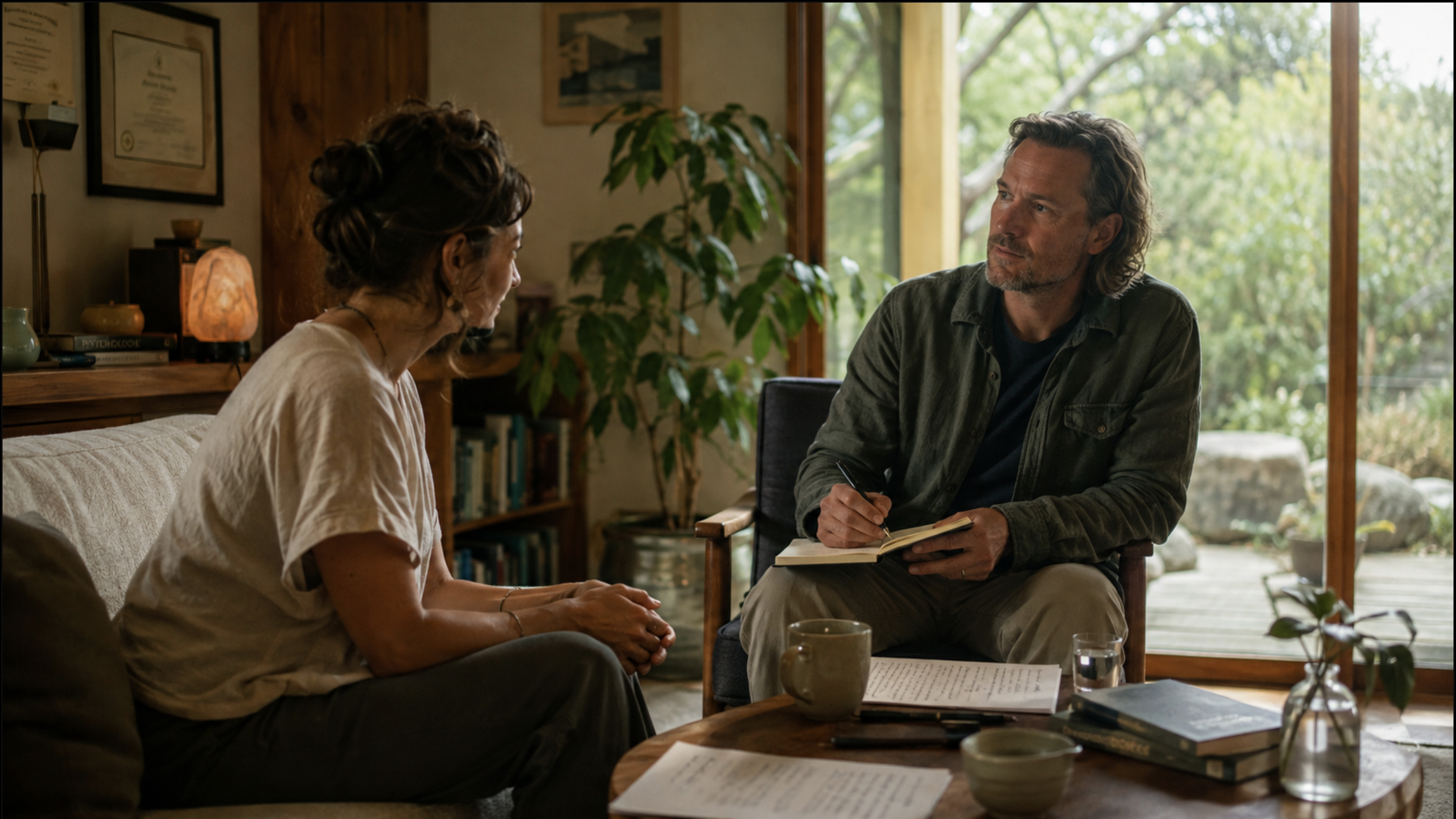
Educational note: This article is for education and decision support only. It is not medical, legal, or mental health advice. It does not instruct anyone to obtain or use controlled substances. Psychedelic laws vary by country, state, province, tribe, municipality, clinical program, and religious context. A person facing acute psychiatric risk, medical instability, suicidality, medication complexity, pregnancy, seizure risk, cardiovascular disease, psychosis risk, bipolar risk, or trauma-related dissociation should seek qualified professional care before making decisions about psychedelic services.
1. The real decision is not who sounds spiritual. It is who can hold risk responsibly.
The modern psychedelic field has expanded faster than most people can evaluate it. A person looking for support may now encounter licensed clinicians, Oregon psilocybin facilitators, Colorado natural medicine facilitators, ketamine clinics, integration therapists, microdosing coaches, underground guides, retreat centers, churches, shamans, peer circles, and wellness providers using overlapping language for very different services. Some operate inside medical, research, or state-regulated systems. Some operate in religious, ceremonial, coaching, peer support, harm-reduction, or wellness spaces. Some are careful, humble, and competent. Some are not. A polished website, personal testimonial, ceremonial title, or confident facilitator voice does not answer the core safety question: what happens if the experience becomes medically, psychologically, ethically, legally, or relationally complicated? [1][4][12][26]
This guide is written to help a layperson evaluate psychedelic support with a high standard of evidence and a practical eye. It does not assume that every meaningful experience must occur inside a hospital or university. It also does not romanticize informal services merely because they use traditional, spiritual, anti-institutional, or natural language. The research record is clear on both sides: psychedelic experiences can be meaningful, psychologically flexible, spiritually significant, and sometimes associated with durable improvements; they can also produce panic, confusion, medical complications, suicidality, psychosis-like reactions, boundary violations, legal exposure, and delayed integration problems, especially when screening, preparation, consent, setting, support, and aftercare are weak. [15][16][17][20][21][36][37]
The right question is not whether psychedelics are good or bad. The right question is whether the provider, guide, facilitator, coach, or retreat has the competence, boundaries, structure, and honesty to match the person in front of them. A stable adult seeking integration after a past experience may need a different kind of support than a person with severe depression, PTSD, bipolar risk, psychosis risk, cardiovascular disease, active suicidality, medication complexity, trauma history, dissociation, substance-use risk, or social instability. In a mature field, support is not measured by charisma. It is measured by fit, scope, ethics, preparedness, and accountability. [4][27][30][31][43][44]
2. First identify the type of service being offered.
The word psychedelic support can hide major differences. Clinical psychedelic-assisted therapy is not the same as legal adult-use facilitation, harm-reduction integration, coaching, peer support, retreat work, or ceremonial leadership. Each category has a different relationship to diagnosis, scope of practice, legal authority, documentation, informed consent, product control, medical screening, and emergency readiness. Before evaluating any individual provider, identify what service they are actually offering and what they are not authorized to do. [1][5][6][8][10][11][30][31]
Clinical psychedelic-assisted therapy is the most medically framed category. It may occur in a research trial, an expanded-access pathway, an approved medical system, a ketamine practice, or another regulated context. A legitimate clinical provider should be able to explain indication, diagnosis, contraindications, medication interactions, consent, emergency procedures, adverse-event monitoring, privacy, documentation, referral, and follow-up. FDA guidance for psychedelic clinical investigations emphasizes careful safety monitoring, informed consent about altered perception and judgment, trained session monitors, and clinical precautions because psychedelic effects can make participants unusually vulnerable and suggestible. [1][12][26][36]
Regulated facilitation is different from psychotherapy. Oregon’s psilocybin services model permits adult psilocybin services without requiring a medical diagnosis, prescription, or referral, but it creates licensed roles for manufacturers, laboratories, service centers, and facilitators. Oregon emphasizes preparation, administration, optional integration, nondirective facilitation, scope limits, and onsite administration. Colorado’s natural medicine rules similarly separate facilitator licensure, clinical facilitator licensure, healing centers, screening, informed consent, adverse-health-event procedures, product rules, and business regulation. A regulated facilitator may be trained and licensed, but that does not automatically make the service medical treatment or psychotherapy. [5][6][7][8][9]
Psychedelic harm reduction and integration therapy is another category. It may help people prepare psychologically, reduce risk, make sense of past experiences, and integrate material after a psychedelic experience, but it is not the same as supplying, recommending, administering, or supervising the use of a controlled substance. The harm-reduction literature draws an important legal and ethical line: a clinician can support safety and integration while avoiding facilitation of illegal use, referral to underground providers, or misleading advertising that implies services outside the clinician’s legal scope. [30][31]
Coaching, peer support, and community support can be valuable, but they should not pretend to be medical treatment. Health navigation, decision aids, shared decision-making, health literacy, peer support, and community-based support all have evidence bases relevant to complex health choices. They can help people organize questions, compare options, understand risks, find appropriate professionals, and avoid isolation. But those frameworks do not authorize a coach or peer to diagnose, prescribe, manage psychiatric instability, evaluate medication interactions, or supervise high-risk dosing outside competence. [55][56][57][59][60]

A safe support setting should make expectations, boundaries, preparation,
and participant care clear before the experience begins.
3. What the evidence actually supports, and what it does not.
Psychedelic research does not support simplistic slogans such as “the medicine heals everyone,” “bad trips are always breakthroughs,” or “all risk is created by prohibition.” Classic psychedelics can produce profound changes in perception, emotion, meaning, memory, self-experience, and worldview. They are often described as physiologically safer than many feared drugs and generally not reinforcing in the same pattern as addictive substances, but their psychological effects can be powerful, destabilizing, and highly context-sensitive. [14][15][18][22]
Clinical studies of psilocybin-assisted therapy for depression, treatment-resistant depression, cancer-related distress, alcohol use disorder, and tobacco addiction suggest that carefully screened participants, controlled dosing, structured preparation, trained support, and post-session integration can be associated with significant improvements. MDMA-assisted therapy trials for PTSD likewise suggest potential benefit in a structured model involving preparation, monitored dosing sessions, and integration. But those findings should not be casually transferred to loosely supervised ceremonies, informal retreats, or unlicensed services. Clinical trials typically exclude many high-risk participants, control dose and product, train monitors, document adverse events, and provide follow-up. Those safeguards are part of the intervention, not decorative extras. [45][46][47][48][49][50][51][52][53][54]
Naturalistic and survey studies show why context matters. People report beneficial changes after psilocybin experiences, ayahuasca ceremonies, 5-MeO-DMT sessions, residential retreats, and integration support. They also report difficult acute reactions, unsafe behavior, ongoing symptoms, and the need for psychological treatment afterward. In Carbonaro and colleagues’ survey of difficult psilocybin experiences, many respondents described their most difficult mushroom experience as among the most challenging events of their lives, while smaller but important minorities reported risk of physical harm, aggression, medical help, or enduring psychological symptoms. The same paper emphasized that such outcomes appear much rarer in screened, prepared, supported research contexts. [16][17][61][62][63][64]
The evidence therefore points to a balanced conclusion: psychedelic support is not only about access to a substance or ceremony. It is about the whole container: screening, consent, preparation, dose and product control, setting, support competence, emergency readiness, ethical boundaries, integration, referral, and the person’s life context after the experience. The best providers do not oversell certainty. They explain uncertainty clearly and design services around risk reduction. [12][22][23][24][25][26][30][31]
4. Legal status is not a side issue.
Legal status should be addressed before any practical decision. In the United States, federal controlled-substance schedules remain relevant even when state programs, research permissions, religious cases, or local enforcement priorities create more complicated realities. The federal scheduling framework is found in 21 C.F.R. Part 1308, and the DEA’s psilocybin fact sheet identifies psilocybin as a Schedule I substance under the Controlled Substances Act. A provider who dismisses legal status as irrelevant is already failing a basic professionalism test. [2][3]
Legal pathways differ by jurisdiction and service type. Oregon’s model is a state-regulated psilocybin services system, not a generalized permission for anyone to provide psilocybin anywhere. Colorado’s natural medicine framework has separate rules for facilitators, healing centers, businesses, products, and safety procedures. Canada’s Special Access Program and Australia’s authorized prescriber pathway show a different model: medical access through qualified prescribers and regulatory oversight. These systems do not all mean the same thing, and they do not convert every retreat, coach, or online guide into a lawful provider. [5][6][7][8][9][10][11]
The practical consumer question is simple: can the provider explain exactly what legal authority, license, exemption, referral pathway, or jurisdictional framework they are relying on? The answer should be clear, specific, and verifiable. “It is decriminalized,” “we operate in a gray area,” “the medicine is sacred,” “everyone does it,” or “we have never had a problem” is not the same as a legal basis. A person does not need to become a lawyer, but they should expect mature providers to explain legal status without evasion, pressure, or fantasy. [2][5][8][10][31]
5. Screening is the gatekeeper of safety.
Screening is one of the clearest differences between serious providers and high-risk providers. A credible provider should ask enough questions to determine whether the service is appropriate at all. Screening should consider psychiatric history, current symptoms, suicidality, psychosis history, bipolar or manic symptoms, dissociation, trauma history, seizure risk, cardiovascular disease, pregnancy, medication use, substance-use patterns, sleep deprivation, recent crises, support at home, and the person’s capacity to understand and consent. The exact screening process will differ by setting, but there should be a process. [1][12][20][21][26]
Clinical research guidelines have long emphasized psychiatric and medical exclusions, preparation, monitor competence, physician availability, and careful management of acute distress. Johnson, Richards, and Griffiths’ safety guidelines for human hallucinogen research stressed screening out people with personal or family histories of psychotic disorders or severe psychiatric conditions, preparing participants, providing a safe physical environment, and using trained monitors. FDA guidance similarly emphasizes the altered cognition and vulnerability created by psychedelic effects. [1][12]
The highest-risk answer is no screening at all. A provider who says “the medicine knows,” “everyone is welcome,” “contraindications are fear-based,” or “we do not need medical information” should be treated as unsafe. Another serious warning sign is superficial screening without consequences. If a provider asks about medications, psychosis, mania, or heart disease but never explains how the answers change eligibility, preparation, dose, setting, or referral, the screening may be performative rather than protective. [12][20][21][26]
Screening should also include fit. A person seeking grief support after cancer-related distress may need a very different environment from someone seeking treatment-resistant depression support, addiction support, trauma therapy, spiritual counsel, or integration after a destabilizing ceremony. In psychedelic care, “more intense” is not automatically better. The correct level of support depends on the person’s risks, goals, psychological structure, medical status, social supports, and capacity to integrate. [47][50][51][52][55][56]
6. Informed consent must be stronger than ordinary wellness consent.
Informed consent is not a formality. It is a safety process. Standard informed consent includes the nature of the service, expected benefits, reasonably foreseeable risks, alternatives, confidentiality, costs, boundaries, withdrawal rights, and what happens if something goes wrong. Psychedelic services require more detail because the experience can alter perception, judgment, memory, sense of self, suggestibility, emotional intensity, and the ability to communicate ordinary preferences. [1][36][38][39][42]
Lee, Rosenbaum, and Buchman emphasize that psychedelic-assisted psychotherapy creates special consent challenges because clients may enter nonordinary states in which ordinary decision-making capacity can be impaired. Consent should address withdrawal, session termination, rescue medications, restraints or physical interventions if ever contemplated, touch, sexual boundaries, recording, confidentiality, emergency escalation, and post-session follow-up. Consent to touch should be especially strict: permission given before a session should not be treated as permission to intensify touch during a vulnerable altered state, and withdrawal of consent should be honored. [36][37]
Ethics and ego dissolution add another layer. Psilocybin and related experiences may involve temporary changes in self-boundaries, identity, and values. Some people consider this meaningful; others may find it destabilizing. Smith and Sisti argue that ego dissolution raises ethical questions for consent and autonomy, not because such experiences are automatically harmful, but because they can affect the very sense of self through which consent is usually understood. A provider should be able to discuss these possibilities plainly without mystifying them. [38]
A good consent process should not sound like a sales conversation. It should include reasons not to proceed. It should explain that clinical benefits are not guaranteed, that research findings are not universal, that naturalistic results are confounded by expectation and context, that challenging experiences are possible, and that some adverse effects may appear after the acute session. The provider should also explain alternatives, including psychotherapy, medical care, peer support, meditation, non-drug retreats, support groups, and waiting. [20][21][25][36][56]
7. Preparation is not decoration. It is part of the intervention.
Preparation is often discussed in warm language, but its function is practical. It helps the participant understand the service, clarify intentions, establish trust, learn what may happen during altered states, plan for difficult material, review consent and boundaries, identify support needs, and reduce avoidable risk. Preparation also helps the provider evaluate whether the person’s goals are realistic and whether the service is appropriate. [12][22][23][29][33]
Set and setting research shows that non-drug factors shape drug response. Hartogsohn describes set as expectations, preparation, intention, mood, and psychological variables, while setting includes the physical, interpersonal, social, and cultural environment. Eisner’s older but influential concept of set, setting, and matrix adds the person’s broader life environment: where they come from, who supports them, and where they return after the session. This matters because integration begins before the experience. A person who returns to isolation, conflict, untreated illness, or unstable housing may need a different plan than someone returning to a stable support system. [22][23][24][64]
Preparation should also reduce magical thinking. A provider should not promise that one session will cure trauma, depression, addiction, grief, or existential distress. Clinical trial data are encouraging in some conditions, but trial participants are screened, supported, and followed. The claim that a single ceremony will solve everything is not evidence-based. A mature provider helps a person hold hope and humility at the same time. [25][45][46][47][48][49][52]
Practical preparation should include logistics. The participant should know the length of the session, who will be present, whether they can leave, how bathrooms are handled, whether music or eye shades are used, what support is available, whether touch is ever used, what happens in panic, whether emergency services can be called, how privacy is protected, how transportation is handled, what aftercare exists, and whether follow-up is included. These details may sound mundane, but they often determine whether a difficult experience becomes manageable or dangerous. [12][29][36]
8. The session container should be calm, accountable, and non-exploitative.
A psychedelic session is not just a room and a substance. It is a temporary social system in which ordinary defenses, boundaries, and control may be altered. The physical setting should be safe, comfortable, private, and free of unnecessary stimulation or threat. The interpersonal setting should be steady, respectful, and non-intrusive. The provider should be able to remain present without dominating the experience, interpreting every emotion, imposing a belief system, or turning the session into a performance. [12][22][24][27][29]

A well-prepared support setting should show structure, safety, and care before any session begins, including clear space, participant comfort, and an intentional container.
Clinical and research models often emphasize a supportive, largely nondirective approach. This does not mean doing nothing. It means maintaining safety, helping the person stay oriented when needed, encouraging trust in the unfolding process without coercion, and intervening appropriately if medical or psychological risk emerges. Phelps identifies therapist competencies such as empathetic abiding presence, trust enhancement, spiritual intelligence, knowledge of psychedelic effects, ethical integrity, self-awareness, and complementary therapeutic skills. These are not mystical slogans; they are professional capacities. [27][29][30]
A serious provider should also be able to explain staffing. Who is present? What is each person’s role? Is there a lead facilitator? Is there a licensed clinician? Is anyone medically trained? Are assistants screened and trained? Are there gender or cultural considerations? Is one-on-one support available if a participant becomes distressed? Are there protocols for panic, aggression, dissociation, vomiting, fainting, hypertension, injury, or leaving the premises? The answer does not need to resemble a hospital in every setting, but there must be a realistic safety plan. [1][12][26]
The provider’s relationship to power is crucial. Psychedelic states can intensify transference, attachment, dependency, spiritual projection, erotic confusion, shame, gratitude, and suggestibility. A participant may experience the provider as healer, parent, rescuer, lover, priest, shaman, expert, or authority. This is exactly why ethical boundaries matter. Providers who encourage special dependency, secret bonds, romantic attraction, guru status, or exclusive loyalty create risk. [36][37][40][41]
9. Touch, sexuality, secrecy, and money are high-risk areas.
Boundary violations are not peripheral to psychedelic safety. They are central. Psychedelic-assisted therapy and ceremonial work place participants in unusually vulnerable states. McNamee, Devenot, and Buisson argue that harms in psychedelic-assisted therapy have been underdefined and underreported, and that the psychotherapy and support components themselves can create risk. Their discussion of abuse in a research context highlights the danger of vague protocols, suggestibility, physical touch, and inadequate oversight. [37]
Touch should be handled with explicit consent and conservative boundaries. Some traditions and therapeutic models use supportive touch or bodywork, while others avoid it. Either way, the participant should know before the session what kinds of touch are allowed, what kinds are never allowed, who may initiate, how consent is documented, and how refusal or withdrawal is honored. Sexual touch, romantic involvement, nudity, coercive bodywork, or eroticized “healing” should be treated as major red flags. [29][36][37][40][41]
Secrecy is another red flag. Privacy is normal; secrecy is different. A provider may protect confidentiality, but they should not require silence about harm, discourage outside consultation, forbid talking to family or therapists, or insist that doubts are spiritual resistance. Financial pressure is also dangerous. Large nonrefundable deposits, urgency tactics, expensive upsells, promises of guaranteed transformation, pressure to recruit friends, or claims that the provider alone can heal the client should be treated cautiously. [31][36][37][55]
Ethical providers welcome questions. They can explain fees, refund policies, scope, training, emergency protocols, complaint processes, and limits. They do not retaliate when a client hesitates. They do not shame skepticism. They do not frame all fear as ego resistance. They understand that consent is not real unless the person can say no without punishment. [39][40][41][42]
10. Trauma-informed care is not a marketing phrase.
Many people seek psychedelic support for trauma, grief, depression, addiction, shame, or disconnection. That makes trauma-informed practice essential. SAMHSA’s trauma-informed framework emphasizes safety, trustworthiness, peer support, collaboration, empowerment, voice and choice, and attention to cultural, historical, and gender issues. In practical terms, a trauma-informed provider does not assume that intensity equals healing. They understand that overwhelming a person can reinforce helplessness, dissociation, or shame. [43][44]
Trauma-informed psychedelic support should protect autonomy. The provider should not force disclosure, demand catharsis, interpret memories as literal fact without care, insist that suffering has a predetermined meaning, or pressure the participant to forgive, confront, surrender, or relive traumatic material. They should be able to help the person stay within a workable window of tolerance and should know when a situation requires licensed clinical care rather than coaching or ceremony. [30][43][44]
This is especially important for sexual trauma, childhood trauma, complex trauma, racial trauma, combat trauma, and spiritual abuse. A person may enter a session with a deep desire to be healed quickly. That desire can make them susceptible to authority, touch, group pressure, and unverified interpretations. A trauma-informed provider slows the process down enough to protect choice. They understand that the person’s nervous system, social context, and aftercare matter as much as the peak experience. [36][37][43][44]

Supportive care should be grounded in consent, clear boundaries, and respect for the participant’s autonomy at every stage.
11. Integration is where insight becomes life change, or fails to.
Integration is not a luxury add-on. It is the process of making sense of an experience and translating it into ordinary life. Bathje and colleagues describe psychedelic integration as a broad concept involving mind and emotion, body and somatic practice, spiritual and existential meaning, lifestyle and action, relational and communal life, and relationship with the natural world. Watts and Luoma’s psychological flexibility model similarly emphasizes accepting difficult material, connecting with values and positive meaning, and embodying change through behavior. [32][33][34][35]
Good integration does not require the provider to explain everything. It often requires the opposite: helping the person avoid premature conclusions. A powerful experience can create certainty, but certainty is not always wisdom. A participant may want to quit a job, end a relationship, move, confess, confront someone, stop medication, or make a major identity decision immediately after a session. Integration should create enough space to distinguish durable insight from acute emotional momentum. [30][32][33][35]
Integration also includes adverse experiences. A person may feel unusually open, raw, confused, derealized, anxious, depressed, grandiose, ashamed, or spiritually disoriented after a psychedelic event. Pilecki and colleagues emphasize that integration and harm-reduction clinicians can help clients process psychedelic experiences without encouraging illegal use or acting outside scope. The key is honest support, careful documentation, appropriate referral, and clear boundaries. [30][31]
A credible provider should explain aftercare before the session begins. How many follow-up sessions are included? What happens if distress appears days later? Is there a referral network for medical or psychiatric care? Is crisis support available? Does the retreat check on participants after they return home? Is there community support without dependency? What is the plan for people who do not feel better? Providers who treat integration as optional, vague, or entirely the client’s problem are leaving a major safety gap. [30][31][32][55][59][60]
12. Product, dose, and medical monitoring cannot be ignored.
Dose and product control are major differences between clinical research, regulated services, and many naturalistic settings. In trials, dose, product identity, administration route, timing, setting, and adverse events are documented. In some naturalistic settings, dose may be estimated, products may vary, and content may be unknown. Studies of ayahuasca and 5-MeO-DMT in naturalistic contexts can be valuable, but they also show variability in setting, participant selection, product composition, and follow-up. [19][24][62][63][64]
Uthaug and colleagues’ 5-MeO-DMT naturalistic study is especially instructive because it reported dried toad secretion sessions in which facilitators did not weigh doses, relied on visual inspection, and varied widely in estimated quantities. The study reported improvements in satisfaction with life, mindfulness-related capacities, and symptoms, but it also acknowledged limitations and uncontrolled factors. That kind of evidence should inspire careful research, not casual certainty. [62]
Acute adverse effects matter even when they are usually transient. A 2024 systematic review and meta-analysis of therapeutic psilocybin doses found increased risk of acute headache, nausea, anxiety, dizziness, and elevated blood pressure in clinical trials, while noting that rare and long-term adverse effects require further study. This is not an argument against treatment; it is an argument for medical honesty. A provider should not dismiss physical reactions as meaningless or purely spiritual. [20]
Medication interactions and contraindications deserve special caution. Classic trial guidelines and clinical protocols commonly evaluate serotonergic medications, lithium, antipsychotics, MAO inhibitors, cardiovascular risk, seizure risk, psychiatric history, and other variables depending on the substance and context. A coach or retreat without medical competence should not be advising medication changes. A provider who tells someone to stop medication without coordination with the prescriber is a serious danger sign. [1][11][12][26][31]
13. Choosing a therapist, facilitator, coach, guide, or retreat: what to ask.
Ask first about role and scope. The provider should be able to state whether they are acting as a licensed clinician, regulated facilitator, coach, peer supporter, ceremonial leader, retreat operator, or educator. They should explain what they can do, what they cannot do, and when they refer out. A person should be cautious when one provider claims to be therapist, shaman, doctor, coach, priest, legal expert, trauma specialist, and medicine supplier all at once without verifiable training or accountability. [27][30][31][40][41]
Ask about training and supervision. Serious answers include formal education, licensure where applicable, supervised experience, continuing education, trauma training, ethics training, emergency training, and consultation. Phelps’ competency model emphasizes empathic presence, trust, spiritual intelligence, knowledge of effects, ethical integrity, self-awareness, and complementary therapeutic skills. Nielson and Guss discuss the debated question of therapists’ first-hand psychedelic experience, but they do not turn personal experience into a substitute for ethics, training, or evidence. Personal use is not a credential by itself. [27][28]
Ask about screening. The provider should explain who is not appropriate for the service and why. They should ask about psychiatric history, medical history, medications, suicidality, psychosis or bipolar risk, cardiovascular issues, seizure history, pregnancy, trauma, dissociation, and current life stability when relevant. They should also ask about goals and expectations. A provider who never says no is not screening; they are selling. [1][12][20][21][26]
Ask about consent and boundaries. A credible provider should have a written consent process covering risks, alternatives, confidentiality, touch, recordings, emergency procedures, withdrawal rights, session termination, aftercare, fees, cancellations, and complaint options. They should explain how consent is handled if the participant becomes confused, frightened, dissociated, euphoric, or unable to communicate clearly. [36][37][39][42]
Ask about setting and staffing. Where does the session happen? Who is present? Are there private spaces? Are participants supervised? What happens if someone panics, vomits, tries to leave, becomes aggressive, faints, or reports chest pain? Is medical help accessible? Are facilitators sober? Are phones, photos, and recordings restricted? Is there a plan for transportation? Details reveal seriousness. [1][12][29]
Ask about integration. The provider should explain what happens after the experience and how long support continues. For retreats, ask whether they provide follow-up after the participant returns home. For coaches, ask how they handle destabilization, suicidality, mania, psychosis symptoms, or medication questions. For therapists, ask how integration fits within their scope and documentation. [30][31][32][33]
Ask about evidence. A good provider should be able to distinguish clinical trial evidence from naturalistic survey evidence, tradition, personal experience, and marketing claims. They should not pretend that every condition is proven, that every person benefits, or that adverse reactions are always the client’s fault. They should be comfortable saying “we do not know.” [13][20][21][25][37]
14. Retreats and ceremonies require special evaluation.
Retreats can be meaningful and supportive, but they combine several risk factors: travel, unfamiliar laws, unfamiliar facilitators, group dynamics, limited medical access, cultural differences, pressure to participate, powerful expectations, and separation from ordinary support systems. Residential retreat research suggests possible health benefits across varied programs, but the evidence is heterogeneous and often limited by small samples, weak methodology, limited follow-up, and lack of adverse-effect reporting. A retreat can be helpful without being clinically proven. Those are different claims. [61]
Ayahuasca research illustrates the importance of context. Uthaug and colleagues found sub-acute and longer-term changes in affect and cognitive thinking style after ayahuasca ceremonies, while Perkins and colleagues’ large international survey found that ceremonial practices, support, preparation, motivations, integration difficulties, community, and setting variables were associated with mental health and wellbeing outcomes. These findings support the importance of context, but they do not prove that any particular retreat is safe or effective. [63][64]
A person considering a retreat should evaluate the retreat as an organization, not only the lead facilitator. Who owns it? Who screens participants? Who handles medical emergencies? Are there written policies? Are there trained staff awake and available? Are there private sleeping arrangements? Are sexual boundaries explicit? Are participants allowed to opt out? Are there sober support people? Is there a process for reporting harm? Are local emergency services reachable? Are facilitators licensed or otherwise accountable? Are there hidden costs? Is there follow-up after returning home? [31][36][37][61][64]
Cultural and spiritual claims require care. Traditional knowledge can be valuable, and Indigenous or ceremonial contexts should not be reduced to Western clinical categories. At the same time, spiritual language does not cancel the need for consent, safety, boundaries, and accountability. A retreat that borrows Indigenous language, shamanic imagery, or sacred framing while offering weak screening, vague consent, sexualized conduct, or no aftercare should not be excused because it appears spiritual. [22][23][36][37][64]
15. How to choose based on your actual need.
People often start by asking, “Who is the best guide?” A better first question is, “What kind of support matches my situation?” Someone with a diagnosable mental health condition, serious trauma, current suicidality, medication complexity, bipolar or psychosis risk, or medical instability should prioritize licensed medical or mental health professionals and regulated pathways. Someone seeking meaning-making after a past experience may be well served by integration therapy, coaching within scope, peer support, or community support. Someone exploring spirituality may need a trusted spiritual community, but should still evaluate consent, safety, and boundaries. [13][30][31][43][55]
For depression, PTSD, cancer-related distress, alcohol use disorder, and tobacco addiction, the evidence base is strongest when psychedelic sessions are embedded in structured therapeutic protocols with screening, preparation, dosing support, and integration. Even then, the evidence differs by condition, substance, trial size, blinding challenges, and regulatory status. A provider should not cite clinical trials as if they prove that an unrelated retreat, informal ceremony, or coaching package will produce the same results. [25][45][46][47][48][49][50][51][52][53][54]
For decision-making itself, use shared decision-making principles. Decision aids help people compare options, clarify values, understand uncertainty, and avoid being swept into one path by fear or hype. Health literacy matters because a person cannot consent to what they do not understand. Navigation support can help people move from vague interest to concrete questions, referral, and safer options. This is one of the most valuable roles a directory, coach, therapist, or peer supporter can play: not pushing one solution, but helping the person choose with clearer information. [55][56][57]
For peer and community support, look for humility and boundaries. Peer support can reduce isolation and support recovery, and meta-analytic evidence suggests modest but meaningful benefits for clinical and personal recovery in mental health contexts. But peer support should not become unlicensed treatment, crisis management, coercive group identity, or pressure to take substances. The best peer support respects lived experience while knowing when professional care is needed. [59][60]
16. Red flags that should slow or stop the decision.
A provider should be treated cautiously if they promise guaranteed healing, claim that adverse experiences only happen to people who resist, dismiss all medical contraindications, encourage stopping psychiatric medication without prescriber involvement, refuse to discuss legal status, provide vague answers about training, pressure immediate payment, discourage outside consultation, or imply that questioning them shows lack of readiness. [1][12][20][21][31][36]
Other red flags include no written consent, no screening, no clear refund or cancellation policy, no emergency plan, no aftercare, unclear staff roles, staff using substances during sessions, sexualized language, coercive touch, secret teachings, guru dynamics, pressure to recruit others, unverified testimonials, exaggerated claims about Indigenous authority, refusal to identify product source in legal contexts, or framing every concern as ego resistance. [30][31][36][37][40][41]
A subtler red flag is evidence laundering. This occurs when a provider cites respected studies but offers a service that does not resemble the studied intervention. For example, a psilocybin depression trial does not automatically validate a group retreat with different screening, dose control, facilitators, integration, and population. An ayahuasca survey does not prove that a particular ceremony is safe. A residential retreat review does not prove that every retreat improves health. A mature provider explains these limits. [20][25][45][47][61][64]
17. Green flags that suggest seriousness.
Green flags include clear scope of practice, verifiable credentials, honest legal explanation, structured screening, written informed consent, defined boundaries, conservative touch policy, emergency planning, trauma-informed language, realistic claims, referral relationships, aftercare, documentation when appropriate, and willingness to decline clients who are not a fit. [1][4][12][27][30][31][36][43]
A serious provider also distinguishes hope from certainty. They can explain why clinical trials are promising, why blinding and expectancy are difficult in psychedelic research, why adverse-event reporting must improve, why preparation and integration matter, and why some people should not proceed. They are not threatened by nuance. [13][20][21][25][37]
Another green flag is collaboration. Ethical providers are willing to work with therapists, physicians, psychiatrists, emergency contacts, or community supports when appropriate and with consent. They do not isolate the client from other sources of care. They understand that psychedelic support is one possible component of healing, not a replacement for every other form of care. [30][31][43][55][57]
18. A practical decision framework.
Step one is to define the problem. Are you seeking treatment for a diagnosed condition, support for grief, help with addiction, spiritual exploration, integration after a past experience, education, or community? The answer determines the appropriate level of care. A medical or psychiatric problem calls for medical or licensed mental health evaluation, not only a guide. [13][45][46][47][48][52]
Step two is to define the legal and service category. Is this a clinical trial, a medical service, a state-regulated facilitation service, a religious ceremony, a retreat, an integration service, a coaching service, or peer support? Do not allow language to blur categories. A person should know exactly what they are entering. [2][5][6][8][10][30][31]
Step three is to evaluate risk. Consider personal and family psychiatric history, medications, medical conditions, current stress, trauma, dissociation, substance use, support at home, and ability to take time for recovery. Higher risk does not always mean no support is possible, but it usually means more professional support is needed. [1][12][20][21][26][43]
Step four is to interview the provider. Ask about screening, consent, training, emergency procedures, integration, legal status, boundaries, staffing, and referrals. The content of the answer matters, but the manner also matters. A provider who becomes defensive, evasive, grandiose, or shaming during ordinary questions is showing you how they may behave when you are vulnerable. [36][37][40][41]
Step five is to slow the decision down. Psychedelic marketing often creates urgency: limited spots, spiritual timing, life-changing weekends, or fear of missing a breakthrough. Good decisions usually improve with time, consultation, and comparison. A safe provider will not punish you for taking time. [55][56][57]
19. Credential mapping: how to interpret training claims.
Psychedelic training language can be confusing because the field includes medicine, psychotherapy, harm reduction, religion, coaching, Indigenous traditions, underground lineages, and peer support. A certificate may represent a rigorous year-long program with supervision, ethics, and practice evaluation, or it may represent a weekend workshop. A provider may have a professional license but little psychedelic-specific training, or extensive ceremonial experience but no clinical competence. The question is not whether one background is inherently superior. The question is whether the provider’s training matches the service, the client population, the risks involved, and the legal setting. [4][27][28][30]
For licensed clinicians, look for the underlying license first. Psychologist, physician, psychiatrist, psychiatric nurse practitioner, clinical social worker, marriage and family therapist, and professional counselor are regulated roles with different scopes. Licensure does not automatically prove psychedelic competence, but it does create a board, ethics code, disciplinary process, and minimum professional training. A clinician offering psychedelic preparation or integration should be able to explain how that work fits within their license and how they avoid facilitating illegal activity when the law does not permit administration. [30][31][40][41][42]
For regulated facilitators, look for the jurisdiction-specific license and the exact scope of that license. Oregon and Colorado both show that facilitator systems are not generic permission slips. They contain rules about training, screening, administration, service centers or healing centers, product testing, adverse events, and boundaries. A facilitator should be able to show the license, identify the regulatory body, explain complaint procedures, and describe what services are inside or outside scope. [5][6][7][8][9]
For retreat leaders or ceremonial providers, the evaluation is harder because traditional and naturalistic settings may not fit Western licensure models. That does not mean there are no standards. Ask about years of experience, lineage or training claims, apprenticeship, local legality, emergency procedures, participant screening, assistant training, sexual-boundary policies, substance-testing or product-sourcing practices where legal, integration support, and what happens when a participant is harmed. A serious ceremonial provider should not rely only on mystique. [22][23][31][36][37][64]
For coaches and peers, the boundary should be clear. Coaching may support goals, education, preparation, reflection, and integration, but it should not become diagnosis, psychotherapy, medication advice, crisis treatment, or covert facilitation. Peer support may reduce isolation and add hope through lived experience, but it should not become dependency, pressure, or unlicensed clinical care. The most trustworthy nonclinical providers are often the ones who define their limits most clearly. [30][31][55][57][59][60]
20. Match the support level to the risk level.
A person with low current risk, no major psychiatric history, stable housing, good social support, and a clear educational or integration goal may not need the same service as someone with severe depression, active PTSD symptoms, alcohol-use disorder, chronic suicidality, repeated hospitalizations, medication complexity, or a recent destabilizing experience. The provider’s first job is not to maximize intensity; it is to match the container to the person. [12][20][21][26][43]
Some situations should push the decision toward clinical evaluation before any psychedelic service. These include current suicidal thinking, recent suicide attempt, current psychosis, history of schizophrenia-spectrum disorder, uncontrolled bipolar disorder or manic episodes, severe dissociation, serious cardiovascular disease, seizure history, pregnancy, complex polypharmacy, heavy substance use, active eating disorder medical risk, or an inability to arrange safe aftercare. Not every one of these factors creates an absolute universal exclusion in every possible context, but each demands qualified assessment. A provider who treats such factors casually is not practicing adequate risk management. [1][12][20][21][26]
Trauma also requires risk matching. Some trauma survivors need slow relational therapy before any altered-state work. Others may benefit from integration, somatic support, peer support, or carefully structured clinical treatment. What they do not need is a provider who assumes that overwhelming intensity is the same thing as healing. Trauma-informed care protects choice, pacing, grounding, collaboration, and safety. Psychedelic states may loosen ordinary defenses, and that can be meaningful, but it can also create vulnerability to suggestion, shame, or retraumatization. [36][37][43][44]
Medication questions should be routed to qualified medical professionals. Psychedelic research and access programs pay attention to antidepressants, antipsychotics, lithium, MAO inhibitors, stimulants, cardiac medications, and other substances because interactions can affect safety and response. A guide or coach who tells a person to taper or stop medication without involving the prescriber is crossing a dangerous boundary. The safer standard is coordination, informed consent, and medically competent review. [1][11][12][26][31]
Risk matching also includes social context. A person returning home to an abusive relationship, isolation, unstable housing, work crisis, or family conflict may need more integration and outside support than someone returning to a stable environment. Eisner’s concept of matrix is useful here: the environment to which the person returns can shape whether insights are metabolized or destabilizing. [23][32][55][59]
21. How to evaluate the provider’s relationship to evidence.
A strong provider does not use research as decoration. They understand what the research actually studied. They know the difference between a randomized clinical trial, an open-label study, a case report, a survey, a naturalistic observational study, a professional guideline, an ethics code, and a regulatory rule. Each type of source answers a different question. A clinical trial may support efficacy under controlled conditions. A case report may reveal possible harms without estimating rates. A survey may reveal patterns of experience without proving causation. A regulation may define legality without proving therapeutic value. [13][20][21][25][37]
This distinction matters because psychedelic marketing often collapses evidence categories. A website may cite Johns Hopkins psilocybin cancer-distress research, MDMA phase 3 PTSD trials, and ayahuasca surveys in the same paragraph, then use those sources to market a service that has different substances, staff, screening, setting, dose control, participant population, and follow-up. That is not evidence-based reasoning. It is evidence borrowing. [45][46][50][51][61][64]
A provider’s claims should be proportionate to the evidence. It is fair to say that clinical trials suggest potential benefit for certain conditions under structured protocols. It is fair to say naturalistic studies suggest that context, ritual, support, and integration may be associated with outcomes. It is not fair to guarantee cure, imply that all trauma can be resolved in one weekend, or claim that personal testimonials outweigh contraindications. [20][25][30][37]
A mature provider should also recognize the expectancy problem. Aday and colleagues emphasize that expectations and blinding problems create methodological challenges in psychedelic trials. People often know whether they received a psychedelic, and hype can shape what they expect to happen. This does not invalidate the entire field, but it does mean that honest providers avoid exaggerated certainty. [25]
Ask the provider to name what would count as a bad outcome. If they cannot answer, they may not be thinking in safety terms. Bad outcomes can include acute panic, injury, medical instability, shame, boundary violation, spiritual confusion, mania, persistent anxiety, dissociation, worsened depression, suicidal thinking, family conflict, dependency on the provider, or inability to function after returning home. Serious providers plan for the possibility that a client may not have the hoped-for breakthrough. [16][17][20][21][30][37]
22. Retreat due diligence before travel or deposit.
Retreats deserve extra due diligence because the participant often travels away from ordinary supports, enters an unfamiliar legal and cultural environment, and may pay significant nonrefundable fees before meeting the team. The first question is legal and organizational: where is the retreat held, what law applies, who owns or operates it, what local permissions exist, and what professional or community accountability mechanisms exist? The retreat should be able to answer without vague claims. [2][5][8][10][31]
The second question is screening. Ask whether screening is conducted before travel, who reviews it, what conditions exclude participation, whether medications are reviewed by a qualified professional, and whether the retreat ever declines applicants. If screening happens only after arrival, the person may be financially and emotionally pressured to proceed even if risk factors are discovered. [1][12][20][26]
The third question is staffing. Ask how many participants attend, how many facilitators and assistants are present, whether any staff are licensed clinicians or medically trained, whether staff remain sober, whether night coverage exists, and how emergencies are handled. Group experiences can be powerful, but they can also leave distressed participants under-supported if staffing is thin. [12][29][61][64]
The fourth question is boundaries. Ask for written policies on touch, sexual conduct, romantic involvement, nudity, photography, recordings, confidentiality, participant-to-participant boundaries, staff-to-participant boundaries, and complaints. A retreat that cannot provide these policies should not be trusted merely because the facilitators seem loving. [36][37][40][41]
The fifth question is aftercare. Ask what happens after the retreat, not only during it. Does the retreat offer integration calls, referrals, crisis guidance, or community support? Are participants encouraged to connect with existing therapists or physicians? How does the retreat respond to someone who feels worse after returning home? A retreat that celebrates peak experience but disappears afterward is offering an incomplete container. [30][31][32][61]
23. The interview script: questions that reveal safety quality.
Begin with scope. Ask: what exactly is your role in this service, what are you licensed or authorized to do, what are you not authorized to do, and what situations would you refer out? A clear provider answers directly. A risky provider may answer with identity language, spiritual authority, or testimonials instead of scope. [27][30][31]
Ask about eligibility. Who should not participate? How do you screen for psychosis risk, bipolar risk, suicidality, cardiovascular conditions, seizures, medications, substance-use risk, pregnancy, dissociation, and trauma history? What happens if something concerning appears? Providers who cannot explain exclusion, modification, or referral are not adequately screening. [1][12][20][21][26]
Ask about the actual session. Who is present? What is the participant-to-staff ratio? Is anyone medically trained? What happens if I panic, want to leave, become confused, vomit, faint, report chest pain, or become unable to communicate? How is privacy handled? Is touch used? Can I decline touch? Can I stop the session? How is transportation handled? [12][29][36]
Ask about claims. What benefits are supported by clinical trials, what benefits are suggested by naturalistic studies, and what benefits are based on tradition or experience? What are the limits of the evidence? What adverse outcomes have you seen or prepared for? A provider who can discuss limitations is usually safer than one who speaks only in breakthroughs. [13][20][25][37]
Ask about accountability. Is there a licensing board, regulator, supervisor, ethics committee, professional association, complaint process, or written grievance policy? What happens if a participant believes they were harmed? Can the participant consult an outside clinician or advisor before deciding? The presence of accountability does not guarantee safety, but the absence of accountability should raise the threshold for trust. [39][40][41][42]
Ask about integration. How many sessions are included? What if I feel worse? Do you coordinate with existing clinicians? What if I need psychiatric support? Do you help me slow down major life decisions after the experience? Do you have referral relationships? Integration quality is often where the difference between marketing and care becomes visible. [30][31][32][33][55]
24. How to compare options without getting overwhelmed.
A person can compare options using four columns: legal authority, clinical appropriateness, safety container, and personal fit. Legal authority asks whether the service is allowed in the relevant jurisdiction or context. Clinical appropriateness asks whether the person’s health, medications, diagnosis, and risks match the service. Safety container asks whether screening, consent, staffing, emergency planning, boundaries, and aftercare are adequate. Personal fit asks whether the provider’s style, culture, worldview, cost, location, and communication feel workable. [55][56][57]
Do not let one strong column compensate for a collapsed one. A provider may feel personally warm but have no screening. A retreat may have beautiful ceremonies but no emergency plan. A clinician may have a license but little psychedelic-specific training. A state-regulated facilitator may be legal but not clinically appropriate for someone with severe psychiatric risk. A peer group may feel supportive but lack boundaries. The whole decision matters. [4][12][27][30][31]
Decision aids research is useful because hard decisions often involve tradeoffs rather than one obvious answer. The safest choice may be less intense, slower, or less glamorous than the marketed choice. A person may decide to begin with integration therapy, trauma therapy, peer support, meditation, medical evaluation, or a regulated consultation before considering any psychedelic session. That is not avoidance. It can be informed pacing. [56][57][59]
A good final test is whether the provider helps you become more autonomous or more dependent. Ethical support should strengthen your ability to understand options, make decisions, seek additional care, and integrate into your life. Risky support often increases dependence on the guide, group, medicine, or worldview. [30][31][35][43]
25. What “safe enough” means in a field that can never be risk-free.
No psychedelic service can honestly promise zero risk. Even clinical trials have adverse events, expectancy challenges, limitations, and unknowns. Naturalistic settings have even more variables. The meaningful standard is not perfect safety; it is whether risks are identified, reduced, disclosed, monitored, and responded to. [20][21][25][37]
Safe enough means the provider has a clear legal and ethical frame, screens for foreseeable risks, obtains meaningful consent, controls the environment, respects boundaries, has emergency procedures, offers integration, and knows when to refer. Safe enough also means the participant has time, support, and realistic expectations. A person who is desperate for immediate rescue may be more vulnerable to exploitation and disappointment, so the provider should slow down rather than amplify urgency. [1][12][30][36][43]
Safe enough also means being able to walk away. The person should feel free to pause, decline, seek a second opinion, or choose another path. Informed refusal is part of informed consent. A psychedelic provider who cannot respect refusal is not safe enough, no matter how impressive the ceremony, clinic, or credentials appear. [39][40][42][56]
26. Common provider profiles and how to evaluate them.
A licensed therapist offering preparation and integration can be an excellent fit when the person needs emotional processing, trauma-informed pacing, help making sense of a past experience, or support deciding whether a psychedelic path is appropriate. The key questions are whether the therapist is clear about legal scope, whether they avoid directing illegal use, whether they understand psychedelic-specific risks, and whether they can refer to medical or psychiatric care when needed. A therapist who is hostile to all psychedelic experience may not be helpful, but a therapist who romanticizes every experience may be equally unsafe. [30][31][36][40]
A psychiatrist or physician-led program may be appropriate when diagnosis, medication, medical risk, or approved access matters. Medical oversight is especially important when the person has cardiovascular risk, seizure risk, medication complexity, severe depression, bipolar risk, psychosis risk, active substance-use disorder, pregnancy, or serious medical history. Medical care alone is not enough, however. Psychedelic care also requires psychological preparation, consent, session support, integration, and relational safety. A medically credentialed program should still be evaluated for therapeutic competence and ethical boundaries. [1][11][12][13][26]
A state-regulated psilocybin or natural medicine facilitator may be appropriate for someone seeking a legal facilitation model rather than psychotherapy. The consumer should verify the license, service center or healing center relationship, product and testing rules, preparation and administration structure, integration options, and complaint pathway. Regulated facilitation can offer legal structure, but it may not be the right level of care for people needing psychiatric treatment, trauma therapy, or medication management. [5][6][7][8][9]
A retreat or ceremonial provider may be appropriate for people seeking spiritual, communal, or traditional contexts, but it demands stronger due diligence because regulatory oversight may be limited. Ask about screening, assistants, emergency planning, boundaries, cultural claims, product variability, group size, and follow-up. Traditional or spiritual context can be meaningful, but it cannot substitute for informed consent and accountability. [22][23][31][36][37][61][64]
A coach may be appropriate for education, values clarification, habit formation, integration planning, journaling, accountability, and support navigating options. A coach is not appropriate as the sole support for severe psychiatric risk, medication decisions, diagnosis, crisis management, or trauma therapy unless the coach also holds relevant clinical qualifications and is acting within that scope. [30][31][55][57]
A peer group may be appropriate for reducing isolation, learning from lived experience, and finding community. Peer support should feel empowering rather than coercive. It should not pressure members to use substances, adopt a worldview, disclose private trauma, reject professional care, or become dependent on the group. Good peer support normalizes help-seeking and respects limits. [59][60]
27. When postponing is the safest choice.
A person should consider postponing when the motivation is desperation rather than readiness. Desperation is understandable, especially in depression, grief, trauma, addiction, or chronic illness, but it can narrow judgment. A person who feels “this must work or nothing will” may be more vulnerable to disappointment, dependency, and risky providers. A careful provider will not exploit desperation. They will help the person build support, clarify risks, and decide whether a different level of care should come first. [43][55][56]
Postponing may also be wise during acute life instability. Recent breakup, job loss, eviction risk, legal crisis, family emergency, sleep deprivation, relapse, major conflict, or recent hospitalization can make a powerful altered-state experience harder to integrate. Psychedelic experiences may open material that requires time, support, and steadiness. When ordinary life is already unstable, the person may need grounding and practical support before any peak experience. [23][30][32][43]
Postponing is especially important when a provider creates pressure. A safe opportunity should survive a pause. If the provider says the opening will disappear, the medicine has chosen this exact moment, the person’s hesitation proves ego resistance, or the deposit must be paid immediately to secure destiny, the pressure itself becomes part of the risk assessment. Informed consent depends on the freedom to slow down. [36][39][42][56]
Postponing does not mean abandoning healing. It may mean beginning with psychotherapy, psychiatric evaluation, medical review, peer support, integration work, trauma stabilization, meditation, somatic therapy, addiction support, grief support, or a non-drug retreat. A strong healing plan can be sequential. The psychedelic option does not have to be the first step to be a meaningful step later. [30][32][43][44][55]
28. What a safer written plan should include.
Before committing, ask whether the provider can put the basic plan in writing. The plan should identify the service type, legal context, provider roles, participant eligibility, screening process, contraindications, preparation schedule, session structure, support people, emergency plan, consent boundaries, touch policy, confidentiality policy, fees, cancellation terms, and integration plan. A written plan does not guarantee safety, but the absence of one often reveals improvisation. [1][4][12][36]
For clinical or regulated services, the written plan should be more formal. It should explain diagnosis or eligibility when relevant, informed consent, adverse-event procedures, recordkeeping, privacy, product control, monitoring, and referral. For nonclinical services, it should still state scope and limits. A coach can write a clear integration plan. A peer group can write community agreements. A retreat can write conduct and emergency policies. Written clarity protects both participant and provider. [5][7][8][30][31][40][41]
The plan should also address aftercare failure states. What if the participant feels worse? What if family conflict increases? What if the participant develops insomnia, panic, grandiosity, paranoia, or suicidal thoughts? What if the participant wants to make a major life decision immediately? What if the participant believes a boundary was crossed? A provider who has not thought through negative outcomes is not ready to hold them. [20][21][30][36][37]
Finally, the plan should define who else can be involved. With consent, an existing therapist, physician, psychiatrist, trusted family member, sober support person, or integration provider may be part of the support network. Psychedelic work becomes riskier when one guide becomes the sole interpreter of the experience and the sole gatekeeper of support. Collaboration is a safety feature. [30][31][43][55][59]

Good decisions are often strengthened by informed conversations with trusted communities, peers, and professionals.
29. The difference between a meaningful experience and a responsible service.
Many people have meaningful psychedelic experiences in imperfect settings. That fact can make evaluation confusing. A person may hear a friend say that a retreat changed their life, or that an underground guide was kind, or that a ceremony helped more than years of therapy. These stories may be true. They still do not prove that the same setting is appropriate for a different person with different risks. Anecdotes can inform curiosity, but they should not replace screening, consent, and due diligence. [16][24][61][64]
A responsible service is not defined only by whether some participants report benefit. It is defined by how the service handles variability. Who is screened out? What happens to the person who panics? What happens to the person who feels nothing? What happens to the person who wants more and more sessions? What happens to the person who becomes attached to the guide? What happens when a participant says they were harmed? A provider’s quality is revealed at the edges, not only in success stories. [30][31][36][37]
This distinction is important for Reddit and public education because online communities often amplify dramatic stories. A balanced article should validate that people seek these experiences for real reasons while teaching readers to evaluate structure. The point is not to shame curiosity. The point is to protect choice. People deserve to know that safety is not the absence of fear, and spirituality is not the absence of accountability. [22][30][43][56]
30. How Psychedelist readers should use this guide.
For a reader using a directory or educational platform, the goal is not to find a single universally best provider. The goal is to create a safer shortlist. A good first pass is to remove options that do not disclose their role, location, legal basis, screening process, staff structure, boundaries, or aftercare. A good second pass is to compare the remaining options against the reader’s actual situation: health status, risk factors, budget, travel capacity, support system, spiritual preferences, and desired level of clinical oversight. [55][56][57]
This guide can also help readers avoid false equivalence. A ketamine clinic, a legal psilocybin service center, an integration therapist, an ayahuasca retreat, a microdosing coach, and a peer support group may all appear in the broad ecosystem of psychedelic support, but they are not interchangeable. They differ in legal status, pharmacology, evidence, professional scope, supervision, and risk. A directory should help users understand those differences rather than flatten them into one marketplace category. [5][8][10][13][30][31]
For providers, this same framework can become an ethical self-audit. Can the provider describe the legal frame accurately? Can they say who they should not serve? Can they explain their training without exaggeration? Can they discuss adverse events without defensiveness? Can they show written consent and boundary policies? Can they name referral partners? Can they support integration without making the client dependent? The providers most ready for public visibility are often those who can answer these questions plainly. [4][27][30][31][36]
For the broader field, these standards matter because public trust will not be built by hype alone. Psychedelic services are moving through a period of rapid commercialization, spiritual branding, clinical research, state experimentation, and community innovation. The field will be judged not only by positive outcomes, but by how it handles preventable harm, informed consent, vulnerable participants, bad actors, and exaggerated claims. A safety-centered consumer guide helps the public separate responsible support from charisma-driven risk. [25][36][37][39][43]
The strongest practical advice is to slow down and document the decision. Write down the provider’s answers. Compare them to the source-backed standards in this article. Talk with a trusted clinician or advisor when risk factors are present. Do not allow urgency, fear, spiritual pressure, or testimonials to replace due diligence. The more powerful the experience may be, the more carefully the container should be chosen. [12][30][36][56]
One final practical point is to separate provider evaluation from personal readiness. A provider can be ethical and still not be right for a specific person at a specific time. A retreat can be legally plausible and still be too intense. A therapist can be skilled and still not share the cultural or spiritual fit the person needs. A peer group can be supportive and still not be enough for high-risk symptoms. The safest decision is usually the one that keeps all four questions visible at once: is this legal, is this clinically appropriate, is the container strong enough, and does this fit my actual life after the experience? [23][30][43][55][56]
31. Conclusion: choose the container, not the fantasy.
The psychedelic field contains real promise, real complexity, and real risk. The best evidence does not support blind enthusiasm or reflexive dismissal. It supports careful matching: the right person, the right context, the right legal pathway, the right level of care, the right preparation, the right boundaries, and the right aftercare. [13][20][21][25][30][32]
A trustworthy provider is not simply the one who sounds most awakened, most clinical, most traditional, or most confident. A trustworthy provider is the one who can explain limits, decline inappropriate clients, maintain boundaries, prepare for emergencies, support integration, respect consent, and stay accountable when the experience is not easy. That is the standard a person should bring to choosing a guide, facilitator, coach, or retreat. [4][12][27][30][31][36][43]
In the end, the decision is not only about having a psychedelic experience. It is about whether the experience is held inside a container strong enough for the person’s actual life. The safest path is not always the most dramatic one. Often, the safest path is the one where the provider is honest enough to say what they know, what they do not know, what they can do, what they cannot do, and what kind of support the person truly needs next.
Reference notation
Inline bracketed numbers refer to the numbered source list below, following a compact encyclopedia-style citation model. Multiple numbers after a sentence mean the statement is supported by more than one source. The source list uses compressed professional citations to preserve article space while retaining author, title, publication or institution, year, volume/page or article number where applicable, and a linked source page.
Source list
[1] U.S. Food and Drug Administration. Psychedelic Drugs: Considerations for Clinical Investigations. Final guidance, July 2026. Source page.
[2] Code of Federal Regulations. “Schedules of Controlled Substances.” 21 C.F.R. Part 1308, current as of July 22, 2026. Source page.
[3] Drug Enforcement Administration. Psilocybin. Drug Fact Sheet, December 2024. Source page.
[4] APPA and BrainFutures. Professional Practice Guidelines for Psychedelic-Assisted Therapy. First ed., 2023. Source page.
[5] Oregon Health Authority. Oregon Psilocybin Services. 2024. Source page.
[6] Oregon Health Authority. How to Become a Licensed Psilocybin Facilitator in Oregon. Updated 2024. Source page.
[7] Oregon Health Authority. Chapter 333, Division 333: Psilocybin. Oregon Administrative Rules. Source page.
[8] Colorado DORA. Natural Medicine Licensure Rules and Regulations. 4 CCR 755-1. Source page.
[9] Colorado Department of Revenue. Colorado Regulated Natural Medicine Rules. 1 CCR 213-1. Source page.
[10] Health Canada. Requests to the Special Access Program Involving Psychedelic-Assisted Psychotherapy. 2023. Source page.
[11] Therapeutic Goods Administration. Checklist for Prescribing Psychiatrists of MDMA and Psilocybin. 2026. Source page.
[12] Johnson, Matthew W., et al. “Human Hallucinogen Research: Guidelines for Safety.” Journal of Psychopharmacology 22 (2008): 603-620. Source page.
[13] Reiff, Collin M., et al. “Psychedelics and Psychedelic-Assisted Psychotherapy.” American Journal of Psychiatry 177 (2020): 391-410. Source page.
[14] Nichols, David E. “Psychedelics.” Pharmacological Reviews 68 (2016): 264-355. Source page.
[15] Studerus, Erich, et al. “Acute, Subacute and Long-Term Subjective Effects of Psilocybin in Healthy Humans.” Journal of Psychopharmacology 25 (2011): 1434-1452. Source page.
[16] Carbonaro, Theresa M., et al. “Survey Study of Challenging Experiences After Ingesting Psilocybin Mushrooms.” Journal of Psychopharmacology 30 (2016): 1268-1278. Source page.
[17] Barrett, Frederick S., et al. “The Challenging Experience Questionnaire.” Journal of Psychopharmacology 30 (2016): 1279-1295. Source page.
[18] Dos Santos, Rafael G., et al. “Classical Hallucinogens and Neuroimaging.” Neuroscience & Biobehavioral Reviews 71 (2016): 715-728. Source page.
[19] Holze, Friederike, et al. “Direct Comparison of the Acute Effects of LSD and Psilocybin.” Neuropsychopharmacology 47 (2022): 1180-1187. Source page.
[20] Yerubandi, Akhila, et al. “Acute Adverse Effects of Therapeutic Doses of Psilocybin.” JAMA Network Open 7 (2024): e245960. Source page.
[21] Yildirim, B., et al. “Adverse Psychiatric Effects of Psychedelic Drugs.” Psychological Medicine 54 (2024): 4035-4047. Source page.
[22] Hartogsohn, Ido. “Set and Setting, Psychedelics and the Placebo Response.” Journal of Psychopharmacology 30 (2016): 1259-1267. Source page.
[23] Eisner, Betty. “Set, Setting, and Matrix.” Journal of Psychoactive Drugs 29 (1997): 213-216. Source page.
[24] Haijen, Eline C. H. M., et al. “Predicting Responses to Psychedelics.” Frontiers in Pharmacology 9 (2018): 897. Source page.
[25] Aday, Jacob S., et al. “Great Expectations.” Psychopharmacology 239 (2022): 1989-2010. Source page.
[26] Glennon, Marcus J., et al. “How to Set Up a Psychedelic Study.” Neuroscience and Biobehavioral Reviews 186 (2026): 106657. Source page.
[27] Phelps, Janis. “Developing Guidelines and Competencies for the Training of Psychedelic Therapists.” Journal of Humanistic Psychology 57 (2017): 450-487. Source page.
[28] Nielson, Elizabeth M., and Jeffrey Guss. “Therapists’ First-Hand Experience with Psychedelics.” Journal of Psychedelic Studies 2 (2018): 64-73. Source page.
[29] Mithoefer, Michael C. A Manual for MDMA-Assisted Psychotherapy in the Treatment of PTSD. MAPS, version 8.1, 2017. Source page.
[30] Gorman, Ingmar, et al. “Psychedelic Harm Reduction and Integration.” Frontiers in Psychology 12 (2021): 645246. Source page.
[31] Pilecki, Brian, et al. “Ethical and Legal Issues in Psychedelic Harm Reduction and Integration Therapy.” Harm Reduction Journal 18 (2021): 40. Source page.
[32] Bathje, Geoff J., et al. “Psychedelic Integration.” Frontiers in Psychology 13 (2022): 824077. Source page.
[33] Watts, Rosalind, and Jason B. Luoma. “Psychological Flexibility Model to Support Psychedelic Assisted Therapy.” Journal of Contextual Behavioral Science 15 (2020): 92-102. Source page.
[34] Hayes, Steven C., et al. “Acceptance and Commitment Therapy and Contextual Behavioral Science.” Behavior Therapy 44 (2013): 180-198. Source page.
[35] Kashdan, Todd B., and Jonathan Rottenberg. “Psychological Flexibility as a Fundamental Aspect of Health.” Clinical Psychology Review 30 (2010): 865-878. Source page.
[36] Lee, Andrew, et al. “Informed Consent to Psychedelic-Assisted Psychotherapy.” Canadian Journal of Psychiatry 69 (2024): 309-313. Source page.
[37] McNamee, Sarah, et al. “Studying Harms Is Key to Improving Psychedelic-Assisted Therapy.” JAMA Psychiatry 80 (2023): 411-412. Source page.
[38] Smith, William R., and Dominic Sisti. “Ethics and Ego Dissolution.” Journal of Medical Ethics 47 (2021): 807-814. Source page.
[39] National Commission. The Belmont Report. U.S. Department of Health, Education, and Welfare, 1979. Source page.
[40] American Psychological Association. Ethical Principles of Psychologists and Code of Conduct. 2017. Source page.
[41] American Counseling Association. 2014 ACA Code of Ethics. 2014. Source page.
[42] American Medical Association. “Informed Consent.” Code of Medical Ethics Opinion 2.1.1. Source page.
[43] SAMHSA. SAMHSA’s Concept of Trauma and Guidance for a Trauma-Informed Approach. 2014. Source page.
[44] SAMHSA. Trauma-Informed Care in Behavioral Health Services. TIP 57. 2014. Source page.
[45] Mitchell, Jennifer M., et al. “MDMA-Assisted Therapy for Severe PTSD.” Nature Medicine 27 (2021): 1025-1033. Source page.
[46] Mitchell, Jennifer M., et al. “MDMA-Assisted Therapy for Moderate to Severe PTSD.” Nature Medicine 29 (2023): 2473-2480. Source page.
[47] Goodwin, Guy M., et al. “Single-Dose Psilocybin for Treatment-Resistant Major Depression.” New England Journal of Medicine 387 (2022): 1637-1648. Source page.
[48] Carhart-Harris, Robin, et al. “Trial of Psilocybin versus Escitalopram for Depression.” New England Journal of Medicine 384 (2021): 1402-1411. Source page.
[49] Davis, Alan K., et al. “Psilocybin-Assisted Therapy on Major Depressive Disorder.” JAMA Psychiatry 78 (2021): 481-489. Source page.
[50] Griffiths, Roland R., et al. “Psilocybin Decreases Depression and Anxiety in Life-Threatening Cancer.” Journal of Psychopharmacology 30 (2016): 1181-1197. Source page.
[51] Ross, Stephen, et al. “Psilocybin Treatment for Anxiety and Depression in Life-Threatening Cancer.” Journal of Psychopharmacology 30 (2016): 1165-1180. Source page.
[52] Bogenschutz, Michael P., et al. “Psilocybin-Assisted Psychotherapy for Alcohol Use Disorder.” JAMA Psychiatry 79 (2022): 953-962. Source page.
[53] Johnson, Matthew W., et al. “Psilocybin in the Treatment of Tobacco Addiction.” Journal of Psychopharmacology 28 (2014): 983-992. Source page.
[54] Garcia-Romeu, Albert, et al. “Psilocybin-Occasioned Mystical Experiences in Tobacco Addiction.” Current Drug Abuse Reviews 7 (2014): 157-164. Source page.
[55] Teggart, Kylie, et al. “System Navigation Programs Linking Primary Care with Community Services.” BMC Health Services Research 23 (2023): 450. Source page.
[56] Stacey, Dawn, et al. “Decision Aids for People Facing Health Treatment or Screening Decisions.” Cochrane Database of Systematic Reviews 2024: CD001431. Source page.
[57] Muscat, Danielle M., et al. “Health Literacy and Shared Decision-Making.” Journal of General Internal Medicine 36 (2021): 521-524. Source page.
[58] Duplicate of [55], retained for numbering continuity in the audited source list. Source page.
[59] Shalaby, Reham A. Hameed, and Vincent I. O. Agyapong. “Peer Support in Mental Health.” JMIR Mental Health 7 (2020): e15572. Source page.
[60] Smit, Dorien, et al. “Effectiveness of Peer Support for Individuals with Mental Illness.” Psychological Medicine 53 (2023): 5332-5341. Source page.
[61] Naidoo, Dhevaksha, et al. “The Health Impact of Residential Retreats.” BMC Complementary and Alternative Medicine 18 (2018): 8. Source page.
[62] Uthaug, Malin V., et al. “A Single Inhalation of Vapor from Dried Toad Secretion Containing 5-MeO-DMT.” Psychopharmacology 236 (2019): 2653-2666. Source page.
[63] Uthaug, Malin V., et al. “Sub-Acute and Long-Term Effects of Ayahuasca.” Psychopharmacology 235 (2018): 2979-2989. Source page.
[64] Perkins, Daniel, et al. “Influence of Context and Setting on Ayahuasca Drinkers.” Frontiers in Pharmacology 12 (2021): 623979. Source page.